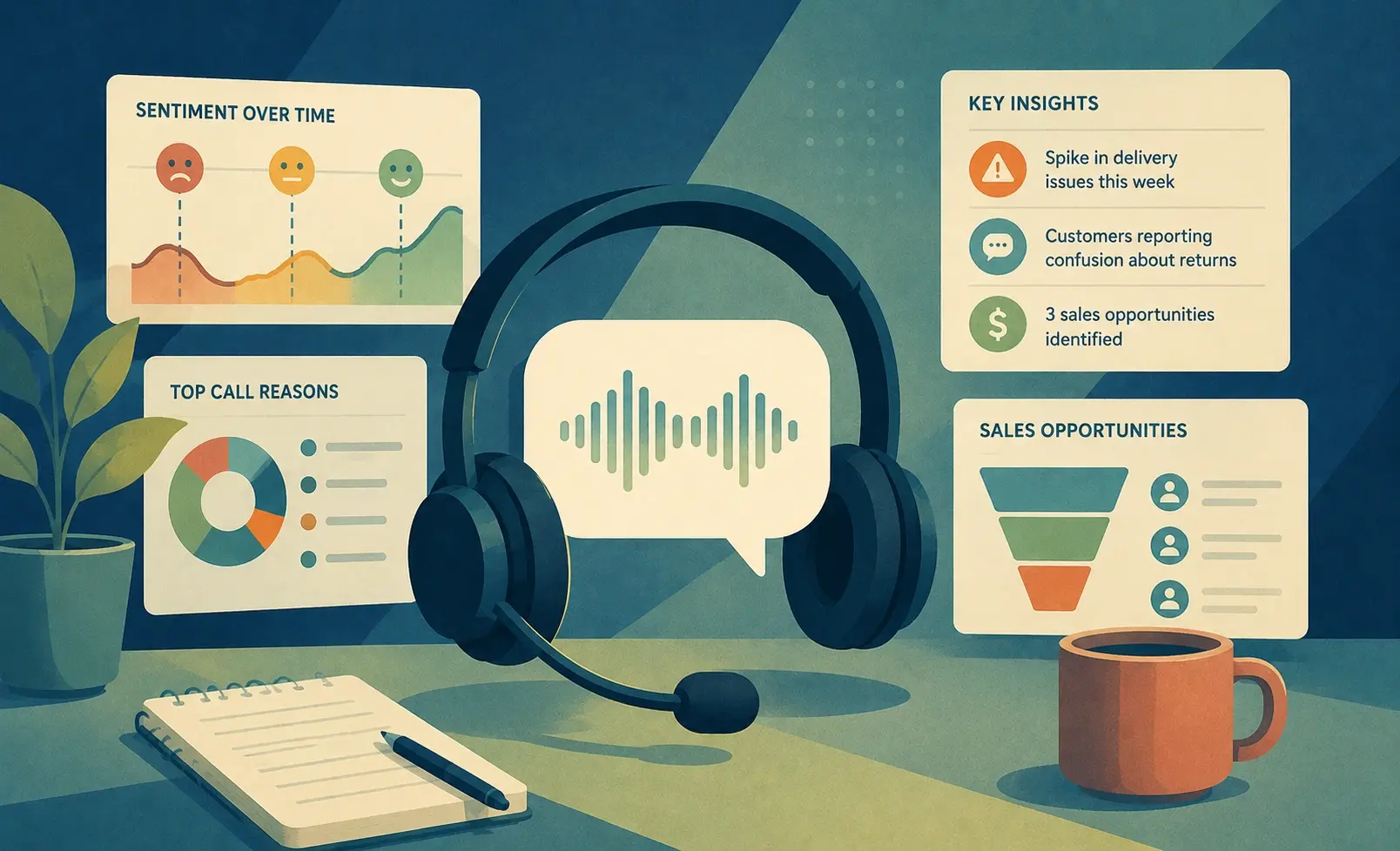
As businesses increasingly rely on AI systems to enhance customer interactions, selecting the right agent assist technology becomes crucial. With the stakes high—impacting agent performance, customer experience, and operational efficiency—organizations must evaluate their options carefully. This guide will explore the most reliable AI systems for agent assist in 2025, focusing on accuracy benchmarks and key features that can elevate your customer service operations.
Understanding Agent Assist Technology
Core Definition:
Agent assist technology leverages real-time artificial intelligence to monitor customer interactions, understand context and intent, and provide agents with relevant information, guidance, and recommendations during conversations. The goal is to improve outcomes for both the agent and the customer.
What It's NOT:
- A searchable knowledge base
- Static scripts or call flows
- Post-call quality scoring
- A chatbot or IVR system
The technology operates on multiple layers, including conversation intelligence, context engines, and decision engines, ensuring that agents receive timely and relevant support throughout customer interactions.
Core Platform Capabilities
When evaluating AI systems for agent assist, it’s essential to look for must-have features that can significantly impact your operations:
-
Real-Time Processing
- Sub-2-second latency from speech to guidance
- Continuous analysis throughout interactions
This ensures agents receive guidance when they need it most.
-
Context-Aware Knowledge Surfacing
- Automatically displays relevant information based on conversation context
This eliminates the need for agents to search for answers, reducing handle time and improving resolution rates.
- Automatically displays relevant information based on conversation context
-
Sentiment Detection & Escalation Prevention
- Recognizes emotional shifts and prompts de-escalation tactics
This proactive approach prevents escalations before they occur.
- Recognizes emotional shifts and prompts de-escalation tactics
-
Compliance Monitoring
- Ensures adherence to regulatory and policy requirements
This reduces legal risks and potential fines.
- Ensures adherence to regulatory and policy requirements
-
Multichannel Support
- Works seamlessly across voice, chat, email, and social media
This guarantees consistent agent support regardless of the communication channel.
- Works seamlessly across voice, chat, email, and social media
-
CRM & System Integration
- Seamless connection with existing technology stacks
This is vital for ensuring high adoption rates among agents.
- Seamless connection with existing technology stacks
-
Supervisor Analytics
- Provides real-time monitoring, intervention capability, and performance insights
This amplifies supervisors' ability to coach effectively.
- Provides real-time monitoring, intervention capability, and performance insights
These capabilities make agent assist systems indispensable for organizations aiming to improve their customer service quality and operational efficiency.
Vendor Comparison Framework
When considering which AI systems to adopt, a comparative analysis can help clarify your options. Below is a comparison of three leading agent assist platforms, focusing on their core technology, integration capabilities, and business impact.
| Feature | Insight7 | Google Contact Center AI | Amazon Connect |
|---|---|---|---|
| Transcription Accuracy | 96% | 94% | 95% |
| Latency (seconds) | 1.2 | 1.5 | 1.8 |
| Sentiment Detection | ✓ | ✓ | ✓ |
| Intent Recognition | Advanced | Basic | Advanced |
| Integration Capabilities | 15+ pre-built | 10 pre-built | 8 pre-built |
| Compliance Monitoring | Comprehensive | Moderate | Basic |
| Average AHT Reduction | 20% | 15% | 18% |
| Typical ROI Timeline | 8 months | 12 months | 10 months |
This comparison highlights Insight7 as a strong contender, particularly in transcription accuracy, latency, and integration capabilities, making it a reliable choice for organizations seeking to enhance their customer service operations.
Implementation Considerations
Implementing an agent assist system requires careful planning to ensure success. Here’s a structured approach to guide your implementation:
Preparation:
- Define clear business objectives for the agent assist system, such as reducing average handle time or improving first call resolution rates.
- Involve key stakeholders from IT, operations, and customer service to align on goals and expectations.
Execution:
- Begin with a pilot program involving a small group of agents (20-50) to test the system in real-world scenarios.
- Provide thorough training on how to use the system effectively, emphasizing its role as a support tool rather than a replacement for human agents.
Evaluation:
- Monitor key performance metrics such as average handle time, customer satisfaction scores, and first call resolution rates during the pilot phase.
- Gather feedback from agents to identify any challenges or areas for improvement.
Iteration & Improvement:
- Based on performance data and agent feedback, make necessary adjustments to the system and training materials.
- Plan for a phased rollout to the entire team, ensuring that support resources are available as agents adapt to the new technology.
By following this structured implementation plan, organizations can maximize the benefits of their chosen agent assist system and enhance overall customer service performance.
Conclusion
Selecting the most reliable AI systems for agent assist in 2025 is a critical decision that can significantly influence your organization’s customer service capabilities. By understanding the core technology, evaluating key features, and carefully planning your implementation, you can position your team for success. With tools like Insight7 leading the way, you can empower your agents to deliver exceptional customer experiences while improving operational efficiency.