


A VP of CX at a 200-rep insurance contact center has three dashboards open: NPS scores from a quarterly survey, ticket volume by category from the support platform, and a slide deck the research team built last month from 40 customer interviews.
None of them agrees with each other, and none of them tells her which decision to make first. Her CEO wants a recommendation by Friday on which two product issues to prioritize for next quarter.
This is the actual problem AI tools for customer insights solve: turning fragmented feedback from calls, tickets, surveys, and product behavior into a single source of truth that supports decisions.
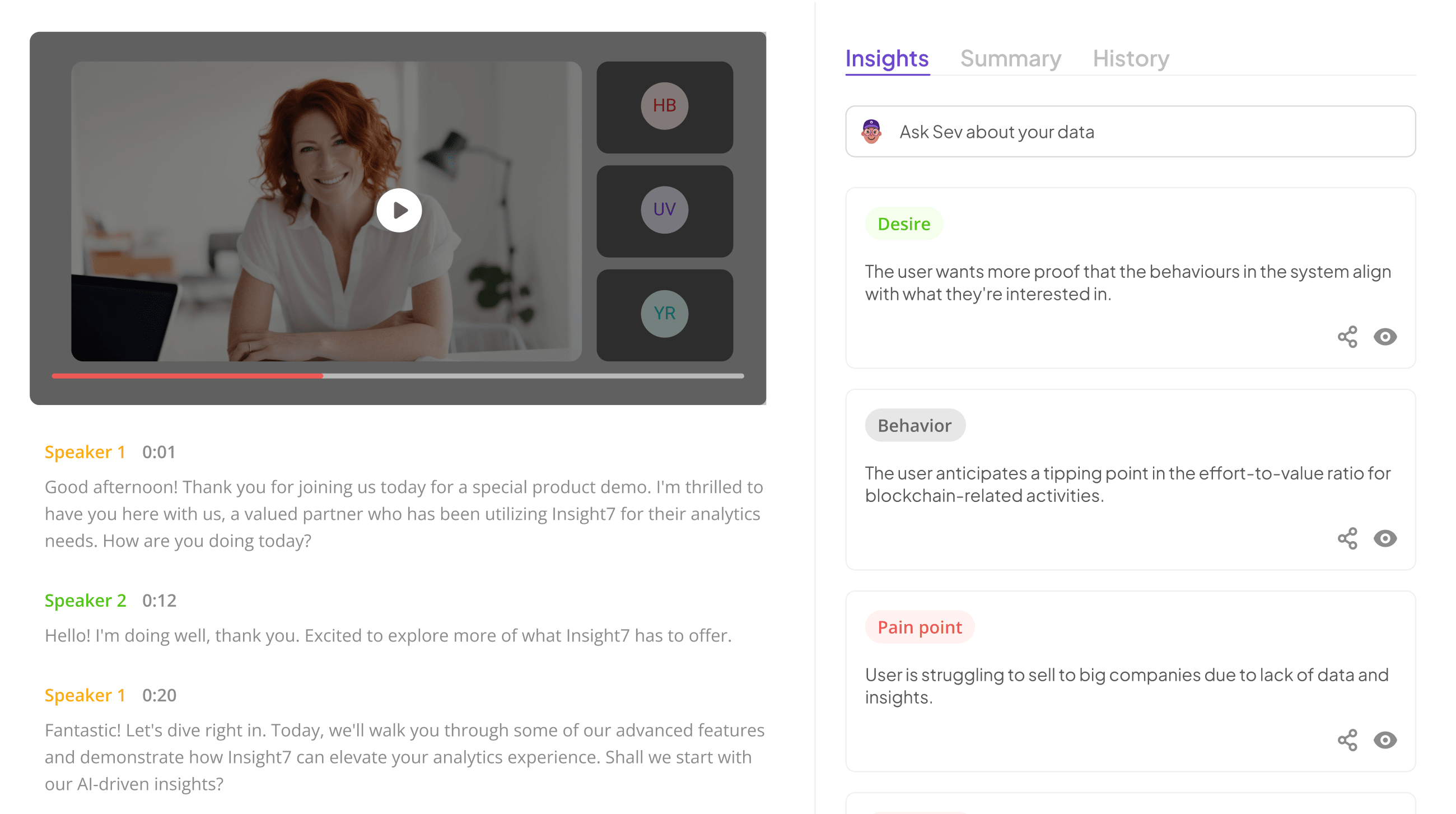
Insight7’s call analytics platform analyzes 100% of customer conversations automatically, surfacing recurring themes with frequency data, sentiment context, and specific call evidence. For mid-market companies with 40+ customer-facing reps, the right tool depends on which data sources matter most to your decisions and which team needs to act on the output.
Here are five real AI tools for customer insights, organized by the situation each one fits best.
Quick Pick: Which Tool Fits Your Situation
| Your situation | Best fit | Why |
|---|---|---|
| Mid-market contact center extracting product and CX insights from customer calls | Insight7 | Analyzes 100% of calls automatically with theme extraction, sentiment, and coaching links |
| Enterprise CX program needing surveys, NPS, and CSAT across multiple channels | Qualtrics XM | Mature survey infrastructure, deep enterprise integrations, and established analyst credibility |
| Enterprise needing experienced analytics across web, mobile, and contact center | Medallia | Strongest cross-channel signal capture and case management workflows |
| Mid-market team analyzing unstructured feedback from tickets, reviews, and surveys | Chattermill (Sprinklr) | Theme extraction across written feedback channels with strong NLP accuracy |
| Product team wanting customer insights from in-product behavior data | Mixpanel | Event-based product analytics with an AI-powered query interface |
1. Insight7: Customer Insights From Conversations at Scale
A 120-rep customer support team handles 4,000 calls a month. Their VOC program runs on quarterly surveys with a 14% response rate. By the time the survey results come back, the issues customers raised in calls three months ago have either resolved themselves, become churn drivers, or compounded into systemic problems. The data is always behind reality.
Insight7 closes that lag by analyzing every customer conversation automatically. Calls are transcribed, scored against custom criteria, and clustered into recurring themes with frequency data. When 28% of calls in a 30-day window mention confusion about a specific billing change, that pattern surfaces within days, not quarters.
The mechanism that matters here is the connection between insight and action. A theme dashboard alone does not change anything.
Insight7 ties customer insights directly to coaching workflows and product feedback loops, so a recurring objection becomes a coaching scenario for sales reps and a recurring complaint becomes a prioritized ticket for the product team. The signal moves from data to action without manual handoffs.
Built for mid-market companies with 40+ customer-facing reps in sales, support, and customer success. SOC 2 Type II, HIPAA, and GDPR compliant. The trade-off: Insight7 specializes in conversation data. If your primary feedback source is structured surveys with no associated call recordings, a survey-first platform like Qualtrics will be a better starting point.
2. Qualtrics XM: Survey-First Experience Management for Enterprises
Qualtrics is the established leader in survey-based experience management. Its XM platform handles NPS, CSAT, employee experience, and product feedback through structured surveys distributed across multiple channels, with AI text analytics layered on top of open-ended responses.
Built for enterprise CX programs that already operate on a survey-driven model and need depth in survey design, panel management, and integration with enterprise systems like Salesforce and SAP. The trade-off: Qualtrics is expensive and configuration-heavy. Mid-market teams without dedicated CX operations resources often find the platform overbuilt for their needs, and survey-only feedback misses the conversation data where most product and service insights actually live.
3. Medallia: Cross-Channel Experience Analytics for Enterprises
Medallia captures experience signals across web, mobile, contact center, and in-person interactions, then applies its Athena AI to extract themes, sentiment, and emotion from open-text feedback and call transcripts. Strong workflow capabilities route insights to the right teams and trigger case management when sentiment crosses defined thresholds.
Built for large enterprises that need to unify experience data from multiple touchpoints into one analytics environment. The trade-off: Medallia is enterprise-priced and enterprise-complex. Implementation cycles are long, and the platform’s value increases with the number of channels you connect. Teams focused primarily on contact center conversations rather than a full omnichannel experience often find specialized call analytics tools faster to deploy and easier to operate.
4. Chattermill (Sprinklr): Unified Feedback Analysis Across Written Channels
Chattermill, now part of Sprinklr, analyzes unstructured feedback from support tickets, reviews, surveys, social media, and CRM logs. Its NLP engine clusters themes automatically and tracks sentiment trends over time across consolidated written feedback sources.
Built for mid-market and enterprise teams whose customer feedback lives primarily in written channels rather than calls. Particularly strong for e-commerce, SaaS, and consumer brands with high volumes of reviews and support tickets. The trade-off: Chattermill’s strength is text analysis. For teams whose richest customer signal comes from voice conversations, a call-first platform like Insight7 captures patterns that text-only tools miss entirely, including tone, hesitation, and emotional escalation.
5. Mixpanel: Product Behavior Analytics for Product Teams
Mixpanel sits in a different category but solves a related problem: understanding what customers do inside your product, not just what they say about it. Its event-based data model captures clicks, signups, feature usage, and retention patterns, with AI-powered query interfaces that let non-technical users ask behavioral questions in plain English.
Built for product teams that need behavioral data to inform feature prioritization, retention analysis, and conversion funnel optimization. The trade-off: Mixpanel does not analyze customer feedback or conversations. It tells you what users did, not why. The most complete customer insights operations pair behavioral analytics (what they did) with conversation analytics (what they said about it) to triangulate why a behavior is happening.
How to Pick the Right Tool for Your Decisions
The question is not “which AI customer insights tool is best” but “which decision do I need to make, and which tool surfaces the evidence for that decision?”
- If your decisions hinge on what customers say in conversations (CX leaders, sales operations, contact center QA managers), conversation-first platforms like Insight7 will produce the highest-signal insights because most actionable feedback never reaches a survey form.
- If your decisions hinge on structured comparable feedback across cohorts (research-driven CX programs, enterprise NPS tracking), survey platforms like Qualtrics or experience platforms like Medallia fit better.
- If your decisions hinge on what users actually do in your product (product managers, growth teams), behavioral analytics like Mixpanel is the right primary tool, often complemented by a conversation analytics tool to capture qualitative context.
- The mistake most teams make is buying a tool that produces insights nobody is structured to act on. The best insights operation matches the data source to the decision-maker who owns the action.
If your customer insights program relies on quarterly surveys and your CEO is making product and CX decisions on stale data, book a demo with Insight7 to see how analyzing 100% of calls changes what your insights look like and how fast they reach the people who can act on them.
Frequently Asked Questions
1. What are AI tools for customer insights?
AI tools for customer insights use natural language processing and machine learning to analyze customer feedback from calls, surveys, tickets, reviews, and product behavior. They cluster themes, surface sentiment trends, and produce insights from unstructured data faster than manual analysis can.
2. Which AI tool is best for customer insights?
The best tool depends on your data source. Insight7 is best for conversation data from calls. Qualtrics is best for survey-driven CX programs. Medallia is best for an enterprise omnichannel experience. Chattermill is best for written feedback analysis. Mixpanel is best for in-product behavioral data.
3. How do AI customer insights tools improve decision-making?
They replace sample-based and lagged data with real-time analysis across the full feedback population. Decision-makers see frequency data and sentiment patterns within days instead of waiting weeks for survey results or quarterly reports. The faster feedback loop allows interventions before issues compound.
4. Can AI replace human analysts in customer research?
AI replaces the manual work of transcribing, tagging, and clustering large feedback datasets. Human judgment remains essential for interpreting strategic significance, evaluating which patterns matter most, and making cross-functional decisions about how to respond. The combination is more effective than either alone.
5. How much do AI customer insights tools cost?
Pricing varies widely. Mid-market platforms like Insight7 typically run on per-seat or per-call-volume pricing. Enterprise platforms like Qualtrics and Medallia operate on custom annual contracts that often start in the six figures. Mixpanel offers tiered pricing starting with a free plan for small teams.








