
Validating B2B Concepts with Customer Discovery Interviews
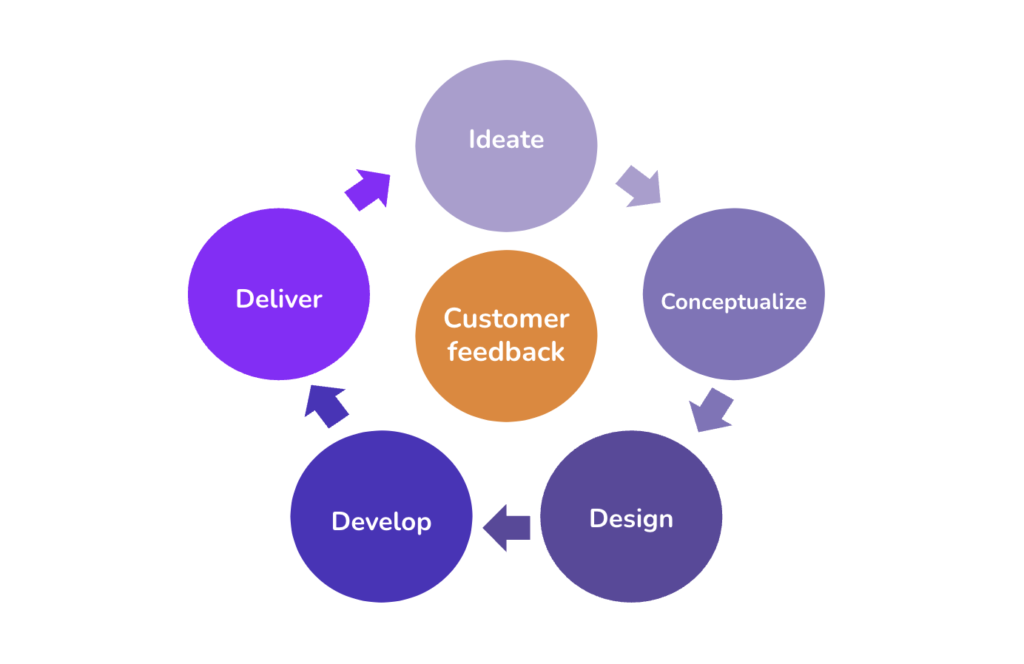
Customer discovery interviews validate new business concepts prior to over-investing in execution. These short but highly insightful customer conversations enable organizations to gather real-world perspectives from intended users in order to identify core problems, evaluate potential solutions, and analyze product-market fit. In the book “The Mom Test”, Rob Fitzpatrick emphasizes the need for conducting customer interviews to validate your business ideas. Good questions lead to great conversations, which lead to concrete facts that help you validate and iterate your idea. While brilliant ideas and innovative solutions hold promise, validation through real-world insights is what separates promising concepts from market failures. Launching an innovative new product or service carries substantial risk. Industry research indicates that 42% of B2B products fail due to lack of market fit and as many as 6 out of every 10 new product launches fail to meet revenue and adoption expectations. This high failure rate is often because companies pour significant time and money into ideas without effectively verifying customer interest. Without a practical way to test whether your value proposition actually resonates with target users, it’s incredibly easy to spend months or even years building something no one wants. What are Customer Discovery Interviews and how do they work Customer discovery interviews are usually 30-45 minute semi-structured discussions with 5 to 8 representatives from your target business or consumer segments. The key goal is to filter and prioritize ideas faster while also reducing risk by understanding customer needs, wants, and preferences directly from the source. While simply talking to potential customers is valuable, structured interviews elevate the process to a science. By following a pre-defined framework, you ensure consistent data collection and analysis, enabling you to: Compare and contrast: Analyze responses across different segments and personas to identify common themes and variations. Identify key trends: Uncover patterns and insights that wouldn’t be apparent through casual conversations. Quantify qualitative data: Use coding techniques to categorize and measure the frequency and intensity of specific themes. Good interviewers can skillfully extract an immense amount of value from well-prepared discovery discussions such as: Direct customer quotes to incorporate into market research proposals, product requirements documents, and other plans needing stakeholder approval and buy-in. Revelation of common pain points and customer needs that can be addressed by new offerings. Testing which potential product features, messaging approaches, and value propositions actually appeal to users rather than relying on internal assumptions and guesses. Gathering feedback on optimal pricing models and willingness to pay thresholds. Receiving ideas on best go-to-market strategies and sales channels to deploy. Catching faulty assumptions early before over-investing in a direction not actually in demand. Building Your Customer Discovery Interview Framework: A Step-by-Step Guide Now, let’s translate theory into practice. Here’s a step-by-step guide to conducting insightful customer discovery interviews: Define your target audience: Identify the specific pain points and decision-making processes of your ideal B2B customers. Segment your audience if necessary to ensure tailored questioning. Craft a semi-structured interview guide: Prepare key questions aligned with your goals and the Mom Test principles. Include open-ended prompts, behavior-focused inquiries, and potential dealbreaker questions. Recruit participants: Reach out to individuals within your target audience through existing network connections, online communities, or professional platforms. Offer incentives to compensate for their time and ensure participation. Conduct the interviews: Create a comfortable and professional atmosphere. Actively listen, ask follow-up questions, and avoid solutioneering. Take detailed notes to capture key insights and responses. Analyze and synthesize findings: Summarize key themes and common pain points. Identify discrepancies between assumptions and reality. Translate customer needs into actionable product or service features. AI tools like Insight7 do a great job at simplifying and automating this process. Iterate and refine: Use the gathered insights to refine your concept and prioritize features that address actual customer needs. Repeat and validate: Conduct additional interviews with different audience segments to ensure wider applicability and validate your evolving concept. The Process: Conducting Effective Customer Discovery Interviews While perhaps intimidating for some, conducting effective discovery interviews does not require complicated tools or a fancy setup. All you need is a recruitment screener template to find appropriate participants, an open-ended discussion guide with 5-6 strategic questions related to key assumptions you wish to test, and a notation template for capturing feedback, quotes, and insights. With that said, how do you actually prepare for a good idea validation conversation? Pre-plan the three most important things you want to learn from any given type of person. Pre-planning your big questions makes it much easier to ask good follow-up questions. Don’t be afraid to update the list as you learn and your questions change. The less formal you can make the conversation, the better. Once you get used to this, you can start having these interviews with no formality at all, and the people you are talking to won’t even realize they’re being interviewed. For example, at a conference, you could have 10-20 of these conversations in just a few hours. Here is a detailed overview of the step-by-step process: Clearly define your target customer profile and ideal buyer persona based on role, use cases, and other attributes. Personas may cover both end-user demographics as well as key decision-maker titles involved in procurement. Carefully craft an open-ended discovery interview guide organized around addressing major assumptions and knowledge gaps. Generally, start broad, incorporate follow-up probe questions based on initial responses, and close with numeric rating questions to quantify reactions. Leave room for open, authentic conversations while covering your research priorities. Recruit participant matches meeting your identified persona criteria via cold emails, phone calls, LinkedIn outreach, and by checking within your professional network for personal introductions. Explain why you wish to speak with them and what is in it for them based on incentives like gift cards for their time or access to research findings. Prepare customized scripts for interview probes and to address anticipated areas of concern ahead of time. But also remain flexible and conversational. Digitally send calendar invites for discovery calls booked as virtual video interviews for
