
Analysis Of Focus Group Data: Top AI Tools For FGD Analysis

[vc_row type=”in_container” full_screen_row_position=”middle” column_margin=”default” column_direction=”default” column_direction_tablet=”default” column_direction_phone=”default” scene_position=”center” text_color=”dark” text_align=”left” row_border_radius=”none” row_border_radius_applies=”bg” overflow=”visible” overlay_strength=”0.3″ gradient_direction=”left_to_right” shape_divider_position=”bottom” bg_image_animation=”none”][vc_column column_padding=”no-extra-padding” column_padding_tablet=”inherit” column_padding_phone=”inherit” column_padding_position=”all” column_element_direction_desktop=”default” column_element_spacing=”default” desktop_text_alignment=”default” tablet_text_alignment=”default” phone_text_alignment=”default” background_color_opacity=”1″ background_hover_color_opacity=”1″ column_backdrop_filter=”none” column_shadow=”none” column_border_radius=”none” column_link_target=”_self” column_position=”default” gradient_direction=”left_to_right” overlay_strength=”0.3″ width=”1/1″ tablet_width_inherit=”default” animation_type=”default” bg_image_animation=”none” border_type=”simple” column_border_width=”none” column_border_style=”solid”][vc_column_text] The success of marketing and product development often hinges on how well we analyze focus group data. Focus groups offer a unique window into customer needs, behaviors, and motivations. But the real value comes from turning those raw discussions into clear, actionable insights that can drive impact across product strategy, marketing, experience design, and business planning initiatives. What is FGD Analysis? FGD (Focus Group Discussion) analysis refers to the systematic examination of data collected during a focus group session. It involves transcribing discussions, identifying key themes, and interpreting the data to uncover insights related to the research question. The process is often qualitative and involves understanding the dynamics of group interactions, such as how participants influence each other’s opinions or how certain ideas dominate the conversation. What Methodology is Commonly Used by Focus Groups? The qualitative research methodology is most commonly used in focus group studies. Specifically, methodologies like thematic analysis and grounded theory are popular because they allow for in-depth exploration of participant perspectives and social dynamics. The focus is often on understanding subjective experiences rather than measuring them quantitatively. The goal is to gather rich, descriptive data rather than numerical data. This makes the analysis more nuanced than just crunching numbers from surveys. And It requires a keen eye to spot patterns and extract meaning. However, some researchers may use mixed methods, combining qualitative focus group data with quantitative surveys to validate their findings. What Type of Analysis is Best for Focus Groups? The best type of analysis for focus group data depends on the nature of the research and its objectives. Here are some common analysis types used: Thematic Analysis: This is the most widely used method in focus group analysis. It involves identifying recurring themes, patterns, and concepts across the data. Thematic analysis is especially useful for understanding participants’ attitudes, beliefs, and behaviors in relation to the topic being studied. Content Analysis: Another common approach is content analysis, which involves quantifying the frequency of certain words or themes that appear during the discussions. This method is effective when researchers are interested in understanding the prevalence of specific ideas or terminologies. Discourse Analysis: If the focus is on how people use language in social interactions, discourse analysis may be more appropriate. This method looks at the language used by participants and how it reflects underlying social and cultural norms. Grounded Theory: Grounded theory is useful when the goal is to generate theories based on the data itself. It is an inductive approach where researchers develop theories by continuously comparing emerging themes across the focus group data. Narrative Analysis: In cases where the researcher is more interested in individual stories and how they are constructed, narrative analysis might be the best approach. This method allows a deeper dive into how participants frame their personal experiences in the group context. What Are the Four Critical Qualities of Focus Group Analysis? Depth: Focus group analysis should go beyond surface-level observations, exploring the underlying reasons and motivations behind participants’ opinions. Context: Analysis must consider the broader social and cultural context in which participants’ opinions are formed. Credibility: The findings should be supported by clear evidence, typically through direct quotes from participants, and should be triangulated with other data sources when possible. Systematic Approach: A rigorous, systematic method must be used to ensure that the analysis is thorough and free from researcher bias. This includes transparent coding processes and a clear explanation of how themes were derived from the data. How is Focus Group Data Analyzed? Focus group data analysis involves several systematic steps aimed at deriving insights from participant interactions. The process starts with data collection, typically through video or audio recordings of the focus group discussions (FGD). These recordings are then transcribed into written documents for further analysis. The analysis generally involves multiple stages, including: Transcription: Converting the verbal exchanges from the focus group into text, ensuring that no information is lost in the process. This often includes noting non-verbal cues like tone or body language, as they can add context to the dialogue. Coding: After transcription, researchers typically categorize the data by identifying recurring themes, keywords, or concepts. Coding can be done either manually or with the help of qualitative analysis software like NVivo or Insight7, which offers AI-powered analysis for qualitative data. Thematic Analysis: The next step is to conduct thematic analysis, identifying patterns or themes across the group discussions. These themes represent common ideas or perceptions shared by participants, providing insight into their collective opinions. Categorization: The data is further categorized to highlight similarities and differences across various groups, or even between individuals. This helps in understanding the range of perspectives. Interpretation: Once themes are identified, the next step is interpreting the findings in the context of the research objectives. Researchers analyze how participants’ opinions and attitudes relate to the research questions. Visualization and Reporting: The final step in focus group analysis is presenting the results, typically through detailed reports, visual charts, or graphs to make the data accessible and interpretable. Before Transcription, How Do You Record Data from a Focus Group? Data from a focus group is typically recorded through audio or video devices. Audio recordings allow the researcher to capture all verbal exchanges, while video recordings can also capture non-verbal cues, like gestures or facial expressions, which can provide additional context. These recordings are then transcribed for analysis. How Long Does It Take to Analyze Focus Group Data? The time it takes to analyze focus group data can vary significantly depending on the size and complexity of the data, the method used for analysis, and the software tools employed. Generally, for a single focus group session, the process might take 1-2 weeks. Here’s a breakdown: Transcription: Depending on the length of the
How To Analyze Focus Group Data And Get Actionable Insights

[vc_row type=”in_container” full_screen_row_position=”middle” column_margin=”default” column_direction=”default” column_direction_tablet=”default” column_direction_phone=”default” scene_position=”center” text_color=”dark” text_align=”left” row_border_radius=”none” row_border_radius_applies=”bg” overflow=”visible” overlay_strength=”0.3″ gradient_direction=”left_to_right” shape_divider_position=”bottom” bg_image_animation=”none”][vc_column column_padding=”no-extra-padding” column_padding_tablet=”inherit” column_padding_phone=”inherit” column_padding_position=”all” column_element_direction_desktop=”default” column_element_spacing=”default” desktop_text_alignment=”default” tablet_text_alignment=”default” phone_text_alignment=”default” background_color_opacity=”1″ background_hover_color_opacity=”1″ column_backdrop_filter=”none” column_shadow=”none” column_border_radius=”none” column_link_target=”_self” column_position=”default” gradient_direction=”left_to_right” overlay_strength=”0.3″ width=”1/1″ tablet_width_inherit=”default” animation_type=”default” bg_image_animation=”none” border_type=”simple” column_border_width=”none” column_border_style=”solid”][vc_column_text] A Step-by-Step Guide on How to Analyze Focus Group Data and Extracting Powerful Customer Insights Learning how to analyze focus group data with AI tools can supercharge your research endeavors. You’ve just wrapped up a series of highly engaging focus group discussions filled with rich commentary and candid exchanges around your core topics of interest. The hard work of meticulously planning, recruiting participants, and facilitating the live sessions is now complete. But now comes one of the most critical and often overwhelming parts of the process – analyzing all of that raw, unstructured focus group data and synthesizing it into clear, actionable insights that can drive real business impact. Whether your focus groups aimed to pressure test new product concepts, dive into customer pain points and unmet needs, evaluate marketing messaging, or anything in between, sifting through hours of video recordings and transcripts to identify overarching themes and key takeaways can feel like an insurmountable task. That’s where having a proven framework for qualitative data analysis becomes invaluable. Relying on an ad-hoc approach risks missing crucial details or forcing insights that may not be fully grounded in the data. However, a systematic, best-practice methodology allows you to extract maximum value and confidently uncover the most meaningful learnings from your focus group investment. What You Will Learn in This Guide In this step-by-step guide, I’ll outline a practical approach for analyzing focus group recordings, videos, transcripts, and other materials to pinpoint high-impact customer insights. This article covers: • Essential first steps to prep and organize your focus group data • Qualitative coding techniques to identify patterns and critical themes • How to elevate verbatim customer quotes and “aha” moments • Methods for clustering themes into prioritized key insights • Best practices for crafting narrative-driven shareable reports • Tools for performing focus group data analysis By following a systematic process like the one outlined here, you will learn how to analyze you can transform those raw customer discussions into a crystal-clear roadmap for innovating successful new products and experiences tailored to what your target market truly needs and values. Steps on How to Analyze Focus Group Data Like a Pro Step 1: Prepare and Digest the Raw Data Before you can jump into analysis, the first essential step is to collect and prepare all discussion recordings, videos, transcripts, notes, worksheets, and any other outputs and stimuli from your focus group sessions. You want to centralize all of this raw data into a shared repository for your analysis team. It’s critical to have verbatim transcripts covering all focus group dialogue, as these text documents will make it far easier to code and analyze versus trying to analyze audio/video directly. Most focus group consultants and facilities can generate detailed transcripts along with the raw video recordings. If you don’t have your transcripts already, you can upload your recordings here to generate accurate transcripts. Once you have the data compiled and transcripts ready, the next step is for each analyst to review and digest all of the raw focus group materials thoroughly. This includes reading through transcripts, watching video snippets of key moments, and reviewing any notes taken by the moderator and supporting staff. The goal is to immerse yourself in the actual voice of the customer, rereading commentary and analyzing both the actual words and nonverbal cues. It’s about developing a solid comprehension of the sessions before you start looking for overarching trends and extracting insights. Taking the time for this tedious preparatory work upfront helps tune your team’s mindset and bring the focus group environment back to life before diving into coding. Step 2: Code the Transcript Data into Themes and Topics With everyone well-versed in the raw focus group content, the next major phase is a systematic coding process to objectively identify and organize all relevant commentary into distinct themes and topics that emerge. Most qualitative researchers leverage coding software like Insight7 to streamline this iterative process. Within each full transcript, you’ll code each quote, sentence or partipant response into one or more designated themes using the tools. This could start with pre-defined topics based on your original study goals/questions, but will quickly expand into an inductive approach as you discover new themes surfacing directly from the data. For example, imagine you’re analyzing focus groups conducted to better understand consumer perceptions around a new category of fitness wearables. You may have pre-defined codes for themes like “Pricing Attitudes,” “Form Factor Preferences,” or “Motivation for Using a Fitness Tracker.” But through the real discussions, you may inductively create new codes and sub-codes for themes like: • “Social Sharing Needs” • “Integration with Health Apps” • “Wearable Fatigue and Lapsing Usage” – Sub-code: “Novelty Quickly Wears Off” The software makes it easy to assign multiple codes to the same quote when relevant, which preserves the original rich context. You can also bundle individual codes into hierarchical code categories as appropriate. At this stage, it’s fine to be liberal in creating codes – you can always consolidate them later as higher-level patterns surface. Step 3: Examine Code Frequencies and Co-Occurrences Once your team has thoroughly coded the entire focus group transcript corpus, the next step is using those codes and software capabilities to surface potential insights hiding within the data. One simple but powerful way to do so is looking at code frequencies – both at overall levels, but also frequencies broken down by particular sessions, participant demographics, or any other criteria from your screening data. For example, you may find that while “Integration with Health Apps” didn’t get discussed extensively overall, it ranked as a top theme for millennial participants compared to boomers. Or the theme “Social Sharing Needs” dominated discussions in Session 4 compared to other sessions for unknown reasons.
Purpose Of Focus Groups And Tools For Analyzing FGD Transcripts

The Purpose of Focus Groups & AI Tools for Analyzing Focus Group Data Transcripts Understanding the purpose of focus groups is a key factor in carrying out research efficiently. As businesses strive to better understand their customers and optimize products and services to meet evolving needs, focus groups have become an invaluable research method in the modern marketer’s toolkit. Generally, the purpose of focus groups is to uncover candid, nuanced feedback and rich insights directly from target consumers themselves. By bringing together a carefully selected group of people to participate in an open-ended discussion guided by a skilled moderator, focus groups enable organizations to move beyond the limits of broad quantitative data. The live, dynamic nature of these sessions reveals the context, emotions, and deeper meaning that shapes consumer attitudes, motivations and behaviors. In this post, we’ll explore the many critical purposes focus groups serve across multiple business functions and industries. You’ll see firsthand examples demonstrating their remarkable value for applications like: • Exploring new product/service concepts and ideas • Evaluating marketing strategies, messaging and campaigns • Understanding usage drivers, purchase influences and decision criteria • Uncovering unmet needs and white space innovation opportunities • Testing designs, packaging, advertising creative and brand perception • Gauging reactions to pricing, promotions, distribution and business model ideas • Capturing authentic voice-of-customer sentiments to inform strategic plans Let’s dive into why leading brands across sectors rely on focus groups to fuel innovation, improve customer experiences and gain a powerful competitive advantage. Primary Purposes of Focus Groups 1. Purpose of Focus Groups: New Product & Service Idea Generation One of the most common and valuable purposes of focus groups is providing a live “In the room” setting to explore and vet new product/service concepts, positioning, and marketing directly with target users. The dynamic, interactive format enables you to get spontaneous reactions, contextual feedback and creative ideas directly from the people who would be using or purchasing the offering. Rather than just presenting a static list of potential ideas or prototypes, skilled moderators can facilitate immersive exercises, scenario walkthroughs and open-ended discussions to capture how people organically respond, what most excites or concerns them, their willingness to purchase, desired pricing, preferred naming/branding approaches and much more. As another example, a food company used focus groups to test dozens of new flavor concepts and product ideas directly with target demographics. In addition to rating appeal and likelihood of purchase, the two-way dialogue uncovered valuable nuances around taste preferences, nutritional factor interest and desired brand imagery that weren’t contemplated in the original product briefs. This allowed them to identify true white space opportunities in a crowded market. Whether it’s shaping the next big product innovation or optimizing the details on a line extension, few methods provide the level of real-time, contextualized feedback around new ideas that focus groups enable early in the development process. 2. Purpose of Focus Groups: Customer Experience Optimization and Design Validation Thanks to the rise of technology and new consumer expectations, providing standout user experiences has become a top priority and competitive differentiator for brands in every sector. Focus groups are an ideal method for holistically mapping the current state of customer journeys, uncovering points of friction and frustration, and envisioning ways to optimize ease, efficiency and overall delight. By walking through immersive tasks, usage scenarios and interactive exercises, focus groups can capture in-the-moment reactions, emotional responses, and fresh ideas from people actually navigating your websites, apps, products, services, stores and other touchpoints. You gain a richer understanding of real-world pain points, needs and desired improvement areas than soliciting feedback from customers in a vacuum. On the services side, a telecommunications provider invited customers into focus groups to discuss the installation and troubleshooting experience for its home internet and TV bundles. By simulating account setup, common tech issues and resolution paths, they identified systemic problems that were driving high call volumes into support centers and eroding customer satisfaction scores. But the groups also revealed localized needs and preferences by region that were being overlooked. From refining digital interfaces and streamlining service processes to reimagining physical spaces and innovating new value-add offerings, focus groups are an incredibly versatile tool for empathizing with customers, shining a light on current experience gaps, and collaboratively envisioning improvements for driving greater satisfaction and loyalty. 3. Purpose of Focus Groups:Marketing & Advertising Optimization Beyond product insights, focus groups play an invaluable role for shaping truly impactful marketing and advertising strategies tailored to target audiences. The qualitative feedback captures the authentic voice of the customer, revealing what messaging and creative concepts truly resonate on an emotional level versus just gauging surface-level reactions. Focus groups can explore drivers behind brand perception, test campaigns in their full context, and reveal the underlying needs/motivations/mindsets marketing must tap into for optimal influence. Because the discussions are open-ended and iterative, new creative territories and directions often emerge beyond what might be scripted. This allows teams to see how different approaches land before going to market. A financial services company facilitated focus groups with a mix of existing customers and prospects to gauge reactions to new broadcasting spots and ad concepts. While the quantitative feedback told them most people viewed the ads positively, the qualitative insights uncovered crucial nuances around themes/messaging that felt inauthentic versus compelling to different segments based on their personal contexts and relationships to money. This allowed them to make strategic pivots before investing further. An auto manufacturer used focus groups to get feedback for an upcoming launch targeted at first-time EV buyers. Their initial marketing concepts spotlighted the impressive acceleration and other performance stats. However, the groups revealed this positioning actually created hesitancies for the demo they were targeting comprised of mostly eco-conscious buyers. Participants reacted far more positively when the creative emphasized sustainability messaging. This feedback led to a major shift in the campaign. In another case, a high-end travel company envisioned focus groups with affluent consumers to validate its plan for a rebranding and refresh of its website, digital marketing
The Ultimate Focus Group Discussion Guide for Research Consultants

Focus group discussion guide is important when embarking on a focus group research. As a research consultant, you know focus groups are a powerful qualitative method for understanding your clients’ customers, uncovering unmet needs, exploring new product concepts, testing messaging, and much more. But facilitated these in-depth group discussions effectively is both an art and a science. If you don’t have a well-designed discussion guide, your focus groups can easily veer off track, miss crucial areas of inquiry, and fail to generate the rich insights you need. On the flip side, a meticulously-crafted guide keeps the sessions tightly focused yet allows for the free-flowing dialogue and spontaneous discoveries that make focus groups so valuable. In this post, we’ll walk through a comprehensive template and best practices for creating an exemplary focus group discussion guide customized for your clients’ unique research objectives. You’ll get a proven structure to follow, insightful examples, and expert tips on: • How to write clear, unbiased questions that generate honest feedback • Best techniques for establishing rapport and making participants feel comfortable • Simple ways to facilitate productive group interactions and exchanges • Prompts for getting people to open up and share deeper personal experiences • Smooth transitions to keep discussions flowing naturally from one topic to the next • Tactics for gently probing interesting areas that emerge spontaneously • Methods for adapting your guide mid-session based on participant responses Let’s dive into everything you need to build amazing focus group guides that generate game-changing consumer insights. If you already have your focus group discussion transcripts, visit here to analyze and extract insights automatically. Focus Group Discussion Guide Template Below is a template outlining all key sections to include in a focus group discussion guide. Use this as your starting framework, then customize based on your specific research objectives. I. Introduction (5 mins) – Brief intro/background on moderator and purpose/sponsors of the research – Explanation of the general topic to be discussed – Underline that participants were hired to share honest thoughts and opinions – Reassure that there are no wrong answers and establish rapport and openness – Set expectations for session (length, ability to move around, ability to skip questions, etc.) Example: “Thank you all for joining us today. My name is Sarah and I’ll be moderating our discussion. We are doing this research on behalf of [client company] to get feedback from users like you on potential new product and messaging ideas. This is just a freewheeling discussion, with no trick questions or anything like that. I want to hear your completely honest thoughts and opinions based on your personal experiences and perspectives…” II. Ice Breaker/Warm Up (5-10 mins) – Simple question that gets participants comfortable speaking in the group – Should be fun, easy, and not intimidating Example: “To get us started, tell me your name, where you’re from, and your favorite midnight snack!” III. Background and Usage (10-15 mins) – Open-ended questions about their general background related to the topic – Inquire about behaviors, attitudes, likes/dislikes, associations, motivations, etc. – Establishes context and leads into key areas of investigation Example Questions: “What are some of your favorite [CATEGORY] products and why?” “How often do you typically [BEHAVIOR]? Walk me through the last time you did this.” “How would you describe the role [PRODUCT/SERVICE] plays in your daily life?” “What factors do you consider when choosing a [PRODUCT/SERVICE]?” IV. Key Areas of Exploration (45-60 mins) This is the core part of the discussion where you dive deep into the topics you need to better understand through these focus groups. The number of key areas and specific questions will vary widely based on your objectives, but this section should consume about half of your allotted time. Questions should follow a logical flow, starting broad and getting increasingly more granular and specific. Use a mix of questions types, like: • Open-ended exploratory: “What are your overall thoughts and feelings about [PRODUCT/IDEA]? What intrigues or concerns you most?” • Likes/Dislikes: “What did you like or dislike about [EXAMPLE]? What did or didn’t resonate with you?” • Immersive scenario walkthrough: “Let’s say you wanted to [TASK]. Talk me through how you would go about doing that from start to finish.” • Head-to-head comparison: “If you had to choose between [OPTION A] or [OPTION B], which would you prefer and why?” • “Imagine if” prompts: “Imagine if [NEW PRODUCT/FEATURE] allowed you to [CAPABILITY]. How would that change things for you?” Also, do “clearing activities” between each area to avoid cross-contamination or bias from previous discussions. That could involve having them jot down solo thoughts, vote, or complete word association exercises. Transition smoothly between sections using segues like: “Thanks for that helpful discussion around pricing. Let’s change gears now and talk about [NEXT AREA]…” V. Projective Exercises and Prompts (~15 mins) In addition to direct questions, do activities that use projective techniques and creativity to further tap into participants’ deeper motivations, feelings, unmet needs, and ideas. A few examples: • Have participants draw or use metaphors to represent how they feel about a product/service • Show example ads, photos, objects and have them build stories around them • Use psychological prompts like “If [BRAND/PRODUCT] was an animal, what animal would it be and why?” • Do exercises getting them to project into different scenarios, mindsets, or roles These activities tend to surface very insightful information that participants may not directly express with words alone. VI. Areas for Follow Up (5 mins) – Check if key things were missed or need more probing – Ask: “What other thoughts/experiences haven’t we covered yet on this topic?” – Also cover housekeeping questions on logistics, time allotments, etc. VII. Wrap Up (5 mins) – Briefly summarize key themes and takeaways – Allow final thoughts or additional comments – Thank participants for their time and openness “That wraps up our discussion for today. Thank you all so much for sharing your honest perspectives…” Best Practices for Effective Focus Group Discussion Guide Follow these
Focus Group Analysis: Best AI Analysis Tools for Market Researchers
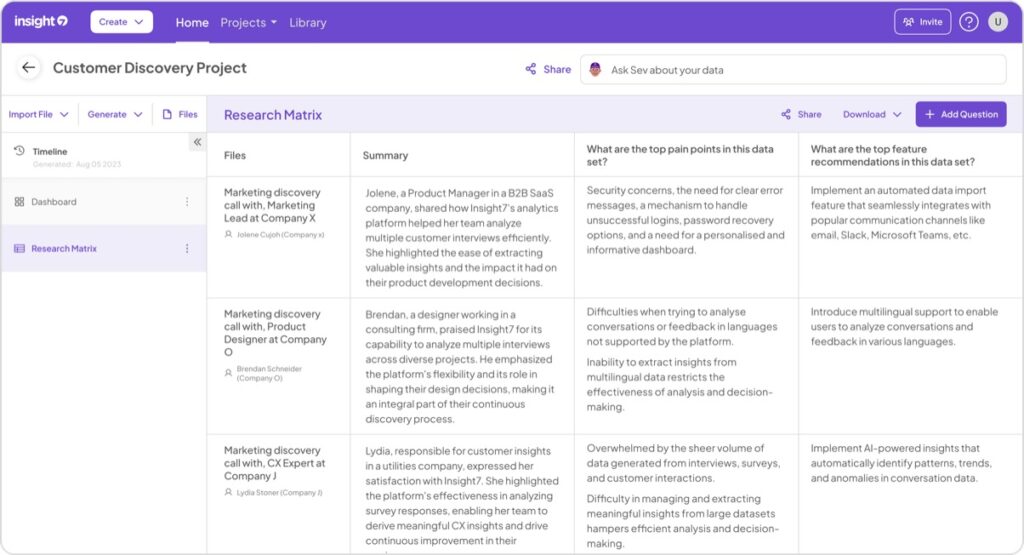
[vc_row type=”in_container” full_screen_row_position=”middle” column_margin=”default” column_direction=”default” column_direction_tablet=”default” column_direction_phone=”default” scene_position=”center” text_color=”dark” text_align=”left” row_border_radius=”none” row_border_radius_applies=”bg” overflow=”visible” overlay_strength=”0.3″ gradient_direction=”left_to_right” shape_divider_position=”bottom” bg_image_animation=”none”][vc_column column_padding=”no-extra-padding” column_padding_tablet=”inherit” column_padding_phone=”inherit” column_padding_position=”all” column_element_direction_desktop=”default” column_element_spacing=”default” desktop_text_alignment=”default” tablet_text_alignment=”default” phone_text_alignment=”default” background_color_opacity=”1″ background_hover_color_opacity=”1″ column_backdrop_filter=”none” column_shadow=”none” column_border_radius=”none” column_link_target=”_self” column_position=”default” gradient_direction=”left_to_right” overlay_strength=”0.3″ width=”1/1″ tablet_width_inherit=”default” animation_type=”default” bg_image_animation=”none” border_type=”simple” column_border_width=”none” column_border_style=”solid”][vc_column_text] Focus group analysis is a crucial component of market research, providing valuable insights into consumer opinions and behaviors. It is essential for result-oriented marketing. Focus groups offer valuable qualitative insights into consumer behaviors, preferences, and perceptions. The introduction of AI tools has transformed this process by offering greater efficiency, accuracy, and depth of insight. This article explores how AI is enhancing focus group analysis and provides a detailed overview of the top AI tools for market researchers in 2024. But before moving on, we should outline the process to give a better understanding of Focus group analysis: Data Collection and Preparation: Begin by collecting and preparing your data. This includes transcribing audio and video recordings and organizing notes accurately. Proper preparation ensures a smooth analysis process. Analysis: This stage involves multiple techniques to extract insights. You start by coding transcripts, assigning labels to relevant text. Then, you identify overarching themes. You might conduct sentiment analysis to gauge emotional responses., or content analysis to quantify specific topics. It is purely dependent on the type of analysis you want to do. Many researchers also do comparative analysis across groups and demographics. Advanced tools can even offer predictive analysis based on patterns in the data. Visualization: Once the analysis is complete, the next step is to visualize the findings. Effective visualization helps in conveying insights clearly and compellingly. Use charts, graphs, and infographics to represent data patterns and themes. Word clouds can highlight frequently mentioned terms, while bar charts or pie charts can illustrate the distribution of coded themes or sentiment scores. The Impact of AI on Focus Group Analysis AI tools address several key challenges in traditional focus group analysis: 1. Enhanced Speed and Efficiency: AI automates transcription, coding, and thematic analysis, allowing researchers to obtain insights more quickly and focus on strategic decisions. 2. Improved Accuracy: AI minimizes human errors in transcription and data coding, ensuring more reliable and consistent results. 3. Deeper Insights: AI algorithms identify patterns and themes that may not be immediately evident, offering richer and more actionable insights. 4. Scalability: AI efficiently handles large datasets, enabling comprehensive analysis without sacrificing quality. Essential AI Tools for Focus Group Analysis Here’s a detailed look at some of the most effective AI tools for focus group analysis, including their features, benefits, and potential drawbacks: 1. Insight7 Insight7 is a no-code SaaS platform designed for qualitative data analysis. It is designed to streamline the analysis of qualitative data with features like automated transcription, sentiment analysis, and theme identification. It offers powerful visualization tools, such as automated charts and graphs, which help in quickly visualizing trends and patterns. The sentiment analysis visuals provide a clear display of sentiment trends across data sets. Insight7’s user-friendly interface ensures that businesses can efficiently extract actionable insights from customer feedback and focus group data, making the analysis process both comprehensive, easy and straightforward. Key Features: Automated Transcription: Converts audio and video recordings into accurate text transcripts. Thematic Analysis: Identifies and extracts key themes and patterns from qualitative data. Customizable Reporting: Generates detailed and tailored reports based on focus group findings. Integration with Other Platforms: Seamlessly integrates with OneDrive, SharePoint, Gong, Google Drive, and more. Multi-Language Support: Analyzes data in various languages by translating it to English for processing and then back to the original language. Pros: User-friendly with a straightforward learning curve. Cost-effective compared to many competitors. Comprehensive end-to-end solution with flexible reporting and multi-language capabilities. Generates insights quickly Cons: Not suited for manual coding. 2. Delve Delve is a user-friendly qualitative data analysis tool that simplifies the process of coding and finding patterns in qualitative data, including focus group transcripts. It offers collaborative features for team analysis, making it easy for multiple researchers to work together. Delve’s intuitive coding process and visualization tools help teams quickly identify and communicate key insights from their data. Key Features: Advanced Coding: Offers dynamic coding and categorization options for detailed analysis. Thematic Visualization: Provides tools for mapping and analyzing themes effectively. Data Integration: Supports the integration of data from multiple sources. Collaborative Features: Enables multiple users to work on projects simultaneously. Pros: Strong coding and visualization features. Effective for team-based research projects. Good for detailed thematic analysis. Cons: Limited advanced analytical tools, Uses manual coding. 3. QuestionPro QuestionPro is a comprehensive survey and research tool that includes capabilities for conducting and analyzing focus groups. It offers features like automated transcription, qualitative data coding, and robust analytics. QuestionPro’s all-in-one platform allows for easy integration of survey and focus group data, and its powerful analytics tools help in generating comprehensive insights. Key Features: AI-Powered Insights: Utilizes advanced analytics to uncover insights from qualitative data. Survey Integration: Combines qualitative and quantitative data through seamless survey integration. Real-Time Reporting: Provides real-time updates and visualizations for immediate analysis. Customizable Dashboards: Tailors dashboards to specific research needs. Pros: Comprehensive tools for both survey and qualitative analysis. Real-time reporting enhances data visibility. AI-driven analytics offer actionable insights. Cons: Can be expensive, Some features may be more suited for survey data than in-depth qualitative analysis and advanced features may require additional training. 4. Taguette Taguette is a free, open-source tool for qualitative research. It allows researchers to code, annotate, and analyze text data, making it suitable for focus group analysis. While it has a basic interface, it is easy to use and provides the essential tools needed for basic qualitative analysis. Taguette’s open-source nature makes it an excellent choice for researchers on a budget or those looking for a customizable solution. Key Features: Tagging and Coding: Intuitive tagging and coding features for qualitative data. Customizable Categories: Allows for the creation of custom coding categories. Data Organization: Manages and organizes large volumes of data efficiently. Open-Source Flexibility: Offers customization options due to its open-source nature. Pros:
What is a Focus Group in Research: Focus Group Data Analysis

What is a Focus Group in Research? If you work in marketing, product development, user experience, or any other customer-facing role, you’ve likely heard or asked “what is focus group in research” before. So what exactly is a focus group? How do they work? And what value do they provide for research? A focus group is a carefully planned discussion involving a small group of people whose beliefs, attitudes, experiences, and insights are relevant to the research topic at hand. The discussion is led by a trained moderator in an informal setting that is designed to spark insightful feedback and foster an open exchange of ideas. Focus groups are a type of qualitative market research technique used across many industries to gain an in-depth understanding of a target audience’s opinions, motivations, preferences, and pain points. They fill a critical role in customer/user research. This is done by uncovering the “why” behind people’s behaviors, needs, and decision-making processes – something that can’t be fully captured through quantitative methods like surveys alone. In this article, we will examine the place of focus group in research and how to analyze focus group data. However, in the meantime, click here to analyze transcripts from your research. The use of Focus Groups • Testing new product concepts, designs, marketing campaigns, etc. prior to launch • Understanding attitudes and perceptions around an existing product/service • Exploring customer experiences, unmet needs, and points of friction • Generating new ideas from engaged consumers/users • Assessing reactions to things like pricing, branding, and messaging At their core, focus groups provide businesses and organizations with a direct line of communication to their target customers or end-users. This first-hand feedback is invaluable for making more informed, customer-centric decisions during product development, marketing campaigns, user experience design, and beyond. How Does a Focus Group Work? The specific process can vary based on research objectives, however, most focus groups follow a similar basic format: 1. Recruiting Participants who match pre-determined screening criteria (e.g. demographics, behaviors, experiences, etc.) are recruited through various channels. This ensures the participants are relevant to the research topic. Typical group size is 6-10 people. 2. Logistics A facility is selected that has an observation room with a one-way mirror, as well as audio/video recording capabilities. The participants are brought into a controlled discussion room with a trained moderator. 3. Discussion Guide The moderator follows a pre-set discussion guide covering specific topics and questions, but allowing for a natural flow of dialog. Guides are carefully structured to create an open environment for sharing thoughts and opinions. 4. Group Dynamics One of the key strengths of focus groups is the ability for diverse individuals to share perspectives, build off each other’s comments, and spark new insights through triggered memories and associations. Skilled moderators facilitate these rich interactions. 5. Activities To further promote engagement, moderators will often incorporate exercises, product samples, visuals, and other activities into the session. This could involve evaluating mock-ups, sampling products, or role-playing scenarios. 6. Observation There is typically a one-way mirror or video stream where clients/stakeholders can observe the sessions live. This allows them to experience first-hand reactions and catch important non-verbal cues. 7. Analysis After a focus group, recordings are reviewed and key insights are comprehensively analyzed using AI tools like Insight7. Reports summarize major themes, significant quotes, and strategic recommendations. While there are many variables to conducting effective focus groups, some guiding best practices include: • No more than 10 participants to ensure everyone can actively participate • A skilled moderator experienced in managing group dynamics • Comfortable, casual setting to facilitate open discussion • Incentives for participants in exchange for their feedback • A mix of question types (e.g. open-ended, projective, etc.) • Incorporating interactive exercises beyond just verbal Q&A The Role of Focus Groups in Research Within the field of market research, focus groups occupy an important space in the qualitative research realm. They complement and enhance quantitative data gathered through methods such as surveys by capturing the much-needed context behind the “what” and revealing the “why.” For example, let’s say a software company is preparing to launch a new enterprise product. They’ve surveyed hundreds of target customers to measure demand, assess feature prioritization, and gauge pricing sensitivity. This quantitative data reveals important statistics like what percentage of people are interested in the product, which features rank as most valuable, and what the acceptable price range is. But what those rating scales and multiple-choice questions can’t uncover is the reasoning and motivations behind why customers made those selections. That’s where focus groups play a critical role –allowing the researchers to explore the underlying beliefs, experiences, hesitations, and use cases that inform those decisions. What is Focus Group in Research? Why do customers value certain features more than others? What problems are they really trying to solve? What objections exist that could prevent them from adopting the product? Whose opinions and perspectives influence their choices? The live, dynamic nature of a focus group allows researchers to peel back the layers and uncover the rich personal context and stories behind people’s behaviors and preferences. These real-world anecdotes and revelations not only provide strategic direction for developing better solutions, but also cultivate deeper empathy and understanding of the customer mindset. At the end of the day, businesses are creating products and services for human beings – not just data points on a spreadsheet. Success hinges on being able to connect with target audiences on a deeper, emotional level. Through their unique ability to facilitate open-ended dialog, focus groups play an instrumental role in humanizing the research findings and crystallizing a customer-centric point of view. When used properly as part of a mixed-methods research approach, they serve as a powerful complement to quantitative data by capturing the authentic voices and personal perspectives that numbers alone cannot convey. However, it’s important to note that focus groups do have some inherent limitations. Compared to many quantitative methods, focus groups: • Involve small sample sizes that may not be
How to Generate Actionable Insight From Interview Transcripts With AI

[vc_row type=”in_container” full_screen_row_position=”middle” column_margin=”default” column_direction=”default” column_direction_tablet=”default” column_direction_phone=”default” scene_position=”center” text_color=”dark” text_align=”left” row_border_radius=”none” row_border_radius_applies=”bg” overflow=”visible” overlay_strength=”0.3″ gradient_direction=”left_to_right” shape_divider_position=”bottom” bg_image_animation=”none”][vc_column column_padding=”no-extra-padding” column_padding_tablet=”inherit” column_padding_phone=”inherit” column_padding_position=”all” column_element_direction_desktop=”default” column_element_spacing=”default” desktop_text_alignment=”default” tablet_text_alignment=”default” phone_text_alignment=”default” background_color_opacity=”1″ background_hover_color_opacity=”1″ column_backdrop_filter=”none” column_shadow=”none” column_border_radius=”none” column_link_target=”_self” column_position=”default” gradient_direction=”left_to_right” overlay_strength=”0.3″ width=”1/1″ tablet_width_inherit=”default” animation_type=”default” bg_image_animation=”none” border_type=”simple” column_border_width=”none” column_border_style=”solid”][vc_column_text] Every actionable insight gleaned from interview transcripts is an ammo that gives you a competitive edge in your industry. But how do you generate these insights from your interview transcription? Conducting interviews is a crucial step in many research processes, from product development and user experience studies to academic research and journalism. However, manually analyzing interview transcripts can be an incredibly time-consuming and labor-intensive process, often taking weeks or even months to extract meaningful insights. This is where the power of artificial intelligence (AI) comes into play. By leveraging AI-powered tools like Insight7, researchers and analysts can streamline the analysis of interview transcripts, uncovering actionable insights in a fraction of the time it would take to do manually. In this blog post, we’ll explore how AI can be used to generate actionable insights from interview transcripts, and provide practical tips for getting the most out of this technology. Click here to analyze your interview files. What is an actionable insight? An actionable insight is a valuable piece of information or understanding derived from data analysis that can be immediately acted upon to drive positive outcomes or decisions. Unlike raw data or general observations, actionable insights provide specific recommendations or strategies that can be implemented to achieve a desired goal or outcome. These insights are actionable because they offer clear guidance on what steps to take next to capitalize on opportunities, address challenges, or optimize performance in a meaningful way. Ultimately, actionable insights empower individuals and organizations to make informed decisions and drive measurable results based on data-driven analysis. An actionable insight goes beyond mere data analysis—it’s a revelation that drives tangible, meaningful actions. It’s the key to making informed decisions, optimizing strategies, and achieving real results. With actionable insights, you can transform raw data into actionable steps that propel your business forward. Examples of Actionable Insights Here are some examples of actionable insights in the B2B context: 1. Identifying High-Value Accounts Analyzing customer data to identify which accounts have the highest potential for revenue growth or profitability based on factors such as past purchasing behavior, industry trends, and market opportunities. This insight can inform sales and marketing teams on where to focus their efforts to maximize ROI. 2. Understanding Buying Intent Monitoring website traffic, engagement metrics, and other digital interactions to identify signals of buying intent from potential B2B customers. This insight can help sales teams prioritize leads and tailor their outreach efforts to prospects who are most likely to convert. 3. Optimizing Sales Pipeline Analyzing the sales pipeline to identify bottlenecks, inefficiencies, or areas of opportunity for improvement. This insight can guide sales leaders in reallocating resources, refining sales processes, or providing additional training to sales teams to accelerate deal velocity and increase win rates. 4. Predicting Customer Churn Utilizing predictive analytics models to identify patterns or indicators that signal potential churn among B2B customers. This insight enables customer success teams to proactively intervene with at-risk accounts, address underlying issues, and implement retention strategies to minimize churn and preserve revenue. 5. Personalizing Account-Based Marketing (ABM) Campaigns Leveraging customer data and behavioral insights to personalize marketing campaigns for targeted B2B accounts. This insight allows marketers to deliver relevant content, offers, and messaging tailored to the specific needs, interests, and pain points of key decision-makers within each account, thereby increasing engagement and driving conversions. 6. Optimizing Pricing Strategies Analyzing market trends, competitor pricing, and customer feedback to inform pricing decisions for B2B products or services. This insight enables pricing teams to set competitive pricing strategies, identify opportunities for discounting or bundling, and maximize revenue while maintaining profitability. 7. Improving Product Development Gathering feedback from B2B customers through surveys, interviews, or user testing to identify areas for product improvement or new feature development. This insight helps product teams prioritize roadmap initiatives, allocate resources effectively, and deliver solutions that address the specific needs and pain points of target customers. These examples demonstrate how actionable insights derived from data analysis can inform strategic decision-making, drive operational efficiency, and ultimately contribute to the success of B2B organizations. Understanding the Value of AI for Interview Transcript Analysis Before diving into the specifics of using AI for interview transcript analysis, it’s important to understand the value it can bring to the table. Here are some key benefits: – Time Saving: AI can quickly process large volumes of text data, significantly reducing the time required for manual analysis. – Consistency: AI algorithms apply a consistent approach to analyzing data, reducing the potential for human bias or inconsistencies. – Scalability: AI tools can handle vast amounts of data, making it easier to analyze interviews across multiple projects or studies. – Objectivity: By removing human subjectivity, AI can uncover insights that may have been overlooked or influenced by preconceived notions. Preparing Interview Transcripts for AI Analysis Before employing AI to analyze your interview transcripts, it’s essential to ensure that your data is properly formatted and organized. Here are some key steps to follow: – Transcribe Interviews Accurately: Ensure that your interview transcripts are accurate and complete. Errors or omissions in the transcription process can lead to inaccurate insights. – Clean and Preprocess Data: Remove any identifying information, such as names or locations, and preprocess the text to improve the quality of the analysis (e.g., removing stop words, stemming, etc.). – Organize and Structure Data: Clearly label and organize your transcripts, separating them by interview, topic, or any other relevant categories. – Consider Metadata: Include any relevant metadata, such as participant demographics or interview context, as this can provide additional context for the analysis. Choosing the Right AI Tools and Techniques for Generating Actionable Insight There are various AI tools and techniques that can be employed for interview transcript analysis, each with its own strengths and use cases.
How To Develop A Product Strategy With Customer Interviews In 2024
In the dynamic world of product development, the voice of the customer has never been more crucial. As we move further into 2024, organizations are increasingly recognizing the importance of integrating customer feedback into their product strategy. This not only ensures that the product meets market demands but also fosters a customer-centric approach that can significantly enhance the product’s success. In this context, customer interviews emerge as a pivotal tool for gathering valuable insights. However, the true challenge lies in effectively analyzing these insights to inform a robust product strategy. Here, we will explore the art of leveraging customer interviews to develop a product strategy that resonates with both the needs of the market and the organization’s goals. Understanding the Customer through Interviews The process of developing a product strategy begins with a deep understanding of the customer. Customer interviews are an invaluable source of qualitative data that provide a window into the customer’s mind. To extract meaningful insights, it’s essential to approach these interviews with a structured methodology. Begin by identifying the key customer segments you aim to understand better and tailor your questions to probe into their specific challenges, preferences, and expectations. When conducting interviews, focus on open-ended questions that encourage detailed responses. This will allow you to capture the nuances of customer experiences and pain points. Furthermore, employing empathy and active listening during these sessions will enable you to build rapport and gain more candid insights. Analyzing Interview Data with AI Once you have gathered your interview data, the next step is to analyze it to uncover patterns and themes that can inform your product strategy. This is where artificial intelligence (AI) tools come into play. In 2024, AI-powered tools are more sophisticated than ever, offering advanced capabilities for analyzing large volumes of qualitative data. AI tools can assist in thematic analysis, helping to prioritize product features by identifying recurring themes across customer interviews. They can also help create user and buyer personas, turning raw data into actionable profiles that guide product development and marketing strategies. Moreover, AI can optimize the process of finding opportunities from customer feedback and enhance decision-making by providing data-driven insights. Creating a Product Roadmap with Customer Insights The insights derived from customer interviews and AI analysis should serve as the foundation for your product roadmap. This roadmap outlines the strategic direction and planned evolution of your product. It prioritizes features and improvements based on customer needs and aligns them with the organization’s objectives. To create a roadmap that is both customer-centric and feasible, integrate the insights gained from your analysis into a structured framework. Consider factors such as market trends, competitive landscape, and internal capabilities. Then, use AI tools to simulate different roadmap scenarios, assessing the potential impact of each feature or change on customer satisfaction and business outcomes. Enhancing Marketing Messaging with User Research The insights from customer interviews are not only valuable for product development but also for refining marketing messaging. Understanding your customers’ language, pain points, and desires enables you to craft messages that resonate deeply with your target audience. AI can play a crucial role in this process by analyzing interview data to identify the most impactful words and phrases used by customers. By aligning your marketing messages with the language and concerns of your customers, you can improve engagement and conversion rates. This approach also ensures consistency between the product experience and the marketing narrative, reinforcing trust and credibility with your audience. Conclusion Developing a product strategy based on customer interviews is a powerful way to ensure that your product aligns with market needs and customer expectations. By harnessing the power of AI to analyze interview data, you can gain deeper insights, create more accurate personas, and develop a roadmap that truly reflects customer priorities. Additionally, these insights can significantly enhance marketing efforts, leading to more effective communication and stronger customer relationships. As we continue through 2024, the integration of customer insights and AI in product strategy will be a critical factor in the success of organizations across various industries.
AI Tools To Analyze Customer Interviews for Marketing

[vc_row type=”in_container” full_screen_row_position=”middle” column_margin=”default” column_direction=”default” column_direction_tablet=”default” column_direction_phone=”default” scene_position=”center” text_color=”dark” text_align=”left” row_border_radius=”none” row_border_radius_applies=”bg” overflow=”visible” overlay_strength=”0.3″ gradient_direction=”left_to_right” shape_divider_position=”bottom” bg_image_animation=”none”][vc_column column_padding=”no-extra-padding” column_padding_tablet=”inherit” column_padding_phone=”inherit” column_padding_position=”all” column_element_direction_desktop=”default” column_element_spacing=”default” desktop_text_alignment=”default” tablet_text_alignment=”default” phone_text_alignment=”default” background_color_opacity=”1″ background_hover_color_opacity=”1″ column_backdrop_filter=”none” column_shadow=”none” column_border_radius=”none” column_link_target=”_self” column_position=”default” gradient_direction=”left_to_right” overlay_strength=”0.3″ width=”1/1″ tablet_width_inherit=”default” animation_type=”default” bg_image_animation=”none” border_type=”simple” column_border_width=”none” column_border_style=”solid”][vc_column_text]Customer interviews provide invaluable insights that can shape marketing strategies, product development, and overall business direction. However, analyzing these interviews can be a daunting task, especially when dealing with large volumes of qualitative data. Fortunately, AI tools have emerged to streamline this process, making it easier for marketers to extract actionable insights from customer conversations. In this guide, we will explore various AI tools that can help analyze customer interviews effectively, with a special focus on Insight7. The Importance of Analyzing Customer Interviews Customer interviews are a goldmine of information. They allow businesses to: Understand Customer Needs: By directly engaging with customers, businesses can uncover their pain points, desires, and expectations. Identify Trends: Analyzing interviews can reveal patterns in customer behavior and preferences, helping businesses stay ahead of the curve. Enhance Product Development: Insights gained from interviews can inform product features, improvements, and new offerings. Refine Marketing Strategies: Understanding how customers perceive a brand can help tailor marketing messages and campaigns for better engagement. However, the challenge lies in the sheer volume of data generated from these interviews. This is where AI tools come into play, automating the analysis process and providing deeper insights. Top AI Tools for Analyzing Customer Interviews 1. Insight7 Insight7 is a powerful AI-driven platform designed specifically for analyzing qualitative data from customer interviews. It streamlines the process of synthesizing insights, making it easier for marketers to derive actionable conclusions from their conversations. Here are some key features of Insight7: Automated Transcription: Insight7 can transcribe audio and video recordings of interviews, ensuring that all spoken content is captured accurately. Thematic Analysis: The platform automatically identifies themes and patterns in the data, allowing users to quickly understand key insights without manual effort. Customizable Reporting: Users can generate reports that summarize findings, complete with quotes and insights from the transcripts, making it easy to share with stakeholders. Multi-Project Analysis: Insight7 allows users to analyze multiple projects simultaneously, providing a comprehensive view of customer feedback across different studies. Data Privacy Compliance: The platform adheres to strict data privacy regulations, ensuring that sensitive information is handled securely. To get started with Insight7, you can sign up here for a free trial and experience its capabilities firsthand. 2. Otter.ai Otter.ai is a popular transcription tool that uses AI to convert spoken language into written text. It is particularly useful for recording and transcribing interviews in real-time. Key features include: Real-Time Transcription: Otter.ai transcribes conversations as they happen, making it easy to capture insights on the fly. Speaker Identification: The tool can differentiate between speakers, which is essential for understanding who said what during interviews. Searchable Transcripts: Users can search through transcripts for specific keywords or phrases, allowing for quick reference. 3. Rev Rev is another transcription service that offers both human and AI-generated transcriptions. It is known for its accuracy and speed. Features include: Human Transcription: For those who prefer a higher level of accuracy, Rev offers human transcription services. AI Transcription: Users can opt for AI-generated transcriptions for faster turnaround times. Integration with Other Tools: Rev can integrate with various platforms, making it easy to incorporate transcriptions into existing workflows. 4. Descript Descript is a versatile tool that combines transcription, audio editing, and video editing capabilities. It is particularly useful for content creators and marketers. Key features include: Text-Based Editing: Users can edit audio and video by editing the text transcript, making it intuitive to cut and rearrange content. Overdub Feature: Descript allows users to create voiceovers using AI-generated voices, which can be useful for creating marketing content. Collaboration Tools: The platform supports collaboration, enabling teams to work together on projects seamlessly. 5. NVivo NVivo is a qualitative data analysis software that helps researchers analyze unstructured data, including interview transcripts. It is widely used in academic and market research. Key features include: Coding Capabilities: Users can code data to identify themes and patterns, making it easier to analyze qualitative data. Visualizations: NVivo offers various visualization tools to help users understand their data better. Integration with Survey Tools: The software can integrate with survey tools, allowing for a comprehensive analysis of both qualitative and quantitative data. 6. Qualtrics Qualtrics is a robust survey tool that also offers qualitative analysis capabilities. It is particularly useful for organizations looking to gather customer feedback through surveys and interviews. Key features include: Survey Creation: Users can create customized surveys to gather specific feedback from customers. Text Analysis: Qualtrics can analyze open-ended responses to identify themes and sentiments. Reporting Tools: The platform provides reporting tools to visualize data and share insights with stakeholders. 7. Google Forms While not specifically an AI tool, Google Forms is a widely used survey tool that can be leveraged for qualitative research. It allows users to create surveys and collect responses easily. Key features include: Customizable Surveys: Users can create surveys tailored to their specific needs. Data Export: Responses can be exported to Google Sheets for further analysis. Integration with Other Google Tools: Google Forms integrates seamlessly with other Google tools, making it easy to incorporate into existing workflows. Conclusion In conclusion, analyzing customer interviews is a critical component of effective marketing strategies. With the help of AI tools like Insight7, marketers can streamline the analysis process, uncover valuable insights, and make data-driven decisions. By leveraging these tools, businesses can enhance their understanding of customer needs, improve product offerings, and ultimately drive better results. Whether you’re looking for transcription services, thematic analysis, or customizable reporting, there are various options available to suit your needs. Start exploring these tools today and unlock the potential of customer insights for your marketing efforts. [/vc_column_text][/vc_column][/vc_row]
How to Implement AI for Customer Feedback Analysis: Challenges and Best Practices
[vc_row type=”in_container” full_screen_row_position=”middle” column_margin=”default” column_direction=”default” column_direction_tablet=”default” column_direction_phone=”default” scene_position=”center” text_color=”dark” text_align=”left” row_border_radius=”none” row_border_radius_applies=”bg” overflow=”visible” overlay_strength=”0.3″ gradient_direction=”left_to_right” shape_divider_position=”bottom” bg_image_animation=”none”][vc_column column_padding=”no-extra-padding” column_padding_tablet=”inherit” column_padding_phone=”inherit” column_padding_position=”all” column_element_direction_desktop=”default” column_element_spacing=”default” desktop_text_alignment=”default” tablet_text_alignment=”default” phone_text_alignment=”default” background_color_opacity=”1″ background_hover_color_opacity=”1″ column_backdrop_filter=”none” column_shadow=”none” column_border_radius=”none” column_link_target=”_self” column_position=”default” gradient_direction=”left_to_right” overlay_strength=”0.3″ width=”1/1″ tablet_width_inherit=”default” animation_type=”default” bg_image_animation=”none” border_type=”simple” column_border_width=”none” column_border_style=”solid”][vc_column_text] Customer feedback is a valuable asset for any business. It helps companies understand what customers think about their products or services and identify areas for improvement. However, analyzing large volumes of feedback manually can be time-consuming and prone to errors. This is where AI comes into play. By using AI-powered tools, businesses can streamline the feedback analysis process and generate valuable insights that can drive decision-making. From understanding customer sentiment to detecting patterns in feedback, AI can make analysis faster, more efficient, and more accurate. The challenge lies in implementing AI effectively to ensure that the insights gathered are both actionable and relevant. In this article, we’ll guide you through the process of implementing AI for customer feedback analysis, covering both the challenges and best practices. We’ll explore the role of AI in feedback analysis, key steps for successful implementation, and common pitfalls to avoid. Whether you’re looking to enhance customer satisfaction, fine-tune your marketing strategy, or improve your product, this guide will show you how to make AI work for your business. Understanding the Basics AI helps in feedback analysis by automating the process of sorting, categorizing, and extracting meaningful insights from large datasets. It identifies patterns in customer sentiments, highlights common issues, and enables businesses to take timely action based on real-time feedback. Before diving into implementation, it’s important to grasp the fundamentals of AI in customer feedback analysis. At its core, AI uses machine learning and natural language processing (NLP) to analyze large sets of data and extract insights. This can include everything from categorizing feedback by sentiment (positive, negative, neutral) to identifying emerging themes or patterns in customer comments. One of the most powerful features AI offers is sentiment analysis, which automatically detects the emotional tone behind feedback. Sentiment analysis can help businesses quickly identify areas that are making customers happy or frustrated. Similarly, natural language processing (NLP) enables AI to understand human language, making it easier to extract meaningful insights from unstructured data such as reviews or surveys. The challenges of manual feedback analysis are well-known. Sorting through thousands of comments, categorizing them, and identifying trends can be overwhelming. Traditional methods also leave room for human error or bias, which can distort the insights gathered. AI helps overcome these challenges by automating the analysis process, ensuring a faster, more consistent, and objective approach to understanding customer feedback. However, AI is not without its own challenges. For example, AI systems rely heavily on the quality of data they are fed. Poorly organized or incomplete feedback data can lead to inaccurate results. Additionally, while AI can provide quick insights, human judgment is still necessary to interpret and apply those insights correctly. This means businesses need to strike a balance between leveraging AI and using human intuition. Step-by-Step Guide Step 1: Choosing the Right AI Tools When selecting AI tools for customer feedback analysis, it’s important to prioritize features that align with your business goals. Look for tools that offer text analysis to process open-ended feedback, sentiment detection to understand customer emotions, and automated reporting to quickly generate insights that can be shared across teams. AI tools can be particularly effective, as they specialize in qualitative data analysis, making it easy to extract actionable insights from interviews, surveys, and reviews. Insight7’s automated qualitative data analysis allows businesses to upload large datasets and get detailed insights with minimal manual input. This feature is ideal for companies looking to analyze feedback in bulk and derive clear, actionable takeaways. It also offers bulk transcription capabilities, enabling businesses to convert audio or video feedback into text for easier analysis. This feature is essential for companies dealing with interview or call feedback, allowing them to transcribe and analyze multiple sources of feedback quickly. Once you’ve chosen the right tool, you can begin gathering feedback data. Step 2: Collecting and Organizing Feedback Data The accuracy of your AI analysis will depend largely on the quality of the feedback you provide. To ensure comprehensive results, it’s essential to gather feedback from multiple sources, including surveys, product reviews, social media, and customer service interactions. Consolidating feedback from different touchpoints will give your AI a richer dataset to work with, leading to more accurate insights. When organizing feedback data, it’s important to group similar types of feedback together, such as product complaints, service reviews, or feature suggestions. This helps the AI system categorize the feedback correctly and generate more relevant insights. Insight7 allows users to consolidate customer feedback from various sources into one centralized repository. This project-based feature makes it easy to manage and organize data, so you can track feedback trends across different products or time periods. Step 3: Training and Customizing the AI System AI systems are powerful, but they become even more effective when tailored to your specific business needs. Depending on the industry you’re in, the language and type of feedback may vary greatly. For example, a healthcare company analyzing patient feedback will need an AI system trained to understand medical terms, while an e-commerce business will need AI to focus on product-specific feedback. Customizing AI systems allows you to focus on the insights that matter most to your business. By fine-tuning the system to understand the unique terminology or customer concerns in your industry, you can ensure that the insights generated are both relevant and actionable. AI platforms offer customizable insight deliverables, allowing you to tweak how data is processed and what insights are prioritized. This ensures that your AI system is delivering insights that are aligned with your specific business goals and customer needs. Step 3: Training and Customizing the AI System AI systems are most effective when trained and customized for specific applications. Although many tools are plug-and-play, customizing them to meet your industry-specific requirements will improve
