
Best AI Feedback Tools for Training Programs in 2026

Customer experience managers and contact center training leaders who need to turn customer feedback into actionable training priorities face a structural problem: most feedback collection tools capture what customers say in surveys, but the most useful feedback lives in conversations that have already happened. AI tools that analyze customer feedback from calls, chat transcripts, and interviews surface training gaps that no survey would catch. This guide covers the best AI tools for customer feedback analysis in the context of training programs: what training gaps they surface, how they aggregate insights across large volumes of conversations, and how to route findings into rep development. Methodology Platforms were evaluated against four criteria relevant to training use cases: Feedback source coverage. Does the tool analyze calls, surveys, chat transcripts, or all three? Pattern extraction at volume. Can it identify themes across hundreds or thousands of interactions, not just summarize individual ones? Training signal clarity. Does the output tell training leaders what to work on, or does it produce generic sentiment scores? Integration with coaching workflows. Can insights connect directly to rep-level coaching or training assignment? Tools were assessed using G2 reviews, vendor documentation, and independent research as of Q1 2026. How do you use AI to get feedback from customers? AI collects and analyzes customer feedback through two distinct approaches. Active collection uses chatbots and surveys to prompt customers for responses at specific touchpoints (post-call, post-purchase, mid-session). Passive extraction analyzes conversations that have already happened, identifying what customers said without requiring them to answer any additional questions. For training purposes, passive extraction is often more valuable because customers speak naturally in service calls, surfacing frustrations, confusion, and unmet expectations that structured surveys would never capture. What are the best AI feedback tools for training programs? The best AI feedback tools for training programs are ones that close the loop between what customers say and what reps practice. Tools that only report on customer sentiment without connecting insights to rep behavior generate reports that training leaders read but can’t act on. The most effective tools in this category either integrate with coaching platforms directly or produce sufficiently specific behavioral findings (for example: “agents fail to address billing confusion before escalating”) that training teams can build scenarios from them. Avoid this common mistake: Treating customer satisfaction scores as training inputs. CSAT and NPS tell you whether customers are happy, not why reps are missing. Behavioral analysis of actual conversations, what agents said and didn’t say, is the training signal that drives curriculum decisions. AI Tool Comparison Tool Primary feedback source Training signal output Best for Insight7 Calls, chat, interviews Per-criteria behavioral scores, theme extraction Contact center QA + training integration Qualtrics XM Surveys + call integration Multi-channel sentiment, text analytics Enterprise CX programs with survey infrastructure Medallia Surveys, calls, digital Signal aggregation across channels Large enterprise CX programs Tethr Calls Customer effort scoring, topic analysis Teams focused on effort reduction and service quality Platform Profiles 1. Insight7 Insight7 analyzes 100% of recorded calls and chat transcripts, extracting behavioral themes, sentiment patterns, and per-criteria performance scores from every conversation. For training leaders, the key output is the agent scorecard: a per-rep view showing which criteria score consistently low across multiple calls, directly indicating where coaching is needed. The platform’s thematic analysis identifies cross-call patterns with frequency data. Training leaders see not just that customers mention billing confusion, but that 60% of calls in a given period included that theme, allowing curriculum teams to build targeted scenarios rather than generic empathy modules. Insight7 also generates AI coaching scenarios from real call transcripts, turning the hardest customer interactions from actual conversations into roleplay training. Fresh Prints, a staffing company, expanded from QA to the AI coaching module and found that reps could practice specific skills immediately rather than waiting for the next weekly coaching call (AI Coaching Demo recording, Feb 2026). Limitation: Sentiment analysis accuracy requires configuration. Returned items can be classified as negative sentiment even when the interaction resolved smoothly. Training teams should calibrate output against human-reviewed calls during initial setup. 2. Qualtrics XM Qualtrics XM covers the widest range of feedback channels in this category, combining traditional survey infrastructure (NPS, CSAT, CES) with call recording integration and digital feedback capture. For enterprise training programs that need to connect survey feedback to operational metrics, Qualtrics provides the data model to do this across channels. The limitation for training purposes is that survey responses are curated by customers, which often underrepresents the everyday friction that service calls contain. 3. Medallia Medallia aggregates customer signals from surveys, calls, and digital interactions into a unified dashboard. For training teams, the value is in trend tracking across large populations: which locations, teams, or time periods are producing the most friction, and how that changes as training programs roll out. The platform requires significant configuration investment and targets large enterprise deployments. 4. Tethr Tethr specializes in customer effort scoring from call conversations, measuring how much work customers have to do to get their issues resolved. For training programs focused on service quality and first-call resolution, Tethr’s effort-based signals are directly actionable: high-effort interactions are mapped to the agent behaviors that caused them. ICMI (International Customer Management Institute) reports that reducing customer effort is among the highest-leverage service improvements available to contact centers. Tethr’s effort scoring translates that insight into per-call and per-agent data that training teams can work from directly. 5. Avoma Avoma combines meeting intelligence with customer insight extraction. For customer success teams that need to extract training signals from account reviews and onboarding calls, Avoma captures themes across the full customer lifecycle. The platform is better suited to B2B customer success environments than high-volume contact center settings. 6. SentiSum SentiSum analyzes support tickets and conversation text to extract topic patterns and sentiment signals at scale. For training programs that include support team development, SentiSum identifies knowledge gaps where agents most frequently escalate or provide inconsistent answers, adding a channel that most call analytics platforms don’t cover. What Are 5
How To Use AI for Customer Feedback Analysis

Customer Feedback Analysis is a crucial aspect of any business striving for growth and customer satisfaction. In today’s dynamic market, understanding customer sentiments and preferences is essential for staying competitive. The integration of Artificial Intelligence (AI) in various industries has revolutionized processes, and customer feedback analysis is no exception. In this article, we will explore how you can leverage the power of AI for effective customer feedback analysis, resulting in enhanced satisfaction and business success. Understanding the Role of AI in Analyzing Customer Feedback AI technology has the capability to process and interpret vast volumes of customer feedback data with unparalleled speed and accuracy. This empowers businesses to extract valuable insights, paving the way for improved customer satisfaction levels. Comprehensive feedback analysis through AI provides companies with a competitive edge by enabling them to identify trends and respond proactively to customer needs. Enhancing Customer Satisfaction with AI-Powered Tools AI-powered tools play a pivotal role in facilitating personalized customer experiences through advanced customization features. Businesses can utilize sentiment analysis techniques to understand and address customer pain points effectively. Real-time insights provided by AI tools enable companies to take prompt actions on critical feedback, further enhancing overall customer satisfaction. Making Data-Driven Decisions based on AI Analysis AI analysis helps businesses make informed decisions by uncovering hidden patterns and themes in customer feedback data. Topic modeling algorithms assist in identifying key discussion areas for improvement, based on customer inputs. This data-driven approach ensures that strategic decisions align with customer expectations and preferences. Leveraging Insight7 AI for Automated Feedback Processing Introducing Insight7, a powerful tool for automating the categorization and tagging of customer feedback, ensures efficient data management. Businesses can leverage Insight7 to generate contextually relevant and personalized responses to customer queries and concerns at scale. This not only saves time but also enhances the overall customer experience. Feel free to give this AI-tool a shot here. The Role of AI in Streamlining Feedback Collection Channels AI techniques contribute to the effectiveness of marketing strategies through NPS surveys and intelligent multi-channel feedback collection mechanisms. Seamless text analysis algorithms enhance sentiment detection and issue categorization, providing valuable insights for refining products or services. Enhancing Visitor Engagement and Brand Perception with AI-Driven Systems AI-driven systems analyze customer feedback on digital platforms, driving meaningful interactions and experiences. Sentiment and emotion analysis shape brand perception, offering businesses an opportunity to address concerns promptly and positively impact customer perception. Improving Customer Experience through Conversational Chatbots and AI Businesses can leverage conversational chatbots powered by AI to deliver seamless and personalized customer experiences. Conversational AI technologies not only enhance customer support but also drive sales growth through proactive engagement, improving overall customer satisfaction. Automating Tasks with AI for Enhanced Customer Engagement Strategies AI automation techniques contribute to improved efficiency in customer engagement, exemplified by automated email follow-ups. AI algorithms predict potential issues or churn risks based on customer behavior data, allowing businesses to address concerns before they escalate. The Future of AI-Driven Customer Feedback Analysis As technology advances, the future of AI in customer feedback analysis looks promising. Explainable AI models are expected to bring transparency and trust to the analysis process, ensuring that businesses understand how AI arrives at its conclusions. Conclusion In conclusion, the integration of AI in customer feedback analysis is a game-changer for businesses aiming to enhance customer satisfaction and drive growth. Encourage readers to leverage AI technology in their own organizations, emphasizing the key benefits discussed in this article. By embracing AI, businesses can stay ahead of the competition and build lasting relationships with their customers in today’s fast-paced and ever-evolving market.
Validating B2B Concepts with Customer Discovery Interviews
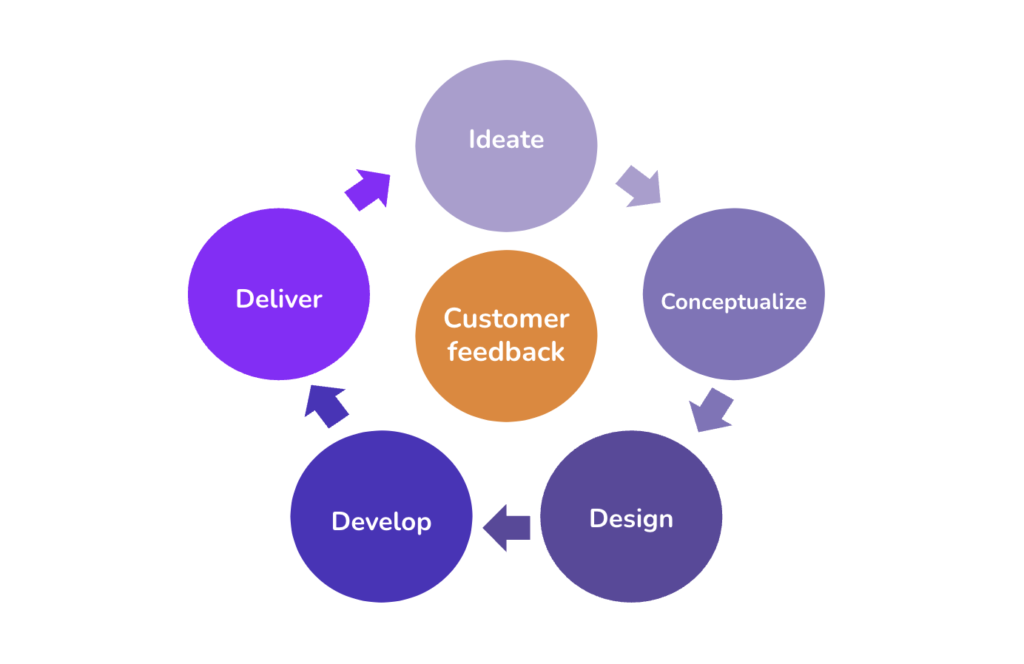
Customer discovery interviews validate new business concepts prior to over-investing in execution. These short but highly insightful customer conversations enable organizations to gather real-world perspectives from intended users in order to identify core problems, evaluate potential solutions, and analyze product-market fit. In the book “The Mom Test”, Rob Fitzpatrick emphasizes the need for conducting customer interviews to validate your business ideas. Good questions lead to great conversations, which lead to concrete facts that help you validate and iterate your idea. While brilliant ideas and innovative solutions hold promise, validation through real-world insights is what separates promising concepts from market failures. Launching an innovative new product or service carries substantial risk. Industry research indicates that 42% of B2B products fail due to lack of market fit and as many as 6 out of every 10 new product launches fail to meet revenue and adoption expectations. This high failure rate is often because companies pour significant time and money into ideas without effectively verifying customer interest. Without a practical way to test whether your value proposition actually resonates with target users, it’s incredibly easy to spend months or even years building something no one wants. What are Customer Discovery Interviews and how do they work Customer discovery interviews are usually 30-45 minute semi-structured discussions with 5 to 8 representatives from your target business or consumer segments. The key goal is to filter and prioritize ideas faster while also reducing risk by understanding customer needs, wants, and preferences directly from the source. While simply talking to potential customers is valuable, structured interviews elevate the process to a science. By following a pre-defined framework, you ensure consistent data collection and analysis, enabling you to: Compare and contrast: Analyze responses across different segments and personas to identify common themes and variations. Identify key trends: Uncover patterns and insights that wouldn’t be apparent through casual conversations. Quantify qualitative data: Use coding techniques to categorize and measure the frequency and intensity of specific themes. Good interviewers can skillfully extract an immense amount of value from well-prepared discovery discussions such as: Direct customer quotes to incorporate into market research proposals, product requirements documents, and other plans needing stakeholder approval and buy-in. Revelation of common pain points and customer needs that can be addressed by new offerings. Testing which potential product features, messaging approaches, and value propositions actually appeal to users rather than relying on internal assumptions and guesses. Gathering feedback on optimal pricing models and willingness to pay thresholds. Receiving ideas on best go-to-market strategies and sales channels to deploy. Catching faulty assumptions early before over-investing in a direction not actually in demand. Building Your Customer Discovery Interview Framework: A Step-by-Step Guide Now, let’s translate theory into practice. Here’s a step-by-step guide to conducting insightful customer discovery interviews: Define your target audience: Identify the specific pain points and decision-making processes of your ideal B2B customers. Segment your audience if necessary to ensure tailored questioning. Craft a semi-structured interview guide: Prepare key questions aligned with your goals and the Mom Test principles. Include open-ended prompts, behavior-focused inquiries, and potential dealbreaker questions. Recruit participants: Reach out to individuals within your target audience through existing network connections, online communities, or professional platforms. Offer incentives to compensate for their time and ensure participation. Conduct the interviews: Create a comfortable and professional atmosphere. Actively listen, ask follow-up questions, and avoid solutioneering. Take detailed notes to capture key insights and responses. Analyze and synthesize findings: Summarize key themes and common pain points. Identify discrepancies between assumptions and reality. Translate customer needs into actionable product or service features. AI tools like Insight7 do a great job at simplifying and automating this process. Iterate and refine: Use the gathered insights to refine your concept and prioritize features that address actual customer needs. Repeat and validate: Conduct additional interviews with different audience segments to ensure wider applicability and validate your evolving concept. The Process: Conducting Effective Customer Discovery Interviews While perhaps intimidating for some, conducting effective discovery interviews does not require complicated tools or a fancy setup. All you need is a recruitment screener template to find appropriate participants, an open-ended discussion guide with 5-6 strategic questions related to key assumptions you wish to test, and a notation template for capturing feedback, quotes, and insights. With that said, how do you actually prepare for a good idea validation conversation? Pre-plan the three most important things you want to learn from any given type of person. Pre-planning your big questions makes it much easier to ask good follow-up questions. Don’t be afraid to update the list as you learn and your questions change. The less formal you can make the conversation, the better. Once you get used to this, you can start having these interviews with no formality at all, and the people you are talking to won’t even realize they’re being interviewed. For example, at a conference, you could have 10-20 of these conversations in just a few hours. Here is a detailed overview of the step-by-step process: Clearly define your target customer profile and ideal buyer persona based on role, use cases, and other attributes. Personas may cover both end-user demographics as well as key decision-maker titles involved in procurement. Carefully craft an open-ended discovery interview guide organized around addressing major assumptions and knowledge gaps. Generally, start broad, incorporate follow-up probe questions based on initial responses, and close with numeric rating questions to quantify reactions. Leave room for open, authentic conversations while covering your research priorities. Recruit participant matches meeting your identified persona criteria via cold emails, phone calls, LinkedIn outreach, and by checking within your professional network for personal introductions. Explain why you wish to speak with them and what is in it for them based on incentives like gift cards for their time or access to research findings. Prepare customized scripts for interview probes and to address anticipated areas of concern ahead of time. But also remain flexible and conversational. Digitally send calendar invites for discovery calls booked as virtual video interviews for
