
Top 5 AI Tools to Analyze Interview Transcripts in 2026

Analyzing interview transcripts has become a critical task for various fields, such as market research and academic studies. From academic studies to customer feedback and market research, interviews remain one of the most effective ways to collect rich, detailed data. The ability to extract meaningful insights from conversations—whether one-on-one interviews or group discussions—can lead to better decision-making, more precise strategies, and improved outcomes. However, manual transcript analysis is time-consuming and prone to human error. This is where AI-powered tools come into play. Advanced AI tools have made analyzing interview transcripts for insights faster, more accurate, and less biased. Organizations looking to glean actionable insights from interviews at scale (10, 20, 50, or even 100) can use the right tools to transcribe, analyze interview transcripts, and extract valuable information to inform strategy, planning, and product development. These AI-powered tools help reduce biases by focusing on data rather than subjective human impressions, providing objective and data-driven insights. Moreover, as recruitment teams become more global and virtual, AI interview analysis tools help manage remote interviews, offering automatic transcription, analysis, and reporting features. In this article, we will explore the top five AI tools for analyzing interview transcripts in 2025. You’ll discover their unique features, benefits, and how they can enhance your qualitative research efforts. From cutting-edge transcription capabilities to sentiment analysis and advanced reporting, these tools are designed to revolutionize your approach to qualitative analysis. Why AI Tools for Transcript Analysis Are Essential in 2026 The rise of big data and the increasing complexity of research projects have made traditional qualitative analysis methods insufficient. Researchers face challenges such as: Time Constraints: Manual coding and analysis of transcripts take weeks or even months. Human Bias: Inconsistent interpretations can affect the reliability of insights. Data Overload: With larger datasets, identifying patterns and trends becomes overwhelming. AI tools solve these issues by automating repetitive tasks, enhancing accuracy, and providing actionable insights faster than ever. In 2025, these tools are no longer just a luxury but a necessity for staying competitive in research and analysis. Key advancements in AI technology, such as natural language processing (NLP) and machine learning algorithms, have further improved the capabilities of transcript analysis tools. These innovations allow tools to identify themes, tone, and context, giving researchers a deeper understanding of their data. Read: Transcript Analysis AI: How It Works Top AI Transcript Analysis Tools (2026) 1. Insight7 Insight7 is an AI-powered platform that specializes in analyzing interviews at scale, for example, focus group discussions, and in-depth interviews (IDIs). Its core features revolve around automating the analysis of interview data in form of video, audio, and text. Its AI-powered capabilities extract insights, sentiment, and trends, which can be visualized into customizable categories aligned with business metrics. Users can activate these insights to make quality decisions, improve experiences, reduce churn, shape marketing/sales strategies, and drive other impactful actions. Also, Insight7 offers features such as sentiment analysis, topic modeling, and conversation clustering to help researchers and organizations gain actionable insights from qualitative data. Key Features: Natural Language Processing (NLP): Utilizes machine learning algorithms to uncover insights, identify patterns, and extract key themes from text data. Sentiment Analysis & Topic Modeling: Helps researchers gain actionable insights from qualitative data. Theme Extraction: Extract recurring themes from multiple interviews through bulk upload of documents or URLs. Enterprise-Grade Security: Adheres to SOC 2 Type II and GDPR standards. Cloud Integration: Insight7 supports multiple data sources, such as Google Meet, Google Drive, and Microsoft Teams. Benefits Insight7’s automation and comprehensive reporting capabilities make it a game-changer for businesses and researchers alike. It’s particularly well-suited for analyzing qualitative interviews in industries like marketing, healthcare, and academia. Use Cases: Automated research on large call transcript datasets. Enhancing customer experience by identifying friction points. Analyzing employee experience drivers for engagement and retention. 2. MonkeyLearn MonkeyLearn is an AI-powered platform that specializes in analyzing text data at scale, including documents, communications, and user-generated content. Its core features revolve around automating various natural language processing tasks. It utilizes machine learning algorithms to perform text analysis capabilities like sentiment analysis, keyword extraction, topic modeling, and text classification. MonkeyLearn offers the ability to build custom-trained models and access pre-built models for common use cases. A key capability is allowing users to train custom machine learning models tailored to their specific text data and requirements. MonkeyLearn also provides integration options to incorporate text analysis insights into existing tools and workflows. Key Features: Text analysis capabilities like sentiment analysis, keyword extraction, topic modeling, and text classification. Custom-trained models and access to pre-built models for common use cases. Incorporate insights into existing workflows and tools. Benefits: MonkeyLearn excels at providing flexibility, allowing users to build models that cater to their unique requirements. Its integration options make it a valuable tool for organizations looking to embed text analysis directly into their processes. Use Cases: Analyzing customer feedback data at scale. Categorizing support tickets/emails into topics. Monitoring brand perception from social media data. 3. RapidMiner RapidMiner is an AI-powered platform that specializes in analyzing text data at scale. Its core features revolve around automating text mining and natural language processing tasks. It utilizes machine learning algorithms to perform text analysis capabilities such as sentiment analysis, text classification, and clustering. RapidMiner offers a range of advanced analytics tools and techniques to help researchers and organizations extract insights, discover patterns, and make predictions from unstructured text data. RapidMiner provides flexible options for automating repetitive tasks, creating reusable workflows, and orchestrating the analysis process. Users can configure the platform to map extracted insights to specific research objectives and streamline the analysis of interview data. Key Features: Sentiment analysis, text classification, and text clustering. User-friendly interface with drag-and-drop functionality. Create workflows that can be used repeatedly for similar tasks. Benefits: RapidMiner is particularly suitable for businesses and researchers looking for a comprehensive solution to analyze interview transcripts and other forms of text data. Its flexibility makes it ideal for handling varied datasets. Use Cases: Analyzing customer feedback data and identifying sentiment trends. Categorizing support tickets
How to Use Qualitative Feedback for Improving Customer Experience

Improving customer experience is no longer a luxury but a necessity. According to Forbes, customers have become more discerning than ever, and their expectations for personalized, seamless, and memorable interactions have skyrocketed. While quantitative data provides valuable insights into customer behavior and trends, it often fails to capture the depth and nuances of the customer journey. This is where qualitative feedback shines, offering a treasure trove of rich, contextual information that can unlock the key to crafting truly remarkable customer experiences. In this comprehensive guide, we’ll explore the power of qualitative feedback and how businesses can harness it to elevate their customer experience strategies to new heights. In the meantime, click here to analyze your qualitative feedback data in seconds. Understanding the Value of Qualitative Feedback Qualitative feedback is the voice of your customers, expressed in their own words, emotions, and storytelling. It offers a window into their thoughts, feelings, and motivations, shedding light on the “why” behind their actions and decisions. This invaluable data can reveal deeper insights that quantitative metrics alone cannot provide, such as: 1. Uncovering Pain Points and Frustrations Qualitative feedback allows customers to articulate the specific challenges, frustrations, or roadblocks they encountered during their journey with your brand. These insights can help you identify areas for improvement and prioritize solutions that address their most pressing needs. 2. Capturing Emotional Connections Customer experiences are inherently emotional, and qualitative feedback captures the sentiments, emotions, and personal connections that customers form with your brand. Understanding these emotional undercurrents can guide you in creating more meaningful and resonant experiences. 3. Revealing Unmet Needs and Desires Customers often have unmet needs or desires that they may not even be aware of. Qualitative feedback can uncover these hidden gems, enabling you to innovate and deliver experiences that exceed expectations. 4. Gaining Contextual Insights Qualitative feedback provides rich context about the customer’s unique circumstances, backgrounds, and environments. This context is crucial for understanding the “why” behind their behavior and tailoring experiences accordingly. 5. Fostering Customer-Centric Mindset By immersing yourself in the stories, voices, and perspectives of your customers, qualitative feedback cultivates a customer-centric mindset within your organization, ensuring that customer needs are at the forefront of every decision and initiative. Collecting Qualitative Feedback for Improving Customer Experience To harness the full potential of qualitative feedback, it’s essential to have a robust and well-designed strategy for collecting and managing this valuable data. Here are some effective strategies and best practices to consider: 1. In-depth Interviews Conduct one-on-one interviews with customers, either in person, over the phone, or through video conferencing. In-depth interviews allow for open-ended conversations, probing questions, and the opportunity to explore customers’ experiences in greater depth. Insight7 helps businesses like yours to analyze customer interview and extract actionable insights. 2. Focus Groups Bring together a diverse group of customers to engage in a moderated discussion about their experiences, opinions, and preferences. Focus groups can provide a wealth of insights through the dynamic interactions and diverse perspectives shared. 3. Customer Feedback Surveys While surveys are often associated with quantitative data, they can also be a valuable source of qualitative feedback. Include open-ended questions that encourage customers to share their thoughts, experiences, and suggestions in their own words. 4. Social Media Monitoring Actively monitor social media platforms for customer comments, reviews, and discussions related to your brand. Social media can be a goldmine of unsolicited, authentic customer feedback that can reveal valuable insights. 5. Customer Journey Mapping Engage customers in mapping out their end-to-end journey with your brand, capturing their thoughts, emotions, and experiences at each touchpoint. This exercise can provide a holistic view of the customer experience and identify areas for improvement. 6. Ethnographic Research Observe customers in their natural environments, studying their behaviors, interactions, and contexts. Ethnographic research can uncover insights that customers themselves may not be aware of or able to articulate. Best practices for Collecting Qualitative Feedback and Improving Customer Experience – Ensure diversity and representation in your customer sample – Create a comfortable and welcoming environment for open and honest feedback – Train moderators or interviewers to ask probing, open-ended questions – Respect customer privacy and confidentiality – Embrace both positive and negative feedback as opportunities for improvement Qualitative Feedback Analysis for Improving Customer Experience Once you’ve collected a wealth of qualitative feedback, the next step is to analyze and extract meaningful insights that can inform your customer experience strategies. While the analysis of qualitative data can be time-consuming and labor-intensive, the rewards are invaluable. Here are some effective techniques and tools to consider: 1. Thematic Analysis Identify recurring themes, patterns, and sentiments within the qualitative feedback. Thematic analysis can reveal common pain points, unmet needs, or positive experiences that resonate across multiple customers. 2. Sentiment Analysis Leverage natural language processing (NLP) and machine learning tools to automatically analyze the sentiment (positive, negative, or neutral) expressed in customer feedback. Sentiment analysis can quickly surface areas of concern or delight, enabling you to prioritize actions accordingly. 3. Text Analytics Use advanced text analytics tools like Insight7 to extract insights from unstructured text data, such as customer comments, reviews, or interview transcripts. These tools can identify key topics, phrases, and concepts, as well as uncover relationships and connections within the data. 4. Qualitative Data Analysis Software Invest in specialized qualitative data analysis software, such as Insight7, MAXQDA, or Atlas.ti. These powerful tools can help you organize, code, and analyze large volumes of qualitative data more efficiently and effectively. 5. Customer Journey Mapping Map out the customer journey based on the qualitative feedback, identifying touchpoints, pain points, and opportunities for improvement. This visual representation can help you understand the end-to-end experience from the customer’s perspective. 6. Collaborative Analysis Involve cross-functional teams, including customer service, product development, marketing, and operations, in the analysis process. This collaborative approach can uncover diverse perspectives and foster a shared understanding of the customer experience. Leveraging Qualitative Insights for Improving Customer Experience Once you’ve extracted valuable insights from your qualitative feedback, it’s time to put them
The Ultimate Focus Group Discussion Guide for Research Consultants

Focus group discussion guide is important when embarking on a focus group research. As a research consultant, you know focus groups are a powerful qualitative method for understanding your clients’ customers, uncovering unmet needs, exploring new product concepts, testing messaging, and much more. But facilitated these in-depth group discussions effectively is both an art and a science. If you don’t have a well-designed discussion guide, your focus groups can easily veer off track, miss crucial areas of inquiry, and fail to generate the rich insights you need. On the flip side, a meticulously-crafted guide keeps the sessions tightly focused yet allows for the free-flowing dialogue and spontaneous discoveries that make focus groups so valuable. In this post, we’ll walk through a comprehensive template and best practices for creating an exemplary focus group discussion guide customized for your clients’ unique research objectives. You’ll get a proven structure to follow, insightful examples, and expert tips on: • How to write clear, unbiased questions that generate honest feedback • Best techniques for establishing rapport and making participants feel comfortable • Simple ways to facilitate productive group interactions and exchanges • Prompts for getting people to open up and share deeper personal experiences • Smooth transitions to keep discussions flowing naturally from one topic to the next • Tactics for gently probing interesting areas that emerge spontaneously • Methods for adapting your guide mid-session based on participant responses Let’s dive into everything you need to build amazing focus group guides that generate game-changing consumer insights. If you already have your focus group discussion transcripts, visit here to analyze and extract insights automatically. Focus Group Discussion Guide Template Below is a template outlining all key sections to include in a focus group discussion guide. Use this as your starting framework, then customize based on your specific research objectives. I. Introduction (5 mins) – Brief intro/background on moderator and purpose/sponsors of the research – Explanation of the general topic to be discussed – Underline that participants were hired to share honest thoughts and opinions – Reassure that there are no wrong answers and establish rapport and openness – Set expectations for session (length, ability to move around, ability to skip questions, etc.) Example: “Thank you all for joining us today. My name is Sarah and I’ll be moderating our discussion. We are doing this research on behalf of [client company] to get feedback from users like you on potential new product and messaging ideas. This is just a freewheeling discussion, with no trick questions or anything like that. I want to hear your completely honest thoughts and opinions based on your personal experiences and perspectives…” II. Ice Breaker/Warm Up (5-10 mins) – Simple question that gets participants comfortable speaking in the group – Should be fun, easy, and not intimidating Example: “To get us started, tell me your name, where you’re from, and your favorite midnight snack!” III. Background and Usage (10-15 mins) – Open-ended questions about their general background related to the topic – Inquire about behaviors, attitudes, likes/dislikes, associations, motivations, etc. – Establishes context and leads into key areas of investigation Example Questions: “What are some of your favorite [CATEGORY] products and why?” “How often do you typically [BEHAVIOR]? Walk me through the last time you did this.” “How would you describe the role [PRODUCT/SERVICE] plays in your daily life?” “What factors do you consider when choosing a [PRODUCT/SERVICE]?” IV. Key Areas of Exploration (45-60 mins) This is the core part of the discussion where you dive deep into the topics you need to better understand through these focus groups. The number of key areas and specific questions will vary widely based on your objectives, but this section should consume about half of your allotted time. Questions should follow a logical flow, starting broad and getting increasingly more granular and specific. Use a mix of questions types, like: • Open-ended exploratory: “What are your overall thoughts and feelings about [PRODUCT/IDEA]? What intrigues or concerns you most?” • Likes/Dislikes: “What did you like or dislike about [EXAMPLE]? What did or didn’t resonate with you?” • Immersive scenario walkthrough: “Let’s say you wanted to [TASK]. Talk me through how you would go about doing that from start to finish.” • Head-to-head comparison: “If you had to choose between [OPTION A] or [OPTION B], which would you prefer and why?” • “Imagine if” prompts: “Imagine if [NEW PRODUCT/FEATURE] allowed you to [CAPABILITY]. How would that change things for you?” Also, do “clearing activities” between each area to avoid cross-contamination or bias from previous discussions. That could involve having them jot down solo thoughts, vote, or complete word association exercises. Transition smoothly between sections using segues like: “Thanks for that helpful discussion around pricing. Let’s change gears now and talk about [NEXT AREA]…” V. Projective Exercises and Prompts (~15 mins) In addition to direct questions, do activities that use projective techniques and creativity to further tap into participants’ deeper motivations, feelings, unmet needs, and ideas. A few examples: • Have participants draw or use metaphors to represent how they feel about a product/service • Show example ads, photos, objects and have them build stories around them • Use psychological prompts like “If [BRAND/PRODUCT] was an animal, what animal would it be and why?” • Do exercises getting them to project into different scenarios, mindsets, or roles These activities tend to surface very insightful information that participants may not directly express with words alone. VI. Areas for Follow Up (5 mins) – Check if key things were missed or need more probing – Ask: “What other thoughts/experiences haven’t we covered yet on this topic?” – Also cover housekeeping questions on logistics, time allotments, etc. VII. Wrap Up (5 mins) – Briefly summarize key themes and takeaways – Allow final thoughts or additional comments – Thank participants for their time and openness “That wraps up our discussion for today. Thank you all so much for sharing your honest perspectives…” Best Practices for Effective Focus Group Discussion Guide Follow these
Focus Group Analysis: Best AI Analysis Tools for Market Researchers
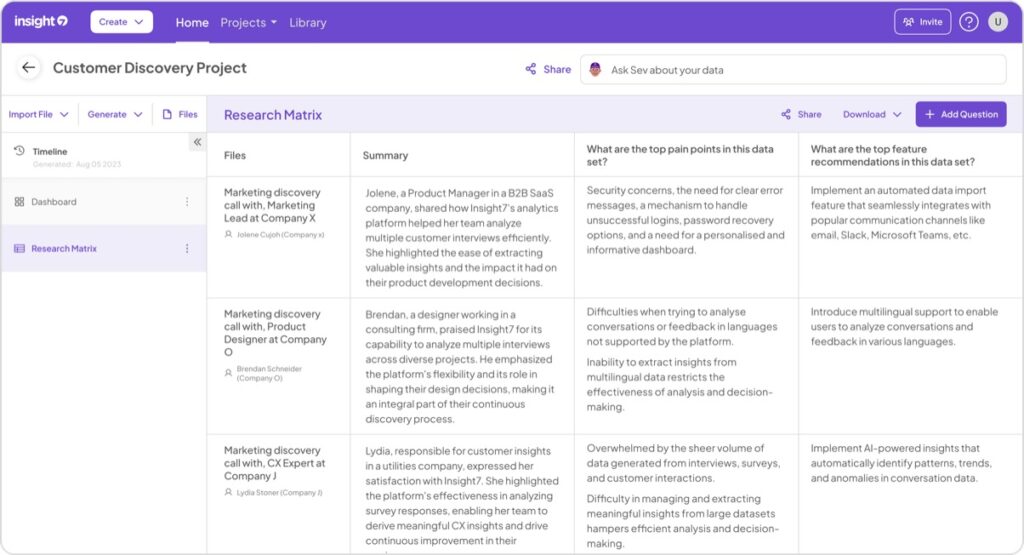
[vc_row type=”in_container” full_screen_row_position=”middle” column_margin=”default” column_direction=”default” column_direction_tablet=”default” column_direction_phone=”default” scene_position=”center” text_color=”dark” text_align=”left” row_border_radius=”none” row_border_radius_applies=”bg” overflow=”visible” overlay_strength=”0.3″ gradient_direction=”left_to_right” shape_divider_position=”bottom” bg_image_animation=”none”][vc_column column_padding=”no-extra-padding” column_padding_tablet=”inherit” column_padding_phone=”inherit” column_padding_position=”all” column_element_direction_desktop=”default” column_element_spacing=”default” desktop_text_alignment=”default” tablet_text_alignment=”default” phone_text_alignment=”default” background_color_opacity=”1″ background_hover_color_opacity=”1″ column_backdrop_filter=”none” column_shadow=”none” column_border_radius=”none” column_link_target=”_self” column_position=”default” gradient_direction=”left_to_right” overlay_strength=”0.3″ width=”1/1″ tablet_width_inherit=”default” animation_type=”default” bg_image_animation=”none” border_type=”simple” column_border_width=”none” column_border_style=”solid”][vc_column_text] Focus group analysis is a crucial component of market research, providing valuable insights into consumer opinions and behaviors. It is essential for result-oriented marketing. Focus groups offer valuable qualitative insights into consumer behaviors, preferences, and perceptions. The introduction of AI tools has transformed this process by offering greater efficiency, accuracy, and depth of insight. This article explores how AI is enhancing focus group analysis and provides a detailed overview of the top AI tools for market researchers in 2024. But before moving on, we should outline the process to give a better understanding of Focus group analysis: Data Collection and Preparation: Begin by collecting and preparing your data. This includes transcribing audio and video recordings and organizing notes accurately. Proper preparation ensures a smooth analysis process. Analysis: This stage involves multiple techniques to extract insights. You start by coding transcripts, assigning labels to relevant text. Then, you identify overarching themes. You might conduct sentiment analysis to gauge emotional responses., or content analysis to quantify specific topics. It is purely dependent on the type of analysis you want to do. Many researchers also do comparative analysis across groups and demographics. Advanced tools can even offer predictive analysis based on patterns in the data. Visualization: Once the analysis is complete, the next step is to visualize the findings. Effective visualization helps in conveying insights clearly and compellingly. Use charts, graphs, and infographics to represent data patterns and themes. Word clouds can highlight frequently mentioned terms, while bar charts or pie charts can illustrate the distribution of coded themes or sentiment scores. The Impact of AI on Focus Group Analysis AI tools address several key challenges in traditional focus group analysis: 1. Enhanced Speed and Efficiency: AI automates transcription, coding, and thematic analysis, allowing researchers to obtain insights more quickly and focus on strategic decisions. 2. Improved Accuracy: AI minimizes human errors in transcription and data coding, ensuring more reliable and consistent results. 3. Deeper Insights: AI algorithms identify patterns and themes that may not be immediately evident, offering richer and more actionable insights. 4. Scalability: AI efficiently handles large datasets, enabling comprehensive analysis without sacrificing quality. Essential AI Tools for Focus Group Analysis Here’s a detailed look at some of the most effective AI tools for focus group analysis, including their features, benefits, and potential drawbacks: 1. Insight7 Insight7 is a no-code SaaS platform designed for qualitative data analysis. It is designed to streamline the analysis of qualitative data with features like automated transcription, sentiment analysis, and theme identification. It offers powerful visualization tools, such as automated charts and graphs, which help in quickly visualizing trends and patterns. The sentiment analysis visuals provide a clear display of sentiment trends across data sets. Insight7’s user-friendly interface ensures that businesses can efficiently extract actionable insights from customer feedback and focus group data, making the analysis process both comprehensive, easy and straightforward. Key Features: Automated Transcription: Converts audio and video recordings into accurate text transcripts. Thematic Analysis: Identifies and extracts key themes and patterns from qualitative data. Customizable Reporting: Generates detailed and tailored reports based on focus group findings. Integration with Other Platforms: Seamlessly integrates with OneDrive, SharePoint, Gong, Google Drive, and more. Multi-Language Support: Analyzes data in various languages by translating it to English for processing and then back to the original language. Pros: User-friendly with a straightforward learning curve. Cost-effective compared to many competitors. Comprehensive end-to-end solution with flexible reporting and multi-language capabilities. Generates insights quickly Cons: Not suited for manual coding. 2. Delve Delve is a user-friendly qualitative data analysis tool that simplifies the process of coding and finding patterns in qualitative data, including focus group transcripts. It offers collaborative features for team analysis, making it easy for multiple researchers to work together. Delve’s intuitive coding process and visualization tools help teams quickly identify and communicate key insights from their data. Key Features: Advanced Coding: Offers dynamic coding and categorization options for detailed analysis. Thematic Visualization: Provides tools for mapping and analyzing themes effectively. Data Integration: Supports the integration of data from multiple sources. Collaborative Features: Enables multiple users to work on projects simultaneously. Pros: Strong coding and visualization features. Effective for team-based research projects. Good for detailed thematic analysis. Cons: Limited advanced analytical tools, Uses manual coding. 3. QuestionPro QuestionPro is a comprehensive survey and research tool that includes capabilities for conducting and analyzing focus groups. It offers features like automated transcription, qualitative data coding, and robust analytics. QuestionPro’s all-in-one platform allows for easy integration of survey and focus group data, and its powerful analytics tools help in generating comprehensive insights. Key Features: AI-Powered Insights: Utilizes advanced analytics to uncover insights from qualitative data. Survey Integration: Combines qualitative and quantitative data through seamless survey integration. Real-Time Reporting: Provides real-time updates and visualizations for immediate analysis. Customizable Dashboards: Tailors dashboards to specific research needs. Pros: Comprehensive tools for both survey and qualitative analysis. Real-time reporting enhances data visibility. AI-driven analytics offer actionable insights. Cons: Can be expensive, Some features may be more suited for survey data than in-depth qualitative analysis and advanced features may require additional training. 4. Taguette Taguette is a free, open-source tool for qualitative research. It allows researchers to code, annotate, and analyze text data, making it suitable for focus group analysis. While it has a basic interface, it is easy to use and provides the essential tools needed for basic qualitative analysis. Taguette’s open-source nature makes it an excellent choice for researchers on a budget or those looking for a customizable solution. Key Features: Tagging and Coding: Intuitive tagging and coding features for qualitative data. Customizable Categories: Allows for the creation of custom coding categories. Data Organization: Manages and organizes large volumes of data efficiently. Open-Source Flexibility: Offers customization options due to its open-source nature. Pros:
How To Find Opportunities From Customer Feedback With AI
In the ever-evolving landscape of product development, one of the most crucial elements for success is the ability to harness customer feedback effectively. With the advent of artificial intelligence (AI), organizations now have the opportunity to find and exploit opportunities from customer feedback at an unprecedented scale. In this write-up, we will explore how AI can be leveraged to transform customer feedback into actionable insights that can propel product development forward. Customer feedback is a goldmine of insights, but it often comes in unstructured forms like interviews, surveys, and social media comments, making it challenging to decipher and act upon. AI, with its ability to process large volumes of data quickly and accurately, can help organizations sift through this feedback to identify patterns, trends, and specific areas that require attention or improvement. Applications of AI in Finding Opportunities The process of finding opportunities from customer feedback with AI involves several steps. First, data must be collected from various sources and aggregated into a centralized system. AI tools can then be employed to conduct a thematic analysis, which is the process of identifying and reporting patterns within data. This analysis can highlight recurring themes that are relevant to customer satisfaction and product usability. AI tools can also create user personas, which are fictional characters that embody the characteristics of an organization’s ideal customer. By analyzing feedback data, AI can help in developing detailed personas that reflect the needs, behaviors, and pain points of different customer segments. This enables organizations to tailor their product development efforts to meet the specific requirements of their target audience. Another application of AI in utilizing customer feedback is feature prioritization. AI algorithms can analyze feedback to determine which features are most desired or needed by customers. This helps product managers make informed decisions about which features to develop first, ensuring that the product meets market demands and enhances customer satisfaction. Marketing messaging can also be optimized using insights derived from customer feedback. AI can analyze the language and sentiment of feedback to understand what resonates with customers. This information can then be used to refine marketing messages, making them more effective and personalized. In addition to these applications, AI can improve decision-making in the product development process by providing a data-driven roadmap that incorporates customer insights. This roadmap can guide product managers in aligning their strategies with customer needs, ultimately leading to products that are well-received in the market. Conclusion To sum up, AI offers a multitude of ways to find opportunities from customer feedback. By employing AI tools, organizations can analyze and interpret large volumes of feedback, develop user personas, prioritize product features, optimize marketing messages, and create a customer-centric product roadmap. As we move further into 2024 and beyond, the use of AI in product development will only become more integral, providing organizations with the competitive edge needed to succeed in a customer-driven market.
Best AI Feedback Tools for Training Programs in 2026

Customer experience managers and contact center training leaders who need to turn customer feedback into actionable training priorities face a structural problem: most feedback collection tools capture what customers say in surveys, but the most useful feedback lives in conversations that have already happened. AI tools that analyze customer feedback from calls, chat transcripts, and interviews surface training gaps that no survey would catch. This guide covers the best AI tools for customer feedback analysis in the context of training programs: what training gaps they surface, how they aggregate insights across large volumes of conversations, and how to route findings into rep development. Methodology Platforms were evaluated against four criteria relevant to training use cases: Feedback source coverage. Does the tool analyze calls, surveys, chat transcripts, or all three? Pattern extraction at volume. Can it identify themes across hundreds or thousands of interactions, not just summarize individual ones? Training signal clarity. Does the output tell training leaders what to work on, or does it produce generic sentiment scores? Integration with coaching workflows. Can insights connect directly to rep-level coaching or training assignment? Tools were assessed using G2 reviews, vendor documentation, and independent research as of Q1 2026. How do you use AI to get feedback from customers? AI collects and analyzes customer feedback through two distinct approaches. Active collection uses chatbots and surveys to prompt customers for responses at specific touchpoints (post-call, post-purchase, mid-session). Passive extraction analyzes conversations that have already happened, identifying what customers said without requiring them to answer any additional questions. For training purposes, passive extraction is often more valuable because customers speak naturally in service calls, surfacing frustrations, confusion, and unmet expectations that structured surveys would never capture. What are the best AI feedback tools for training programs? The best AI feedback tools for training programs are ones that close the loop between what customers say and what reps practice. Tools that only report on customer sentiment without connecting insights to rep behavior generate reports that training leaders read but can’t act on. The most effective tools in this category either integrate with coaching platforms directly or produce sufficiently specific behavioral findings (for example: “agents fail to address billing confusion before escalating”) that training teams can build scenarios from them. Avoid this common mistake: Treating customer satisfaction scores as training inputs. CSAT and NPS tell you whether customers are happy, not why reps are missing. Behavioral analysis of actual conversations, what agents said and didn’t say, is the training signal that drives curriculum decisions. AI Tool Comparison Tool Primary feedback source Training signal output Best for Insight7 Calls, chat, interviews Per-criteria behavioral scores, theme extraction Contact center QA + training integration Qualtrics XM Surveys + call integration Multi-channel sentiment, text analytics Enterprise CX programs with survey infrastructure Medallia Surveys, calls, digital Signal aggregation across channels Large enterprise CX programs Tethr Calls Customer effort scoring, topic analysis Teams focused on effort reduction and service quality Platform Profiles 1. Insight7 Insight7 analyzes 100% of recorded calls and chat transcripts, extracting behavioral themes, sentiment patterns, and per-criteria performance scores from every conversation. For training leaders, the key output is the agent scorecard: a per-rep view showing which criteria score consistently low across multiple calls, directly indicating where coaching is needed. The platform’s thematic analysis identifies cross-call patterns with frequency data. Training leaders see not just that customers mention billing confusion, but that 60% of calls in a given period included that theme, allowing curriculum teams to build targeted scenarios rather than generic empathy modules. Insight7 also generates AI coaching scenarios from real call transcripts, turning the hardest customer interactions from actual conversations into roleplay training. Fresh Prints, a staffing company, expanded from QA to the AI coaching module and found that reps could practice specific skills immediately rather than waiting for the next weekly coaching call (AI Coaching Demo recording, Feb 2026). Limitation: Sentiment analysis accuracy requires configuration. Returned items can be classified as negative sentiment even when the interaction resolved smoothly. Training teams should calibrate output against human-reviewed calls during initial setup. 2. Qualtrics XM Qualtrics XM covers the widest range of feedback channels in this category, combining traditional survey infrastructure (NPS, CSAT, CES) with call recording integration and digital feedback capture. For enterprise training programs that need to connect survey feedback to operational metrics, Qualtrics provides the data model to do this across channels. The limitation for training purposes is that survey responses are curated by customers, which often underrepresents the everyday friction that service calls contain. 3. Medallia Medallia aggregates customer signals from surveys, calls, and digital interactions into a unified dashboard. For training teams, the value is in trend tracking across large populations: which locations, teams, or time periods are producing the most friction, and how that changes as training programs roll out. The platform requires significant configuration investment and targets large enterprise deployments. 4. Tethr Tethr specializes in customer effort scoring from call conversations, measuring how much work customers have to do to get their issues resolved. For training programs focused on service quality and first-call resolution, Tethr’s effort-based signals are directly actionable: high-effort interactions are mapped to the agent behaviors that caused them. ICMI (International Customer Management Institute) reports that reducing customer effort is among the highest-leverage service improvements available to contact centers. Tethr’s effort scoring translates that insight into per-call and per-agent data that training teams can work from directly. 5. Avoma Avoma combines meeting intelligence with customer insight extraction. For customer success teams that need to extract training signals from account reviews and onboarding calls, Avoma captures themes across the full customer lifecycle. The platform is better suited to B2B customer success environments than high-volume contact center settings. 6. SentiSum SentiSum analyzes support tickets and conversation text to extract topic patterns and sentiment signals at scale. For training programs that include support team development, SentiSum identifies knowledge gaps where agents most frequently escalate or provide inconsistent answers, adding a channel that most call analytics platforms don’t cover. What Are 5
Best AI Tools for B2B Customer Research Discovery
[vc_row type=”in_container” full_screen_row_position=”middle” column_margin=”default” column_direction=”default” column_direction_tablet=”default” column_direction_phone=”default” scene_position=”center” text_color=”dark” text_align=”left” row_border_radius=”none” row_border_radius_applies=”bg” overflow=”visible” overlay_strength=”0.3″ gradient_direction=”left_to_right” shape_divider_position=”bottom” bg_image_animation=”none”][vc_column column_padding=”no-extra-padding” column_padding_tablet=”inherit” column_padding_phone=”inherit” column_padding_position=”all” column_element_direction_desktop=”default” column_element_spacing=”default” desktop_text_alignment=”default” tablet_text_alignment=”default” phone_text_alignment=”default” background_color_opacity=”1″ background_hover_color_opacity=”1″ column_backdrop_filter=”none” column_shadow=”none” column_border_radius=”none” column_link_target=”_self” column_position=”default” gradient_direction=”left_to_right” overlay_strength=”0.3″ width=”1/1″ tablet_width_inherit=”default” animation_type=”default” bg_image_animation=”none” border_type=”simple” column_border_width=”none” column_border_style=”solid”][vc_column_text]In the rapidly evolving digital landscape, understanding customers’ needs and preferences is paramount for businesses aiming to stay ahead of the curve. The advent of artificial intelligence (AI) has revolutionized customer research by offering tools that provide deeper insights into customer behavior and sentiment. As organizations strive to harness the potential of AI to enhance their customer research efforts, one must consider the best tools available that align with the principles of E-E-A-T (Experience, Expertise, Authoritativeness, Trustworthiness). This write-up delves into the top AI tools for customer research, highlighting their capabilities and how they cater to the needs of modern businesses seeking to make data-driven decisions and foster meaningful customer relationships. Understanding the Customer: The AI Advantage The essence of customer research lies in the ability to gather and analyze data that reflects the real needs, pain points, and desires of the target audience. AI tools have transformed this aspect of business intelligence by automating the collection and interpretation of vast amounts of data, providing actionable insights that would otherwise be unattainable through traditional methods. AI-powered customer research tools can join virtual meetings, analyze conversations, and extract key insights, allowing product teams to see the evidence behind customer feedback and make informed decisions. One of the primary benefits of using AI for customer research is the accuracy and speed with which it can process information. High-quality transcription services, for instance, boast up to 99% accuracy, ensuring that every customer interaction is captured with precision. By grouping customer interviews into projects, AI tools can present a dashboard of themes, feedback, and pain points, significantly reducing the time and effort required to manually sift through data. Furthermore, AI tools can segment data based on attributes such as the customer’s name, role, and organization details. This level of segmentation is invaluable for tailoring marketing strategies and product development to meet the specific needs of different customer groups. The ability to run queries on datasets to generate user personas, buyer personas, and product messaging within seconds is a testament to the efficiency and effectiveness of AI in customer research. Leveraging AI for Actionable Insights The integration of AI tools into customer research workflows enables teams to brainstorm solutions to problems identified through customer feedback. These tools act as brainstorming partners, suggesting ideas for solutions, ad copy, and even testimonials based on the data fed into them. The opportunity to turn customer feedback into user personas and buyer personas provides a nuanced understanding of the market, which is crucial for crafting compelling product narratives and marketing campaigns. AI’s ability to analyze data from multiple sources, such as Google Meet, Zoom, Gmail, HubSpot, and Salesforce, consolidates customer insights, providing a comprehensive view of customer sentiment across various touchpoints. This holistic approach ensures that no feedback is siloed, and all customer interactions contribute to the overall understanding of customer needs. The application of AI in customer research also extends to content creation. By leveraging customer conversations, businesses can generate marketing content that resonates with their audience. This includes blog ideas, newsletters, webinar topics, and website messaging that are directly informed by customer interactions, ensuring relevance and authenticity in communication. Choosing the Right AI Tool for Your Business When selecting an AI tool for customer research, it is crucial to consider the tool’s ability to integrate seamlessly with existing systems and the quality of insights it provides. The tool should be capable of attributing data accurately for segmentation purposes and visualizing insights for easy interpretation and decision-making. Moreover, it should facilitate the analysis of customer feedback in real time, enabling businesses to respond promptly to emerging trends and customer needs. As organizations aim to adopt a product-led growth strategy, the role of AI in customer research becomes even more significant. The right AI tool can empower product teams to execute better by providing a clear understanding of customer segments and personas, highlighting pain points and desires, and identifying critical product opportunities. It is essential to choose a tool that aligns with the organization’s goals and provides a people-centric approach to data analysis. In conclusion, AI tools for customer research are transforming the way businesses interact with and understand their customers. By offering a combination of accuracy, speed, and depth of insights, these tools enable organizations to make data-driven decisions that enhance customer satisfaction and drive growth. As businesses continue to navigate the complexities of the digital age, the integration of AI into customer research practices will be a defining factor in achieving success and maintaining a competitive edge. Best AI Tools for B2B Customer Research Discovery In today’s fast-paced business environment, understanding customer needs and preferences is crucial for success. B2B companies are increasingly turning to AI tools to streamline their customer research processes, enabling them to gather insights more efficiently and effectively. This guide explores the best AI tools available for B2B customer research discovery, highlighting their features, benefits, and how they can transform your research efforts. 1. Insight7 Insight7 is a powerful interview analysis platform designed to help businesses synthesize qualitative data at scale. With its user-friendly interface and robust features, Insight7 enables teams to analyze customer interviews, focus groups, and surveys quickly and accurately. Here are some key features that make Insight7 a top choice for B2B customer research: Key Features: Automated Transcription: Insight7 offers a built-in transcription service that converts audio and video recordings into text with high accuracy (up to 99%). This feature saves time and eliminates the need for manual transcription. Thematic Analysis: The platform automatically extracts themes, pain points, and needs from customer conversations, allowing researchers to identify key insights without sifting through lengthy transcripts. Multi-Project Analysis: Users can group related files into projects, enabling them to analyze multiple interviews or focus groups collectively. This feature helps uncover patterns
How to Analyze Many Customer Interview Transcripts Efficiently
As organizations strive for a deeper understanding of their customer base, the task of analyzing customer interview transcripts becomes both vital and challenging. With an abundance of qualitative data at hand, the question arises: how can we analyze many customer interview transcripts efficiently? The key lies in leveraging technology and systematic approaches to transform raw data into actionable insights without getting lost in the volume of information. In today’s data-driven landscape, customer interviews are a goldmine of insights. They offer unfiltered access to customer perceptions, experiences, and expectations. However, the sheer volume of transcripts can be overwhelming, making it difficult to extract meaningful patterns and trends. To tackle this challenge, organizations must adopt a structured method that combines the power of AI-driven tools with human expertise. Leveraging AI for Efficient Transcript Analysis The first step in efficient transcript analysis is to utilize a third-party transcription service that ensures high accuracy. An accuracy rate of 99% is ideal, as it minimizes the need for manual corrections and allows for a smoother analysis process. Once the transcripts are ready, AI-powered platforms can automatically process the data, identifying key insights, summarizing customer sentiment, and even attributing quotes to specific individuals, roles, or organizations for better segmentation. These AI tools can group interviews into projects, offering a dashboard view that highlights recurring themes such as customer satisfaction, product experience feedback, and areas for improvement. This high-level overview allows teams to quickly identify the most impactful pain points and brainstorm solutions. From Data to Personas and Messaging The next layer of analysis involves turning the data into buyer personas, user personas, and opportunity solution trees. This is where AI really shines, generating product messaging, ad copy, and even testimonials within seconds. By feeding the AI with rich, qualitative data, organizations can ensure that the generated content is not only accurate but also highly relevant to their target audience. Moreover, AI can assist in creating marketing content such as blog posts, newsletters, and website messaging by tapping into customer conversations. This approach ensures that marketing efforts are grounded in actual customer experiences, making them more persuasive and relatable. Continuous Learning and Reanalysis An efficient analysis process is not a one-time event. As more data is added, the ability to reanalyze and update insights is crucial. AI platforms can accommodate this by allowing teams to add new data to existing projects and generate updated dashboards that reflect the latest trends and feedback. Integration with Existing Tools To streamline the analysis process, it’s essential to integrate the AI platform with existing tools such as Google Meet, Zoom, and various CRM and customer support systems. This integration ensures that all customer feedback, regardless of the source, is accounted for and analyzed in a centralized manner. Empowering Teams with Real-Time Insights The ultimate goal of analyzing customer interview transcripts is to empower product teams, customer success teams, and marketers with real-time insights. By doing so, organizations can make informed decisions, prioritize product opportunities, and enhance customer satisfaction more effectively. In conclusion, the efficient analysis of customer interview transcripts requires a blend of technology and strategic thinking. By leveraging AI-driven platforms, organizations can navigate the complexities of qualitative data and transform it into a competitive advantage. As we continue to embrace a customer-centric approach, the ability to analyze transcripts efficiently will become increasingly crucial in understanding and meeting customer needs.
Best AI Customer Interview Transcription Software
In the age of digital transformation, organizations are increasingly turning to artificial intelligence (AI) to streamline operations and enhance customer experiences. One area where AI is making significant strides is in the transcription of customer interviews. For businesses that rely on customer feedback and interviews to inform product development and marketing strategies, accurately transcribing these interactions is critical. However, the process can be time-consuming and prone to human error. Enter the best AI customer interview transcription software, a game-changer for organizations looking to optimize their customer insights process. The transcription software not only captures the spoken word with high accuracy but also offers a plethora of features that cater to the nuanced needs of businesses. At the heart of this technology lies an advanced AI engine that boasts an impressive accuracy rate of 99%, ensuring that the transcriptions are reliable and can be used confidently for analysis and decision-making. These AI-powered transcription tools are not just about converting speech to text; they integrate seamlessly with popular communication platforms like Google Meet and Zoom. This integration allows for automatic transcription of conversations, which flow directly into the organization’s platform. Here, the product team can access key insights, customer summaries, and critical keywords with ease. This level of automation and integration simplifies the workflow, allowing teams to focus on interpreting the data rather than spending hours on manual transcription. Moreover, the software’s ability to attribute data adds another layer of sophistication. It can identify the speaker’s name, role, and organization details, which is invaluable for segmentation and targeted analysis. This feature allows businesses to tailor their strategies and communications to specific segments of their customer base, enhancing the personalization of their services and products. The AI transcription software also shines in its ability to group interviews into projects, providing a dashboard view of customer feedback themes. For instance, a project could reveal insights into managing customer satisfaction, improving reporting and communication, or offering feedback on product experience. The ability to view and analyze pain points and their impact on customers equips businesses with the knowledge to address issues effectively and enhance the overall user experience. Another standout feature is the software’s query capabilities. Teams can run queries on the dataset to generate user personas, buyer personas, and even product messaging. These rapid, accurate, and data-driven insights can be transformed into actionable strategies, marketing materials, and testimonials, all within a matter of seconds. But what truly sets this AI transcription software apart is its role in content creation. The insights gleaned from customer conversations are a goldmine for marketing content. Whether it’s blog posts, newsletters, or ad copy, the software can generate relevant and compelling content ideas based on real customer interactions. This not only ensures authenticity but also resonates with the target audience, as it’s rooted in their actual needs and feedback. In conclusion, the best AI customer interview transcription software is revolutionizing the way organizations handle customer feedback. Its high accuracy, seamless integration, data attribution, and powerful analysis tools make it an indispensable asset for any business looking to leverage customer insights for growth and improvement. As we navigate an increasingly competitive landscape, tools like these will become essential for maintaining a customer-centric approach and staying ahead of the curve.
How to Use AI Tools for Customer Interview Theme Analysis
[vc_row type=”in_container” full_screen_row_position=”middle” column_margin=”default” column_direction=”default” column_direction_tablet=”default” column_direction_phone=”default” scene_position=”center” text_color=”dark” text_align=”left” row_border_radius=”none” row_border_radius_applies=”bg” overflow=”visible” overlay_strength=”0.3″ gradient_direction=”left_to_right” shape_divider_position=”bottom” bg_image_animation=”none”][vc_column column_padding=”no-extra-padding” column_padding_tablet=”inherit” column_padding_phone=”inherit” column_padding_position=”all” column_element_direction_desktop=”default” column_element_spacing=”default” desktop_text_alignment=”default” tablet_text_alignment=”default” phone_text_alignment=”default” background_color_opacity=”1″ background_hover_color_opacity=”1″ column_backdrop_filter=”none” column_shadow=”none” column_border_radius=”none” column_link_target=”_self” column_position=”default” gradient_direction=”left_to_right” overlay_strength=”0.3″ width=”1/1″ tablet_width_inherit=”default” animation_type=”default” bg_image_animation=”none” border_type=”simple” column_border_width=”none” column_border_style=”solid”][vc_column_text]In the age of data-driven decision-making, artificial intelligence (AI) has become a critical ally for businesses seeking to understand their customers better. AI tools for customer interview theme analysis are transforming the way organizations gather and interpret customer feedback, enabling them to make more informed product and marketing decisions. This blog post delves into the practical application of AI tools for customer interview theme analysis, offering insights into how organizations can leverage technology to enhance their customer understanding and drive business growth. In a world awash with customer data, the challenge lies not in collecting information but in extracting actionable insights. Traditional methods of customer feedback analysis often involve manual sifting through transcripts, a time-consuming process prone to human error and bias. AI-powered tools, however, can process vast amounts of data with speed and accuracy, identifying patterns and themes that might otherwise go unnoticed. The first step in using AI for customer interview analysis is to ensure high-quality data capture. Organizations like the one we’re discussing have bots that can join meetings on platforms like Google Meet or Zoom, recording conversations with precision. The transcripts generated by third-party services boast an accuracy of up to 99%, laying a solid foundation for analysis. Once the data is captured, AI tools can automatically flow the information into a platform where product teams can access key insights and evidence. This level of automation not only saves time but also allows for the attribution of data to specific individuals, enhancing the granularity of the analysis. For instance, knowing the role, organization details, and sentiment of the speaker can significantly aid in segmenting customer feedback and tailoring responses. AI tools can also group customer interviews into projects, providing a dashboard view of overarching themes. This holistic view can reveal areas such as customer satisfaction, reporting inefficiencies, or product experience pain points. Teams can then drill down into each theme to understand specific issues, like the inconvenience of lacking mobile app support or the need for better risk management features. Moreover, AI doesn’t just analyze; it can also generate. From the dataset, it can create user personas, buyer personas, and even product messaging. This feature turns the AI tool into a brainstorming partner, helping teams to develop solutions and marketing strategies based on real customer feedback. The integration capabilities of AI tools are also impressive. They can pull data from various channels, such as email, CRM, and customer support platforms, ensuring a comprehensive analysis across the customer journey. This cross-channel perspective is invaluable for organizations that want to understand and act on customer needs in a dynamic and nuanced market. AI tools for customer interview analysis are not just about processing data; they are about empowering teams to make data-driven decisions quickly. By reducing the time spent on manual analysis, teams can focus on strategic decision-making and creative problem-solving. This shift from data processing to data-driven strategy can significantly impact customer satisfaction and retention. In conclusion, AI tools for customer interview theme analysis are revolutionizing the way organizations understand their customers. By automating the collection and analysis of customer feedback, these tools enable businesses to uncover deep insights, drive product innovation, and create more effective marketing strategies. As we continue to navigate a data-rich environment, the use of AI in customer analysis will undoubtedly become a staple for organizations aiming to stay ahead in their respective industries. [/vc_column_text][/vc_column][/vc_row]
