
Comcast Leadership Mock AI Interview
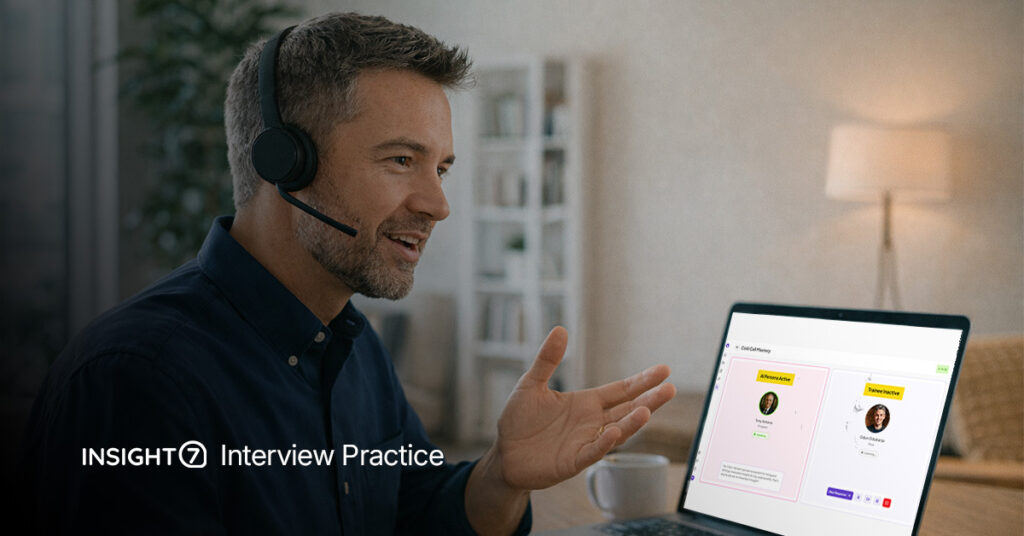
Comcast Leadership interviews test whether you can lead across a broadband-led business managing the cable-to-streaming transition, NBCUniversal media, Peacock, and Comcast Business at the same time. Panels look for leaders who hold the Credo values as a real operating frame, not a tagline. Innovation, ownership, and customer experience define the bar. Start your free Comcast Leadership practice session. What interviewers actually evaluate Broadband and media strategy, Credo leadership, and talent building Comcast Leadership panels evaluate whether you can grow the business while living the Credo. Strong answers name the decision, the trade-off, and the outcome. Signals scored: broadband strategy, media and streaming transition, cost discipline, Credo-led leadership, talent development, cross-business coordination. What gets scored in every session Specific, sentence-level feedback. Dimension What it measures How to answer Strategic Framing Can you frame at the portfolio level? Name the alternative Capital and Cost Can you hold capex and content spend discipline? Cite specific numbers Credo Leadership Do you lead through the Credo visibly? Show the decision you made Talent and Culture Do you build teams through change? Show specific moves How a session works Step 1: Get your Comcast Leadership question You receive a scenario rooted in real leadership work: a video-to-broadband transition call, a Peacock investment decision, a cross-business conflict, or a Credo-led team moment. Step 2: Answer by voice Speak your answer as you would to an executive committee. The system listens for trade-off clarity, personal ownership, and Credo framing. Step 3: Get scored dimension by dimension You get a score across all four dimensions with one flagged weakness and a sentence-level rewrite. Step 4: Re-answer and track improvement Revise and answer again. Your score history tracks across Strategic Framing, Capital and Cost, Credo Leadership, and Talent and Culture. Frequently Asked Questions What type of questions are asked in a leadership interview? Comcast Leadership interviews are behavioral and scenario-based. Expect questions on a business transition you led, a capex or content spend decision, a Credo moment, a talent call during change, and a cross-business conflict you resolved. What are the 5 C's of interviewing? The 5 C's are Competence, Character, Communication, Culture fit, and Career direction. For Comcast Leadership, Competence is broadband and media judgment, Character is how you lived the Credo under pressure, Communication is how you align across businesses, Culture fit is the Credo, and Career direction is why a broadband-led media business. How to crack a Comcast interview? Prepare specific numbers, specific decisions, and Credo-aligned stories. Review recent Comcast earnings materials to speak accurately about broadband, Peacock, and content spend. Tie every leadership example to a measurable outcome. What are the 5 hardest interview questions? The hardest Comcast Leadership questions force a real call: a content investment you killed, a business you divested or wound down, a Credo moment that cost short-term performance, a talent call during transition, and a cross-business decision that created friction. What are the most common failure modes in Comcast Leadership interviews? The most consistent failures are: Strategy language without capex or content spend detail Credo framed as a slogan rather than a decision frame Missing cross-business alignment mechanics Transition stories with no numbers Treating Comcast like a single-product company Also practice All nine Comcast role interview practice pages. Sales Customer Service Product Management Marketing Finance Operations People & HR Legal & Compliance One full session free. No account required. Real, specific feedback.
Comcast Finance Mock AI Interview
Comcast Finance interviews test whether you can model a broadband-led business with significant media and streaming exposure, where subscribers, ARPU, cord cutting, and content spend all move earnings. Panels look for finance professionals who partner with operating leaders while holding controls. Operational efficiency shapes every conversation. Start your free Comcast Finance practice session. What interviewers actually evaluate Broadband and media economics, forecast discipline, and controls Comcast Finance panels evaluate whether you understand cable, streaming, and media economics at the same time. Strong answers name the driver and the lever. Signals scored: subscriber economics, ARPU, video-to-broadband transition, content spend, NBCUniversal and Peacock economics, capex, audit and SOX. What gets scored in every session Specific, sentence-level feedback. Dimension What it measures How to answer Driver Literacy Do you model subs and ARPU accurately? Name the specific driver Capital Discipline Can you defend capex or content spend? Payback and fit Forecast Credibility Are assumptions defensible? Sensitivities Controls Do you protect SOX and audit? Name the control How a session works Step 1: Get your Comcast Finance question You receive a scenario grounded in real Comcast finance: a subscriber variance, a capex or content spend defense, a cost program, or a Peacock contribution discussion. Step 2: Answer by voice Speak your answer as you would to a CFO or controller. The system listens for driver literacy, capital judgment, and controls awareness. Step 3: Get scored dimension by dimension You get a score across all four dimensions with one flagged weakness and a sentence-level rewrite. Step 4: Re-answer and track improvement Revise and answer again. Your score history tracks across Driver Literacy, Capital Discipline, Forecast Credibility, and Controls. Frequently Asked Questions What questions are asked at the Comcast interview? Comcast commonly asks Credo-anchored behavioral questions plus role-specific prompts. Finance candidates should expect a variance explanation, a capex or content spend scenario, and a controls question. How do I prepare for a finance interview question? Prepare three assets: a model you built end to end, a variance you investigated with specific drivers, and a partnership story where you changed a business outcome. Read recent Comcast earnings materials before the interview. What are the 5 C's of interviewing? The 5 C's are Competence, Character, Communication, Culture fit, and Career direction. For Comcast Finance, Competence is cable and media economics, Character is how you held a controls line, Communication is how you brief operating leaders, Culture fit is the Credo and operational efficiency, and Career direction is why a broadband-led media business. What are the 3 C's of interviewing? The 3 C's are Credibility, Competence, and Chemistry. For Comcast Finance, Credibility is numbers, Competence is cable and streaming economics, and Chemistry is whether business partners see you as one of them. What are the most common failure modes in Comcast Finance interviews? The most consistent failures are: Generic FP&A answers without cable or streaming drivers Missing content spend or capex framing Forecast stories without sensitivities No controls or SOX dimension Treating Comcast like a software company rather than a cable and media operator Also practice All nine Comcast role interview practice pages. Sales Customer Service Product Management Marketing Operations People & HR Leadership Legal & Compliance One full session free. No account required. Real, specific feedback.
Comcast Customer Service Mock AI Interview
Comcast Customer Service interviews test whether you can handle Xfinity broadband, video, and mobile issues on calls that directly affect NPS, churn, and the Credo commitment to treat customers as you would want to be treated. Panels look for candidates who de-escalate, resolve accurately, and close the loop. First call resolution and ownership matter more than talk time. Start your free Comcast Customer Service practice session. What interviewers actually evaluate Credo-led de-escalation, product accuracy, and retention Comcast Customer Service panels evaluate whether your handling would protect NPS and retain customers. Strong answers name the situation, the words used, and the outcome. Signals scored: de-escalation, billing and device accuracy, churn recognition, Credo-aligned behavior, first call resolution, ownership. What gets scored in every session Specific, sentence-level feedback. Dimension What it measures How to answer De-escalation Can you lower tension without overpromising? Specific language Product Accuracy Do you resolve correctly? Name the fix Retention Move Do you act on churn risk? Name the save Credo Alignment Does your behavior match the Credo? Anchor to a value How a session works Step 1: Get your Comcast Customer Service question You receive a scenario rooted in real calls: a billing dispute, an outage frustration, a device activation failure, or a churn-risk conversation at renewal. Step 2: Answer by voice Speak your answer as you would to the customer. The system listens for language, accuracy, and Credo framing. Step 3: Get scored dimension by dimension You get a score across all four dimensions with one flagged weakness and a sentence-level rewrite. Step 4: Re-answer and track improvement Revise and answer again. Your score history tracks across De-escalation, Product Accuracy, Retention Move, and Credo Alignment. Frequently Asked Questions What questions are asked at the Comcast interview? Comcast commonly asks Credo-anchored behavioral questions: a time you treated a customer as you would want to be treated, a time you acted like an owner, a time you teamed up, and a time you improved a process. Customer service candidates should expect specific de-escalation and recovery scenarios. What are the 5 C's of interviewing? The 5 C's are Competence, Character, Communication, Culture fit, and Career direction. For Comcast Customer Service, Competence is product and billing accuracy, Character is how you handled a difficult call, Communication is tone and clarity, Culture fit is the Credo, and Career direction is why broadband-led. Is a Comcast interview hard? Comcast interviews are structured around the Credo and specific behavioral outcomes. The difficulty comes from panels expecting specific language and specific customer outcomes, not rehearsed lines. Prepare two or three real customer stories you can anchor to Credo values. What questions are asked in a customer service interview? Expect questions on a customer you recovered, a mistake you owned, a retention call you handled, a time you broke bad news, and a teammate disagreement in front of a customer. Bring specific words you actually used. What are the most common failure modes in Comcast Customer Service interviews? The most consistent failures are: Scripted empathy without real language Missing Credo values as a live frame No retention or churn awareness Stories that end at the handoff Treating Comcast like a single-product brand rather than a multi-line operator Also practice All nine Comcast role interview practice pages. Sales Product Management Marketing Finance Operations People & HR Leadership Legal & Compliance One full session free. No account required. Real, specific feedback.
Bank of America Sales Mock AI Interview
Bank of America Sales interviews evaluate whether your sales judgment translates into decisions that reflect Responsible Growth framework and risk management rigor. Candidates for Bank of America, a major US universal bank operating across Consumer Banking, Global Wealth (Merrill), and Global Banking and Markets, are expected to show specificity, structured thinking, and a measurable outcome on every story. Generalizations and team-level framing fail fast against Bank of America's specificity bar. Start your free Bank of America Sales practice session. What interviewers actually evaluate Pipeline Discipline, Discovery & Closing Bank of America Sales interviews test whether your day-to-day sales work reflects Responsible Growth framework and risk management rigor: specific decisions, defended trade-offs, and outcomes that moved a business metric. What separates strong candidates is how they frame the problem, name the decision they personally made, and quantify what changed across Responsible Growth under Brian Moynihan, risk management culture post-2008, Erica AI assistant, Preferred Rewards, and regulatory and capital discipline. Discovery depth, Qualification rigor, Close plan specificity, Forecast defensibility, Quota impact, Objection handling What gets scored in every session Specific, sentence-level feedback. Dimension What it measures How to answer Discovery Depth Did you uncover the economic buyer, budget, timeline, and true decision criteria? Generic pain questions score low. Named stakeholders, budget signals, decision path Deal Qualification Can you defend why this deal is real? We probe for MEDDIC or equivalent rigor, not optimism. Metrics, economic buyer, competition Closing Judgment Did you take a clear position on next steps and defend your forecast? Hopeful language scores low. Specific next step, committed date, close plan Pipeline Impact What did your work change? A booked number, a shortened sales cycle, a saved deal. Quota attainment, cycle time, deal size How a session works Step 1: Get your Bank of America Sales question You are assigned questions based on where candidates for this role typically struggle most, which for Bank of America Sales means specificity and stories that end in a measurable outcome rather than activity. Each session starts fresh with a new question targeting a different evaluation dimension. Step 2: Answer by voice Speak your answer as you would in a real interview. The AI listens for STAR structure and evaluation signal alignment, specifically whether your decisions are named, your trade-offs are defended, and your Result includes a sales outcome that was different because of your work. Step 3: Get scored dimension by dimension Instant scores across all four rubric dimensions. Each gets a score, a flagged weakness, and a specific sentence-level fix. Bank of America Sales interviewers probe for stories described by activity rather than decision, and for conclusions that summarize without a measurable business outcome. Step 4: Re-answer and track improvement Revise based on feedback and answer again. See the before/after score change across Discovery Depth, Deal Qualification, Closing Judgment, Pipeline Impact. Your weakness profile updates across sessions so if you consistently end stories without a measurable outcome, that becomes the focus of your next question assignment. Frequently Asked Questions How do I prepare for a Bank of America interview? To prepare for a Bank of America Sales interview, study Responsible Growth under Brian Moynihan, risk management culture post-2008, Erica AI assistant, Preferred Rewards, and regulatory and capital discipline, and rehearse three to five STAR stories that each end in a measurable sales outcome. Expect behavioral probing on how you handled trade-offs, stakeholder friction, and decisions that were challenged. Strong candidates tie every story back to Responsible Growth framework and risk management rigor. What are the 5 C's of interviewing for Bank of America Sales? In Bank of America Sales interview contexts, the 5 C's map to Context (the business or customer situation), Complexity (the challenge or constraint you faced), Criteria (the key decisions and trade-offs you weighed), Choice (the position you took and defended), and Consequence (the outcome the business saw). For Bank of America Sales interviews, Criteria and Consequence are most often underdeveloped by candidates who describe activity without defending decisions or reporting measurable impact. What are the 3 C's of interviewing in a Bank of America Sales context? The 3 C's in Bank of America Sales interview contexts cover Competency (the specific skill being evaluated), Culture fit with Responsible Growth framework and risk management rigor, and Contribution (what you personally decided, not what the team concluded). For Bank of America Sales interviews, Culture fit and Contribution are most often underdeveloped by candidates who describe work at the team level without claiming individual ownership. What are the 7 most common interview questions and answers in Bank? Bank of America Sales interviews are behaviorally structured. Common questions include: "Tell me about a sales outcome you drove at Bank of America's scale or equivalent" "Describe a situation where you had to make a tough sales trade-off" "Walk me through how you handled a stakeholder who pushed back on your approach" "Tell me about a time your sales judgment was tested and what you decided" Each question tests depth, specificity, and alignment with Responsible Growth framework and risk management rigor. What are the most common failure modes in Bank of America Sales interviews? The most consistent failures are: Ending a story with activity rather than a measurable sales outcome Describing work at the team level without claiming individual ownership, which fails Bank of America's specificity bar No story prepared for a time the candidate was wrong or the decision was challenged Answers that ignore Responsible Growth framework and risk management rigor and focus only on generic best practice Vague stakeholder language ("we aligned") without naming the friction or how it was resolved Also practice All eight Bank of America role interview practice pages. Customer Service Product Management Marketing Finance Operations People & HR Leadership Legal & Compliance One full session free. No account required. Real, specific feedback.
Bank of America Product Management Mock AI Interview
Bank of America Product Management interviews evaluate whether your product management judgment translates into decisions that reflect Responsible Growth framework and risk management rigor. Candidates for Bank of America, a major US universal bank operating across Consumer Banking, Global Wealth (Merrill), and Global Banking and Markets, are expected to show specificity, structured thinking, and a measurable outcome on every story. Generalizations and team-level framing fail fast against Bank of America's specificity bar. Start your free Bank of America Product Management practice session. What interviewers actually evaluate Product Strategy, Prioritization & Execution Bank of America Product Management interviews test whether your day-to-day product management work reflects Responsible Growth framework and risk management rigor: specific decisions, defended trade-offs, and outcomes that moved a business metric. What separates strong candidates is how they frame the problem, name the decision they personally made, and quantify what changed across Responsible Growth under Brian Moynihan, risk management culture post-2008, Erica AI assistant, Preferred Rewards, and regulatory and capital discipline. Problem framing, Prioritization, Trade-off defense, Stakeholder alignment, Outcome metrics, User research signal What gets scored in every session Specific, sentence-level feedback. Dimension What it measures How to answer Problem Framing Did you name the user, the job, and the evidence? "Users wanted" without data scores low. User segment, problem statement, evidence Prioritization Rigor Can you defend why this shipped and that did not? Feature lists without trade-offs score low. Trade-off naming, scoring framework Cross-Functional Leadership Did you align engineering, design, and GTM without authority? "We agreed" without friction scores low. Stakeholder specifics, conflict resolution Outcome Metrics What metric moved and why? Shipped-it stories without adoption or business impact score low. Adoption, retention, revenue signal How a session works Step 1: Get your Bank of America Product Management question You are assigned questions based on where candidates for this role typically struggle most, which for Bank of America Product Management means specificity and stories that end in a measurable outcome rather than activity. Each session starts fresh with a new question targeting a different evaluation dimension. Step 2: Answer by voice Speak your answer as you would in a real interview. The AI listens for STAR structure and evaluation signal alignment, specifically whether your decisions are named, your trade-offs are defended, and your Result includes a product management outcome that was different because of your work. Step 3: Get scored dimension by dimension Instant scores across all four rubric dimensions. Each gets a score, a flagged weakness, and a specific sentence-level fix. Bank of America Product Management interviewers probe for stories described by activity rather than decision, and for conclusions that summarize without a measurable business outcome. Step 4: Re-answer and track improvement Revise based on feedback and answer again. See the before/after score change across Problem Framing, Prioritization Rigor, Cross-Functional Leadership, Outcome Metrics. Your weakness profile updates across sessions so if you consistently end stories without a measurable outcome, that becomes the focus of your next question assignment. Frequently Asked Questions What do they ask in a product management interview? For Bank of America Product Management interviews, the strongest answers to this question are specific, structured, and tied to a measurable outcome. Interviewers are listening for evidence of Responsible Growth framework and risk management rigor, a clear decision you personally made, and what changed in the business because of it. Generalizations and team-level framing score low. How do I prepare for a Bank of America interview? To prepare for a Bank of America Product Management interview, study Responsible Growth under Brian Moynihan, risk management culture post-2008, Erica AI assistant, Preferred Rewards, and regulatory and capital discipline, and rehearse three to five STAR stories that each end in a measurable product management outcome. Expect behavioral probing on how you handled trade-offs, stakeholder friction, and decisions that were challenged. Strong candidates tie every story back to Responsible Growth framework and risk management rigor. What are the 5 C's of interviewing for Bank of America Product Management? In Bank of America Product Management interview contexts, the 5 C's map to Context (the business or customer situation), Complexity (the challenge or constraint you faced), Criteria (the key decisions and trade-offs you weighed), Choice (the position you took and defended), and Consequence (the outcome the business saw). For Bank of America Product Management interviews, Criteria and Consequence are most often underdeveloped by candidates who describe activity without defending decisions or reporting measurable impact. What are the 3 C's of interviewing in a Bank of America Product Management context? The 3 C's in Bank of America Product Management interview contexts cover Competency (the specific skill being evaluated), Culture fit with Responsible Growth framework and risk management rigor, and Contribution (what you personally decided, not what the team concluded). For Bank of America Product Management interviews, Culture fit and Contribution are most often underdeveloped by candidates who describe work at the team level without claiming individual ownership. What are the most common failure modes in Bank of America Product Management interviews? The most consistent failures are: Ending a story with activity rather than a measurable product management outcome Describing work at the team level without claiming individual ownership, which fails Bank of America's specificity bar No story prepared for a time the candidate was wrong or the decision was challenged Answers that ignore Responsible Growth framework and risk management rigor and focus only on generic best practice Vague stakeholder language ("we aligned") without naming the friction or how it was resolved Also practice All eight Bank of America role interview practice pages. Sales Customer Service Marketing Finance Operations People & HR Leadership Legal & Compliance One full session free. No account required. Real, specific feedback.
Bank of America HR Mock AI Interview
Bank of America People & HR interviews evaluate whether your people & hr judgment translates into decisions that reflect Responsible Growth framework and risk management rigor. Candidates for Bank of America, a major US universal bank operating across Consumer Banking, Global Wealth (Merrill), and Global Banking and Markets, are expected to show specificity, structured thinking, and a measurable outcome on every story. Generalizations and team-level framing fail fast against Bank of America's specificity bar. Start your free Bank of America People & HR practice session. What interviewers actually evaluate Talent, Culture & Organizational Judgment Bank of America People & HR interviews test whether your day-to-day people & hr work reflects Responsible Growth framework and risk management rigor: specific decisions, defended trade-offs, and outcomes that moved a business metric. What separates strong candidates is how they frame the problem, name the decision they personally made, and quantify what changed across Responsible Growth under Brian Moynihan, risk management culture post-2008, Erica AI assistant, Preferred Rewards, and regulatory and capital discipline. Talent decisions, Culture-building, Policy judgment, Employee relations, DEI, Retention outcomes What gets scored in every session Specific, sentence-level feedback. Dimension What it measures How to answer Talent Judgment Did you make a specific hiring or performance call and defend it? Vague people descriptions score low. Specific decision, rationale Culture Signal Did you reinforce values through action, not just communication? Posters score low. Action examples, ritual design Policy & Compliance Did you handle policy, risk, and legal exposure with rigor? "I asked legal" without ownership scores low. Policy rationale, risk framing Organizational Impact What changed: retention, engagement, bench strength, leader readiness? Retention, engagement, readiness How a session works Step 1: Get your Bank of America People & HR question You are assigned questions based on where candidates for this role typically struggle most, which for Bank of America People & HR means specificity and stories that end in a measurable outcome rather than activity. Each session starts fresh with a new question targeting a different evaluation dimension. Step 2: Answer by voice Speak your answer as you would in a real interview. The AI listens for STAR structure and evaluation signal alignment, specifically whether your decisions are named, your trade-offs are defended, and your Result includes a people & hr outcome that was different because of your work. Step 3: Get scored dimension by dimension Instant scores across all four rubric dimensions. Each gets a score, a flagged weakness, and a specific sentence-level fix. Bank of America People & HR interviewers probe for stories described by activity rather than decision, and for conclusions that summarize without a measurable business outcome. Step 4: Re-answer and track improvement Revise based on feedback and answer again. See the before/after score change across Talent Judgment, Culture Signal, Policy & Compliance, Organizational Impact. Your weakness profile updates across sessions so if you consistently end stories without a measurable outcome, that becomes the focus of your next question assignment. Frequently Asked Questions How do I prepare for a Bank of America interview? To prepare for a Bank of America People & HR interview, study Responsible Growth under Brian Moynihan, risk management culture post-2008, Erica AI assistant, Preferred Rewards, and regulatory and capital discipline, and rehearse three to five STAR stories that each end in a measurable people & hr outcome. Expect behavioral probing on how you handled trade-offs, stakeholder friction, and decisions that were challenged. Strong candidates tie every story back to Responsible Growth framework and risk management rigor. What questions are usually asked in an HR interview? Bank of America People & HR interviews are behaviorally structured. Common questions include: "Tell me about a people & hr outcome you drove at Bank of America's scale or equivalent" "Describe a situation where you had to make a tough people & hr trade-off" "Walk me through how you handled a stakeholder who pushed back on your approach" "Tell me about a time your people & hr judgment was tested and what you decided" Each question tests depth, specificity, and alignment with Responsible Growth framework and risk management rigor. What are the 5 C's of interviewing for Bank of America People & HR? In Bank of America People & HR interview contexts, the 5 C's map to Context (the business or customer situation), Complexity (the challenge or constraint you faced), Criteria (the key decisions and trade-offs you weighed), Choice (the position you took and defended), and Consequence (the outcome the business saw). For Bank of America People & HR interviews, Criteria and Consequence are most often underdeveloped by candidates who describe activity without defending decisions or reporting measurable impact. What are the 7 most common interview questions and answers in Bank? Bank of America People & HR interviews are behaviorally structured. Common questions include: "Tell me about a people & hr outcome you drove at Bank of America's scale or equivalent" "Describe a situation where you had to make a tough people & hr trade-off" "Walk me through how you handled a stakeholder who pushed back on your approach" "Tell me about a time your people & hr judgment was tested and what you decided" Each question tests depth, specificity, and alignment with Responsible Growth framework and risk management rigor. What are the most common failure modes in Bank of America People & HR interviews? The most consistent failures are: Ending a story with activity rather than a measurable people & hr outcome Describing work at the team level without claiming individual ownership, which fails Bank of America's specificity bar No story prepared for a time the candidate was wrong or the decision was challenged Answers that ignore Responsible Growth framework and risk management rigor and focus only on generic best practice Vague stakeholder language ("we aligned") without naming the friction or how it was resolved Also practice All eight Bank of America role interview practice pages. Sales Customer Service Product Management Marketing Finance Operations Leadership Legal & Compliance One full session free. No account required. Real, specific feedback.
Bank of America Operations Mock AI Interview
Bank of America Operations interviews evaluate whether your operations judgment translates into decisions that reflect Responsible Growth framework and risk management rigor. Candidates for Bank of America, a major US universal bank operating across Consumer Banking, Global Wealth (Merrill), and Global Banking and Markets, are expected to show specificity, structured thinking, and a measurable outcome on every story. Generalizations and team-level framing fail fast against Bank of America's specificity bar. Start your free Bank of America Operations practice session. What interviewers actually evaluate Process Improvement, Execution & Throughput Bank of America Operations interviews test whether your day-to-day operations work reflects Responsible Growth framework and risk management rigor: specific decisions, defended trade-offs, and outcomes that moved a business metric. What separates strong candidates is how they frame the problem, name the decision they personally made, and quantify what changed across Responsible Growth under Brian Moynihan, risk management culture post-2008, Erica AI assistant, Preferred Rewards, and regulatory and capital discipline. Root cause analysis, Sequencing, Change management, Metric movement, Safety, Sustainability of gain What gets scored in every session Specific, sentence-level feedback. Dimension What it measures How to answer Problem Diagnosis Did you find the root cause, not just a symptom? 5-whys or data-driven diagnosis beats intuition. Root cause, data evidence Execution Plan Did you describe sequencing, owners, and milestones with specifics? Vague plans score low. Sequencing, owners, milestones Stakeholder Management Did you bring operators and leaders along? Forced change scores low. Change management, frontline buy-in Throughput Outcome What throughput, cost, safety, or quality metric moved? Effort without outcome scores low. Metric delta, sustainability How a session works Step 1: Get your Bank of America Operations question You are assigned questions based on where candidates for this role typically struggle most, which for Bank of America Operations means specificity and stories that end in a measurable outcome rather than activity. Each session starts fresh with a new question targeting a different evaluation dimension. Step 2: Answer by voice Speak your answer as you would in a real interview. The AI listens for STAR structure and evaluation signal alignment, specifically whether your decisions are named, your trade-offs are defended, and your Result includes a operations outcome that was different because of your work. Step 3: Get scored dimension by dimension Instant scores across all four rubric dimensions. Each gets a score, a flagged weakness, and a specific sentence-level fix. Bank of America Operations interviewers probe for stories described by activity rather than decision, and for conclusions that summarize without a measurable business outcome. Step 4: Re-answer and track improvement Revise based on feedback and answer again. See the before/after score change across Problem Diagnosis, Execution Plan, Stakeholder Management, Throughput Outcome. Your weakness profile updates across sessions so if you consistently end stories without a measurable outcome, that becomes the focus of your next question assignment. Frequently Asked Questions What questions are asked in an operations interview? Bank of America Operations interviews are behaviorally structured. Common questions include: "Tell me about a operations outcome you drove at Bank of America's scale or equivalent" "Describe a situation where you had to make a tough operations trade-off" "Walk me through how you handled a stakeholder who pushed back on your approach" "Tell me about a time your operations judgment was tested and what you decided" Each question tests depth, specificity, and alignment with Responsible Growth framework and risk management rigor. How do I prepare for a Bank of America interview? To prepare for a Bank of America Operations interview, study Responsible Growth under Brian Moynihan, risk management culture post-2008, Erica AI assistant, Preferred Rewards, and regulatory and capital discipline, and rehearse three to five STAR stories that each end in a measurable operations outcome. Expect behavioral probing on how you handled trade-offs, stakeholder friction, and decisions that were challenged. Strong candidates tie every story back to Responsible Growth framework and risk management rigor. What are the 5 C's of interviewing for Bank of America Operations? In Bank of America Operations interview contexts, the 5 C's map to Context (the business or customer situation), Complexity (the challenge or constraint you faced), Criteria (the key decisions and trade-offs you weighed), Choice (the position you took and defended), and Consequence (the outcome the business saw). For Bank of America Operations interviews, Criteria and Consequence are most often underdeveloped by candidates who describe activity without defending decisions or reporting measurable impact. What are the 3 C's of interviewing in a Bank of America Operations context? The 3 C's in Bank of America Operations interview contexts cover Competency (the specific skill being evaluated), Culture fit with Responsible Growth framework and risk management rigor, and Contribution (what you personally decided, not what the team concluded). For Bank of America Operations interviews, Culture fit and Contribution are most often underdeveloped by candidates who describe work at the team level without claiming individual ownership. What are the most common failure modes in Bank of America Operations interviews? The most consistent failures are: Ending a story with activity rather than a measurable operations outcome Describing work at the team level without claiming individual ownership, which fails Bank of America's specificity bar No story prepared for a time the candidate was wrong or the decision was challenged Answers that ignore Responsible Growth framework and risk management rigor and focus only on generic best practice Vague stakeholder language ("we aligned") without naming the friction or how it was resolved Also practice All eight Bank of America role interview practice pages. Sales Customer Service Product Management Marketing Finance People & HR Leadership Legal & Compliance One full session free. No account required. Real, specific feedback.
Bank of America Marketing Mock AI Interview
Bank of America Marketing interviews evaluate whether your marketing judgment translates into decisions that reflect Responsible Growth framework and risk management rigor. Candidates for Bank of America, a major US universal bank operating across Consumer Banking, Global Wealth (Merrill), and Global Banking and Markets, are expected to show specificity, structured thinking, and a measurable outcome on every story. Generalizations and team-level framing fail fast against Bank of America's specificity bar. Start your free Bank of America Marketing practice session. What interviewers actually evaluate Campaign Strategy, Measurement & Brand Judgment Bank of America Marketing interviews test whether your day-to-day marketing work reflects Responsible Growth framework and risk management rigor: specific decisions, defended trade-offs, and outcomes that moved a business metric. What separates strong candidates is how they frame the problem, name the decision they personally made, and quantify what changed across Responsible Growth under Brian Moynihan, risk management culture post-2008, Erica AI assistant, Preferred Rewards, and regulatory and capital discipline. Audience insight, Positioning, Channel judgment, Attribution rigor, Brand stewardship, Business outcome What gets scored in every session Specific, sentence-level feedback. Dimension What it measures How to answer Strategy Framing Did you name the audience, the insight, and the positioning? Channel-first answers score low. Audience specificity, insight, positioning Execution Rigor Did you describe the creative, channel mix, and operational choices with specifics? Buzzwords score low. Creative brief, channel rationale Measurement Discipline Can you defend attribution and what moved the needle? Vanity metrics score low. Attribution method, business metric Brand Judgment Did your work protect and build brand equity, not just short-term performance? Brand guardrails, long-term effect How a session works Step 1: Get your Bank of America Marketing question You are assigned questions based on where candidates for this role typically struggle most, which for Bank of America Marketing means specificity and stories that end in a measurable outcome rather than activity. Each session starts fresh with a new question targeting a different evaluation dimension. Step 2: Answer by voice Speak your answer as you would in a real interview. The AI listens for STAR structure and evaluation signal alignment, specifically whether your decisions are named, your trade-offs are defended, and your Result includes a marketing outcome that was different because of your work. Step 3: Get scored dimension by dimension Instant scores across all four rubric dimensions. Each gets a score, a flagged weakness, and a specific sentence-level fix. Bank of America Marketing interviewers probe for stories described by activity rather than decision, and for conclusions that summarize without a measurable business outcome. Step 4: Re-answer and track improvement Revise based on feedback and answer again. See the before/after score change across Strategy Framing, Execution Rigor, Measurement Discipline, Brand Judgment. Your weakness profile updates across sessions so if you consistently end stories without a measurable outcome, that becomes the focus of your next question assignment. Frequently Asked Questions How do I prepare for a Bank of America interview? To prepare for a Bank of America Marketing interview, study Responsible Growth under Brian Moynihan, risk management culture post-2008, Erica AI assistant, Preferred Rewards, and regulatory and capital discipline, and rehearse three to five STAR stories that each end in a measurable marketing outcome. Expect behavioral probing on how you handled trade-offs, stakeholder friction, and decisions that were challenged. Strong candidates tie every story back to Responsible Growth framework and risk management rigor. What questions are asked in a Bank of America Marketing interview? Bank of America Marketing interviews are behaviorally structured. Common questions include: "Tell me about a marketing outcome you drove at Bank of America's scale or equivalent" "Describe a situation where you had to make a tough marketing trade-off" "Walk me through how you handled a stakeholder who pushed back on your approach" "Tell me about a time your marketing judgment was tested and what you decided" Each question tests depth, specificity, and alignment with Responsible Growth framework and risk management rigor. What are the 3 C's of interviewing in a Bank of America Marketing context? The 3 C's in Bank of America Marketing interview contexts cover Competency (the specific skill being evaluated), Culture fit with Responsible Growth framework and risk management rigor, and Contribution (what you personally decided, not what the team concluded). For Bank of America Marketing interviews, Culture fit and Contribution are most often underdeveloped by candidates who describe work at the team level without claiming individual ownership. Is a Bank of America interview hard? For Bank of America Marketing interviews, the strongest answers to this question are specific, structured, and tied to a measurable outcome. Interviewers are listening for evidence of Responsible Growth framework and risk management rigor, a clear decision you personally made, and what changed in the business because of it. Generalizations and team-level framing score low. What are the most common failure modes in Bank of America Marketing interviews? The most consistent failures are: Ending a story with activity rather than a measurable marketing outcome Describing work at the team level without claiming individual ownership, which fails Bank of America's specificity bar No story prepared for a time the candidate was wrong or the decision was challenged Answers that ignore Responsible Growth framework and risk management rigor and focus only on generic best practice Vague stakeholder language ("we aligned") without naming the friction or how it was resolved Also practice All eight Bank of America role interview practice pages. Sales Customer Service Product Management Finance Operations People & HR Leadership Legal & Compliance One full session free. No account required. Real, specific feedback.
Bank of America Leadership Mock AI Interview
Bank of America Leadership interviews evaluate whether your leadership judgment translates into decisions that reflect Responsible Growth framework and risk management rigor. Candidates for Bank of America, a major US universal bank operating across Consumer Banking, Global Wealth (Merrill), and Global Banking and Markets, are expected to show specificity, structured thinking, and a measurable outcome on every story. Generalizations and team-level framing fail fast against Bank of America's specificity bar. Start your free Bank of America Leadership practice session. What interviewers actually evaluate Strategy, People Leadership & Execution Bank of America Leadership interviews test whether your day-to-day leadership work reflects Responsible Growth framework and risk management rigor: specific decisions, defended trade-offs, and outcomes that moved a business metric. What separates strong candidates is how they frame the problem, name the decision they personally made, and quantify what changed across Responsible Growth under Brian Moynihan, risk management culture post-2008, Erica AI assistant, Preferred Rewards, and regulatory and capital discipline. Strategic clarity, Trade-off defense, People decisions, Execution cadence, Enterprise impact, Culture leadership What gets scored in every session Specific, sentence-level feedback. Dimension What it measures How to answer Strategic Clarity Did you name the bet and the trade-off? "We pursued growth" without choice scores low. Strategic choice, trade-off People Leadership Did you develop, move, or confront talent with specifics? Generic leadership scores low. Specific people decisions Execution Discipline Did you drive results through cadence, accountability, and unblocking? Vague delivery scores low. Operating cadence, accountability Enterprise Impact What did your leadership move at scale? Team wins without enterprise lift score low. Enterprise metric, durable change How a session works Step 1: Get your Bank of America Leadership question You are assigned questions based on where candidates for this role typically struggle most, which for Bank of America Leadership means specificity and stories that end in a measurable outcome rather than activity. Each session starts fresh with a new question targeting a different evaluation dimension. Step 2: Answer by voice Speak your answer as you would in a real interview. The AI listens for STAR structure and evaluation signal alignment, specifically whether your decisions are named, your trade-offs are defended, and your Result includes a leadership outcome that was different because of your work. Step 3: Get scored dimension by dimension Instant scores across all four rubric dimensions. Each gets a score, a flagged weakness, and a specific sentence-level fix. Bank of America Leadership interviewers probe for stories described by activity rather than decision, and for conclusions that summarize without a measurable business outcome. Step 4: Re-answer and track improvement Revise based on feedback and answer again. See the before/after score change across Strategic Clarity, People Leadership, Execution Discipline, Enterprise Impact. Your weakness profile updates across sessions so if you consistently end stories without a measurable outcome, that becomes the focus of your next question assignment. Frequently Asked Questions What are the 5 C's of interviewing for Bank of America Leadership? In Bank of America Leadership interview contexts, the 5 C's map to Context (the business or customer situation), Complexity (the challenge or constraint you faced), Criteria (the key decisions and trade-offs you weighed), Choice (the position you took and defended), and Consequence (the outcome the business saw). For Bank of America Leadership interviews, Criteria and Consequence are most often underdeveloped by candidates who describe activity without defending decisions or reporting measurable impact. What type of questions are asked in a leadership interview? Bank of America Leadership interviews are behaviorally structured. Common questions include: "Tell me about a leadership outcome you drove at Bank of America's scale or equivalent" "Describe a situation where you had to make a tough leadership trade-off" "Walk me through how you handled a stakeholder who pushed back on your approach" "Tell me about a time your leadership judgment was tested and what you decided" Each question tests depth, specificity, and alignment with Responsible Growth framework and risk management rigor. How do I prepare for a Bank of America interview? To prepare for a Bank of America Leadership interview, study Responsible Growth under Brian Moynihan, risk management culture post-2008, Erica AI assistant, Preferred Rewards, and regulatory and capital discipline, and rehearse three to five STAR stories that each end in a measurable leadership outcome. Expect behavioral probing on how you handled trade-offs, stakeholder friction, and decisions that were challenged. Strong candidates tie every story back to Responsible Growth framework and risk management rigor. What are the 3 C's of interviewing in a Bank of America Leadership context? The 3 C's in Bank of America Leadership interview contexts cover Competency (the specific skill being evaluated), Culture fit with Responsible Growth framework and risk management rigor, and Contribution (what you personally decided, not what the team concluded). For Bank of America Leadership interviews, Culture fit and Contribution are most often underdeveloped by candidates who describe work at the team level without claiming individual ownership. What are the most common failure modes in Bank of America Leadership interviews? The most consistent failures are: Ending a story with activity rather than a measurable leadership outcome Describing work at the team level without claiming individual ownership, which fails Bank of America's specificity bar No story prepared for a time the candidate was wrong or the decision was challenged Answers that ignore Responsible Growth framework and risk management rigor and focus only on generic best practice Vague stakeholder language ("we aligned") without naming the friction or how it was resolved Also practice All eight Bank of America role interview practice pages. Sales Customer Service Product Management Marketing Finance Operations People & HR Legal & Compliance One full session free. No account required. Real, specific feedback.
Bank of America Finance Mock AI Interview
Bank of America Finance interviews evaluate whether your finance judgment translates into decisions that reflect Responsible Growth framework and risk management rigor. Candidates for Bank of America, a major US universal bank operating across Consumer Banking, Global Wealth (Merrill), and Global Banking and Markets, are expected to show specificity, structured thinking, and a measurable outcome on every story. Generalizations and team-level framing fail fast against Bank of America's specificity bar. Start your free Bank of America Finance practice session. What interviewers actually evaluate Financial Analysis, Modeling & Business Judgment Bank of America Finance interviews test whether your day-to-day finance work reflects Responsible Growth framework and risk management rigor: specific decisions, defended trade-offs, and outcomes that moved a business metric. What separates strong candidates is how they frame the problem, name the decision they personally made, and quantify what changed across Responsible Growth under Brian Moynihan, risk management culture post-2008, Erica AI assistant, Preferred Rewards, and regulatory and capital discipline. Driver identification, Assumption transparency, Scenario analysis, Recommendation clarity, Decision impact, Controls awareness What gets scored in every session Specific, sentence-level feedback. Dimension What it measures How to answer Model Rigor Was your model structured with clear drivers and scenarios, not just output accuracy? Driver identification, scenario logic Assumption Clarity Can you name and defend your key assumptions? Implicit assumptions score low. Explicit assumption naming, rationale Business Judgment Did your analysis lead to a clear recommendation? Summaries without a position score low. Recommendation, business framing Impact Quantification What decision changed because of your analysis? A cost avoided, a choice shaped. Decision impact, $ or % outcome How a session works Step 1: Get your Bank of America Finance question You are assigned questions based on where candidates for this role typically struggle most, which for Bank of America Finance means specificity and stories that end in a measurable outcome rather than activity. Each session starts fresh with a new question targeting a different evaluation dimension. Step 2: Answer by voice Speak your answer as you would in a real interview. The AI listens for STAR structure and evaluation signal alignment, specifically whether your decisions are named, your trade-offs are defended, and your Result includes a finance outcome that was different because of your work. Step 3: Get scored dimension by dimension Instant scores across all four rubric dimensions. Each gets a score, a flagged weakness, and a specific sentence-level fix. Bank of America Finance interviewers probe for stories described by activity rather than decision, and for conclusions that summarize without a measurable business outcome. Step 4: Re-answer and track improvement Revise based on feedback and answer again. See the before/after score change across Model Rigor, Assumption Clarity, Business Judgment, Impact Quantification. Your weakness profile updates across sessions so if you consistently end stories without a measurable outcome, that becomes the focus of your next question assignment. Frequently Asked Questions How do I prepare for a Bank of America interview? To prepare for a Bank of America Finance interview, study Responsible Growth under Brian Moynihan, risk management culture post-2008, Erica AI assistant, Preferred Rewards, and regulatory and capital discipline, and rehearse three to five STAR stories that each end in a measurable finance outcome. Expect behavioral probing on how you handled trade-offs, stakeholder friction, and decisions that were challenged. Strong candidates tie every story back to Responsible Growth framework and risk management rigor. What are the 5 C's of interviewing for Bank of America Finance? In Bank of America Finance interview contexts, the 5 C's map to Context (the business or customer situation), Complexity (the challenge or constraint you faced), Criteria (the key decisions and trade-offs you weighed), Choice (the position you took and defended), and Consequence (the outcome the business saw). For Bank of America Finance interviews, Criteria and Consequence are most often underdeveloped by candidates who describe activity without defending decisions or reporting measurable impact. How do I prepare for a finance interview question? To prepare for a Bank of America Finance interview, study Responsible Growth under Brian Moynihan, risk management culture post-2008, Erica AI assistant, Preferred Rewards, and regulatory and capital discipline, and rehearse three to five STAR stories that each end in a measurable finance outcome. Expect behavioral probing on how you handled trade-offs, stakeholder friction, and decisions that were challenged. Strong candidates tie every story back to Responsible Growth framework and risk management rigor. What are the 3 C's of interviewing in a Bank of America Finance context? The 3 C's in Bank of America Finance interview contexts cover Competency (the specific skill being evaluated), Culture fit with Responsible Growth framework and risk management rigor, and Contribution (what you personally decided, not what the team concluded). For Bank of America Finance interviews, Culture fit and Contribution are most often underdeveloped by candidates who describe work at the team level without claiming individual ownership. What are the most common failure modes in Bank of America Finance interviews? The most consistent failures are: Ending a story with activity rather than a measurable finance outcome Describing work at the team level without claiming individual ownership, which fails Bank of America's specificity bar No story prepared for a time the candidate was wrong or the decision was challenged Answers that ignore Responsible Growth framework and risk management rigor and focus only on generic best practice Vague stakeholder language ("we aligned") without naming the friction or how it was resolved Also practice All eight Bank of America role interview practice pages. Sales Customer Service Product Management Marketing Operations People & HR Leadership Legal & Compliance One full session free. No account required. Real, specific feedback.
