A Week, an Idea, and an AI Evaluation System: What I Learned Along the Way

How the Project Started I remember the moment the evaluation request landed in my Slack. The excitement was palpable—a chance to delve into a challenge that was rarely explored. The goal? To create a system that could evaluate the performance of human agents during conversations. It felt like embarking on a treasure hunt, armed with nothing but a week’s worth of time and a wild idea. Little did I know, this project would not only test my technical skills but also push the boundaries of what I thought was possible in AI evaluation. A Rarely Explored Problem Space Conversations are nuanced; they’re filled with emotions, tones, and subtle cues that a machine often struggles to decipher. This project was an opportunity to explore a domain that needed attention—a chance to bridge the gap between human conversation and machine understanding. What Needed to Be Built With the clock ticking, the mission was clear: Create a conversation evaluation framework capable of scoring AI agents based on predefined criteria. Provide evidence of performance to build trust in the evaluation. Ensure that the system could adapt to various conversational styles and tones. What made this mission so thrilling was the challenge of designing a system that could accurately evaluate the intricacies of human dialogue—all within just one week. What Made the Work Hard (and Exciting) This project was both daunting and exhilarating. I was tasked with: Understanding the nuances of human conversation: How do you capture the essence of a chat filled with sarcasm or hesitation? Developing a scoring rubric: A clear, structured approach was essential to avoid ambiguity in evaluations. Iterating quickly: With a week-long deadline, every hour counted, and fast feedback loops became my best friends. Despite the challenges, the thrill of creating something groundbreaking kept me motivated. The feeling of building something new always excites me—it’s unpredictable, and there was always a chance the entire system could fail. Lessons Learned While Building the Evaluation Framework Through the highs and lows of this intense week, I gleaned valuable insights worth sharing: Quality isn’t an afterthought—it’s a system. Reliable evaluation requires clear rubrics, structured scoring, and consistent measurement rules that remove ambiguity. Human nuance is harder than model logic. Real conversations involve tone shifts, emotions, sarcasm, hesitation, filler words, incomplete sentences, and even transcription errors. Teaching AI to interpret this required deeper work than expected. Criteria must be precise or the AI will drift. Vague rubrics lead to inconsistent scoring. Human expectations must be translated into measurable and testable standards. Evidence-based scoring builds trust. It wasn’t enough for the system to assign a score—we had to show why. High-quality evidence extraction became a core pillar. Evaluation is iterative. Early versions seemed “okay” until real conversations exposed blind spots. Each iteration sharpened accuracy and generalization. Edge cases are the real teachers. Background noise, overlapping speakers, low empathy moments, escalations, or long pauses forced the system to become more robust. Time pressure forces clarity. With only a week, prioritization and fast feedback loops became essential. The constraint was ultimately a strength. A good evaluation system becomes a product. What began as a one-week sprint became one of our most popular services because quality, clarity, and trust are universal needs. How the System Works (High-Level Overview) The evaluation system operates on a multi-faceted, evidence-based approach: Data Collection: Conversations are transcribed and analyzed in over 60 languages. Evaluation on Rubrics: The AI evaluates transcripts against structured sub-criteria using our Evaluation Data Model. Scoring Mechanism: Each criterion is scored out of 100, with weighted sub-criteria and supporting evidence. Performance Summary & Breakdown: Overall summary Detailed score breakdown Relevant quotes from the conversation Evidence that supports each evaluation This approach streamlines evaluation and empowers teams to make faster, more informed decisions. Real Impact — How Teams Use It Since launching, teams across product, sales, customer experience, and research have leveraged the evaluation system to enhance their operations. They are now able to: Identify strengths and weaknesses in AI interactions. Provide targeted training to improve agent performance. Foster a culture of continuous, evidence-driven improvement. The real impact lies in transforming conversations into actionable insights—leading to better customer experiences and stronger business outcomes. Conclusion — From One-Week Sprint to Flagship Product What started as a one-week sprint has now evolved into a flagship product that continues to grow and adapt. This journey taught me that the intersection of human conversation and AI evaluation is not just a technical pursuit—it’s about understanding the essence of communication itself. “I build intelligent systems that help humans make sense of data, discover insights, and act smarter.” This project became a living embodiment of that philosophy. By refining the evaluation framework, addressing the nuances of human conversation, and focusing on evidence-based scoring, we created a robust system that not only meets our needs but also sets a new industry standard for AI evaluation.
How to Enhance B2B Product Positioning and Messaging with Buyer Personas
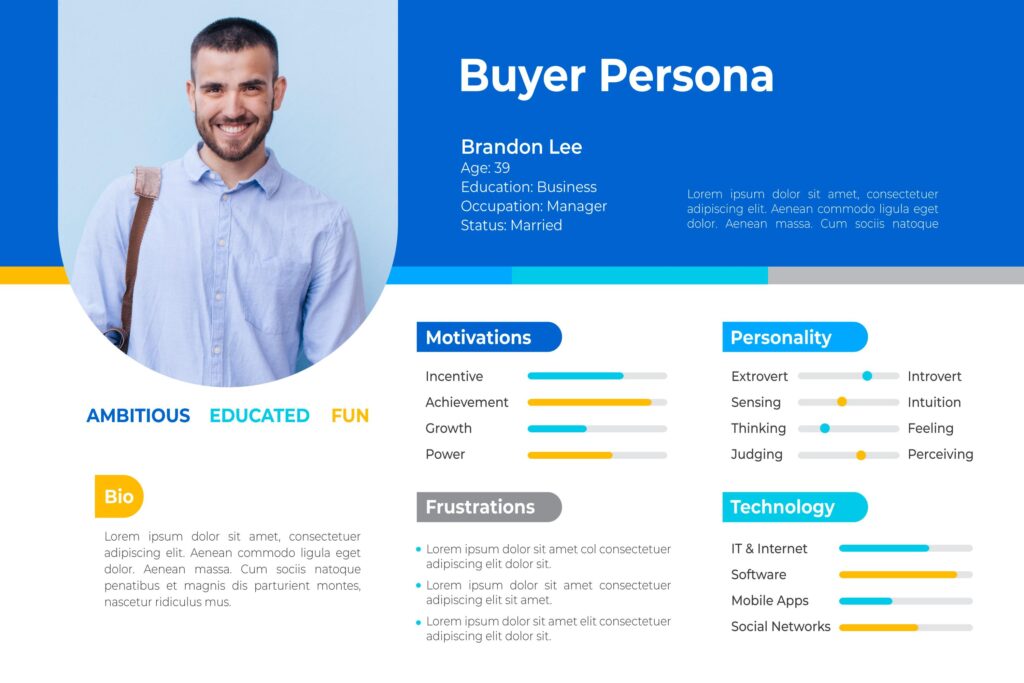
In the fast-paced world of B2B marketing, understanding your target audience is key to success. To effectively communicate with your customers, you need to know who they are, what they care about, and how to address their specific needs. This is where buyer personas come into play. In this comprehensive guide, we will explore the importance of buyer personas in improving B2B product positioning and messaging, and provide you with practical steps to create and utilize these personas effectively. Understanding the Power of B2B Buyer Personas Buyer personas are fictional representations of your ideal customers based on real data and research. They provide a detailed description of different segments of your audience, including their characteristics, goals, challenges, preferences, behaviors, and buying journey. By empathizing with your customers through buyer personas, you can tailor your marketing messages, content, and channels to meet their specific needs and preferences. According to top experts in the field, buyer personas are not just made-up or imaginary profiles. Instead, they are a distillation of real-life examples derived from close collaboration with various departments, such as sales, customer service, and pre-sales consulting. By leveraging the insights from these teams, you can create buyer personas that accurately reflect your customers’ experiences and preferences. The Importance of B2B Buyer Personas B2B buyer personas play a crucial role in aligning your marketing strategy with your customers’ expectations and pain points. Here are some key reasons why buyer personas are important in B2B marketing: Targeted Marketing Campaigns: Buyer personas enable personalized messaging and content, increasing the effectiveness of your marketing campaigns. Improved Lead Generation and Nurturing: By identifying high-value prospects and tailoring communication to their specific needs, buyer personas enhance conversion rates and nurture leads effectively. Enhanced Sales and Marketing Alignment: Aligning efforts based on personas improves collaboration between sales and marketing teams, leading to more effective revenue generation. Increased Customer-Centricity: Developing empathy and delivering products and services that meet customer needs strengthens customer satisfaction and loyalty. Higher ROI on Marketing Investments: A targeted approach based on buyer personas optimizes resource allocation, maximizing business outcomes. Better Predictability of Trends: Understanding your buyer’s thought process through buyer personas allows you to predict potentially valuable demand generation trends ahead of time. By leveraging the power of buyer personas, you can create a customer-centric marketing strategy that resonates with your target audience, increases engagement, and drives conversions. Steps to Create Effective B2B Buyer Personas Creating buyer personas requires thorough research and analysis of both existing and potential customers. Follow these steps to create impactful buyer personas for your B2B marketing strategy: 1. Market Research and Data Analysis Start by conducting market research and collecting data from various sources, such as customer feedback, surveys, interviews, website and social media analytics, CRM and email data, as well as market research and industry reports. Gather demographic information (e.g., age, gender, location, education, role), psychographic information (goals, challenges, motivations, values), behavioral information (online habits, preferred channels, content formats), and buying information (budget, timeline, criteria, influencers). 2. Identify Common Pain Points To truly understand your audience, identify their pain points by conducting interviews, surveys, and analyzing customer feedback. You can use tools like insight7 to uncover the challenges they face in their professional lives and position your product or service as the solution they need. 3. Gather Insights From Sales and Customer Support Teams Tap into the expertise of your sales and customer support teams who interact with customers on a daily basis. They can provide valuable insights into customer needs, preferences, and objections, helping you validate and refine your buyer personas. 4. Craft Detailed Buyer Personas Based on the data and insights gathered, create comprehensive profiles for each buyer persona. Include details such as job titles, responsibilities, goals, motivations, challenges, preferred communication channels, and even personal interests. The more detailed and human-like your personas are, the better you can tailor your marketing efforts. 5. Validate Personas Through Customer Interviews Validate your buyer personas by conducting interviews with existing customers who match the persona profiles. Gather feedback on whether the personas accurately reflect their experiences and identify areas for refinement. This iterative process ensures that your personas remain relevant and effective. 6. Document and Share Personas Document your buyer personas in a clear and concise manner. Include visual representations, stories, and key attributes to make them relatable and memorable. Share these persona documents with your marketing, sales, and product teams to ensure alignment and a consistent approach to demand generation. 7. Continuous Iteration and Improvement Buyer personas are not static and require regular updates and refinements. Collect and analyze new data and feedback from customers and prospects, track changes in customer behavior, preferences, and expectations, and review your personas based on marketing results. This ongoing process ensures that your personas remain accurate and effective over time. By following these steps, you can create buyer personas that serve as powerful tools to guide your marketing strategy and connect with your target audience on a deeper level. Leveraging B2B Buyer Personas in Product Positioning and Messaging Once you have created your buyer personas, it’s time to leverage them in your product positioning and messaging. Here are some key ways to utilize buyer personas effectively: Develop a Unique Value Proposition (UVP): Craft a clear and compelling message about what you offer, how it benefits your target customers, what problems it solves, and what sets you apart from competitors. Your UVP should be consistently communicated across your marketing channels and materials. Segment Your Messaging: Tailor your messaging to each buyer persona, addressing their specific pain points, goals, and preferences. This personalization enhances the impact of your communication and resonates with your target audience. Choose the Right Channels: Identify the channels and platforms preferred by each buyer persona and focus your marketing efforts accordingly. This ensures that your messaging reaches your audience in the places they frequent, increasing the likelihood of engagement and conversion. Create Relevant Content: Develop content that speaks directly to the needs and interests of each buyer persona.
PLG vs. Sales-Led Growth: Which Strategy Is Right for Your Business?

In the ever-evolving landscape of business growth strategies, it’s essential to choose the right approach that aligns with your goals and target audience. Two prominent strategies, Product-Led Growth (PLG) and Sales-Led Growth, offer distinct paths to success. In this article, we’ll delve deep into these strategies, highlighting their differences, providing practical examples, and offering guidance on when to deploy each. What is PLG? Product-led growth, often referred to as PLG, is an innovative approach that places the product itself at the forefront of customer acquisition and retention. In essence, the product becomes the primary salesperson. Users are empowered to sign up, onboard, and explore the product’s value independently, with minimal to no direct sales involvement. Key Features of PLG Product Excellence: The heart of PLG is a product that stands out as exceptional. It must be so compelling that users not only want to use it but also share it with others. Slack’s success story exemplifies this principle. Slack offers a user-friendly, feature-rich platform for team communication. Its intuitive design and efficiency make it a prime example of a product that sells itself. User Self-Service: In a PLG model, the onboarding process is designed to be self-service. Users should be able to create accounts, understand the product’s features, and start gaining value without needing extensive guidance. Dropbox, a widely used cloud storage service, allows users to sign up, install the application, and begin uploading and sharing files effortlessly. This self-service approach drives user adoption. Frictionless Onboarding: The goal of onboarding is to minimize any barriers or friction that might hinder user adoption. Consider the onboarding process of Zoom, the video conferencing platform. Users can join meetings without needing to create accounts, reducing friction and making it easy for anyone to use the product. Continuous Iteration: A hallmark of PLG is its focus on feedback and iteration. Companies actively seek user feedback and use it to improve the product continually. Airbnb, for example, regularly updates its platform based on user reviews and suggestions, enhancing the overall user experience. What is Sales-Led Growth? Sales-led growth is a traditional approach that relies on dedicated sales teams to identify leads, pitch products, negotiate deals, and ultimately close sales. This model places human interaction at the core of customer acquisition and retention. In a Sales-Led Growth model, companies typically have specialized sales teams that reach out to potential customers through various channels, such as cold calls, emails, and in-person meetings. These sales teams nurture leads, answer questions, and guide customers through the sales process. Major Difference Between Product-Led Growth and Sales-Led Growth User-centric Vs. Sale-centric: The most prominent distinction between PLG and Sales-Led Growth is their primary focus. PLG is user-centric, prioritizing the user experience and empowering users to explore the product themselves. Consider the case of insight7, which offers a free trial to users, allowing them to experience the service before making a purchase. This user-centric approach minimizes the need for direct sales involvement. In contrast, Sales-Led Growth is sales-centric. It relies on human interaction to nurture leads and close deals. A prime example of a Sales-Led Growth company is Oracle, a multinational computer technology corporation. Oracle’s complex, enterprise-level solutions require in-depth discussions, customizations, and negotiations, making direct sales efforts essential. Speed and Efficiency PLG often leads to faster adoption rates. Users can sign up, onboard themselves, and start experiencing the product’s value within minutes. A notable example of a fast-adoption PLG product is Grammarly, a writing assistance tool. Users can install the browser extension and begin using it to improve their writing instantly. In contrast, Sales-Led Growth can be a slower process due to the involvement of sales teams. Consider the example of Salesforce, a company specializing in customer relationship management (CRM) solutions. Salesforce relies on dedicated sales teams that engage with businesses, analyze their needs, and propose tailored CRM solutions. This personalized approach may lead to longer sales cycles. Cost and Scalability PLG can be more cost-effective in the long run. It doesn’t require extensive sales teams and their associated costs. This scalability is exemplified by companies like Canva, a graphic design platform. Canva offers a free, user-friendly design tool with a vast library of templates and features. Users can get started without needing direct sales support. Canva’s model allows for a large user base to grow without substantial increases in labor costs. On the other hand, Sales-Led Growth can become expensive due to the need for a dedicated sales force. A notable example is IBM, a multinational technology company. IBM’s enterprise-level solutions often require complex negotiations and customization, which necessitate significant sales resources and, subsequently, higher costs. When to Use Each Strategy When to Choose PLG: PLG is an excellent choice when you have a product that can stand on its own. If your product is straightforward, user-friendly, and intuitive, and your target audience prefers self-service experiences, PLG is the way to go. Slack, as previously mentioned, is a prime example. Its chat platform is so intuitive and valuable that teams can start using it immediately. PLG is often favored by SaaS companies, innovative tech startups, and products with clear use cases. For example, Zoom’s video conferencing platform is known for its simplicity and efficiency, making it an ideal candidate for PLG. Users can join meetings with minimal friction, which aligns with the self-service philosophy of PLG. When to Choose Sales-Led Growth: Sales-led growth is the preferred choice when your product is complex and requires in-depth explanation, negotiation, and customization. This approach is suitable for high-value B2B products, enterprise solutions, and industries where personal relationships are essential. A prime example of Sales-Led Growth is Oracle, which offers intricate software solutions for businesses. Oracle’s products often involve extensive customization and consultation. Sales teams work closely with clients to understand their unique needs and tailor solutions accordingly. In the world of business growth strategies, PLG and Sales-Led Growth represent two contrasting yet effective approaches. PLG places the product at the forefront, offering a user-centric, self-service experience, while Sales-Led Growth
What Is PLG (Product-Led Growth) and Why Is it a Good Strategy for Saas business?

PLG or Product-Led growth is One strategy that has been gaining significant prominence in recent years. In today’s fast-paced digital landscape, businesses continually search for innovative approaches to drive growth and succeed in the competitive realm of Software as a Service (SaaS) and technology. PLG represents a fundamental shift in how companies approach customer acquisition, onboarding, and retention. This article will take you on a journey through the world of PLG, explaining what it is, why it’s becoming increasingly essential, and how it’s transforming the way businesses operate. What Is Product-Led Growth (PLG)? Product-Led Growth, or PLG, is a business methodology that places the product at the forefront of the customer acquisition and retention process. Unlike traditional sales-led approaches, PLG leverages the inherent value of a product to attract, engage, and retain customers. The core idea is to create a product that is so intuitive, valuable, and user-friendly that it sells itself. This approach goes beyond merely offering a product and involves nurturing the customer journey to foster organic growth. The Evolution of SaaS and Technology To understand the significance of PLG, it’s crucial to recognize the context in which it has emerged. The SaaS and technology industries have undergone a profound transformation in recent years. Software applications have shifted from being primarily installed on local devices to being accessible through the cloud. This shift has made it easier for businesses to reach a global audience and continuously update their products. The Traditional Sales-Led Approach Before PLG, the traditional sales-led approach was the norm. Companies relied on dedicated sales teams to identify leads, pitch their products, negotiate deals, and close sales. While this approach still has its place, it often involves high acquisition costs and can lead to a disconnect between the customer and the product itself. Principles of Product-Led Growth (PLG) Product-led growth operates on several key principles that distinguish it from traditional sales-led models. These principles include a strong focus on product excellence, user self-service, frictionless onboarding, and continuous iteration based on user feedback. Product Excellence: PLG places a strong emphasis on creating a product that’s exceptionally valuable, user-friendly, and intuitive. The product itself becomes the primary driver of growth. User Self-Service: In a PLG model, users should be able to explore, use, and gain value from the product independently. This self-service approach minimizes the need for direct human intervention during the early stages of the customer journey. Frictionless Onboarding: The onboarding process should be designed to be seamless and intuitive, guiding users to understand the product’s value quickly. The goal is to reduce any barriers or friction that might hinder adoption. Continuous Iteration: Feedback from users is actively sought and incorporated into the product’s development. This iterative approach ensures the product remains relevant and valuable as user needs evolve. Example: Slack Slack, a popular team communication tool, embodies the principles of PLG. It provides a free, user-friendly platform where teams can communicate effortlessly. Users can sign up, invite team members, and start using the product immediately. Slack’s success is built on the product’s excellence, self-service nature, frictionless onboarding, and continuous updates based on user feedback. Product-Led Growth vs. Sales-Led Growth Product-led growth (PLG) and the traditional sales-led approach differ primarily in their methods of customer acquisition and retention. In a sales-led approach, companies rely on dedicated sales teams to identify leads, pitch products, negotiate deals, and close sales. It’s a human-centric approach. In contrast, PLG shifts the focus to the product itself. With PLG, the product is designed to be so valuable, user-friendly, and intuitive that it can attract, engage, and retain customers without the need for direct sales efforts. PLG is a user-centric approach that leverages the inherent value of the product to drive organic growth. Measuring PLG Success To measure the success of a PLG strategy, you need to focus on specific metrics and key performance indicators (KPIs). These include: User Adoption: Track the number of users who sign up for your product and actively use it. A high adoption rate is a positive sign of PLG success. User Retention: Measure how many users continue to use the product over time. High retention rates indicate that the product is meeting user needs. Customer Satisfaction: Collect user feedback and gauge their satisfaction. Positive feedback suggests that the product is delivering value. Lifetime Value (LTV): Determine the long-term value of a customer by assessing their spending over time. A higher LTV signifies PLG success. Example: Dropbox Dropbox, a file-sharing and cloud storage service, is a classic example of PLG success. They offer a free tier with an easy sign-up process. By tracking user adoption and retention, they can measure the effectiveness of their PLG strategy. Those who enjoy the free version are more likely to convert to paying customers, leading to a high lifetime value. The Importance of User Onboarding User onboarding is a critical aspect of PLG. It involves guiding new users to understand the product’s value and features quickly. Effective onboarding: Reduces Abandonment: Users are less likely to abandon the product if they can easily grasp its benefits. Accelerates Value Realization: It helps users start using the product for their intended purpose, gaining value sooner. Improves Retention: A well-structured onboarding process contributes to higher user retention rates. Scenario: Dropbox vs. Traditional Sales-Led Cloud Service Let’s compare Dropbox’s PLG approach to a hypothetical traditional sales-led cloud service. Dropbox (PLG): A new user signs up for Dropbox online. They receive a guided tour of the interface, highlighting key features. They can immediately start uploading and sharing files. Dropbox offers rewards for referring friends. Traditional Sales-Led Cloud Service: A sales representative contacts a potential customer via phone or email. They schedule a demo of the cloud service. The salesperson negotiates a pricing plan. The customer signs a contract and is onboarded with the assistance of a dedicated account manager. In this scenario, Dropbox’s PLG approach is user-centric and involves minimal human intervention. Users can quickly understand and use the product. The traditional sales-led approach relies heavily on
Product Prioritisation: How to improve it using the Fogg model
As a product manager, you are constantly faced with product prioritisation—the challenge of deciding what to build next. How do you prioritise the features and improvements that will deliver the most value to your users and your business? How do you balance the needs and expectations of different stakeholders and customers? How do you ensure that your product roadmap aligns with your vision and strategy? One framework that can help you answer these questions is the Fogg Behavioural Model (FBM). Developed by Dr. BJ Fogg, a behavioural scientist and director of the Stanford Persuasive Technology Lab, the FBM is a simple yet powerful model that explains how human behaviour is influenced by three factors: 1. Motivation 2. Ability 3. Triggers. How those FBM help Product Prioritisation? According to the FBM, for a behaviour to occur, a person must have sufficient motivation to perform it, sufficient ability to perform it, and a trigger to prompt them to perform it. If any of these factors are missing or insufficient, the behaviour will not happen. Motivation refers to the degree of desire or willingness to perform a behaviour. It can be influenced by various factors, such as pleasure or pain, hope or fear, social acceptance or rejection, etc. Motivation can vary depending on the context and the individual. Ability refers to the degree of ease or difficulty to perform a behaviour. It can be influenced by various factors, such as time, money, physical effort, mental effort, social deviance, non-routine, etc. Ability can also vary depending on the context and the individual. ALSO READ: Generating Better Ideas for Your Products — Lessons from Teresa Torres Triggers refer to the cues or signals that prompt a person to perform a behaviour. They can be external or internal. External triggers are stimuli that come from outside the person, such as notifications, buttons, reminders, etc. Internal triggers are stimuli that come from within the person, such as emotions, thoughts, memories, etc. The FBM can be represented by a formula: B = MAT. Behaviour = Motivation x Ability x Trigger. The formula implies that for a behaviour to occur, all three factors must be present and above a certain threshold. The higher the motivation and ability, the more likely the behaviour will happen when triggered. Conversely, the lower the motivation and ability, the less likely the behaviour will happen when triggered. How does this relate to product prioritisation? As a product manager, you want to design products that enable and encourage your users to perform certain behaviours that create value for them and for your business. For example, you may want your users to sign up for your service, use your features regularly, invite their friends to join your platform, provide feedback on your product, etc. To achieve these outcomes, you need to understand what motivates your users to perform these behaviours, what makes it easy or hard for them to perform these behaviours, and what triggers them to perform these behaviours. By applying the FBM to your product decisions, you can prioritise the features and improvements that will increase your users’ motivation and ability to perform the desired behaviours and provide them with effective triggers to prompt them to do so. For instance, at Insight7, we are constantly reaching out to users to understand what influences their behaviours and how they utilise our app. This helps us to understand how we can tweak our product to improve the ease of use, and eventually, the speed with which users accomplish their tasks using Insight7. Here are some use cases you can consider: – If you want your users to sign up for your service (behaviour), you need to motivate them by highlighting the benefits and value proposition of your service (motivation), make it easy for them to sign up by reducing friction and complexity in the registration process (ability), and provide them with clear and compelling calls-to-action on your landing page or in your marketing campaigns (trigger). – To get users utilising your features regularly (behaviour), you need to motivate them by showing them how your features help them achieve their goals and solve their problems (motivation), make it easy for them to use your features by providing intuitive and user-friendly interfaces (ability), and provide them with timely and relevant reminders or notifications that nudge them to use your features when they need them (trigger). – If you want your users to invite their friends to join your platform (behaviour), you need to motivate them by rewarding them with incentives or social recognition for inviting their friends (motivation), make it easy for them to invite their friends by integrating with their contacts or social networks (ability), and provide them with prompts or suggestions that encourage them to invite their friends at appropriate moments (trigger). – To get users to provide feedback on your product (behaviour), you need to motivate them by showing them how their feedback matters and how it will improve your product (motivation), make it easy for them to provide feedback by offering simple and convenient ways for them to share their opinions (ability), and provide them with requests or invitations that ask them for their feedback at optimal times (trigger). In summary, product prioritisation is not an easy task. Developing, testing and marketing new features is a gruelling, expensive series of tasks. However, using the right frameworks can improve the speed of decision making and ultimately help product teams make better decisions on what actions to prioritise.
Generating Better Ideas for Your Products — Lessons from Teresa Torres

If you are a product manager, designer, or researcher, unless you are Teresa Torres, you might be familiar with the difficulty of coming up with good ideas. And when we say “good ideas”, we are talking of groundbreaking but actionable notions within the realm of executability. I mean, yes, we’ve probably all thought about the brilliant idea of putting a jetpack on a car to get to the office faster. Still, the reality of propulsion physics and transit networks makes that an impractical idea. So, in the case of product discovery, what qualifies as a good idea? Simply put, a good idea helps you create products that solve real customer problems while also delivering value for your business. But even when we say it that way, it doesn’t seem to narrow down the pool of ideas or differentiate between bad, good and better ones. Because, yes, there are multiple great ideas. But how do you know which problems to focus on, which solutions to try, and which to ship? One way to answer these questions is to adopt continuous discovery habits. Continuous discovery is a way of working that helps you discover products that create customer value and business value. It involves constantly learning from your customers, generating and testing many ideas, and making fast and informed decisions. In this blog post, we discuss some insights from Teresa Torres, a product discovery coach and the author of the book Continuous Discovery Habits. Torres has helped hundreds of teams adopt continuous discovery practices and improve product outcomes. Outcome vs output One of the key suggestions of Teresa Torres’ gospel of continuous discovery is to focus on outcomes rather than outputs. Outcomes are the changes in customer behavior or business results you want to achieve with your product. Outputs are the features or solutions that you build and ship. In her words: “Shifting to an outcome mindset is harder than it looks. We spend most of our time talking about outputs. So, it’s not surprising that we tend to confuse the two. Even when teams intend to choose an outcome, they often fall into the trap of selecting an output. I see teams set their outcome as “Launch an Android app” instead of “Increase mobile engagement” or “Get to feature parity on the new tech stack” instead of “Transition customer to the new tech stack.” By focusing on outcomes, you can avoid falling in love with your solutions and instead keep an open mind about what might work best for your customers and your business. You can also measure your progress more effectively and validate your assumptions more quickly. How to shift to an outcome mindset To shift to an outcome mindset, Torres suggests using a simple framework called opportunity solution trees. An opportunity solution tree is a visual tool that helps you map out the possible paths to reach your desired outcome. It consists of three elements: An outcome: The change in customer behavior or business result that you want to achieve. Opportunities: The customer problems, needs, or desires that are related to your outcome. Solutions: The ideas or hypotheses that you have for addressing the opportunities. Using an opportunity solution tree, you can generate many ideas for different opportunities and solutions and prioritize them based on their potential impact and feasibility. You can also test your thoughts with customers and learn what works and what doesn’t. Does Group Brainstorming give better ideas for your products? Another habit of continuous discovery that Torres talks about is generating many ideas for your products. Alleviate the pressure to come up with a brilliant idea at once and just churn out as many ideas as possible. After all, as they say, let the bad water flow, and over time, pure water will follow. However, contrary to popular belief, brainstorming in groups is not the best way to do that. Torres cites research that shows that individuals are more effective at generating ideas than groups. “Study after study found that the individuals generating ideas alone outperformed the brainstorming groups. Individuals generated more ideas, more diverse ideas, and more original ideas,” Teresa says. “Many people argued that the most common problems with brainstorming can be counteracted with good facilitation. This is true. Trained facilitators do help. But they help groups get to the same level of individuals working alone. They don’t help groups outperform individuals.” Why is Group Brainstorming for better ideas inefficient? Torres explains that group brainstorming has several drawbacks, such as: Social loafing: Some people tend to contribute less when in a group than when alone. Production blocking: Some people have to wait for their turn to speak or write down their ideas, which reduces their creativity and productivity. Evaluation apprehension: Some people are afraid of being judged or criticized by others for their ideas, which inhibits their originality and diversity. Conformity pressure: Some people tend to agree with or imitate the ideas of others, which reduces the variety and quality of ideas. To overcome these challenges, Torres recommends using a technique called brainwriting. Brainwriting is a method of generating ideas individually and then sharing them with others for feedback and improvement1. It involves four steps: Write down as many ideas as you can on sticky notes or index cards in a limited time (e.g., 10 minutes). Shuffle your notes or cards and exchange them with another person. Review the notes or cards you received and add new ideas or improve existing ones. Repeat steps 2 and 3 until everyone has seen all the notes or cards. By using brainwriting, you can leverage the benefits of both individual and group ideation. You can generate more ideas, more diverse ideas, more original ideas—and ultimately, better ideas. Interviews Arguably the best way to get better ideas on how to help your product become more valuable to customers is to listen to the customers themselves. Sometimes, it’s just that simple. Learning from your customers continuously might give you better insight into how to solve their problems
Experimental Testing: A Short Guide to The Right Approach

It is well established that the Product Discovery process is a crucial stage in developing any product worth using. In our last blog post, we discussed hypothesis testing. Today, we are moving forward to the next phase: experimental testing. Experimental testing is validating assumptions and testing new ideas or product features through experiments with real users or customers. This can be done through various methods such as usability testing, A/B testing, surveys, interviews, and prototyping. The goal of experimental testing is to gather data and insights that can inform product development decisions and improve the user experience. Experimentation plays a vital role in improving the product discovery process. Before we continue, let us discuss some examples of products that have failed or succeeded due to proper (or improper) experimental testing. Success and Failure Stories Google Glass One product that failed due to poor experimental testing was Google Glass. Remember the concept? Long before Facebook rebranded to Meta and AR and VR became buzzwords, Google was already cornering the Extended Reality market. And things looked good for them. The Google Glass was a sturdy product and was light-years ahead of its time. However, as you will often find with great but unsuccessful products, that is not necessarily a compliment. While the concept of a wearable heads-up display was intriguing, the product ultimately failed to capture the interest of consumers. The high price point, awkward design, and privacy concerns caused the product to be pulled from the market. This failure could have been prevented if Google had done more thorough experimental testing with potential users to identify these issues before launching the product. Unfortunately, the bigwigs at the tech giant were convinced that rolling it out earlier would help them get feedback directly from consumers. Hence, according to their assumptions, they would be able to improve on the next release of the product. But this experimental testing should have been done before the product was released, not after. Amazon Echo On the other hand, a product that succeeded due to good experimental testing is the Amazon Echo. The Echo was not the first voice-activated smart speaker on the market, but it quickly became the most popular due to Amazon’s focus on experimentation. Amazon continuously tested and iterated on the product, adding new features and improving the user experience. By listening to their customers and making changes based on their feedback, Amazon created a product that people love and use every day. The Echo has since gone on to revolutionize the smart speaker market. And would you belive it? One of the most cited reasons for this dominance is the superior end-user experience. Overall, good experimental testing is essential for product success. It helps identify potential issues early on, saves time and resources, and allows continuous improvement. What is the right framework for Experimental Testing? Marty Cagan, a well-known Silicon Valley veteran who has worked with companies like eBay, Netscape, and HP, is one of the loudest voices emphasising the importance of experimentation in product development. In his book “Inspired: How to Create Tech Products Customers Love,” he proposes a framework for product discovery that includes a cycle of experimentation. The cycle includes ideation, prototyping, testing, and learning. Ideation – This is the initial stage where the team generates ideas. It’s important to come up with as many ideas as possible and to be open to all possibilities. The ideation stage should involve customers, stakeholders, and team members. The goal is to gather as much input as possible to generate a wide range of ideas. Prototyping – Once you have a list of ideas, it’s time to create prototypes. Prototyping is the process of creating a basic version of the product to test the idea’s feasibility. Prototyping can take many forms, from sketches to wireframes to functional prototypes. Testing – Testing is the process of evaluating the prototype with actual customers. Testing should be conducted in several stages to ensure that the product is meeting the user’s needs. Marty Cagan emphasizes that testing should be done as early as possible in the product development process. This helps to identify any issues early on and to make any necessary changes. Learning – Based on the results of the testing, the team should evaluate what works and what doesn’t work. To be unbiased at this stage is very mission-critical. It is essential to understand the reason behind the success or failure of the product. This knowledge will help the team to iterate and improve the product. So do not be precious with your product and be ready to kill off any ‘darling’ features customers don’t want/need. Wrapping up… Experimental testing helps the product team to validate the ideas and to identify potential flaws at an early stage. This saves time and resources in the long run. Experimentation should always be a continuous process integrated into every stage of product development, and yes, it can be time-intensive. We know that. That’s the reason why here at Insight7, our philosophy is all about making it easier to draw insights, fast-tracking the product discovery process and helping stakeholders make decisions faster. That’s why we developed our software, which uses AI to help you draw insights from thousands of surveys and research data in seconds. You can try the product here. Experimentation will supercharge your product team’s ideation process because the real world is a whole different ball game compared to the drawing board. Getting feedback on the real-world usage of your product will probably be the most important insight you gather in the course of Product Discovery. By embracing experimentation, product teams can create innovative and successful products that meet the needs of their customers in more realistic—and eventually more profitable—ways.
Collaborating with Cross-functional Teams During Product Ideation

Collaborating with cross-functional teams during product ideation can significantly improve the chances of success for a new product. Product ideation is not a one-man show, and it requires the input and collaboration of several different departments and experts. This can help to ensure that all aspects of the product idea are thoroughly thought through and considered before it is brought to market. What is product ideation? Product ideation refers to the creative process of generating, developing, and refining ideas for new products or services. It involves identifying customer needs, researching market trends, and brainstorming innovative solutions to create unique and valuable offerings for target customers. The ultimate goal of product ideation is to create a product that can successfully meet the needs of customers and create value for the business. What is a cross-functional team? Cross-functional teams typically include individuals from departments such as marketing, engineering, design, and operations. Each of these departments brings a unique set of skills and perspectives that can contribute to the success of a product. For example, marketing can help to identify customer needs and desires, while engineering can provide technical expertise to make sure that the product is feasible to build. Collaborating with cross-functional teams When collaborating with cross-functional teams, it is important to create a culture of open communication and collaboration. This can be achieved through regular meetings, shared project management tools, and clear lines of communication. Encouraging team members to share their ideas, experiences, and insights can lead to more creative and innovative solutions. Benefits of cross-functional collaboration One of the key benefits of cross-functional collaboration in product ideation is that it helps to identify potential challenges and obstacles early on in the ideation process. This can prevent problems from arising later on, when they may be more difficult to solve. For example, if engineering raises concerns about the feasibility of a particular aspect of the product, this can be addressed early on, rather than later when it may be too late to make changes. Another benefit of cross-functional collaboration is that it helps to build consensus around the product idea. When team members from different departments have the opportunity to provide input and feedback, they are more likely to buy into the idea and support it in the future. This can be especially important for product ideation, where the support of all departments is necessary for success. Collaborating with cross-functional teams during product ideation can also have some disadvantages. Here are a few: Time consumption: Collaborating with a cross-functional team can be time-consuming, especially if team members are not in close proximity. This can slow down the ideation process and result in delays. Communication barriers: Communication barriers can arise when team members come from different departments and have different areas of expertise. This can result in misunderstandings and lead to friction between team members. Decision-making challenges: With input and feedback coming from multiple departments, decision-making can become more complex and challenging. It may take longer to reach consensus on certain aspects of the product idea. Different priorities: Different departments may have different priorities, which can lead to conflicting ideas and perspectives. This can make it difficult to reach agreement on the best course of action for the product idea. Resistance to change: Some team members may be resistant to change and may not be open to new ideas. This can make it difficult to get everyone on board with the product idea which may lead to conflicts between team members. While these disadvantages can present challenges, they can be overcome with careful planning, effective communication, and a willingness to work together. By being aware of these potential challenges, companies can take steps to minimize their impact and ensure the success of their product ideation process. Should companies work with cross functional teams during product ideation? Yes, it is generally recommended to work with cross-functional teams during product ideation. The benefits of collaborating with individuals from different departments, who bring different perspectives and skills, can significantly improve the chances of success for a new product. Collaborating with cross-functional teams helps to ensure that all aspects of the product idea are thoroughly thought through and considered, and that potential challenges are identified and addressed early on. However, it is important to manage the potential disadvantages that can arise from cross-functional collaboration, such as communication barriers, decision-making challenges, and resistance to change, etc. Companies can overcome these challenges by creating a culture of open communication and collaboration, and by taking steps to minimize the impact of the disadvantages. In summary, collaborating with cross-functional teams during product ideation is a crucial step towards the success of a new product. By bringing together individuals with diverse perspectives and skills, companies can ensure that all aspects of the product idea are thoroughly considered and that potential challenges are identified and addressed early on. A culture of open communication and collaboration can help to build consensus around the product idea and increase the chances of success.
Product Owner vs. Product Manager: What really is the difference?

A product manager and a product owner are two very important roles in the development of a product. They are two roles that are often associated with the development and management of a product within an organization. Some organizations may wonder whether it is necessary to employ both a product manager and a product owner, seeing that their roles are interrelated. But are they really the same? While they may seem quite similar at the surface level and have some overlapping responsibilities, there are however some significant differences between the two roles that are important to understand. Product managers are responsible for the overall strategy and vision for a product. They work closely with cross-functional teams to ensure that the product aligns with the company’s overall goals and objectives. They are also responsible for defining the product roadmap and ensuring that the development team is on track to meet the product’s goals and deadlines. On the other hand, product owners are focused on the day-to-day management of the product. They are responsible for prioritizing and organizing the development team’s work, as well as communicating with stakeholders to ensure that the product meets their needs and expectations. They are also responsible for making decisions about which features and capabilities to include in the product, based on input from the development team, customers, and other stakeholders. The roles and responsibilities of the product owner include what features would be a part of the product release. The product owner defines user stories based on customer requirements and prioritizes them for the development team. One key difference between product managers and product owners is that product managers have a more strategic role, while product owners are more focused on the tactical execution of the product. Product managers are responsible for defining the overall direction and vision for the product, while product owners are responsible for ensuring that the development team can execute and deliver on that vision in a way that meets the needs of stakeholders and customers. They are responsible for the product backlog, which is a prioritized list of all the features and functions that a product should have. The product owner is responsible for maintaining the backlog and prioritizing items on it based on the needs of the business and the development team. They work closely with the development team to ensure that the most important items are being worked on first. Read also: Harnessing Customer Interviews to Build the Right Product Another key difference is that product managers often have a broader scope of responsibility than product owners. Product managers are typically responsible for the entire product lifecycle, from concept to launch and beyond, while product owners are typically focused on the development and release of a specific product or product feature. The product manager is more focused on the big picture and the long-term strategy for the product, while the product owner is more focused on the day-to-day details and making sure that the development team has everything they need to be successful. Overall, the product manager decides what products to build next, and the product owner helps the development team to build the products.
Step by Step Guide to SaaS Product Development

If you are thinking of developing a SaaS product, this guide is for you. In this article, we will discuss the steps involved in developing a SaaS product and some of the challenges you will face. First Steps Before you start developing your SaaS product, you should have a solid business plan that outlines your product, its features, and your target market. You should also conduct market research to determine the viability of your idea and identify your competitors. You should create a prototype of your software and conduct beta testing to see if customers are interested in your product. If needed, you should adjust your plan according to the results of the beta tests. Finally, you will need to obtain funding to launch your startup. If you want to summarize and analyze your research data and store it in central repository to make it accessible to the team then you must use Insight7 Developing Your Product Once you have secured funding for your startup, you will need to hire a team of developers to work on your project. At this point, you should also select a technology stack to build your product on. Since a SaaS product has a large number of users, it will need to be scalable to accommodate this traffic. You will also need to develop an infrastructure to support your product. This includes choosing a suitable hosting platform and managing your server and security needs. In addition, you will need to set up an automated deployment process to streamline the software development lifecycle and ensure that the software is always up-to-date. Finally, you will need to build user interfaces for your product and add functionality to it based on customer feedback. Customer Support and Marketing Once your product is launched, you will need to begin marketing and generating leads for it. Building an audience for your software is an important part of ensuring its success. You will also have to deal with customer support issues once you launch your product. These can include troubleshooting user issues and responding to customer complaints. Handling these issues in a timely manner is important for maintaining a positive customer experience. You will need to build a team to handle customer support to ensure that your customers have a positive experience with your product. Challenges of Developing a SaaS Product One of the major challenges involved in developing a SaaS product is security. Customers will only trust a product if it is secure and stable. You will therefore have to keep your software up to date by implementing the latest security features and patches. You should also ensure that your product is free from bugs and defects. Providing good customer service is also important when launching a SaaS product. If you fail to address customer concerns in a timely manner, you will lose your customers to your competitors. They are; Security/Stability Software development life cycle Hosting environment Deployment and maintenance Customer support and marketing Technical infrastructure to support the application needs to be managed and maintained on an ongoing basis in order to keep it up and running at all times. Using an outsourced service provider to manage your IT infrastructure may be a good option for your business as it minimizes the time and effort required to manage and maintain your system. Infrastructure requirements vary according to the nature and type of the application being developed. For example, a web application requires fewer servers than a database server. Server capacity is also determined by the amount of data that needs to be stored or processed by the system. You must determine how much server capacity you need based on these factors before setting up your system. Different technologies should be used to support different types of applications. For example, ASP or ASP NET technology should be used to develop web applications while PHP or Java technology should be used to develop mobile applications. The cloud-based architecture of the SaaS model is particularly suitable for enterprises with a large user base. The use of cloud computing allows businesses to reduce the costs associated with maintaining an on-premises IT environment while still enabling them to meet their growing storage needs. Identify your technical infrastructure needs based on your business goals and the type of application you are developing. Then, implement the right infrastructure to support the application. Finally, launch the application and make it available to users around the world via the cloud. Create a customer management dashboard to keep track of your users. Monitor their activity and ensure that they are satisfied with your service by resolving any issues that may arise in a timely manner. Develop a marketing plan to promote your product to your target audience and generate sufficient revenue to cover the cost of maintaining your infrastructure. Stay updated with the latest industry trends and best practices by keeping a close eye on developments in the field and adopting new technology as and when it is needed. This will help you develop a product that meets current needs and will be able to adapt to the changing demands of customers in the future. A SaaS solution offers a number of advantages over traditional on-premises software solutions such as reduced hardware costs, increased data security, easier scalability and greater ease of deployment. Using a cloud-based platform also eliminates the need to purchase expensive hardware and software, as well as the need to hire in-house technical staff to maintain the system. Moreover, the maintenance costs associated with hosting an application in the cloud are far lower than those associated with running the same application on a traditional IT infrastructure. If you want to summarize and analyze your research data and store it in central repository to make it accessible to the team then you must use Insight7 In a SaaS delivery model, applications are hosted by a third-party service provider and delivered to the customer over the Internet. Therefore, there is no need for the customer to invest