
Leveraging Customer Empathy to Ship Delightful Products

Customer empathy is the ability to deeply understand and relate to the thoughts, feelings, and needs of your customers. It’s a crucial element in shipping delightful products because it allows you to design and deliver solutions that truly resonate with your target audience. By putting yourself in the customer’s shoes, you can identify pain points, anticipate desires, and create experiences that exceed expectations. This empathetic approach not only enhances user satisfaction but also fosters long-term loyalty, as customers appreciate when a company genuinely cares about their well-being and preferences, ultimately leading to the creation of products that genuinely delight and fulfill their needs. CEO/Co-founder of Insight7 had a chat with Erich Wichman, a Senior Product Lead at Shopify on the topic: “Leveraging Customer Empathy to Ship Delightful Products” and here are the key takeaways from their conversation. Watch the full webinar here. Meet Eric Eric, a product manager at Shopify, brings a wealth of experience to the table. Having spent five years at Shopify, he’s been deeply involved in the multi-channel space and worked alongside me on various projects. He has also spent a significant part of his career in product consulting, working on a diverse array of digital products. Eric’s insights into building great products quickly, by incorporating customer input into the product development process, will be invaluable today. The Importance of Customer Empathy in Product Development To kick things off, let’s address a fundamental question: Why is customer empathy so critical in the product development process? Eric emphasizes that customers are at the heart of any product; they are the users who make or break it. Building a product isn’t about solving your problems; it’s about addressing the needs of others. To succeed, you must adopt your customers’ perspective, understand their pain points, and align your product with their requirements. Eric underscores that a successful product is one that customers adopt and use regularly. It must also be sustainable in the long term, which involves more than just creating something customers love – it involves creating something that can thrive within your business model. A Framework for Customer Empathy But how do you actually go about empathizing with your customers? Eric provides a five-point framework: Customer Obsession: Step outside your own perspective and immerse yourself in your customers’ experiences. Build Trust: Establish transparent relationships with your customers, making it clear how their insights will be used in your product. Engage Continuously: Create space for ongoing customer engagement throughout the product lifecycle, from discovery to development. Segmentation: Understand different customer segments and tailor your approach accordingly. Actionable Feedback: Act on the feedback you receive, ensuring that it brings value to both your customers and your product. Techniques for Leveraging Customer Empathy In the quest for customer empathy, Eric suggests categorizing your product’s maturity and lifecycle: Zero to One Products: When you’re venturing into uncharted territory, engaging customers early is crucial. Provide early access and create incentives like time or cost savings. Scaling Products: For existing products expanding into new markets or retaining customers, focus on understanding the context in which your customers use your product. Feedback Loops: Regardless of your product’s stage, implement processes that allow for rapid integration of customer feedback into design and development loops. Trimming the Hedges of Bloated Software One common mistake is holding onto unnecessary features or products. Eric advises focusing on the customer’s mental model: Does the feature align with how customers use your product? If it doesn’t fit or provide value, it’s time to consider removal. When you have competing features, conduct a cost-benefit analysis to determine whether to maintain or remove them. Lessons from Real-Life Scenarios Eric shares insights from his experience, emphasizing the importance of bringing stakeholders, including customers, together in one room. This transparency allows everyone to hear feedback directly from customers, fostering empathy and understanding. Additionally, he highlights the value of recording customer feedback to avoid self-selection bias. To maximize insights, be prepared with tools to capture feedback effectively. Common Pitfalls and Challenges Eric points out a few common challenges: Poor Customer Qualification: Ensure you’re talking to the right customers who truly represent your target audience. Lack of Context: Understand your customers’ real-world context to design products that resonate with their needs. Ignoring Thematic Analysis: Cherry-picking feedback can lead to misguided decisions. Always look for consistent themes in customer input. Balancing User Needs with Business Goals In the end, products exist to achieve business outcomes. Your North Star metric is the core business goal, while customer metrics drive your product’s success by enabling customers to extract value. Balancing these aspects ensures that your product aligns with both customer needs and business objectives.
3 Hard Product Lessons from building Insight7
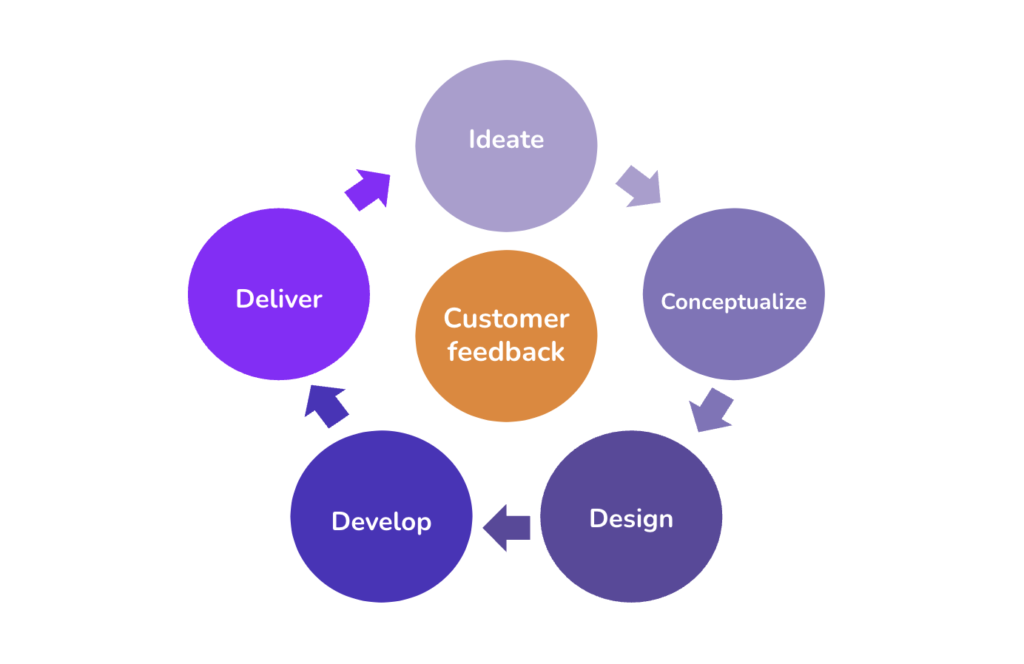
It’s way easier to give product advice than to apply it but I hope these three connected lessons save other founders and product teams a ton of dev resources. 1. Changing user behavior remains the greatest product challenge We all know building a great product is no longer enough to get it off the ground. You need a GTM machine. I would argue the biggest challenge for getting new products off the ground is changing user behavior. Even ahead of competition or funding. How do you get people to change how they work today? I wonder why this isn’t the most talked about subject in the startup world. When we first launched we prided ourselves in having a unique experience that solves a very painful problem but we quickly found out that wasn’t enough. We needed to create the pathways that make it easy to create a new behavior with our app and touch points that reinforce that behavior until it becomes a habit. The lesson here is to think abut the most frictionless way to get the user to achieve their goal with your product the first time and then every time. This leads to the next lesson. 2. Start with the data-in problem: Related to the first lesson is investing in the empty state experience first before the data in state. Most products today require some form of data to activate. It could be documents, first-party data from existing solution, server logs. Whatever is the thing your app makes magic from needs to be easy to connect to unlock value quickly for users. We start by building an interview transcription service and then integrations. I would reverse that order next time as its easier and faster to plugin integrations to show value than to switch behavior for the transcription service. The reason we started with transcription was thinking that it was the biggest pain but we quickly found that people will people would rather do that or take short cuts towards their goal. This points leads to the next lesson. 3. People want 100% automation or they’ll stay with 100% manual. Anything in-between isn’t enough. There is a reason people don’t use the self-driving feature in their car. They’ll rather drive the thing. Compare that to how quickly the average person is adopting self-driving capabilities in their cars. The reason is that people are fine with either control and flexibility or convenience so if you’re trying to take away control it better be a full on convenience. For example: we learnt that to truly unlock true value of our customer feedback synthesis experience, we needed to automate the entire thing: insight extraction, tagging, affinity mapping. 100% automation or nothing. I told the team: give the people what they want. The lesson here is full automation is a goal to continue to strive towards. We are building a fully automated platform to help product teams understand customers with simple commands and basic workflows.
Collaborating with Cross-functional Teams During Product Ideation

Collaborating with cross-functional teams during product ideation can significantly improve the chances of success for a new product. Product ideation is not a one-man show, and it requires the input and collaboration of several different departments and experts. This can help to ensure that all aspects of the product idea are thoroughly thought through and considered before it is brought to market. What is product ideation? Product ideation refers to the creative process of generating, developing, and refining ideas for new products or services. It involves identifying customer needs, researching market trends, and brainstorming innovative solutions to create unique and valuable offerings for target customers. The ultimate goal of product ideation is to create a product that can successfully meet the needs of customers and create value for the business. What is a cross-functional team? Cross-functional teams typically include individuals from departments such as marketing, engineering, design, and operations. Each of these departments brings a unique set of skills and perspectives that can contribute to the success of a product. For example, marketing can help to identify customer needs and desires, while engineering can provide technical expertise to make sure that the product is feasible to build. Collaborating with cross-functional teams When collaborating with cross-functional teams, it is important to create a culture of open communication and collaboration. This can be achieved through regular meetings, shared project management tools, and clear lines of communication. Encouraging team members to share their ideas, experiences, and insights can lead to more creative and innovative solutions. Benefits of cross-functional collaboration One of the key benefits of cross-functional collaboration in product ideation is that it helps to identify potential challenges and obstacles early on in the ideation process. This can prevent problems from arising later on, when they may be more difficult to solve. For example, if engineering raises concerns about the feasibility of a particular aspect of the product, this can be addressed early on, rather than later when it may be too late to make changes. Another benefit of cross-functional collaboration is that it helps to build consensus around the product idea. When team members from different departments have the opportunity to provide input and feedback, they are more likely to buy into the idea and support it in the future. This can be especially important for product ideation, where the support of all departments is necessary for success. Collaborating with cross-functional teams during product ideation can also have some disadvantages. Here are a few: Time consumption: Collaborating with a cross-functional team can be time-consuming, especially if team members are not in close proximity. This can slow down the ideation process and result in delays. Communication barriers: Communication barriers can arise when team members come from different departments and have different areas of expertise. This can result in misunderstandings and lead to friction between team members. Decision-making challenges: With input and feedback coming from multiple departments, decision-making can become more complex and challenging. It may take longer to reach consensus on certain aspects of the product idea. Different priorities: Different departments may have different priorities, which can lead to conflicting ideas and perspectives. This can make it difficult to reach agreement on the best course of action for the product idea. Resistance to change: Some team members may be resistant to change and may not be open to new ideas. This can make it difficult to get everyone on board with the product idea which may lead to conflicts between team members. While these disadvantages can present challenges, they can be overcome with careful planning, effective communication, and a willingness to work together. By being aware of these potential challenges, companies can take steps to minimize their impact and ensure the success of their product ideation process. Should companies work with cross functional teams during product ideation? Yes, it is generally recommended to work with cross-functional teams during product ideation. The benefits of collaborating with individuals from different departments, who bring different perspectives and skills, can significantly improve the chances of success for a new product. Collaborating with cross-functional teams helps to ensure that all aspects of the product idea are thoroughly thought through and considered, and that potential challenges are identified and addressed early on. However, it is important to manage the potential disadvantages that can arise from cross-functional collaboration, such as communication barriers, decision-making challenges, and resistance to change, etc. Companies can overcome these challenges by creating a culture of open communication and collaboration, and by taking steps to minimize the impact of the disadvantages. In summary, collaborating with cross-functional teams during product ideation is a crucial step towards the success of a new product. By bringing together individuals with diverse perspectives and skills, companies can ensure that all aspects of the product idea are thoroughly considered and that potential challenges are identified and addressed early on. A culture of open communication and collaboration can help to build consensus around the product idea and increase the chances of success.
Adopting A Continuous Discovery Process For Building Great Products
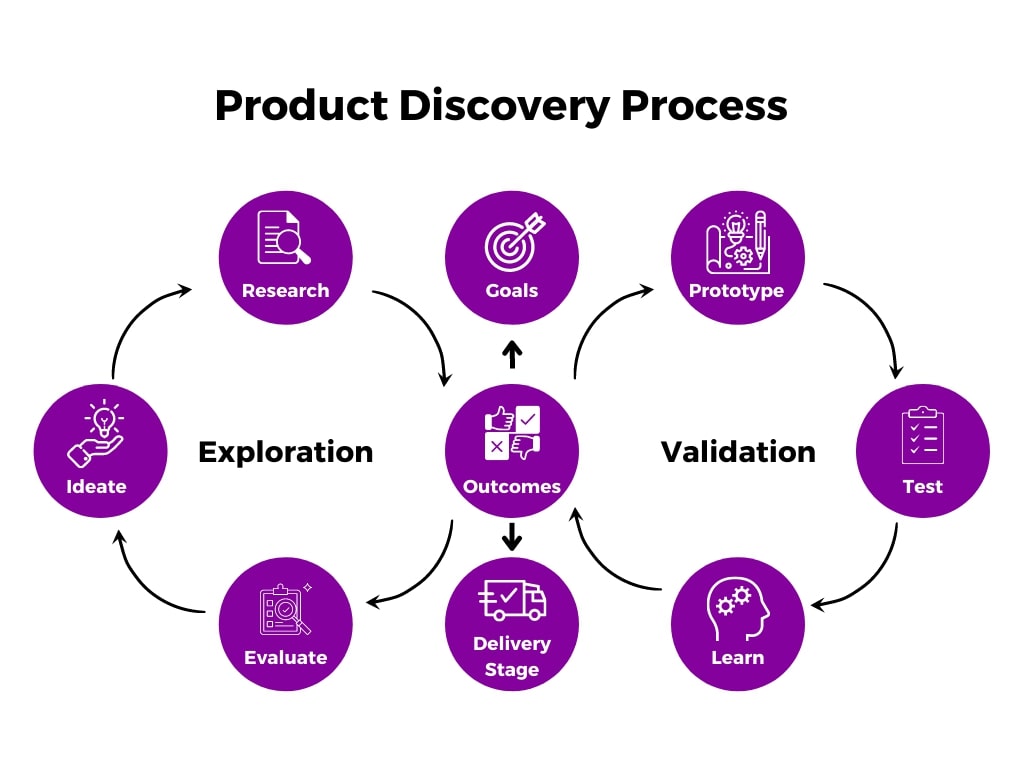
Continuous discovery process involves constantly learning about user needs and opportunities through various research activities such as user interviews and usability testing. The goal of continuous discovery is for product teams to have a tight feedback loop that enables the flow of insights to deliver on the best product experience for a user pain point, need or desire. The product discovery process The typical product discovery process starts with defining the domain or problem space (e.g e-commerce payments or ) you’re trying to solve a problem or set of problems in. The next step is to understand the user or customer segment you’re trying to solve these problems for. This helps the team focus the research on the right areas. You are essentially looking for opportunities to create value that users or businesses are willing to pay for. Once the problem space and user segments are defined, the team then moves on to researching the customer needs and opportunities by carrying out various activities such as user interviews, surveys, usability tests, customer feedback sessions and market research to have a better understanding of the most important problems to solve and the best solutions to them. The continuous discovery process There isn’t a perfect process for doing continuous product discovery and it varies across teams, companies and industries but one main benefit of a continuous product discovery process is that it allows for a more agile approach to product development. By continuously gathering customer feedback and incorporating it into the product, product teams are able to quickly pivot and make changes to improve the product and better meet the needs of your customers. This approach is especially useful in today’s fast-paced, technology-driven market which is constantly evolving meaning customer needs and preferences evolve quickly. How to run product discovery continuously The best teams are able to run product discovery in a continuous manner to build great products and continually improve them. These product teams continually search for new information about user needs, using research activities like weekly customer touch points and hypothesis testing, to uncover user and customer experience insights and user behaviour data. Tools for continuous product discovery It can be difficult to do continuous discovery without the right tools In order to implement a successful continuous product discovery process, it is important to have a dedicated team in place. This team should consist of individuals with a variety of skill sets, including product managers, designers, and developers. The team should also have access to tools and resources that will help them gather and analyse customer feedback, such as user testing software and market research tools. Once the team is in place, the continuous product discovery process can be broken down into a few key steps: Identify customer needs: The first step in the process is to identify the needs of your target customers. This can be done through market research, customer surveys, and other methods of gathering customer feedback. Generate ideas: Once you have a clear understanding of customer needs, the next step is to generate ideas for potential products or features. This can be done through brainstorming sessions, design thinking workshops, and other creative techniques. Test concepts: The next step is to test the viability of your ideas. This can be done through user testing, market validation, and other methods of gathering feedback from potential customers. Iterate and improve: Based on the feedback you receive, you can iterate on your ideas and make improvements to ensure that the product is as successful as possible. This may involve making changes to the product design, adding new features, or even scrapping an idea altogether and starting fresh. By following these steps and continuously gathering customer feedback, you can develop a product that truly meets the needs of your customers and stands a better chance of success in the market. A continuous product discovery process allows for flexibility and adaptability, which is essential in today’s fast-paced business environment. Benefits of continuous product discovery Product discovery is an essential part of the product development process. It is the process of identifying customer needs, validating ideas, and testing concepts to ensure that the product will be successful in the market. A continuous product discovery process is one that is ongoing and iterative, allowing for flexibility and constant improvement. Another advantage of a continuous product discovery process is that it can help reduce the risk of developing a product that fails in the market. By continuously testing and validating ideas, you can identify potential issues early on and make changes before investing too much time and resources into a concept that may not be successful. This can save your company time and money in the long run.
Harnessing Customer Interviews to Build the Right Product

Product discovery undoubtedly is the customer-centric approach to determining whether or not a product or feature should be developed. However, how can these decisions be made? Through continuous discovery. One of the most important aspects of continuous discovery is customer research, and customer interviews are the bedrock of that. To have a good grasp of what your customers really want, you have to engage with them frequently. To some product teams, customer interviews are more or less opening up a Pandora’s box with a litany of more problems than can be handled. This is because customer interviews can possibly shed so much light on the loopholes in your product, and let’s be honest, nobody wants their months of hard work and time invested in making something they assumed would be useful, to be thrashed. But in reality, there’s no better way to build good products than to ask the people the product is built for, the exact things they want. This helps you identify their pain points and condition your solution -your product- to meet those needs. Read also : 7 product discovery books that teach you everything you should know. Thinking of a better way to make conducting customer interviews more productive and less exhausting? Here are some pointers you may want to employ in your next one. 1. Focus on more listening than talking You are trying to know more about your customers, their interests, their lifestyle, and how they interact with your product. Resist the temptation to turn it into a pitch or demo meeting. Keep it as conversational as possible and ask the right questions. Try using more good open-ended questions with fewer assumptions than close-ended typical yes-no questions. This allows the interviewee to be as detailed in their feedback as possible. Also, focus on more questions that allow you validate the problem. 2. Take notes even while you record the interviews (and afterward). Many times, valid points or insights can be forgotten after the interview even though you recorded the process. Jot down striking points while the interview is ongoing. Also, go back over interview recordings to get key insights or better still, leverage the power of AI transcription and analyzing tools. Read Also: The Power of User Interviews in Building Successful Products 3. Recommend probable solutions Finally, make a couple of recommendations on what you think the team should change about the product or overall customer journey as a result of the interviews. Connect the recommendations to the summary. Don’t make recommendations that are disconnected from the key insights you highlighted in the summary. If it’s helpful, create a table that highlights the key insights and puts 1-2 recommendations right next to each insight. Lastly, prioritize. Don’t list every tweak that needs to be made – choose the hard-hitting top 2-3 that would really make the most impact on the product.
7 Product Discovery Books That Teach What You Should Know

[vc_row type=”in_container” full_screen_row_position=”middle” column_margin=”default” column_direction=”default” column_direction_tablet=”default” column_direction_phone=”default” scene_position=”center” text_color=”dark” text_align=”left” row_border_radius=”none” row_border_radius_applies=”bg” overflow=”visible” overlay_strength=”0.3″ gradient_direction=”left_to_right” shape_divider_position=”bottom” bg_image_animation=”none”][vc_column column_padding=”no-extra-padding” column_padding_tablet=”inherit” column_padding_phone=”inherit” column_padding_position=”all” column_element_direction_desktop=”default” column_element_spacing=”default” desktop_text_alignment=”default” tablet_text_alignment=”default” phone_text_alignment=”default” background_color_opacity=”1″ background_hover_color_opacity=”1″ column_backdrop_filter=”none” column_shadow=”none” column_border_radius=”none” column_link_target=”_self” column_position=”default” gradient_direction=”left_to_right” overlay_strength=”0.3″ width=”1/1″ tablet_width_inherit=”default” animation_type=”default” bg_image_animation=”none” border_type=”simple” column_border_width=”none” column_border_style=”solid”][vc_column_text] In product development, so many of our ideas will not work. With product discovery, product teams can limit waste and rebuilds by up to 50%. It is much cheaper to build the right thing the first time by having a clear understanding of the problem and co-creating the solution with customers. Product teams are able to go faster and build greater products by following the right product discovery processes. Here are seven product discovery books that teach you everything you need to know. 7 Must-Read Product Discovery Books 1. Inspired: How to Create Tech Products Customers Love by Marty Cagan In this book, Marty Cagan provides a framework for creating successful products, which involves understanding the customer, identifying a market opportunity, and building a great team to execute on the opportunity. Cagan’s book is essential reading for anyone in the technology industry who wants to create products that customers will love. This book is an essential read for every product manager. Some people call it the product management bible. 2. Continuous Discovery Habits by Teresa Torres In her book, Teresa Torres shares a framework for developing habits that lead to building successful products. According to Torres, there are four main habits that every product development team should adopt: focus on the customer, embrace change, fail fast, and learn constantly. By following these habits, teams can continuously improve their product development process and better meet the needs of their customers. She offers as structured and sustainable approach to continuous discovery and opportunity mapping. She also points out that it is essential to interview your customers regularly (ideally weekly). 3. The Mom Test: How to Talk to Customers & Learn If Your Business Is a Good Idea When Everyone Is Lying to You by Rob Fitzpatrick In this book, Rob Fitzpatrick shares a set of simple rules for crafting good customer interview questions that even a person’s mom can’t lie to them about. The measure of usefulness of an early customer conversation is whether it provides concrete facts about their lives and world views. These facts, in turn, allow us to improve our business. Eventually you do need to mention what you’re building and take people’s money for it. However, the big mistake is almost always to mention your idea too soon rather than too late. The book advises that you shouldn’t ask your mom whether your business is a good idea because she loves you and will lie to you. It is the ultimate guide for interviewing your customers. 4. Jobs to be Done: Theory to Practice by Tony Ulwick In his book, “Jobs to be Done: Theory to Practice,” Tony Ulwick lays out a framework for understanding customer behavior and designing products that meet customer needs. Ulwick’s framework is based on the idea that customers don’t just purchase products, they “hire” them to do a job. By understanding the “job” that a customer is trying to get done, companies can design products that are more likely to be successful. In summary, he shares in the book that people don’t buy products. They “hire” them to do jobs. He also provides insights on how to define and prioritize customer needs. 5. Sprint: How to solve complex problems and test ideas in just 5 days by Jake Knapp This book by Jake Knapp that lays out a framework for solving complex problems and testing ideas in just five days. The sprint process includes four main steps: brainstorming, sketching, deciding, and prototyping. By following this process, companies can quickly and efficiently come up with solutions to complex problems. The book describes a specific Product Discovery technique invented in Google. It is recommended that the ideas in it are compared with Teressa Torres’s approach, particularly interviewing your customers before ideating. You may want to combine those approaches. 6. The Lean Product Playbook: How to Innovate with Minimum Viable Products and Rapid Customer Feedback by Dan Olsen This book by Dan Olsen that lays out a framework for designing and developing successful products. Olsen’s framework is based on the Lean Startup methodology, and it emphasises the importance of validated learning, customer feedback, and continual iteration. By following Olsen’s framework, companies can increase their chances of developing successful products. Key insights from the book include the complete Lean Product Process – discovering and creating products while minimising waste and rework. The author also shares insights around Business Model, Value Proposition, MVP, Product-Market Fit, Product Discovery, and more. 7. Testing Business Ideas: A Field Guide for Rapid Experimentation by Alex Osterwalder In this book, Alex Osterwalder provides a framework for testing business ideas quickly and efficiently. Osterwalder’s framework is based on the Lean Startup methodology, and it emphasizes the importance of validated learning, customer feedback, and continual iteration. By following Osterwalder’s framework, companies can increase their chances of developing successful products. Some lessons from the book include, starting from an idea, then using the design loop to improve it, using discovery experiments to examine your assumptions and information about dozens of tools and techniques anyone can easily apply. Conclusion: What Next After Reading These Product Discovery Books? As you go through these books, you will gain a deeper understanding on how to perform effective product discovery, but your next question might be, what next? [/vc_column_text][/vc_column][/vc_row]
Product Discovery Basics For Building Better Products

What is product discovery? Product discovery is the process by which product teams learn about a problem and opportunity space in which they are trying to create a solution for. The goal of product discovery is to generate a shared understanding within the team about the problem and potential solutions. This understanding is then used to inform the product roadmap and help prioritize product features. Why is product discovery important? Product discovery reduces the time to value of a product or feature as it helps product teams focus on the right problems and build the right solutions. Without a good understanding of the problem and opportunity space, it is easy for teams to build features that no one wants. Who is responsible for product discovery? Product discovery is typically run by a trifecta or triad including the product manager, product designer and engineer. In some cases it could also involved a user research and data scientist who bring in qualitative and quantitative insights and perspectives to the discovery process What are the steps involved in product discovery? Product discovery emerged in the early 2000s as a better way for product teams to build compared to the then method of lengthy, requirements-steeped product development process. What makes for good product discovery is the collaboration with users or customers through the conceptualisation process. The main steps involved in product discovery are: 1. Understand the problem 2. Define the problem 3. Ideate potential solutions 4. Iterate and validate solutions Read more about Essential Customer Discovery Process for B2B Startups What are the techniques used in product discovery? There are several tactics and frameworks associated with product discovery today. There’s no one-size-fits-all when it comes to tools but popular ones used in product discovery process include: Customer interviews: involves asking questions from customers or users via offline and offline communication to understand their needs, pain points and desires. User story maps: Help teams to visualize the user flow and track progress on features Journey maps: Help teams to understand the user experience and identify areas for improvement User or usability testing: allows product teams to assess whether the proposed solution actually solves Prototyping: prototypes are used to communicate and validate proposed solutions with users. They can be used to test different user flows and understand how users interact with the proposed solution. A/B tests: A/B tests are used to quickly validate whether a solution actually solves the problem it was created to solve. Customer journey mapping: is a technique used to define and organize product features. It involves creating a map of the user journey, which helps to identify areas where the product could be improved. Assumption tests: is used to validate assumptions about the product and its features. This usually involves conducting user research and testing the product with real users. Opportunity solution trees: This technique involves creating a tree-like diagram of the potential solutions for a problem, which can help to identify the best course of action. Ethnographic studies: are used to understand the behavior of users. This usually involves observing users in their natural environment and conducting interviews. Jobs to be done: is a technique used in product discovery to help organize product features based on the users goals or objectives. This technique involves understanding the user’s needs and wants, and then designing the product accordingly. Why is user research important during product discovery User research is important during product discovery as it allows product teams to validate their assumptions about the product and its features. This usually involves conducting user research and testing the product with real users. User research can take many forms but some common ones include interviews, surveys, focus groups, usability testing and A/B testing. User research is important as it provides insights into how users interact with the product and what their needs and pain points are. Read more about The Power of User Interviews in Building Successful Products Why is it important to do product discovery continuously? Product discovery should be seen as a continuous process, rather than something that is only done at the beginning of a product development cycle. This is because the problem and opportunity space is constantly changing and product teams need to be agile in their approach in order to build the right solutions. Continuous product discovery also allows product teams to validate their assumptions and learnings from previous discovery processes to build better products.
The Power of User Interviews in Building Successful Products

User interviews are the gold mine of product development. As someone who has worked on B2C and B2B products across multiple domains and at both startups and big tech companies, I have seen product teams use various methodologies, approaches and tools to learn about user needs. One thing all these product companies and teams have in common though is the acknowledgement that the best way to understand user needs is to talk to them directly. Steve Blank calls this process “customer development” in his book – The Four Steps to the Epiphany and it essentially describes a process of building products that are grounded in an intimate understanding of user needs. This process starts with a focus on the user and involves talking to them directly to understand their needs, wants and pains. User interviews help product managers and teams understand the key entities around a problem they are trying to solve: the user, how their product can help the user and the market realities around the user. Here are four ways user interviews help product teams to build successful products: 1. Understanding the why behind a problem 2. Understanding the market realities around a problem 3. Understanding how to solve the problem 4. Understanding how to make good product judgment 1. Understanding the why behind a problem User interviews help the product trifecta or triad (product managers, designers and engineers) to understand the why behind the problem they are solving. They provide insights to causatives, user reasoning, conditions, influencers, limitations etc which can’t be obtained from product usage analytics or any other quantitative sources. This is even more critical for new product development where there isn’t any data on user behavior, feature requests or support tickets. There is no other way to know what users want, why they want it and how best to provide it to them without talking to them. 2. Understanding the market realities around a problem User interviews also help the product team understand the current market realities around a problem space given how quickly the market changes. In my experience, I have seen product managers work with two-year old insights in complex problem areas which is likely to yield the wrong outcomes because the factors influencing the user are likely to have changed. Users might have been using an aggregation tool to simplify their workflow but are now using AI to automate the entire process. 3. Understanding how to solve the problem Speaking to users not only helps you understand the problem space, it also helps you figure out the right way to solve it and even the right scope to begin with. It is very easy to get caught up in the excitement of building a new product and lose sight of what is actually important to users. User interviews keep you grounded and tethered to reality. They help you understand what is actually important to users and what is not. They help you understand how users think about the problem, what their workflow is and how your product can fit into that. User interviews also help you validate your assumptions. It is easy to make assumptions about what users want or how they will use a product but these assumptions can be wrong. The only way to know for sure is to talk to actual users. 4. Understanding how to make good product judgment User interviews help you build empathy for your users. It is easy to get lost in your own world and forget that there are actual people out there who will be using your product. User interviews help you understand their world, their issues and their pains. This understanding is critical for building successful products. This is super critical for early stage startups, employees and founders. If you don’t continually meet with users or customers, eventually all of your insights and knowledge about them becomes obsolete. There’s a saying “It isn’t the things you don’t know what to kill you, it’s the things that you know for sure that just ain’t so”.
