
5 Essential Books for Every Product Manager
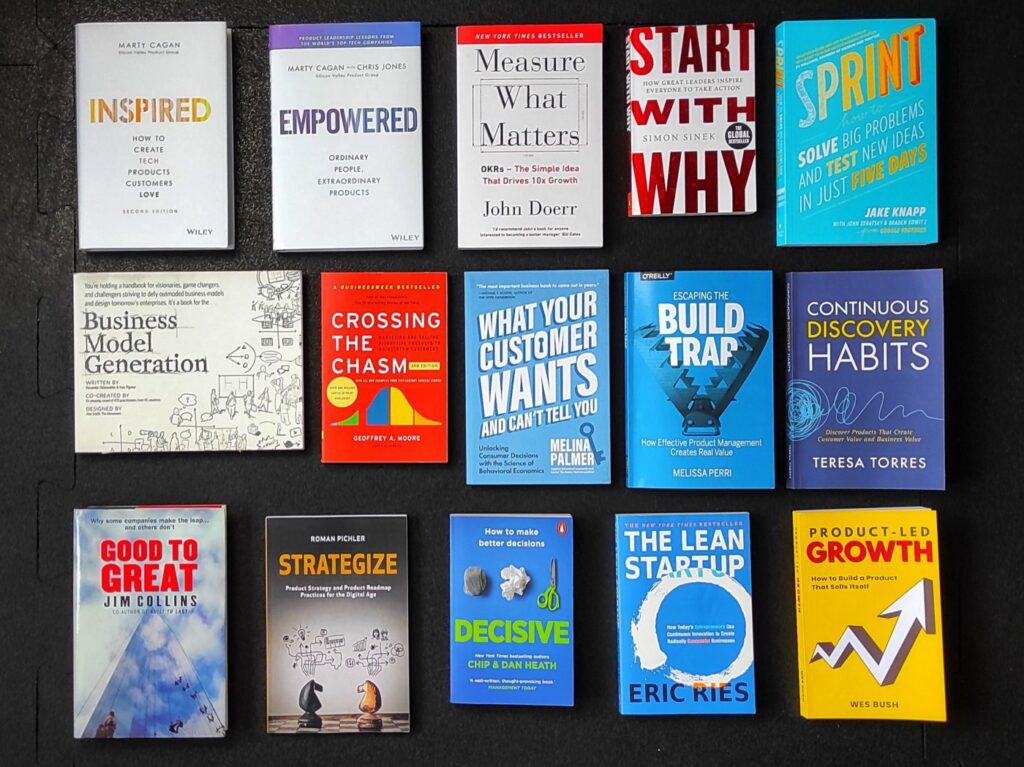
Product discovery is a crucial part of the product development process. It involves understanding the customer, identifying their needs, and developing a solution that addresses those needs. As a product manager, having a solid understanding of product discovery is essential for creating products that customers love. In this article, we’ll take a look at five books that every product manager should consider reading to improve their product discovery skills. Inspired: How to Create Products Customers Love by Marty Cagan In summary, this book is a must read for anyone taking their first steps into Product Management or working alongside software development for the first time. It outlines the skills needed to be a great PM, how to organize teams, and the tried and tested processes to follow. For those with more experience there’s a tonne of great context that explains why the practices used actually work, and why commonly believed alternatives don’t. This book provides an in-depth look at the product development process, from idea to launch. It covers key concepts such as defining product vision, creating a product roadmap, conducting customer research, and more. The author stresses the importance of truly understanding the customer and their needs, as well as fostering a culture of innovation within an organization. The Lean Product Playbook: How to Innovate with Minimum Viable Products and Rapid Customer Feedback by Dan Olsen This is one of the best guides to build great products customers love. In this book, the author presents a step-by-step guide to the Lean Product Development process, which emphasizes fast iteration and continuous learning from customer feedback. To create a successful product — you need to satisfy all layers of the Product-Market fit pyramid, ensuring you’re clear on who you are targeting the product for, what their needs are, and then creating a compelling offering that satisfies those needs with a compelling value proposition, feature set, and UX. The Lean Product Process sets out a six-step process to achieve this: Determine your target customers Identify under-served or unmet needs Define a compelling value proposition Identifying an MVP feature set Creating your MVP prototype Testing your MVP with customers The book covers topics such as defining product-market fit, creating minimum viable products, and using data to make informed decisions about product development. Cracking the PM Interview: How to Land a Product Manager Job in Technology by Gayle McDowell and Jackie Bavaro This book is a comprehensive guide to the product management interview process, specifically for technology companies. It covers common interview questions, provides tips on how to prepare, and offers a deep dive into the skills and experience necessary to excel in a product management role. McDowell and Bavaro begin by defining the product management role, debunking myths, and explaining how it varies by company. Then they talk about what experience you need and how to advance your career, using advice from accomplished PMs at top companies. They also go into the specifics of how recruitment works in big tech, sharing insider information from prestigious companies like Google, Yahoo, and Twitter. The Mom Test: How to Talk to Customers & Learn If Your Business is a Good Idea When Everyone is Lying to You by Rob Fitzpatrick This book provides a framework for conducting customer interviews that yields valuable insights into their problems, needs, and motivations. The Mom Test is a set of simple rules for crafting good questions that even your mom can’t lie to you about. The measure of usefulness of an early customer conversation is whether it gives us concrete facts about our customer’s lives and world views. These facts, in turn, allow us to improve our product. Eventually you do need to mention what you’re building and take people’s money for it. However, the big mistake is almost always to mention your idea too soon rather than too late. If you just avoid mentioning your idea, you automatically start asking better questions. Doing this is the easiest (and biggest) improvement you can make to your customer conversations. The Mom Test: Talk about their life instead of your idea. Ask about specifics in the past instead of generics or opinions about the future. Talk less and listen more. The author argues that by focusing on the “mom test” (asking customers about their life before and after using your product), you can gain a better understanding of the real impact your product is having and whether it is worth pursuing as a business idea. Sprint: How to Solve Big Problems and Test New Ideas in Just Five Days by Jake Knapp, John Zeratsky, and Braden Kowitz Written by three design partners at Google Ventures, this book is a unique five-day process–called the sprint–for solving tough problems using design, prototyping, and testing ideas with customers. This book outlines a structured process for solving complex problems and testing new ideas in just five days. The process involves rapidly prototyping and testing solutions, and is designed to be both fast and effective. The authors provide real-world examples and step-by-step instructions to help readers apply the Sprint method to their own projects. ✨Bonus✨ Continuous Discovery Habits by Teresa Torres Probably one of the most insightful product discovery books to ever be written. In this book, Teresa Torres explores how product managers and designers can keep making a positive impact on their customers’ lives. It explores an optimal decision-making process for product teams, so that they can continue to improve their offerings. These 5 essential books for every Product Manager (plus bonus) offer a wealth of knowledge and practical tips on various aspects of product discovery. Whether you’re a seasoned product manager or just starting out, reading these books will help you better understand the customer, identify their needs, and develop solutions that address those needs. By incorporating the insights and strategies outlined in these books, you can increase your chances of success as a product manager and create great products that customers would love. Conclusion: What Next After Reading These Product Management Books? As
7 Product Discovery Books That Teach What You Should Know

[vc_row type=”in_container” full_screen_row_position=”middle” column_margin=”default” column_direction=”default” column_direction_tablet=”default” column_direction_phone=”default” scene_position=”center” text_color=”dark” text_align=”left” row_border_radius=”none” row_border_radius_applies=”bg” overflow=”visible” overlay_strength=”0.3″ gradient_direction=”left_to_right” shape_divider_position=”bottom” bg_image_animation=”none”][vc_column column_padding=”no-extra-padding” column_padding_tablet=”inherit” column_padding_phone=”inherit” column_padding_position=”all” column_element_direction_desktop=”default” column_element_spacing=”default” desktop_text_alignment=”default” tablet_text_alignment=”default” phone_text_alignment=”default” background_color_opacity=”1″ background_hover_color_opacity=”1″ column_backdrop_filter=”none” column_shadow=”none” column_border_radius=”none” column_link_target=”_self” column_position=”default” gradient_direction=”left_to_right” overlay_strength=”0.3″ width=”1/1″ tablet_width_inherit=”default” animation_type=”default” bg_image_animation=”none” border_type=”simple” column_border_width=”none” column_border_style=”solid”][vc_column_text] In product development, so many of our ideas will not work. With product discovery, product teams can limit waste and rebuilds by up to 50%. It is much cheaper to build the right thing the first time by having a clear understanding of the problem and co-creating the solution with customers. Product teams are able to go faster and build greater products by following the right product discovery processes. Here are seven product discovery books that teach you everything you need to know. 7 Must-Read Product Discovery Books 1. Inspired: How to Create Tech Products Customers Love by Marty Cagan In this book, Marty Cagan provides a framework for creating successful products, which involves understanding the customer, identifying a market opportunity, and building a great team to execute on the opportunity. Cagan’s book is essential reading for anyone in the technology industry who wants to create products that customers will love. This book is an essential read for every product manager. Some people call it the product management bible. 2. Continuous Discovery Habits by Teresa Torres In her book, Teresa Torres shares a framework for developing habits that lead to building successful products. According to Torres, there are four main habits that every product development team should adopt: focus on the customer, embrace change, fail fast, and learn constantly. By following these habits, teams can continuously improve their product development process and better meet the needs of their customers. She offers as structured and sustainable approach to continuous discovery and opportunity mapping. She also points out that it is essential to interview your customers regularly (ideally weekly). 3. The Mom Test: How to Talk to Customers & Learn If Your Business Is a Good Idea When Everyone Is Lying to You by Rob Fitzpatrick In this book, Rob Fitzpatrick shares a set of simple rules for crafting good customer interview questions that even a person’s mom can’t lie to them about. The measure of usefulness of an early customer conversation is whether it provides concrete facts about their lives and world views. These facts, in turn, allow us to improve our business. Eventually you do need to mention what you’re building and take people’s money for it. However, the big mistake is almost always to mention your idea too soon rather than too late. The book advises that you shouldn’t ask your mom whether your business is a good idea because she loves you and will lie to you. It is the ultimate guide for interviewing your customers. 4. Jobs to be Done: Theory to Practice by Tony Ulwick In his book, “Jobs to be Done: Theory to Practice,” Tony Ulwick lays out a framework for understanding customer behavior and designing products that meet customer needs. Ulwick’s framework is based on the idea that customers don’t just purchase products, they “hire” them to do a job. By understanding the “job” that a customer is trying to get done, companies can design products that are more likely to be successful. In summary, he shares in the book that people don’t buy products. They “hire” them to do jobs. He also provides insights on how to define and prioritize customer needs. 5. Sprint: How to solve complex problems and test ideas in just 5 days by Jake Knapp This book by Jake Knapp that lays out a framework for solving complex problems and testing ideas in just five days. The sprint process includes four main steps: brainstorming, sketching, deciding, and prototyping. By following this process, companies can quickly and efficiently come up with solutions to complex problems. The book describes a specific Product Discovery technique invented in Google. It is recommended that the ideas in it are compared with Teressa Torres’s approach, particularly interviewing your customers before ideating. You may want to combine those approaches. 6. The Lean Product Playbook: How to Innovate with Minimum Viable Products and Rapid Customer Feedback by Dan Olsen This book by Dan Olsen that lays out a framework for designing and developing successful products. Olsen’s framework is based on the Lean Startup methodology, and it emphasises the importance of validated learning, customer feedback, and continual iteration. By following Olsen’s framework, companies can increase their chances of developing successful products. Key insights from the book include the complete Lean Product Process – discovering and creating products while minimising waste and rework. The author also shares insights around Business Model, Value Proposition, MVP, Product-Market Fit, Product Discovery, and more. 7. Testing Business Ideas: A Field Guide for Rapid Experimentation by Alex Osterwalder In this book, Alex Osterwalder provides a framework for testing business ideas quickly and efficiently. Osterwalder’s framework is based on the Lean Startup methodology, and it emphasizes the importance of validated learning, customer feedback, and continual iteration. By following Osterwalder’s framework, companies can increase their chances of developing successful products. Some lessons from the book include, starting from an idea, then using the design loop to improve it, using discovery experiments to examine your assumptions and information about dozens of tools and techniques anyone can easily apply. Conclusion: What Next After Reading These Product Discovery Books? As you go through these books, you will gain a deeper understanding on how to perform effective product discovery, but your next question might be, what next? [/vc_column_text][/vc_column][/vc_row]
