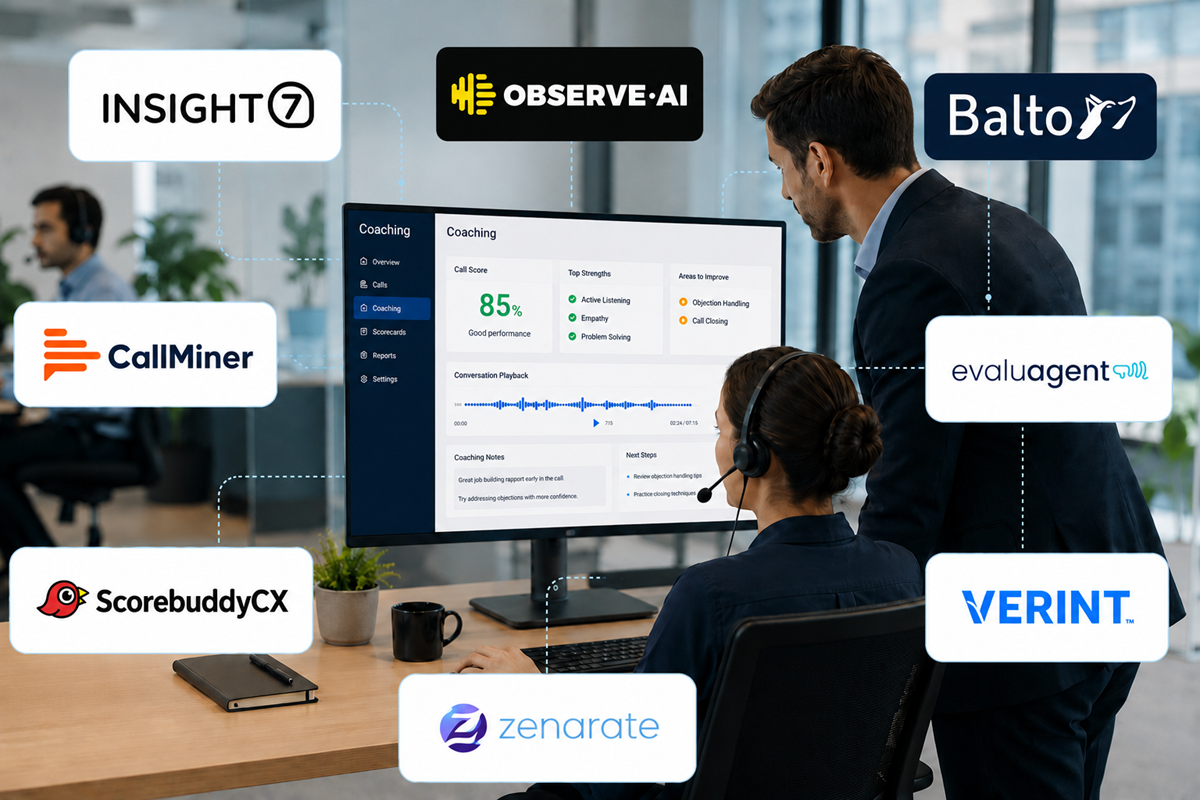
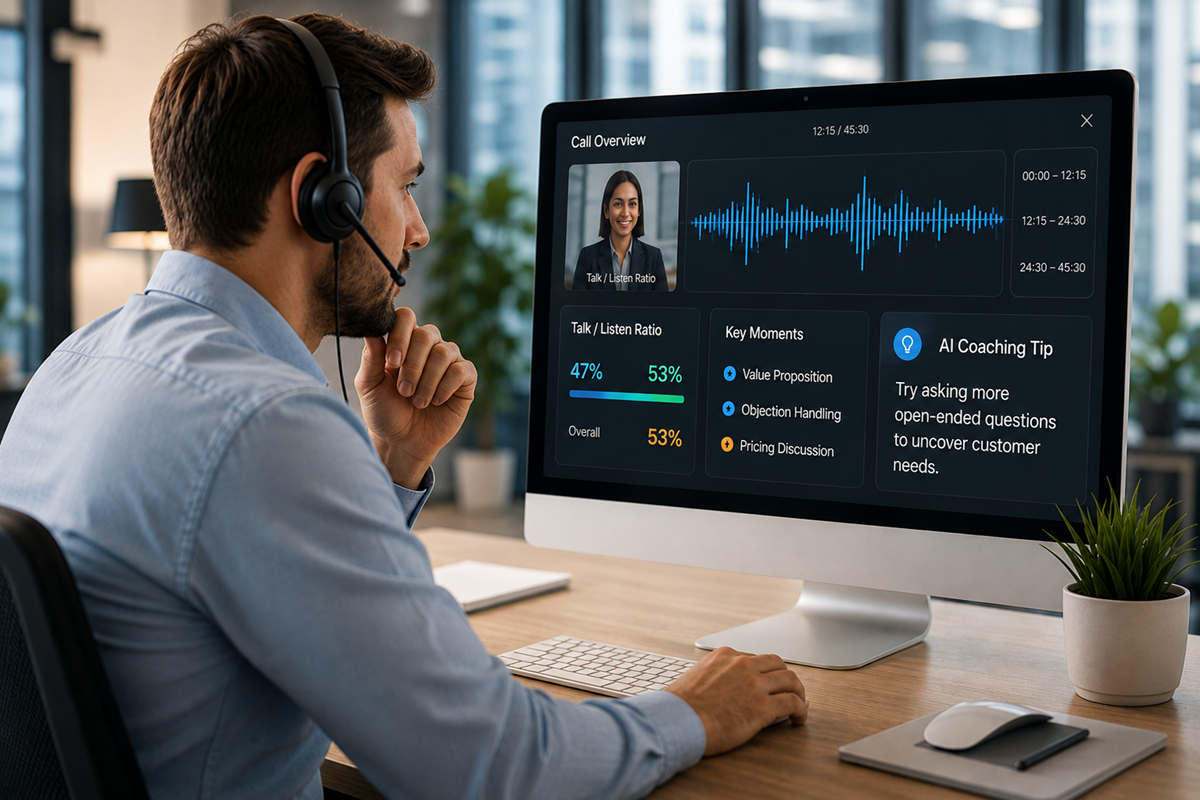
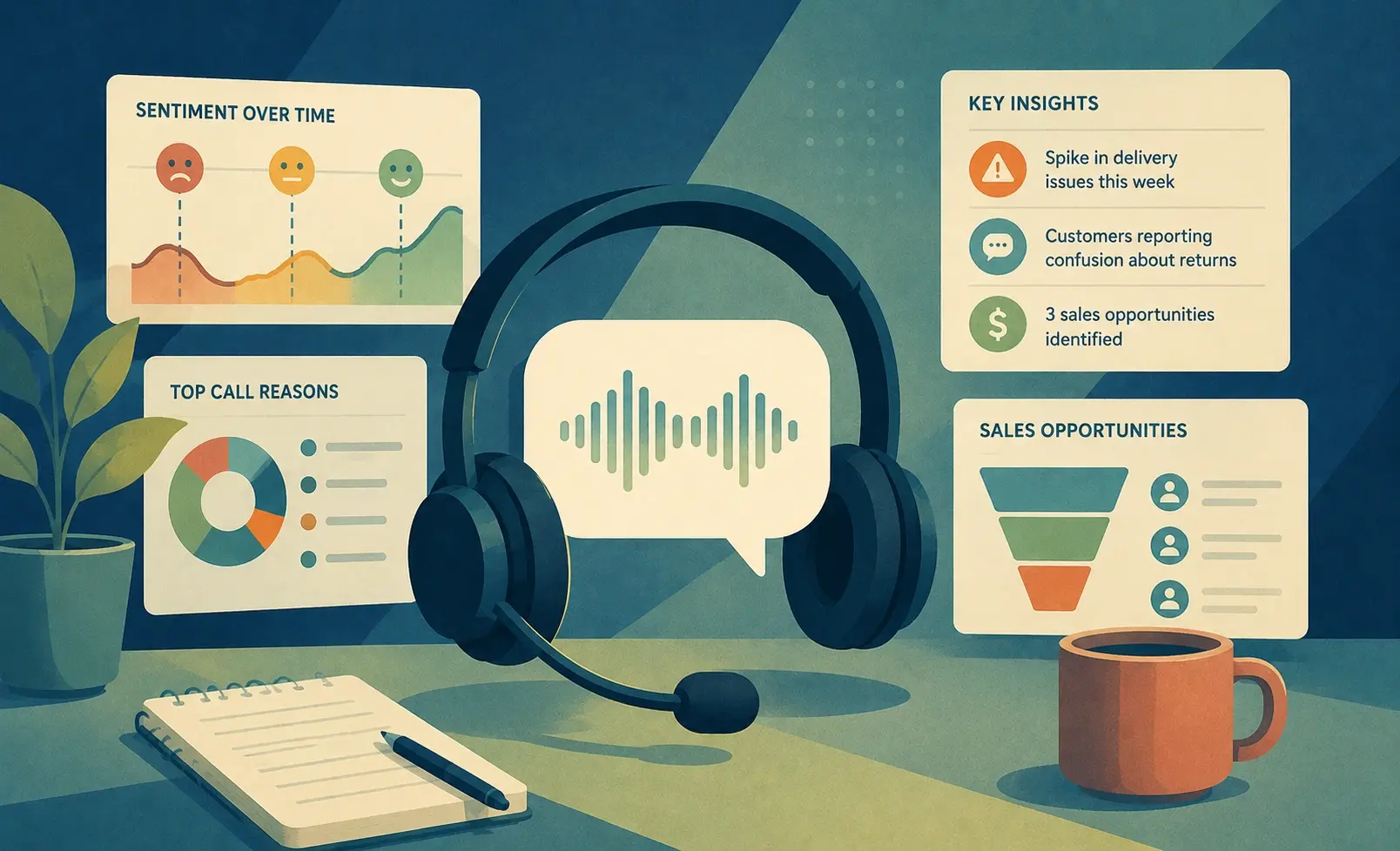
Measuring coaching effectiveness is harder than it looks. Most teams rely on manager impressions and spot-checked calls — a method that misses most interactions and introduces bias. QA evaluation tools change this by automating performance measurement across every call, not just the ones you had time to review.
This guide walks through how to use QA evaluation tools to measure coaching effectiveness in a way that's consistent, scalable, and actually tied to behavior change.
Why Traditional Coaching Metrics Fall Short
Manual QA teams typically review only 3 to 10% of calls. That means coaching decisions are based on a fraction of the data. When a manager tells an agent they need to improve on objection handling, there's rarely proof that the coaching session changed anything — the next sampled call might not even surface that skill.
QA evaluation tools solve this with automated, criteria-based scoring across 100% of calls. Every session becomes a data point. Coaching moves from reactive ("I noticed something on Tuesday's call") to systematic ("your empathy score dropped 12 points over the last 30 calls").
What does a QA evaluation tool actually measure?
A QA evaluation tool scores calls against configurable criteria: greeting quality, product knowledge, compliance language, objection handling, and close technique. Each criterion can be weighted by importance, and every score links back to the exact quote that triggered it. You're not just getting a number — you're getting evidence.
Platforms like Insight7 go further by clustering individual call scores into per-agent scorecards that show trend lines over time. A rep who scored 65% in week one and 81% in week four has a clear improvement trajectory you can point to.
Step 1: Define the Behaviors You're Coaching
Before you can measure coaching effectiveness, you need to agree on what "good" looks like for each behavior you're developing. This is where most QA implementations break down.
Scoring criteria like "customer empathy" or "active listening" are too vague without context. A weighted criteria system with descriptions of what great and poor look like on each dimension gives the AI model accurate anchors. A top closer initially scored 56% without this context. After adding specific behavioral descriptions, scores aligned with manager judgment.
Start by identifying two or three skills per agent that coaching is explicitly targeting. These become your focus criteria for the post-coaching measurement period.
How do you set up scoring criteria for coaching goals?
Set up your scorecard with main criteria, sub-criteria, and a context column. The context column is the key piece: it defines the behavior at the exemplary level and at the deficient level. For a criterion like "urgency language," exemplary might be "agent creates a clear reason to act today without using pressure tactics," while deficient might be "agent makes no attempt to create forward momentum."
Tools that support intent-based evaluation (rather than script compliance) are better for coaching because natural language rarely matches scripts word for word.
Step 2: Establish a Pre-Coaching Baseline
Run a batch of calls through your QA tool before any coaching intervention. Score a minimum of 20 to 30 calls per agent to get a statistically useful baseline.
Look for:
- Average score per coached criterion
- Consistency (variance across calls)
- Which specific situations trigger lower scores
This baseline is your measurement anchor. Without it, you can't attribute score changes to coaching rather than to product changes, seasonal patterns, or natural performance variance.
Insight7's call analytics generates per-agent scorecards from this batch automatically, showing average performance with drill-down into individual calls. You can filter by date range, by call type, and by criterion.
Step 3: Run Targeted Coaching Sessions
Coaching sessions informed by QA data should be specific. Instead of a general debrief, the manager walks in knowing the agent's empathy score dropped on 8 of the last 12 calls, and can pull the exact transcript moments where it happened.
This precision changes the coaching conversation. Agents respond better to evidence than to impressions. "Here's what you said at minute 4:32, and here's why it scored the way it did" is more actionable than "you could be warmer with customers."
If your QA platform includes an AI coaching module, agents can practice the specific skill through roleplay scenarios based on their actual failure points. Fresh Prints noted that their QA lead could give agents a specific thing to work on and they could practice it immediately, rather than waiting for the next week's call.
Step 4: Re-Score After Coaching
Two to four weeks after a coaching session, run another batch of calls through the same QA criteria. Compare:
- Did the coached criterion score improve?
- Did improvement hold across different call types or just easy calls?
- Did adjacent criteria also improve (indicating skill generalization) or decline (indicating that focusing on one skill hurt others)?
This is where QA evaluation tools earn their value. You now have before-and-after data on the specific behaviors that were coached. Coaching effectiveness is no longer a subjective feeling — it's a score change on a defined scale.
If/Then Decision Framework
| Situation | What to Do |
|---|---|
| Score improved on coached criteria | Coaching was effective; expand to next skill area |
| Score flat after 4 weeks | Review whether criteria definitions match behavior; adjust or change coaching approach |
| Score improved but then declined | Coaching worked short-term; add follow-up reinforcement session |
| Score improved on coached criteria but declined elsewhere | Coaching may have overloaded focus; narrow scope per session |
Step 5: Build an Ongoing Measurement Cadence
The goal is not a one-time assessment. Effective coaching programs run on a consistent rhythm: weekly QA scoring, bi-weekly coaching conversations, monthly trend reviews with the team.
Set alert thresholds so you're notified when an agent's score drops below a target on a critical criterion. This turns the QA system into an early warning system rather than a backward-looking audit.
Insight7's alert system can deliver performance-based alerts via email, Slack, or Teams when a score falls below a configured threshold — so managers don't have to check dashboards manually.
How long does it take to see coaching results in QA scores?
Behavior change typically shows up in QA scores within two to four weeks of targeted coaching. Tone and language behaviors change faster than deeper skills like objection handling or consultative questioning. TripleTen, which processes over 6,000 learning coach calls per month through Insight7, was able to track improvement trajectories within their first full scoring cycle — one week from hookup to first analyzed batch.
Common Pitfalls
Scoring without calibration. If your AI scoring model hasn't been tuned to your specific "great/poor" context, scores will be noisy. Block four to six weeks for calibration before using scores as coaching evidence.
Measuring the wrong things. If your coaching sessions focus on empathy but your scorecard doesn't include empathy criteria, you're flying blind. Align scorecard criteria to coaching objectives before each cycle.
Coaching to the scorecard. If agents learn to say the right words without the right intent, your scores will look good but customer outcomes won't improve. Use intent-based scoring, not script compliance, for any criterion that reflects a genuine conversational skill.
Closing Thought
QA evaluation tools work best when they're integrated into a complete coaching loop: baseline, coach, re-score, adjust. The tool doesn't replace manager judgment — it gives managers better information to act on. Teams that instrument this loop properly stop guessing whether coaching is working and start knowing.
Insight7 combines automated QA scoring with AI coaching roleplay, so agents can practice the exact behaviors flagged in their evaluations. If you're building or refining a coaching measurement program, it's worth seeing how the full loop works together.
FAQ
What metrics should I track to measure coaching effectiveness?
Track criterion-level QA scores before and after coaching sessions, score variance across call types, and trend direction over a four-week window. Supporting metrics include call handle time changes, escalation rates, and customer satisfaction scores if available.
How many calls do I need to score to get reliable coaching data?
Score at least 20 to 30 calls per agent per measurement period for statistically meaningful baselines. Automated QA tools make this feasible at scale — manually scoring that volume per rep is impractical for most teams.