
How To Leverage Product Research To Drive B2B Success

In the dynamic landscape of B2B commerce, success hinges on the ability to adapt and innovate. One key strategy that has gained significant traction is the Product-Led Growth (PLG) approach. This approach centers on leveraging the product itself as the primary driver of customer acquisition, conversion, and retention. In this blog post, we will explore the intricacies of utilizing product research to propel B2B success, emphasizing the importance of user experience, integration with existing tools, optimizing the buying journey, and leveraging data and analytics for SaaS growth. Understanding the Product-Led Growth Strategy For B2B Success Product-Led Growth is a methodology that emphasizes building a product that sells itself. This involves a fundamental shift in mindset from sales-led to product-led, where the product becomes a key driver of customer acquisition and retention. Research plays a pivotal role in understanding user needs, preferences, and pain points, guiding the development of a product that not only meets but exceeds customer expectations. Importance of investing in user experience (UX) and in-product elements User experience is paramount in a product-led approach. A seamless, intuitive UX not only attracts users but keeps them engaged. Through meticulous product research, businesses can identify areas of improvement in the user journey, leading to enhanced satisfaction and loyalty. In addition, in-product elements, such as tooltips, guides, and onboarding processes, can be optimized based on research insights to facilitate a smooth user experience. Benefits of integrating with existing tools/platforms Integrating a B2B product with existing tools and platforms is crucial for seamless user adoption. Product research helps identify the most widely used tools in the target industry, enabling developers to create integrations that add value. This strategy not only enhances the product’s utility but also positions it as an indispensable part of the user’s workflow, fostering long-term relationships. Try out this free tool that leverages AI for B2B Success. Optimizing the B2B Buying Journey Creating a frictionless buying journey is essential for B2B success. In this section, we’ll delve into the roles of marketing and Chief Sales Officers (CSOs) in achieving this goal. Role of marketing in framing value and offering online tools for buyer engagement Effective marketing is about framing the value proposition in a way that resonates with the target audience. Product research provides valuable insights into customer pain points, allowing marketers to tailor their messaging to address specific needs. Moreover, offering online tools, such as demos, free trials, and interactive content, can significantly enhance buyer engagement. Through research, businesses can identify the most impactful tools for their target audience. Role of CSOs in enablement and aligning the sales process with buying tasks Chief Sales Officers play a critical role in aligning the sales process with the buying journey. Product research enables CSOs to understand the key decision points in the customer’s journey, allowing them to tailor their sales enablement strategies accordingly. By aligning sales efforts with the buyer’s tasks, CSOs can streamline the process, reducing friction and increasing the likelihood of conversion. Leveraging Data and Analytics for B2B Success Data and analytics are invaluable assets for B2B SaaS companies. They provide actionable insights that drive strategic decision-making, enhance user onboarding and retention, and fuel product development. Importance of improving user onboarding/retention through data analysis Product research extends beyond the development phase and into ongoing user engagement. Through data analysis, businesses can identify patterns in user behavior, allowing them to refine onboarding processes and boost retention rates. Understanding how users interact with the product provides opportunities for targeted improvements, ultimately enhancing the overall user experience. Forecasting demand/churn using analytics for B2B success Analytics not only offer hindsight into user behavior but also empower businesses to predict future trends. By forecasting demand and churn, companies can proactively address potential issues, capitalize on emerging opportunities, and optimize resource allocation. Product research-driven analytics enable B2B SaaS companies to stay ahead of the curve and maintain a competitive edge. Enhancing product development through data-driven insights for B2B Success Data-driven insights are the backbone of successful product development. Product research, coupled with analytics, guides feature prioritization, helps identify gaps in the market, and informs strategic decisions. By aligning development efforts with user needs and preferences, businesses can create products that not only meet but exceed customer expectations, fostering long-term success. Conclusion In the ever-evolving landscape of B2B commerce, leveraging product research is a cornerstone of success. Adopting a Product-Led Growth strategy, optimizing the buying journey, and harnessing the power of data and analytics are key components of a holistic approach to B2B success. By understanding user needs, integrating with existing tools, and continuously refining products based on data-driven insights, businesses can position themselves at the forefront of their industries, driving growth and fostering lasting customer relationships.
5 Effective Ways to Leverage Customer Insights for E-commerce Startups

It’s no news how competitive the e-commerce landscape is, understanding your customers is paramount to achieving success. By leveraging customer insights, you can make informed decisions that drive growth, increase customer satisfaction, and boost your bottom line. In this article, we will explore effective ways to leverage customer insights for e-commerce success. From analyzing customer feedback to implementing data-driven marketing strategies, these tactics will help you harness the power of customer insights to optimize your e-commerce store and stay ahead of the competition. Let’s dive in! The power of customer insights in e-commerce Customer insights are a valuable asset that can significantly impact your e-commerce business. Understanding your customers’ preferences, behaviors, and needs allows you to tailor your offerings and create personalized experiences. By tapping into the power of customer insights, you can make strategic decisions that align with your target audience, ultimately leading to increased conversions and customer loyalty. The abundance of data available today, from website analytics to social media interactions, provides a treasure trove of information waiting to be analyzed. By leveraging customer insights, you can identify trends, spot opportunities for growth, and address any pain points your customers may have. This valuable information can guide your product development, marketing campaigns, and customer service efforts to ensure your e-commerce success. Utilizing tools for gathering customer data To effectively leverage customer insights, it’s crucial to utilize the right tools for gathering customer data. There are numerous tools available that can help you collect and analyze data from various touchpoints, such as your website, social media platforms, and email campaigns. One essential tool is a customer relationship management (CRM) system, which enables you to centralize and manage customer data in one place. A CRM system not only helps you gather information about your customers but also allows you to track their interactions, preferences, and purchase history. This valuable data can then be used to segment your customer base and create targeted marketing campaigns. Another useful tool is web analytics, such as Google Analytics. This tool provides insights into your website’s performance, including visitor demographics, behavior, and conversion rates. By analyzing these metrics, you can identify areas for improvement and optimize your website for a better user experience. Additionally, feedback analyzing tools like Insight7 and other social media listening tools can help you monitor and analyze customer conversations and feedback across various social media channels. This data can provide insights into customer sentiment, preferences, and trends, allowing you to tailor your messaging and offerings accordingly. By utilizing these tools for gathering customer data, you can gain a deeper understanding of your customers and make data-driven decisions that enhance your e-commerce success. Conducting Market Research to Understand Customer Preferences In addition to leveraging the right tools for gathering customer data, conducting market research is another crucial step in understanding customer preferences. While customer insights derived from existing data can provide valuable information, market research helps fill in the knowledge gaps and gives you a broader understanding of your target audience. There are various methods you can employ to conduct market research. Surveys and questionnaires are effective tools to collect data directly from your customers. By asking targeted questions, you can gain insights into their preferences, shopping habits, and motivations. Another effective approach is conducting focus groups or interviews with a select group of customers. This allows you to have in-depth conversations, explore their needs and pain points, and get qualitative insights that go beyond numeric data. Furthermore, studying industry trends and keeping an eye on your competitors can provide valuable insights into emerging customer preferences and market shifts. This information can help you identify new opportunities and make informed decisions regarding product offerings and marketing strategies. By investing time and resources into conducting market research, you can align your business with your customers’ preferences and stay ahead of the competition. How to Leverage Customer Insights for E-commerce Success 1. Analyze customer feedback and reviews Analyzing customer feedback and reviews is another powerful way to leverage customer insights for e-commerce success. Customer feedback is a goldmine of information that can help you understand how your products or services are perceived in the market. By monitoring online reviews, social media comments, and customer feedback platforms, you can gain valuable insights into areas of improvement, customer preferences, and emerging trends. To effectively analyze customer feedback, start by categorizing the feedback into different themes or topics. Look for recurring issues or positive responses that can guide your decision-making process. Pay attention to the sentiment in the feedback to identify areas where you are excelling or falling short. Additionally, consider implementing sentiment analysis tools that can automatically analyze customer sentiment. These tools use natural language processing algorithms to evaluate the emotional tone of customer feedback, providing you with an objective assessment of customer sentiment. By carefully analyzing customer feedback and reviews, you can identify areas where your business can improve, make strategic decisions, and enhance the overall customer experience. 2. Personalize the Shopping Experience With Customer Insights Personalization is a key aspect of leveraging customer insights for e-commerce success. In today’s digital age, customers expect personalized experiences that cater to their unique preferences and needs. By using customer insights, you can create a shopping experience that feels tailored to each individual customer. One way to implement personalization is through product recommendations based on customer preferences and buying behavior. By analyzing customer data, you can identify the products that are most likely to interest a specific individual and display those recommendations on your website or in targeted email campaigns. Another way to personalize the shopping experience is by offering customizations or personalized options for products. This could include allowing customers to choose their preferred colors, sizes, or adding personalized engravings to items. By personalizing the shopping experience, you not only enhance customer satisfaction but also increase the chances of repeat purchases and customer loyalty. 3. Optimize Product Offerings Based on Customer preferences When it comes to leveraging customer insights for e-commerce success, optimizing your product offerings
How to Build User-Centric Products for B2B Software Startup

Creating genuine user-centric software requires diligence across the entire product development lifecycle. In this post, we’ll explore the key principles and best practices to help you build experiences that delight customers. Know Your Target Audience Deeply The first and most critical step is thoroughly understanding who your users are and what they want to accomplish. There are several research techniques to leverage: Surveys – Well-designed surveys provide quantitative data on user behaviors, pain points and preferences. Keep surveys focused and avoid over-surveying users. Interviews – One-on-one user interviews offer valuable qualitative insights. Prepare an interview guide covering goals, frustrations, workflows and more. Personas – Craft robust user personas synthesizing research into an archetype encapsulating behaviors, attitudes and motivations. Make personas realistic, not hypothetical. Scenarios – Develop user journey scenarios mapping how personas would interact with the product. Scenarios test workflows and identify usability gaps. Focus Groups – Facilitated discussions with 5-10 users per group provide qualitative feedback on concepts and prototypes. Recruit engaged participants. The goal is to gather comprehensive insights that paint a complete picture of user needs. Resist making assumptions – let research data inform and guide design decisions. In addition to functional needs, also consider the broader context and non-functional requirements like security, compliance and interoperability that shape the user experience. Define Success Metrics Aligned to Goals Your goal is a user-centric product so identify quantitative and qualitative metrics that indicate whether the software meets user needs. Quantitative metrics track hard data on user actions. Key examples include: Conversion rates for desired actions like sign-ups. Retention/churn rates indicating user loyalty. Task success rates measuring ease of completing critical workflows. Satisfaction scores quantifying user sentiment. Qualitative feedback offers softer, nuanced insights. Useful techniques include: User reviews and testimonials. Social listening on channels like Twitter and Facebook. User feedback forms and suggestion boxes. Moderated forums and online communities. Ensure metrics tie directly to user personas’ goals and motivations. For example, an enterprise persona may care about uptime and support response times versus a consumer persona interested in enjoyable experiences. As user priorities shift over time, evolve metrics accordingly. Continuously track metrics from initial development through post-launch to ensure alignment with evolving user goals. Design Intuitive User Experiences With research and metrics as your foundation, craft intuitive product experiences focused on seamless user workflows. Employ user experience design techniques like: Wireframes – Low-fidelity schematics visualizing interface layouts and information architecture. Build wireframes focused on usability. Prototypes – Interactive prototypes enable hands-on concept validation. Use tools like Figma, Framer and Adobe XD to create prototypes. Start low-fidelity, refine over time. Storyboards – Illustrate user journeys step-by-step to identify usability gaps. Convert insights into storyboards. Persona Stories – Craft narratives describing how personas interact with the product. Uncover use cases and opportunities. Adhere to established interface design and usability heuristics: Consistent visual language and interaction patterns Clear information hierarchy and minimalist aesthetics Accessible and inclusive features supporting diverse users Forgiving interfaces with clear feedback and recovery Maintain focus on crafting experiences optimized for personas’ end-to-end workflows versus implementing individual features. Evaluate if the solution holistically helps users achieve their goals via engaging experiences. Validate Concepts Through User Testing There is no substitute for direct user feedback. Conduct ongoing user testing to validate designs and uncover usability issues before launch. Useful testing methods include: Usability testing – One-on-one product walkthroughs to gauge intuitiveness and uncover pain points. A/B testing – Compare interface variants to determine what performs best. Beta testing – Real-world testing with early access users to validate readiness. Diary studies – Users self-document experiences over time to provide longitudinal insights. Feedback forms – Provide easy ways to share impressions within the product experience. Adopt a collaborative, co-creative mindset when engaging users. Make them active partners in shaping the product, not just test subjects. Synthesize learnings into actionable insights versus isolated observations. Strategically Introduce Your Product to Users The launch introduces your solution to users. Ensure you effectively generate awareness, enthusiasm and adoption in the market: Messaging – Craft messaging highlighting value propositions and benefits to users. Focus on resonating with personas. Channels – Strategically reveal across social media, email, websites, store listings and events. Make a splash. Influencers – Engage influencers and media to organically amplify launch buzz. Referrals – Encourage existing users to refer others via incentives and social sharing. Pricing – Consider introductory pricing and promotions to incentivize trial. Rollout incrementally to a small user segment first. Cautiously expand access while monitoring for issues and gathering feedback. Avoid a big bang launch without testing at smaller scale first. Sustainably Evolve Your Product Post-Launch Product launch is not the end – it’s just the beginning. Adopt a growth mindset committed to continuously evolving the product based on user data and feedback. Agile frameworks like scrums enable releasing incremental enhancements frequently versus big bang launches. Consistently deploy small batches of improvements and new features versus holding them for a major release. Open feedback channels and engage users. Make gathering user insights a habitual practice, not a one-off event. Develop a listening culture focused on users. Analyze usage metrics and experiment with new concepts. Confirm that enhancements positively impact goals; discard what doesn’t. Maintain alignment to user needs, not internal assumptions. By iterating the product sustainably based on real-world data, you can deliver ongoing value that helps users achieve their evolving goals. Designing genuinely user-centric software requires diligence across the entire product development lifecycle. But the effort pays off through software that empowers and delights customers. By deeply understanding your users, crafting experiences holistically optimized for their needs, and sustaining focus post-launch, you can build software that wins with users and succeeds in the marketplace. What steps will you take today to put users first in your next project?
Product-Led Growth: From Product to Profit
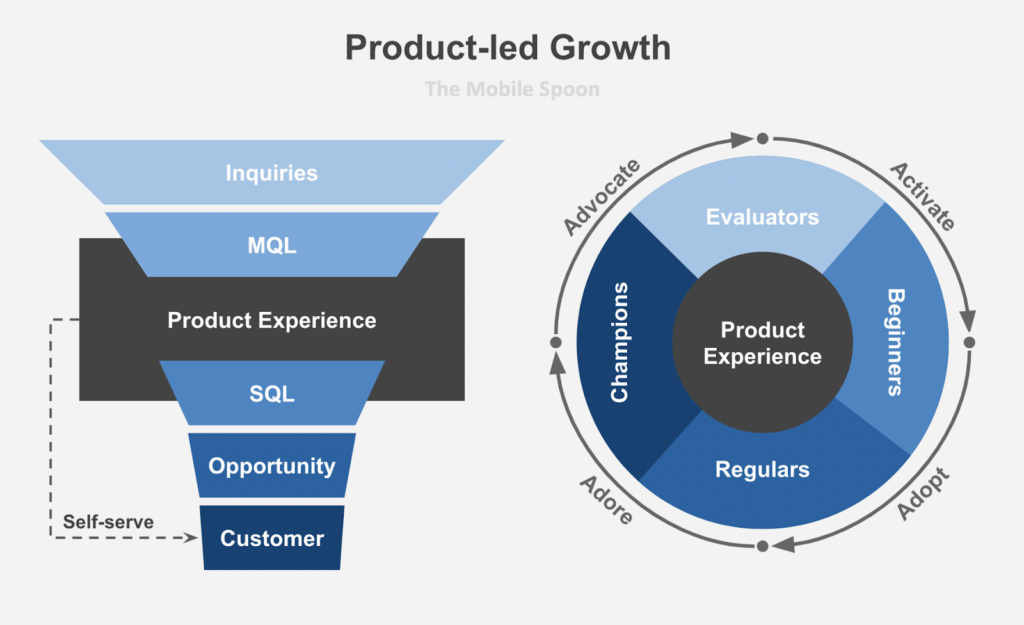
In 2009, a small team of entrepreneurs set out to disrupt the traditional software industry by building a product that users would love. They focused on creating a simple, easy-to-use product that solved a real pain point for their target audience. That product was Slack, and today it’s a household name with millions of users worldwide. Slack is just one example of a product-led growth (PLG) company that has leveraged its product to achieve rapid growth and success. PLG is a business strategy that focuses on creating a product that sells itself, rather than relying on traditional sales or marketing tactics. It’s a mindset that prioritizes user experience and fosters growth through word-of-mouth and organic channels. In this article, we’ll dive deeper into what PLG is, how it works, and its implications for businesses. What is Product-Led Growth? Product-led growth is a business strategy that puts the product at the center of the growth engine. PLG companies prioritize creating a product that provides value to the user right from the start, with the goal of fostering user adoption and driving growth through word-of-mouth and organic channels. The best PLG companies focus on creating a product that is easy to use, intuitive, and solves a real pain point for the user. They prioritize user experience over sales or marketing tactics, and rely on the product to sell itself. This approach is in stark contrast to sales-led growth (SLG) and marketing-led growth (MLG), which rely on traditional sales or marketing tactics to generate revenue. Examples of Top Product Led Growth Companies Slack is just one example of a successful PLG saas company. Other examples include: Zoom: Zoom’s easy-to-use video conferencing software has become a go-to solution for remote work and virtual events. Dropbox: Dropbox’s cloud storage solution has made it easy for users to store, share, and collaborate on files across devices. Grammarly: Grammarly’s writing assistant tool has become a must-have for anyone looking to improve their writing skills. Insight7: Insight7 is an AI powered product discovery tool that helps product teams do customer research 10x faster by generating insights from customer interviews and surveys in one click. Implications of Product-Led Growth Companies that experience product-led growth are characterized by their ability to deliver exceptional product experiences that encourage frequent usage and referral to their networks. These companies experience significant growth due to their viral nature, where users derive immediate unique value from the product or service and are incentivized to attract new users through the network effect. Product-led growth companies are leading the charge in driving growth across both B2B and B2C software and services, and they represent the convergence of three critical corporate functions: product management, marketing, and sales/customer success. Product managers are increasingly taking on marketing responsibilities such as conducting customer interviews, while marketers are now involved in product management duties, such as boosting usage through referral programs. This shift has resulted in customer success/support becoming a critical component of both marketing and product management. This convergence has significant implications not only for improving collaboration between teams but also for promoting employee satisfaction and ensuring optimal team utilization. Interestingly, tools like Insight7 help teams have a seamless collaborative and automated customer research experience to drive growth. Teams that are product-led have developed extensive insights on this convergence and the product discovery and delivery processes. Insight7 provides software solutions that enable product management teams to streamline their approach to continuous product discovery. However, product-led growth has several implications for businesses, both positive and negative. Positive implications: 1.Increased user adoption: PLG companies prioritize creating products that are easy to use and provide value to the user right from the start. By doing so, they are able to foster user adoption and drive growth through word-of-mouth and organic channels. 2. Lower customer acquisition costs: PLG companies rely on their product to drive growth, rather than traditional sales and marketing tactics. By doing so, they can reduce customer acquisition costs and focus on creating a great user experience. 3. Higher customer lifetime value: PLG companies prioritize creating a product that provides ongoing value to the user. By doing so, they can increase customer lifetime value and generate more revenue over time. Negative implications: 1.Longer sales cycles: PLG companies rely on the product to sell itself, which can result in longer sales cycles as users try the product before committing to it. 2. Risk of low conversion rates: PLG companies rely on the product to convert users into paying customers. If the product does not provide enough value or is not easy to use, users may not convert to paying customers. 3. Limited market size: PLG companies may have limited market size, as their product may only appeal to a specific set of users. This can limit their potential for growth. Product-Led Growth vs. Other Growth Strategies PLG vs. SLG: SLG focuses on using sales tactics to acquire new customers while PLG focuses on creating a product that sells itself. SLG typically involves a high-touch sales process, where sales teams work to convince potential customers to buy the product. In contrast, PLG companies prioritize creating a product that users love and that provides enough value to convert them into paying customers without the need for a sales team. PLG vs. MLG: MLG focuses on using marketing tactics to generate demand for the product. Marketing teams use tactics like paid advertising, content marketing, and social media to raise awareness of the product and generate leads. While PLG companies may use some of these tactics, they prioritize creating a product that is easy to use and provides value to the user right from the start, rather than relying solely on marketing tactics to generate demand. While there are both positive and negative implications of this approach, PLG companies like Slack, Zoom, and Dropbox have proven that it can lead to rapid growth and success. By prioritizing the product and user experience, PLG companies have been able to reduce customer acquisition costs, increase customer lifetime value,

From Idea to Reality: The Role of a Product Vision in Product Development

Vision starts with knowing your customers and what they need. You have to deeply understand their challenges and how your product will solve them. A product vision will serve as a guide for the stakeholders, as it will remind them of the general direction the product should be taking, and the common objectives within the team. A product’s development and management involve time, perseverance, effort, and a distinct product vision. In simple terms, stakeholders must be persuaded by the product vision that your development strategy is in line with business objectives and is best for your target market. What is a Product Vision? A product vision also known as a product vision statement is a long-term vision of the product, or what the product will look like in the future. It outlines a product’s strategy and objectives so that stakeholders understand how they should proceed. It also describes the future state of the product as well as the issues or goals it seeks to address. Your product vision sheds light on the motivation for the development of the product and how it meets consumer needs in a way that benefits the company. They also serve as a product manager’s compass for maintaining communication with all relevant parties. As they proceed through the development process, this enables the product team to maintain organization. It also helps the users learn about and connect with a particular product. Ultimately, product vision statements act as benchmarks for the creation of the product. In other words, you begin with a high-level vision statement, then translate that vision into a strategic guide and action plan—the product roadmap. Why is a Product Vision Important? Product vision statements are crucial for businesses for a number of reasons, both for the sake of the customers and stakeholders. To begin with, individuals involved in creating the product and realizing the future state described by the product owner want a clear and cogent development roadmap. A product vision can be compared to a company’s compass in this way. This is so because product vision statements give a lot of important background information about a product, including its objectives, the motivations for its conception, the benefits it aims to offer consumers or users, and the desired future state of a product. All of this provides the stakeholders with a shared goal for their work to change the product’s current state. Additionally, one of the few things that may convey a significant amount of information about your business and product in the fewest possible words is a product vision statement. A product vision can quickly respond to customers who may have accidentally discovered your product and are wondering what it is or what it is intended to accomplish. What makes a great product vision? Define the motivation behind the product It’s great to have an idea for a product but it doesn’t end there. Defining the reason why this product is necessary will help shape the development process. Ask yourself why you are excited to work on the product, why you care about it, what positive change the product should bring about, and how it will shape the future. This provides a great deal of context and information to both customers and stakeholders and can be very useful in determining the best course for further product development and use. Product vision should align with company vision The majority of the time, your product vision will be different from your company vision, which is a crucial concept to comprehend. However, the company’s overarching vision must be complemented by the product visions. This is required because corporate visions and goals can be complex. If the corporate vision is to be realized, it will be accomplished through the company’s products, which are defined by its product visions. As a result, for a company’s corporate vision to be realized, its product visions must be aligned with it. Keep your customers and end users in mind Your customers are the reason for your product, therefore, the product vision must be created with the needs of your target audience and end users in mind. Distinguish between product vision and product strategy Although they are closely related, product vision and product strategy are different. Your vision of the product should not be a plan that demonstrates how to reach your goal. Instead, the product vision and the product strategy, the path toward the goal, should be kept separate. This allows your strategy to be modified while remaining grounded in your vision. Where you want your product to be should be the main focus of your vision. The shorter, the better Your vision should be short and straight to the point so it’s easy for your team and stakeholders to understand. It will most likely be difficult to condense all of the words you want to use in the product vision, but short and sweet usually works better with customers. Furthermore, people are more likely to remember something that is only a sentence long rather than a lengthy paragraph. E.g Insight7’s product vision is “to help businesses build more successful products and services.” Make it inspiring Customers should be motivated to purchase your product or service when they read your product vision. A vision centered on generating value and benefitting others ultimately provides a particularly deep motivation and long-lasting inspiration. A great vision statement should be inspirational for both stakeholders and customers. It must be compelling enough for stakeholders to rally behind, as well as motivate customers to support it. It should be achievable and attainable Your product vision should represent a view of the future that your team believes in and is confident you can achieve. Great product visions are always ambitious, even remarkably so. However, they’re still blueprints and roadmaps stakeholders are using to develop a product, so they must be attainable. Differentiation Your vision should explain why your product is different from your competitors’. It is critical to examine the competition and understand why your product’s vision
What Does a Product Manager Do For a Startup?

A product manager is responsible for all aspects of the company’s product. They are responsible for coming up with new ideas, creating and managing the product roadmap, as well as working with stakeholders and designers on the product, and identifying new features. They are also responsible for creating pricing strategies to ensure the product is profitable for the company. There are four main types of product managers that can exist within a startup: technical product manager, marketing product manager, customer success manager, and sales operations manager. Each type has its own responsibilities but they all have a common goal of ensuring that the product being developed is meeting the requirements of the customers and the business is achieving its key goals. Some startups have a single product manager who takes on all these roles. Other startups, especially startups that are in the early stages, may have multiple product managers working together. There can be one or more people handling marketing and sales operations while one person manages all the other aspects of the product including design, development, marketing, sales, and customer success. Depending on the size of the team and resources available, the number of product managers can be more or less depending on the size of the business and the resources available. However, most startups will have a dedicated team of product managers working together. The Role of A Product Manager The role of a product manager is more commonly associated with larger companies. But in a startup environment, the role of the product manager is critical to ensure that the product is developed in line with the needs of the business and the customers. Without someone to focus on developing the product, a business would find it difficult to grow and achieve its goals. Product managers typically divide their time between managing the product roadmap, feature requirements, and communication with customers and other stakeholders. They also spend time analyzing metrics related to the product to identify opportunities for improvement. They work closely with other team members to make sure that the product is being developed in the most effective way possible. The product manager works with the Engineering Manager to ensure that the product being developed is aligned with the needs of the business, customers, and engineers. This involves working with the engineering team to agree on the feature requirements for each product release and documenting the business requirements for new features. The product manager also works closely with the design team to make sure that the products being developed are functional, usable, and appealing. The Key Skill of Product Management As a product manager, you need to learn how to collaborate with your engineering manager — working together to move the product forward by balancing the needs of your business and your customers. A key skill that product managers need to have is the ability to gain buy-in from other teams within the company. Ideally, a product manager should be able to identify a problem that needs to be solved and communicate this effectively to all of the stakeholders involved. When managing a bottom-up project, the product manager will typically collaborate with the product management team, engineering manager, designers, and developers to create a detailed plan for the development of the product. This will include a detailed roadmap of the features that need to be implemented and a schedule for their development. They will then work with their engineering team to translate this plan into a development schedule and ensure that it is completed within the timeframe set. Managing A Top-Down Project When managing a top-down project, the product manager will typically work with the product management team, marketing personnel, and sales department to develop a strategy for selling the product. They will also work with the engineering team to define the necessary features and implementation plans to ensure that they will meet the specific needs of the customer. Once the strategy has been defined, they will work closely with the development team to implement the required changes and ensure that the product is developed and launched on time. One of the key skills that a product manager needs to develop is the ability to communicate with customers and other stakeholders. A goal-first approach will help keep all stakeholders on the same page. This involves clearly defining the problem that needs to be solved and the goals that you are trying to achieve so that you can develop a solution that will be effective and meet these objectives. Communicating this information to the team who will be implementing your solution will also be helpful to ensure that everyone understands what you are trying to accomplish and can provide feedback to ensure that the solution is effective. The team also needs to be able to gather evidence of the costs and benefits of implementing each solution, including confidence measures and uncertainty bounds. This will help in prioritizing and implementing the changes that are needed to maximize the value of your product. The Product Manager is also responsible for evaluating the performance data that the company gathers from its customers in order to determine whether the product is helping to meet their needs and improve performance. The New Role The new role, accountable for end-to-end key performance indicators (KPIs) and targets, provides “the glue” that connects the silos of typical departments such as engineering, sales, finance, and marketing, according to the authors of a Forrester report on the subject. The cross-functional role of product manager typically involves daily interactions with a spectrum of stakeholders on the business side, as well as with internal teams — IT, product development, and marketing — as well as with the customer. In April 2018, the “Product Manager” role was announced by The Harvard Business Review as a top-20 job worldwide based on Glassdoor rankings. Demand for product-oriented managers has jumped over the past four years and now is more than double its pre-recession level. According to WANTED Analytics’ “Product Managers Hiring Trends
How to Structure Product Teams

There are many ways to structure a product team, and each will have its own benefits. Here are a few tips to get you started: 1. Formal or informal? Formal teams are often best for projects with a lot of coordination and communication between members. Informal teams work better for projects where there is little interaction between team members, such as a single developer working alone. Some projects combine elements of both approaches. 2. Cross-disciplinary or specialized? Cross-disciplinary teams are a good option for complex projects that require input from multiple areas of expertise. Specialized teams are best for projects that benefit from a highly focused approach by a single discipline. In some circumstances, both of these approaches can be combined to create effective project teams. 3. Hybrid vs. full-time? There are pros and cons to both approaches. Full-time teams have the advantage of stability. On the other hand, they tend to be costly and time-consuming to maintain. Hybrid teams are more cost-effective and can be easier to manage. However, their long-term success is often dependent on the commitment of the team members involved. If you want to summarize and analyze your research data and store it in central repository to make it accessible to the team then you must use Insight7 4. Product manager vs. lead engineer? Some people prefer a project manager to lead their team while others prefer a lead engineer. In both cases, it’s important to find the right person for the job. In many cases, however, there are advantages and disadvantages to both roles so there’s no single right answer. 5. Flat vs. hierarchical? A flat organizational structure is easier to manage than a traditional hierarchy. This can be especially true for small teams that need to respond quickly to rapidly changing market conditions. However, it can be harder to maintain accountability and trust among team members with this approach. A traditional hierarchy provides greater visibility and oversight while reducing the risk of miscommunication and conflict. However, it can be difficult for a small organization to establish this type of structure on its own. 6. Lean vs. agile? Agile development methodologies have become increasingly popular in recent years due to their many benefits. Lean methodologies are based on many of the same principles but offer a different approach that can be effective in some cases. Both approaches can be tailored to meet the needs of most organizations. 7. Pull vs. push? There are two basic approaches to product development: pull and push. As the name suggests, the pull method relies on customers to inform the development process by providing feedback throughout various stages of the project. The push approach involves directing the project based on goals and timelines set by management or the client. Both have their advantages and disadvantages and each approach can be used in different situations. 8. What are the pros and cons of remote workers? Remote workers are part of a team but do not usually require the same resources as full-time workers. This can mean higher productivity with reduced overhead costs which can be especially beneficial to small organizations with limited budgets. It can also allow team members to work from various locations around the world which may be especially appealing to younger employees who prefer to work in a flexible environment. However, it can be a challenge for some managers to manage their remote workforce effectively which can lead to some limitations in collaboration and innovation. 9. What is prototyping? Prototyping is a process by which a physical or digital prototype is created to test a new idea before it is fully developed. Prototypes can help developers gather valuable feedback from users in the early stages of the design process and make necessary changes to ensure the final product meets user needs. If you want to summarize and analyze your research data and store it in central repository to make it accessible to the team then you must use Insight7 10. Why has a Product Manager role become so prevalent in startups? The role of a product manager is becoming more and more common in the startup world as companies look to streamline product development and increase their effectiveness by focusing their efforts on the most important tasks. Product managers are responsible for defining the product strategy and overseeing all aspects of the product development process including market research, design, and development. Product Management = Overseen the entire product development lifecycle –> Development strategy = Defining the vision and scope of the product –> Design & UX = User-focused design and user experience –> Delivery management = Making sure that the product is delivered on time & within budget –> Monitoring progress of implementation –> Measuring results and reporting back to the business 11. What are the different roles within a Product Team? The Product Team is comprised of different roles and responsibilities that are each needed to help move the product from concept to reality. The roles fall into three categories: Product Manager, Head of Engineering, and Head of QA/Testing. Each role plays an essential role in helping to develop the product that meets the needs of the user. Product Manager: This role encompasses all aspects of the product development lifecycle including setting development strategy, defining the vision and scope of the product, identifying and assessing market opportunities, and managing the development process from start to finish. Head of Engineering: The head of engineering is responsible for defining the product requirements and overseeing the development and maintenance of the product or service based on those requirements. The engineer creates detailed specifications for the product, monitors the quality of the product as it is being developed, and provides feedback to the design team to help ensure that the feature or product is optimized for the user’s experience. Head of QA/Testing: The head of quality assurance and testing is responsible for ensuring that the software meets all the requirements of the customer and is capable of performing the required
Sales-Led Growth for Startups

Sales-led growth is a strategy used by startups to increase their market share and grow faster than their competitors. It is a process that relies heavily on selling products and services to new customers. Sales-Driven Growth is an approach to generating revenue that emphasizes the importance of marketing over traditional sales techniques. It works with a sales funnel that gradually nurtures leads over time until they are ready to buy your product or service. Traditional sales methods involve closing the deal immediately once a lead becomes a customer, which does not always work well for startup businesses that want to grow their customer base slowly and build long-term relationships with customers. In contrast, a sales-driven approach puts more emphasis on long-term customer relationships and helps startups build their brand by engaging with potential customers over time. In a fast-growing company, the sales team is often made up of high-performing individuals who are extremely skilled at identifying new business opportunities, converting leads into customers, and maintaining strong business relationships with existing clients. For this reason, companies often hire salespeople with strong communication skills and demonstrated expertise in their chosen field. However, to successfully implement sales-driven growth strategies, companies also need leaders who understand how to develop and implement effective marketing strategies that attract new customers and keep current customers coming back for more. If you want to summarize and analyze your research data and store it in central repository to make it accessible to the team then you must use Insight7 There are two main advantages to implementing a sales-driven growth strategy. The first is that it enables startups to expand their customer base without having to spend significant sums of money on marketing campaigns or advertising efforts. By focusing on customer retention rather than customer acquisition, companies can reduce the number of new leads that they need to generate every month while still building a loyal customer base that generates repeat business on a regular basis. The second advantage is that it can give your startup a competitive edge in the marketplace. Even if your market is already dominated by larger competitors, focusing on your sales-driven growth strategy can give you a distinct advantage over companies that are still relying primarily on traditional marketing tactics to attract new customers. (https://blog.knect365.com/2017/11/17/how-to-get-started-with-sales-driven-growth-tactics/) In addition to giving you a competitive advantage in the marketplace, implementing a sales-driven growth strategy can also enhance your overall growth prospects. That’s because when your focus is on acquiring new customers rather than maintaining your existing relationships with existing customers, you can reinvest the money that you save on marketing initiatives into developing new products and expanding your business into new territories. This can help to give your startup a strong financial foundation that will allow it to grow significantly in the years ahead. Unfortunately, there are some disadvantages to implementing a sales-driven growth strategy as well. Chief among these is the fact that it can be more expensive than a more traditional marketing strategy. When you focus all of your efforts on generating new leads and attracting new customers to your startup, it can be easy for expenses to get out of hand. In addition, it can also be difficult to maintain your long-term profit margins when you rely solely on sales and marketing revenues to keep your company going. Finally, there is also a risk that your company will become overly dependent on a single market segment over time if you fail to diversify your customer base early on in your development. (https://www.emarketer.com/Article/Advertising/The-Effectiveness-of-Sales-Driven-Growth-Advertising_Strategy/1011663) In order to minimize these risks and maximize the effectiveness of your sales-driven growth strategy, it’s essential that you implement a smart strategy that will put you on the path to success from the outset. Here are a few tips to help you get started: 1. Identify Your Target Market : One of the most important steps in any growth strategy is identifying your target market. By establishing exactly who your ideal customers are at the outset, you’ll be able to tailor your marketing efforts to their specific needs. This will make it easier for you to target your message and build your brand in a way that resonates with your target audience and helps to attract new customers to your business on a regular basis. 2. Build a Comprehensive Marketing Plan : In addition to identifying your target market, it’s also important to develop a comprehensive marketing plan that will help you to reach your goals more effectively. Creating a detailed roadmap will help to keep you on track and ensure that you’re always taking the right steps to achieve your desired results. It will also provide you with a framework for assessing your progress and making any necessary adjustments along the way as necessary to help ensure that you’re getting the most out of your strategy. 3. Set Up an Effective Sales Process : Another important step in the process of implementing your sales-driven growth strategy is developing an effective sales process. This will help to ensure that you can close deals quickly and retain customers for the long term. In addition, it will also help to streamline your operations and provide greater efficiency as you grow your business over the long term. This will ultimately help you to save money and avoid costly mistakes that can put your growth potential at risk. Overall, there are a number of factors that can impact the success of your sales-driven growth strategy. By making these critical considerations in the early stages of the process, you can help to ensure that your efforts are successful right from the start. If you want to summarize and analyze your research data and store it in central repository to make it accessible to the team then you must use Insight7 Sales are at the heart of every startup’s success – you need to be able to convert traffic into leads and then generate new revenue from those leads in order to grow your company over time.
Product-led Growth Hybrid Model and the Future

It has been widely acknowledged that the two dominant growth models in today’s business world are product-led growth and sales-led growth. However, there is a growing realization that the two models are not as incompatible as once thought. In fact, combining the two can yield highly beneficial results for both the company and the customers. Hybrid approach – Using Product-led growth and Sales-led growth together As companies grow and expand their presence in the marketplace, they often find that their sales efforts are not enough to keep pace. To address this challenge, many companies are turning to a hybrid approach to growth that combines the strengths of both the product and sales teams. This approach has several key advantages. For example, products developed by the company’s product team are often more targeted to specific customer segments than those that are developed in response to customer demand. By developing products that are tailored to the needs of specific market segments, the company can be much more confident that they will resonate with the target customers and generate strong sales for the company. If you want to summarize and analyze your research data and store it in central repository to make it accessible to the team then you must use Insight7 At the same time, the sales teams can use those products to develop new leads and increase sales from existing customers. By combining the strengths of these two teams, the company can achieve greater success in less time and achieve sustainable growth in the long term. While this approach has a number of benefits, it also presents challenges for the company that need to be addressed. For example, it can be difficult to integrate the product and sales teams in a unified way so that they work as a single unit. In addition, it can be challenging to ensure that the two approaches work together in a way that is consistent with the company’s overall strategy. However, by remaining committed to the hybrid approach and making the necessary adjustments as necessary, companies can minimize these challenges and maximize the benefits that come from using this approach. Combining the strengths of product-led growth and sales-led growth is an important strategic tool for many companies who are looking to achieve long-term success. By carefully evaluating the strengths of each approach and selecting the appropriate combination of the two, companies can ensure that they meet their customers’ unique needs and increase their revenue in the process. The growth rate of a company is one of the most important indicators of its success. There are a number of factors that influence the rate of revenue growth for a company, including the market in which it operates, the effectiveness of its marketing strategy, and its operational efficiency. Each of these factors affects the rate of growth in different ways, and the company needs to focus on all of them in order to ensure that it is achieving the greatest possible growth rate in the most efficient way possible. For many fast-growing companies, one of the keys to success is the combination of product-led growth and sales-led growth. This approach allows the company to capitalize on the strengths of both these approaches in order to maximize its growth and improve its profitability in the long run. The terms “product-led growth” and “sales-led growth” are sometimes used interchangeably to refer to the same concept. However, these are two separate strategies, and it is important to understand the differences between them in order to understand how they can be used together to maximize the growth of a business. Product-led growth involves the development of a new product or service with the intention of creating a new market or entering an existing market that has not previously been addressed by the company. The company then focuses on growing the new market or expanding the market share of its existing products and services by selling them to new customers or by appealing to existing customers with new products or offers. Product-led growth relies on the company’s ability to generate high-quality products or services that are able to meet the specific needs of its customers in order to increase demand for its products and increase profit margins. This type of growth is most effective when the company is entering a new market that has limited competition or when there is strong demand for a particular type of product or service that has not been met by other companies in the past. It is also typically most effective when the company has complete control over the product development process and has full control over the distribution channels through which it sells its products to its customers. Sales-led growth involves the selling of the company’s existing products or services to new customers or expanding the company’s market share within its existing customer base by providing them with additional products, services, or incentives designed to increase their loyalty to the company. Sales-led growth requires the continued development of new products that appeal to customers and are capable of being easily integrated into their existing portfolio of products and services in order to maximize profits and sales. This type of growth is most effective when the company is able to effectively penetrate its existing customer base and attract new customers who have high purchasing potential but have not previously purchased the company’s products or services. It also typically works best when the company has a well-developed distribution network and is able to take advantage of economies of scale by selling its products through third-party retailers or through its own brick-and-mortar stores. As product development and sales are both key activities for the success of a startup, businesses will often try to develop a balance between the two approaches in order to ensure sustainable growth and maximize profits. An effective strategy for achieving this balance often includes a combination of new product development and targeted marketing efforts designed to reach potential customers and increase sales for
Product-Led vs Sales-Led Growth: Which one is suitable for your startup

When it comes to startup growth, there are two main types of methods that entrepreneurs can use: product-led growth and sales-led growth. Which of these two is the best for your startup? A balanced approach between the two types of growth is recommended. However, there are times where a particular method works better for your business than others. In the following sections, we will discuss each method and its advantages and disadvantages. If you want to summarize and analyze your research data and store it in central repository to make it accessible to the team then you must use Insight7 You will also learn how to determine which one to use for your business. Finally, we will take a look at some case studies that will help you understand how these approaches have played out in the real world. Product-Led VS Sales-Led Growth: Which is better for your startup? Ease and cost of implementation Product-led growth is often referred to as the “build it and they will come” strategy. It involves building a high-quality product that the market wants and then attracting new customers through word of mouth or marketing. The main advantage of this method is that it’s relatively easy and inexpensive to implement. It is also quite effective if you want to grow your business organically by attracting customers who are genuinely interested in your product. The main disadvantage of this approach is that it takes a long time to build a successful brand with this method. It also involves a lot of trial and error because it can be hard to know what products will appeal to your customers. This can lead to wasted time and resources if your products are never able to find a large market. Revenue Generation Sales-led growth is often referred to as the “find them and sell them” strategy. This involves identifying an existing customer base and selling to them over and over again. The main advantage of this approach is that you immediately start generating revenue as soon as you start using it. This method is also relatively inexpensive to implement because you have an existing customer base that you already know a lot about. The main problem with this approach is that it can take a long time to grow your business using this method. It can also get expensive fast if your sales process involves a lot of cold calling. Another disadvantage is that it’s difficult to build your brand using a sales-only approach. Customers won’t know anything about your company other than the fact that you’re trying to sell something to them. If you want to summarize and analyze your research data and store it in central repository to make it accessible to the team then you must use Insight7 This can make them reluctant to trust you and your products in the future. In order to decide which approach is better for you, you must first understand your goals for growing your business. Are you looking to grow your business quickly and generate a lot of revenue in the process? Or are you more focused on building a loyal customer base and promoting brand awareness over time? Once you’ve answered these questions, you’ll be able to determine which method will help you achieve your long-term business objectives. While both product-led growth and sales-led growth can be effective strategies for small businesses, they aren’t always the best options. Market Differentiation Product led growth works by finding a niche in the market and building a strong brand around it. This approach can be very effective at helping you stand out from your competitors and build a loyal customer base. However, this approach also takes a lot of time and effort because it can take months or even years for you to develop a successful product. For example, if you’re trying to develop a digital product like an app or a website, you need to come up with an idea for an original idea and design, create the product from scratch, and then market it to your audience to get it off the ground. As you can imagine, this process can be time-consuming and very expensive. However, the payoff is potentially huge since getting your product right will be the first step towards achieving long-term success. If you can find a product that solves a problem for your customers and has a high perceived value, you stand a very good chance of generating a significant return on investment in the long run. On the other hand, sales-led growth involves using your existing network of customers and vendors to drive business to your startup. This type of strategy can help you generate quick revenue for your business by reaching a wide audience in a short period of time. Since you won’t have to develop a new product or spend money on marketing, this strategy tends to be more cost effective than product-led growth. However, this type of growth has some important limitations that you should consider before implementing it in your business. For example, you won’t have the opportunity to develop long-term relationships with your customers unless you offer them a great user experience and excellent customer service. You also need to make sure that your sales team is well trained and can effectively communicate the value of your products and services to your target audience. As you can see, both product-led growth and sales-led growth can be effective strategies for growing your business. However, choosing one over the other will depend on your specific business needs and the resources available to you. If you want to summarize and analyze your research data and store it in central repository to make it accessible to the team then you must use Insight7 In most cases, a combination of both strategies will likely be the most effective way for you to reach your goals. Product-led growth refers to the process of developing new products and bringing them to market in an effort
