
4 product lessons from Hooked by Nir Eyal
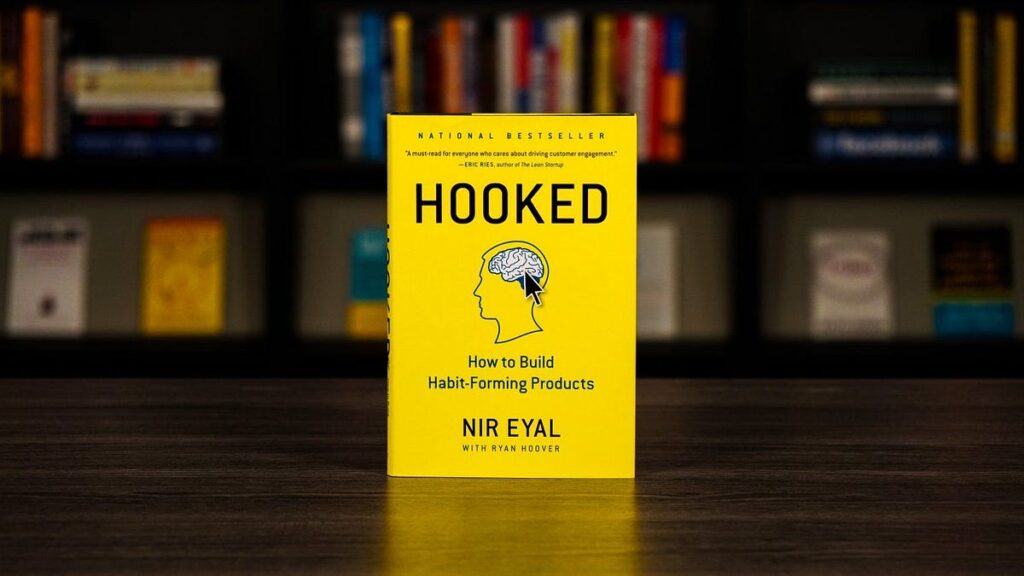
If you’ve read Nir Eyal’s book Hooked: How to build habit-forming products, the Hook Model shouldn’t be strange. The Hook Model is a methodology that product teams can use for products which their users will come back to again and again. But why do some products capture the public’s imagination while others fizzle out of public consciousness? How do some products and services become a part of our daily routines? Is there an underlying process that companies follow to create successful habit-forming or addictive products? Nir Eyal answers all these questions and more in his book and gives the framework for product teams to apply it to their product life-cycle. Based on his years of research, consulting, and practical experience, the book dives deep into the Hook Model, a four-step process used by successful companies to create habit-forming products. Eyal deconstructs the subtle tactics used by companies like Apple, Facebook (now Meta), Pinterest, and many more to link their products to their users’ daily routines and emotions. What is the Hook Model? The Hook Model is a concept in marketing and product design that aims to explain the process of creating habit-forming products or services. It was introduced by Nir Eyal in his book “Hooked: How to Build Habit-Forming Products.” The model outlines a four-step process: Trigger, Action, Variable Reward, and Investment, which helps companies build products that users will engage with repeatedly, forming habits around them. It has it’s premise loosely based on the Fogg Model, which shows the steps that need to be taken before people’s behavior can change and new habits can form. Eyal adapted this model to explain what it takes for a customer to become “hooked” on a new product. The main aim of the model is to create a customer habit. This is done by creating a link between the customers’ problem and the solution you are offering and reinforcing it through repeated exposure to the product. When it happens often enough, the customers will see your product as the obvious option whenever they face the problem and will keep coming back. This cycle can lead to the formation of habits and a strong user attachment to the product. It is however important to note that while the Hook Model has been praised for its insights into habit formation and user engagement, it has also sparked discussions about ethical considerations and potential negative impacts, especially when it comes to addictive technologies and behaviors. Product teams should therefore keep in mind the ethical implications when designing products using this model. What are the 4 stages of the Hook Model? The Hook Model consists of four stages that together create a loop designed to encourage user engagement and habit formation. These stages are: 1 .Trigger: This is the initial prompt that encourages a user to take action. Triggers can be external or internal. External triggers External triggers are the factors that bring the user to the product. They are cues from the environment that prompt the user to act, such as a notification on their phone that says “You have a new message” or an advertisement that says “Start free trial” Internal triggers, on the other hand, arise from emotions or thoughts, like a feeling of boredom or a need for distraction. Internal triggers occur when a product becomes closely associated with a thought, an emotion, or a preexisting routine. Negative emotions like boredom, loneliness, frustration, and indecisiveness are powerful internal triggers and habit-forming products leverage these internal triggers by connecting these emotions to their products. For example, binge-watching a show on a streaming platform due to boredom. 2. Action: The action is the behavior that the user performs in response to the trigger. It is the absolute minimum of interaction needed for the user to experience the reward. It could be anything from scrolling through a social media feed, opening the messaging app to check the new message after receiving a notification, clicking on an ad or CTA to claim your free trial, or sending a message. This stage represents the user’s engagement with the product or service. As a product manager or product designer, you want to minimize the time and effort needed to get the reward. Why is this important? The more difficult the activity is to perform, the higher the motivation levels of the user need to be for them to carry on and complete it. If your users’ motivation is high, they are likely to keep trying for longer. If, on the other hand, their motivation is low, they will give up more easily if the friction level is high. 3. Variable Reward: After the user takes the action, they receive a reward. This reward should be designed to provide a sense of satisfaction or pleasure. What makes the variable reward powerful is that it’s not always the same; there’s an element of unpredictability. This taps into the psychology of seeking out rewards and keeps the user engaged to find out what they’ll receive next. Variable Rewards could come in different forms. Rewards of the Self are feelings of self-fulfillment and satisfaction resulting from completing an action. They are really powerful for habit formation. Achieving a certain level of proficiency or having a certain number of stars for a usage streak of a product could be an example. Rewards of the Hunt are the material benefits that users try to secure. For example, a good deal in an online shop or unlocking a new skill level. They are way more tangible than the Rewards of the Self, so way easier to map out and leverage. Other examples are gathering points, coupons, or even cashback for spending. Rewards of the Tribe are social rewards. Users receive them from their interactions with other people. Social media relies greatly on this kind of reward. People feel a sense of satisfaction when they get positive feedback in the form of likes or comments from their peers. 4. Investment: In this final stage, the
