
Sales Team Performance Targets: How to Measure and Improve with Call Analytics
In today’s competitive sales environment, setting and tracking sales team performance targets is essential to driving growth and achieving business goals. Call analytics has emerged as a powerful tool that helps sales managers and leaders measure performance with precision, uncover actionable insights, and optimize coaching efforts. This guide covers everything you need to know about using call analytics to measure sales team performance targets, answer common questions, and implement strategies that work. What Are Sales Team Performance Targets? Sales team performance targets are specific goals or benchmarks set for individual sales reps or entire teams to achieve within a given timeframe. These targets can include metrics like quota attainment, number of calls made, conversion rates, average deal size, and customer satisfaction scores. Defining clear targets helps organizations align efforts, measure progress, and motivate their teams. Why Use Call Analytics to Measure Sales Team Performance Targets? Traditional performance measurement relies on manual tracking and subjective evaluations, which can be slow, inconsistent, and prone to errors. AI-powered call analytics automates the process by analyzing recorded sales conversations to provide real-time, objective insights into sales behaviors and outcomes. This approach enables sales leaders to: Identify strengths and skill gaps faster Understand customer sentiment and objections Tailor coaching based on actual conversation data Track progress against performance targets more accurately How Does Call Analytics Work for Tracking Sales Team Performance? Call analytics platforms use AI and natural language processing (NLP) to transcribe, analyze, and score sales calls. They extract key metrics such as talk-to-listen ratios, objection handling, question quality, and sentiment shifts. These insights are then mapped to sales performance targets, offering a clear picture of how reps are performing against goals. Which Sales Performance Metrics Can Call Analytics Reveal? Some of the most valuable metrics for tracking sales team performance targets include: Talk-to-Listen Ratio: Measures if reps dominate the conversation or let prospects speak. Ideal ratios indicate better engagement. Objection Handling Rate: Tracks how effectively sales reps respond to customer concerns. Question Quality and Frequency: Assesses if reps are asking the right questions to uncover needs. Sentiment Analysis: Detects customer emotions to gauge interest or hesitation. Call Duration: Monitors call length relative to outcomes to optimize efficiency. Conversion Rate: Measures how many calls lead to the desired action, such as a booked demo or sale. Next Steps Clarity: Checks if reps are securing clear commitments or follow-up actions. What Are the Best Practices for Setting Sales Team Performance Targets Using Call Analytics? Align Targets with Business Goals: Ensure metrics tracked align with revenue and growth objectives. Use Data-Driven Benchmarks: Base targets on historical performance and industry standards. Make Targets SMART: Specific, Measurable, Achievable, Relevant, and Time-bound. Regularly Review and Adjust: Use call analytics insights to update targets as needed. Focus on Quality and Quantity: Balance metrics that measure both activity and effectiveness. Leverage Real-Time Feedback: Use live call data to provide immediate coaching and support. How to Implement Call Analytics for Measuring Sales Team Performance Targets? Integrate With Existing Tools: Connect call analytics software with your CRM and communication platforms. Automate Call Recording and Transcription: Ensure all calls are captured and processed without manual effort. Define Relevant KPIs: Customize metrics that align with your sales targets. Train Your Sales Team: Help reps understand how performance will be measured and how call analytics benefits them. Use Dashboards and Reports: Monitor performance visually and in real-time. Act on Insights: Implement coaching, training, and process improvements based on analytics.Which Tools Offer the Best Call Analytics for Sales Team Performance? There are many platforms available that provide call analytics with features tailored for sales teams. Key factors to consider include AI sophistication, integration options, user-friendly dashboards, and actionable reporting. Popular options include: Insight7 Gong Chorus.ai CallRail ExecVision Choosing the right tool depends on your team size, sales process complexity, and existing tech stack. What Challenges Might You Face When Measuring Sales Team Performance Targets with Call Analytics? Data Overload: Too much data without clear focus can overwhelm teams. Resistance to Change: Some reps may be wary of call monitoring. Integration Issues: Technical challenges connecting platforms. Misaligned Metrics: Focusing on the wrong KPIs can misdirect efforts. Lack of Training: Teams need guidance to leverage insights effectively. Addressing these challenges upfront with clear communication and strategic planning is crucial for success. To dive deeper into identifying and closing skill gaps, check out our detailed guide on how to identify and close skill gaps with sales call analytics. Frequently Asked Questions Q: How does call analytics improve sales team performance?A: By providing objective insights into sales conversations, call analytics identifies strengths, uncovers weaknesses, and informs targeted coaching to help reps improve. Q: What are common sales performance targets tracked with call analytics?A: Targets include quota attainment, call volume, conversion rates, average deal size, objection handling, and customer sentiment. Q: Can call analytics measure soft skills like rapport and empathy?A: Yes, advanced AI can analyze tone, sentiment, and language cues that reflect soft skills and customer engagement. Q: How often should sales team performance targets be reviewed?A: Regularly, monthly or quarterly reviews are common to ensure targets remain relevant and achievable. Q: Is call analytics suitable for small sales teams?A: Absolutely. Call analytics can scale to any team size and provide valuable insights regardless of volume. Q: What should I look for in a call analytics tool?A: Look for AI accuracy, CRM integration, real-time insights, easy reporting, and actionable recommendations. Q: How can call analytics support remote or hybrid sales teams?A: It enables managers to monitor and coach reps effectively regardless of location, ensuring consistent performance standards. Using call analytics to set, measure, and improve sales team performance targets empowers organizations to make smarter decisions, optimize coaching, and ultimately close more deals. By embracing this data-driven approach, sales leaders can turn conversations into competitive advantage.
Customer Insights: Why Companies Struggle – With Sandra Cruz
Everyone talks about “being customer centric.” But few know how to turn that talk into actual action. In this conversation with Sandra Cruz, a seasoned CS and enablement leader, we unpack what meaningful change looks like when you center it on real customer conversations, not assumptions. This isn’t just about listening better. It’s about leading better. Watch the full conversation here Change Doesn’t Start with Process. It Starts with People. If you want to drive meaningful change, you can’t start with frameworks or tools, you have to start with people. Sandra shared how successful customer transformation efforts rely on five key pillars: a clear strategy, strong governance, internal enablement, contextual support, and consistent communication. It’s not just about teaching users how to use a tool. It’s about aligning teams, empowering champions, and making sure everyone, from exec sponsors to end users, is on the same page. “We often serve as the communication glue between departments. Change can’t succeed if people aren’t aligned.” Storytelling: The Accelerator Most Teams Ignore Telling people what to do rarely works. Showing them how they fit into the bigger picture? That changes everything. Sandra explained how a simple “day in the life” example – used at LinkedIn to show how Sales Navigator integrated into reps’ workflows, helped entire teams instantly get it. That’s the power of story. It creates emotional clarity, not just intellectual understanding. “When you tell a story, people empathize. It accelerates buy in.” The Blind Spots That Kill Momentum The reason most teams struggle to act on insights isn’t because the insights are unclear, it’s because the leaders are too far removed from the field. Without first hand context, everything feels urgent and nothing gets prioritized. Sandra pointed to blind spots that creep in when data is fragmented, teams hoard problems to protect themselves, and leaders lack direct contact with real users. “Knowing there’s a problem is an opportunity to fix it, not something to hide.” Coaching Isn’t a Tool. It’s a Culture. The best coaching isn’t forced, it’s wanted. Sandra emphasized that coaching only works when people are ready to grow. When paired with clear data points, like call transcripts, talk time ratios, or empathy signals, it becomes not just feedback, but fuel. And when people begin to improve, they want to keep going. “One good outcome makes you want to chase the next.” Patience is a Strategy Change at scale doesn’t happen overnight. Sandra now coaches CS leaders to build multi year plans that account for limited time, resources, and energy. Instead of firefighting, they learn to zoom out, prioritizing impact, sequencing change, and carving out time for strategic work. “You’ll burn out trying to solve it all today. Break it down. Prioritize what matters most to the business now.” Final Thought Real change doesn’t come from more tools or smarter hires, it comes from clarity, alignment, and relentless communication. And most of all, it comes from listening: to customers, to your team, and to what’s really happening in the field. Want to build a culture where change actually happens? Start with the stories. Then lead with purpose. Watch the full episode here Want more practical insights like this? The conversation doesn’t end here. The Insight Frontier is where we decode conversations and drop signals that move the needle. Subscribe on YouTube to catch the next drop.
Turn Your Customer Complaints Into Revenue – With Sandra Cruz
Before you introduce a new process, launch a tool, or rework your onboarding playbook, ask this: Have you listened to your customers deeply enough to lead meaningful change? In this conversation with Sandra Cruz (ex LinkedIn, Docusign), we unpack what it actually takes to lead change through the lens of customer conversations. Not surface level feedback, but urgency, emotion, and real business value. Here are the key takeaways: 1. Change Doesn’t Start with Process. It Starts with People. Change leadership isn’t just about frameworks, it’s about trust. Sandra combines formal project management with human psychology to unlock transformation. That means understanding what motivates teams to change, and modeling it yourself. She shared an example: when her team piloted Microsoft Copilot internally, she volunteered to be in the early group—using it, failing with it, learning from it. Only then did she advocate for wider adoption. Because leadership isn’t telling. It’s showing. 2. Customer Conversations Are Your Fastest Path to Influence Sandra led a Voice of the Customer program across two products. She didn’t just collect feedback—she turned it into data points, patterns, and business cases. Instead of “this customer is frustrated,” it became: “Four of our top five customers say this feature is blocking expansion. Reducing onboarding time by 2 weeks could unlock $4M in potential growth.” Urgency and impact, not just emotion. 3. Emotion and Context Shouldn’t Get Lost in Translation A quote, a pause, a sense of frustration, these signals are often lost when feedback gets reduced to Jira tickets or OKRs. Sandra builds systems that keep context alive: Start every QBR by asking: “What’s most pressing for you right now?” Pay attention to behavior, not just product usage, but email responsiveness, overdue payments, and tone. Get cross functional teams to hear customer voices directly, not filtered through summaries. Context creates clarity. And clarity drives action. 4. The Real Risk? Only Listening to Validate Your Assumptions Sandra warns against the trap of only hearing what confirms your roadmap. To avoid this: Get product and support teams to join real calls. Show trends over time, not isolated quotes. Share the good alongside the gaps, celebrating progress builds trust and momentum. Listening isn’t just about confirming ideas. It’s about evolving them. Final ThoughtChange leadership isn’t a role. It’s a responsibility. And it starts with how you listen, and what you do next. Watch the full conversation here Want more practical insights like this? The Insight Frontier is where we decode conversations and drop signals that move the needle. Subscribe on YouTube to catch the next drop.
Mastering the 15 Minute Client Intake Call
In the fast paced world of client services, the initial intake call is more than just a formality, it’s a pivotal moment that can set the tone for the entire partnership. A well structured 15 minute call not only clarifies client needs but also builds trust and establishes a strong foundation for collaboration. Begin with Empathy and Active Listening Start the conversation by acknowledging the client’s time and expressing genuine interest in their needs. Active listening is crucial; it demonstrates respect and helps in understanding the client’s concerns without making assumptions. Define the Purpose and Set Expectations Clearly articulate the objectives of the call. Setting expectations ensures that both parties are aligned and that the conversation remains focused and productive. Gather Essential Information Efficiently Utilize a concise intake form or questionnaire to collect necessary details about the client’s business, challenges, and goals. This approach streamlines the process and allows for a more in depth discussion during the call . Identify Pain Points and Desired Outcomes Engage the client in a dialogue about their current challenges and what success looks like for them. Understanding these aspects helps in tailoring solutions that are both relevant and impactful . Establish Rapport and Build Trust Share relevant experiences or insights that resonate with the client’s situation. Demonstrating understanding and expertise fosters a sense of partnership and confidence . Conclude with Clear Next Steps Summarize the key points discussed and outline the subsequent actions. Providing a roadmap for the next steps reinforces commitment and keeps the momentum going . Clarity doesn’t have to take hours. With the right intake structure, you can get to the heart of what your client needs in just 15 minutes – saving time, building trust, and setting every project up for success. If you’re tired of digging through messy transcripts and ready to go from conversation to clarity at scale, Insight7 makes it ridiculously easy to turn customer conversations into clear, actionable insights, fast. Start analyzing with Insight7 today.
The 3 Layer Framework for Turning Customer Conversations into Business Decisions

Most teams don’t have a data problem. They have a signal extraction problem. Especially when it comes to customer conversations. You’ve got sales calls, support tickets, onboarding interviews, churn feedback, NPS comments… Yet when it’s time to make business decisions, leadership is still relying on gut feelings or cherry picked quotes. Why? Because turning those conversations into usable, decision ready insights takes time, coordination, and a level of pattern recognition that most teams can’t sustain at scale. It’s not that the data isn’t there. It’s that there’s no structured way to extract signal from the noise. That’s why we’re showing you the 3 Layer Framework. A simple yet powerful way to convert raw conversation data into actionable product, growth, and retention decisions, without requiring an army of analysts or weeks of work. Here’s how it works. Layer 1: Narrative Compression – What are they actually saying? Most teams start here, but stay stuck here. They transcribe calls, highlight interesting quotes, or tag themes in Notion. But this is the surface level of insight. The real work begins with compressing scattered customer thoughts into cohesive narratives. This isn’t about summarizing. It’s about reducing noise and reconstructing what’s important. You’re looking for: Repeated pain points (across segments) Workarounds they’ve built Mental models they’re operating from What they assumed your product would do but didn’t Without this compression layer, everything feels like a random highlight reel. Let’s say you hear: “We use your tool mostly on Tuesdays after reporting, but it takes 5 steps to do what we need.” “Honestly, we had to use Google Sheets to stitch some things together.” “I just thought it would be more automatic.” These are scattered observations. Narrative compression turns them into: “Users expect automation post reporting, but our current workflow introduces friction, leading to external workarounds.” One clear statement. Ready to be analyzed, debated, acted on. This step is often skipped because it feels “subjective.” But precision doesn’t mean raw quotes, it means context rich synthesis. Layer 2: Evaluation Logic – What does this mean for our strategy? This is where most teams fall apart. They don’t lack insights, they lack evaluation logic. Think of it as the connective tissue between what users are saying and what the business should do about it. Key question at this layer: “What’s the strategic weight of this insight?” You need to evaluate: Frequency: How often is this coming up? Segment relevance: Who is saying it – power users, churned users, prospects? Impact: Does solving this drive activation, retention, or expansion? Effort: What’s the lift to address it? It’s here that conversations move from interesting to influential. For example, if 30% of your enterprise users are creating manual reporting workarounds every week, the weight is high. It signals a product gap with direct revenue implications. But if two users on the free plan mention a minor UX annoyance once, the weight is low, even if the quote sounds juicy. This middle layer is where companies either move fast with confidence or drown in unprioritized feedback. With the right tooling, you can apply structured criteria to evaluate insights automatically, reducing weeks of guesswork. Layer 3: Decision Activation – Who needs to know, and what will they do next? Insight without action is wasted. The final layer is where compressed and evaluated insights become fuel for decisions. This requires: Contextual delivery: Tailored formats for Product, CX, Growth, etc. Timeliness: Insights delivered before key planning or sprint meetings. Clarity: A one-liner on why it matters, what’s at risk, and the suggested move. Let’s go back to our earlier example. After compression and evaluation, the final insight might look like this: 30% of enterprise users created manual reporting workarounds post-Tuesday reports. They expect more automation and are using Google Sheets as a crutch. This friction risks retention in Q3. Suggestion: Prioritize automation for enterprise dashboard workflows in the next sprint.” This insight is now: Narratively clear Strategically weighted Actionable across teams That’s how customer conversations become product backlog items, go to market plays, or support strategies, not just Slack messages or meeting tangents. The Real Bottleneck Isn’t Data. It’s Flow*.* Most companies have some version of this buried inside research decks, product docs, or Slack threads. But without a repeatable flow from raw voice-of-customer to strategic action, insights die in the noise. What this 3 layer framework does is provide a reliable flow: Narrative Compression → Clean inputs Evaluation Logic → Smart prioritization Decision Activation → Timely output This is how you move from “we’re listening to users” to “our product roadmap is customer proven.” So What’s the Problem? Doing this at scale is hard. Manual tagging, endless Notion notes, Miro boards full of Post-Its… it’s chaos. You either burn out your research team, or slow down decision making entirely. That’s why we designed Insight7’s evaluation around this very flow. It takes your customer conversations – calls, surveys, interviews – and automatically applies this 3-layer logic: Compresses insights from raw text and transcripts Evaluates strategic weight across multiple dimensions Outputs clear, actionable recommendations for decision-makers No bloat. No dashboards for dashboards’ sake. Just fast, context-rich decisions from your existing data. TL;DR Customer conversations are gold. But only if you know how to mine, weigh, and act on them. The 3 layer framework helps you do exactly that: Narrative Compression – Turn noise into clarity Evaluation Logic – Prioritize what matters Decision Activation – Drive strategic action fast If your team is sitting on hours of call recordings, survey comments, or feedback forms , but still relying on gut to make roadmap or GTM decisions… It’s time to rethink your insight engine. Want to see how Insight7 runs this framework at scale? Drop your next set of calls into our system, and watch what shows up on your roadmap.
3 Questions to Ask in Onboarding Calls to Ensure Customer Success
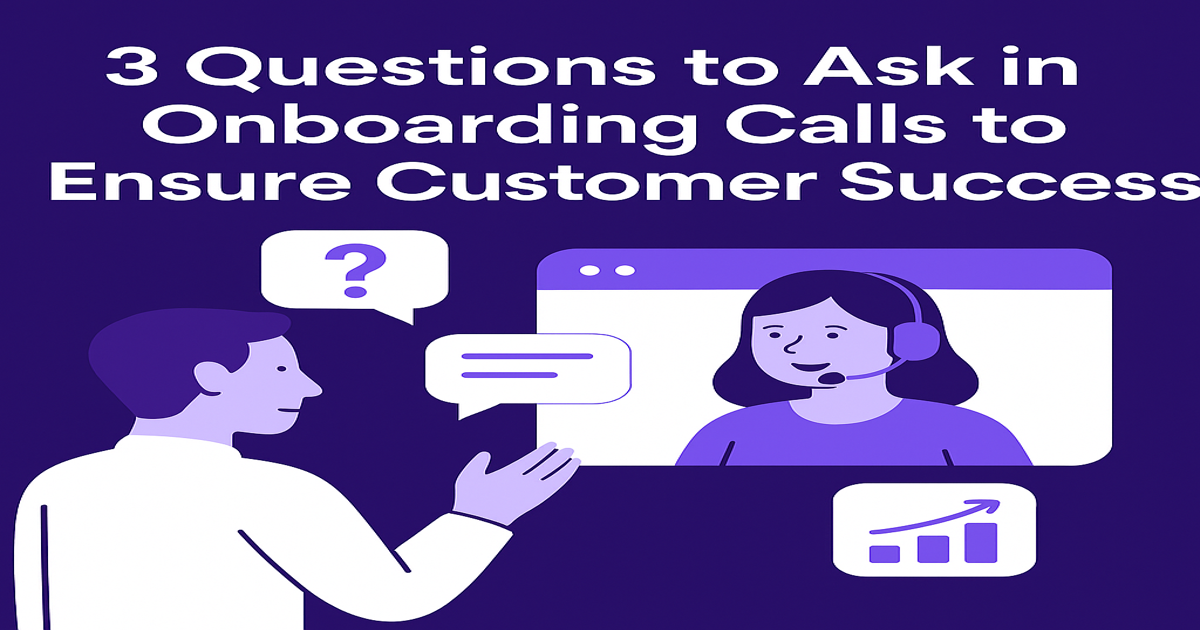
Getting new customers onboarded isn’t just a routine task, it’s a critical moment that sets the tone for your entire relationship. The onboarding phase shapes whether customers find value quickly, build trust, and stick around for the long haul. However, many onboarding experiences fail because they focus too much on product delivery and not enough on understanding the customer’s unique needs, goals, and potential challenges. To shift onboarding from a transactional handoff to a strategic partnership, it’s essential to ask the right questions early on. These questions uncover insights that let you customize the journey, proactively solve problems, and build alignment across teams. In this story, we’ll break down three essential questions every onboarding call should include, and explore how these questions can transform your onboarding outcomes. Why Onboarding Calls Are More Important Than Ever In subscription models and SaaS businesses, customer retention drives growth. The cost to acquire a new customer can be 5 to 25 times higher than retaining one. That means onboarding is not just a “nice to have”, it’s mission-critical. An effective onboarding call achieves more than just setup and training. It clarifies expectations, uncovers hidden risks, and builds rapport. Done well, it reduces friction and accelerates time-to-value, boosting adoption and customer satisfaction. Unfortunately, many onboarding calls fall short. Teams rush through scripts, overlook deeper discovery, or treat the call as a product demo. The result? Customers get lost, disengage, and churn. Question 1: “What does success look like for you in the first 30, 60, and 90 days?” This question is the foundation of a customer-centric onboarding approach. Instead of assuming you know what success means, you invite the customer to define it in their own terms. What goals do they want to hit in the short term? Are they looking to onboard 50 users? Reduce manual processes? See measurable ROI? These specifics give your team a target to aim for and metrics to measure against. Without this clarity, onboarding becomes a generic process with unclear outcomes. Goals provide a roadmap, prioritize resources, and align expectations. How to use the answers: Document these success milestones and revisit them in future check-ins. Align your onboarding tasks and training around these goals. Share progress regularly to keep momentum. Question 2: “What challenges or obstacles do you foresee that might slow down your progress?” Every onboarding journey encounters roadblocks. Some customers have technical integration concerns, others face internal resistance or resource shortages. By proactively asking about potential challenges, you surface issues before they cause delays. This builds trust and signals that you’re invested in helping customers succeed. It also lets you tailor your support, whether that means extra technical assistance, customized training, or managing stakeholder expectations. How to use the answers: Develop mitigation plans for identified challenges. Assign specialists or resources early. Offer additional content or training focused on known pain points. Schedule more frequent check-ins if needed. Question 3: “Who else will be involved in this project, and how can we best collaborate with them?” Onboarding involves more than the primary contact. Teams usually include decision-makers, technical leads, end-users, and sometimes external partners. Each stakeholder may have different needs and communication preferences. Understanding who’s involved helps prevent communication breakdowns, ensures everyone gets the information they need, and aligns your team’s engagement style. How to use the answers: Build a stakeholder map. Tailor communication cadence and channels for each group. Set expectations on updates, meetings, and training sessions. Turning Questions into a Customer Success Playbook Asking these questions is only the first step. The real impact comes from turning the insights into action. Create a Shared Success Plan: Capture goals, challenges, and team roles in a living document accessible to your team and the customer. Tailor Onboarding Content: Customize training and resources based on customer needs and obstacles. Set Milestones and Follow-ups: Schedule regular check-ins aligned with customer timelines and goals. Engage Stakeholders: Include key players in demos, training, and progress reviews. This approach transforms onboarding from a checklist to a personalized, strategic experience, reducing churn and accelerating adoption. Common Pitfalls to Avoid Treating onboarding as a one-way product demo Skipping or rushing discovery questions Assuming all customers have identical needs Failing to document and act on insights Neglecting communication with the wider stakeholder group Avoiding these ensures you don’t lose the opportunity to build a strong foundation for customer success. How Insight7 Unlocks Next-Level Onboarding Insight7’s evaluation platform is built to supercharge this customer-centric onboarding approach. Here’s how: Automated Call Summaries and Highlighting: Insight7 automatically captures key moments in onboarding calls, goals discussed, potential challenges raised, stakeholder mentions, making it easier to document and revisit crucial insights. No more manual note-taking or missed details. Centralized Success Plans: Your team can build shared success plans within Insight7, linking call insights directly to action items and follow-ups. This living document keeps everyone aligned and accountable. Stakeholder Mapping and Communication Tracking: Insight7 allows you to log stakeholders, preferred communication channels, and engagement history. This creates a 360-degree view of collaboration dynamics, ensuring no one falls through the cracks. Proactive Risk Alerts: Using AI-driven analysis, Insight7 can detect hesitation or objection signals during calls, alerting your team to potential onboarding risks early, so you can intervene before problems escalate. Data Driven Coaching: With detailed call evaluations and scoring, managers can coach onboarding reps to improve discovery questioning and customer engagement—refining the process continuously. By integrating these capabilities, Insight7 transforms onboarding calls from basic check-ins into strategic, insight-rich conversations. This leads to faster time-to-value for customers, stronger relationships, and ultimately, reduced churn. Final Thought Onboarding calls are a critical moment to set the tone for success. The questions you ask—and how you act on the answers, can mean the difference between a frustrated, lost customer and a loyal advocate. By asking what success means, uncovering obstacles early, and mapping collaboration, your team gains the insights needed to personalize and accelerate onboarding. Coupled with tools like Insight7, you get the automation and analytics needed to capture these insights reliably, coach your team
Customer Insights and CX Strategy To Boost Profitability With Camilla Ferreira – Part 2

When we think about customer support, it’s often labeled a cost center, a necessary expense but rarely a driver of growth. But what if that’s exactly where we’ve been looking wrong? In a recent episode of The Insights Frontier, CX leader Camila Ferreira shared her vision for transforming support teams from back office functions into powerful engines of growth, without losing the operational discipline businesses expect. Camila’s approach to customer experience (CX) goes beyond traditional support metrics. She aligns CX with business growth and strategic outcomes. 1. Support as a Strategic Growth Lever, Not Just a Service Function “Don’t chase metrics. Chase business growth,” Camila says. Typical CX numbers , CSAT, NPS, average handle time – matter, but only if they translate into real business impact. The most important metric for CX leaders at the boardroom level? Customer Lifetime Value (CLV). This shift in perspective turns support into a growth lever, not just a service cost. 2. Referrals Begin in the Support Queue Most companies think referrals happen in sales or marketing, but Camila’s team proved otherwise. By simply asking for referrals right after resolving customer issues, support became the #1 referral channel, beating even sales. This insight flips the old playbook. The ideal moment to turn satisfaction into advocacy is immediately after a great support interaction, not weeks later. 3. Focus: Do 100% of One Thing, Not 10% of Ten Trying to hit too many goals simultaneously dilutes impact. Camila’s advice is clear: focus on one priority and execute it fully. “Cross the finish line of what really matters,” she says. What matters depends on your company’s goals, revenue, expansion, or profitability , and your metrics should reflect that focus. 4. Customer Support as the Connector Across Teams Support teams touch every part of the customer journey, putting them in a unique position to connect departments. Camila fosters collaboration by asking, “How can I help YOU be more successful?” This mindset led to the creation of a CX Council aligning marketing, product, and operations around frontline insights, driving collective success. 5. AI Empowers Agents to Deliver High Quality Experiences Before AI, agents juggled pulling up tickets, interpreting vague issues, and matching solutions, all under pressure. Now, AI can summarize accounts, detect intent, suggest resolutions, and route queries faster and more accurately. But the goal is more than speed, it’s empowering agents to create meaningful, efficient customer experiences. The Bottom Line If you lead a support team, measure what matters. Support isn’t just a cost center anymore, it’s a growth function. With the right metrics, mindset, and technology, it can become your company’s most underutilized profit center. 🎧 Listen to the full episode: The Business Secret CX Leaders Are Hiding From You About Camila Ferreira Camila Ferreira is a global CX leader with experience across multiple continents, passionate about turning customer support into a strategic business asset. Her work shows what’s possible when CX leaders think beyond satisfaction scores and start influencing business decisions directly. It’s the kind of strategic thinking we explore often on The Insights Frontier, where the real stories behind customer experience come to life. Follow Insight7 on LinkedIn, YouTube, and TikTok for more insights on data-driven growth.
Unlock Business Growth with Conversational Data Insights
In today’s data driven world, businesses have an untapped resource that often goes overlooked: the conversations they have with customers every day. Whether it’s through customer service calls, sales conversations, or support chats, conversational data is a powerful asset that holds the key to understanding customer needs, improving service quality, and driving revenue growth. However, many companies struggle to extract actionable insights from these conversations, missing out on critical opportunities to improve performance. In this article, we’ll explore how to leverage conversational data insights effectively, turning raw call data into strategic business outcomes. What is Conversational Data? Conversational data consists of the recorded interactions between your business and customers, including voice calls, video meetings, chat transcripts, and more. Unlike structured data such as surveys or transaction records, conversational data is unstructured, rich in context, and filled with nuances that reveal customer sentiment, objections, preferences, and expectations. Harnessing this type of data requires advanced techniques beyond simple keyword tagging or manual review. The goal is to extract meaningful themes and insights that can guide decision making across teams. Why Conversational Data Insights Matter for Your Business When properly analyzed, conversational data insights provide a direct window into your customers’ experiences and your team’s performance. Here are key reasons why you should prioritize conversational data: Identify Customer Pain Points: Understand recurring issues or frustrations that affect satisfaction. Improve Sales Effectiveness: Discover objections and questions to refine your sales scripts and training. Enhance Service Quality: Monitor call quality and agent performance for consistent customer support. Drive Product Innovation: Collect feedback directly from conversations to inform product development. Support Data-Driven Coaching: Provide targeted feedback to sales and service teams based on real examples. Key Metrics and KPIs to Track from Conversational Data To move from raw data to actionable insights, focus on tracking specific metrics that reflect both customer experience and operational efficiency: Call Resolution Rate: Measures how often customer issues are resolved in the first interaction, indicating service effectiveness. Customer Sentiment Score: Uses natural language processing (NLP) to gauge emotional tone, positive, neutral, or negative. Talk to Listen Ratio: Tracks balance of conversation, revealing whether agents allow customers to speak or dominate the call. Common Objections and Questions: Identifies frequently raised barriers in sales calls to address proactively. Average Handle Time (AHT): Monitors call duration to balance efficiency with quality. First Contact Resolution (FCR): Shows percentage of issues resolved without follow-up, linked to customer satisfaction. How to Extract Actionable Insights from Conversational Data 1. Automated Transcription and Tagging Manual review of calls is time consuming and inconsistent. AI-powered transcription converts voice calls into text, while smart tagging tools identify key themes, topics, and emotions, all at scale. 2. Go Beyond Keyword Tagging Traditional keyword searches only scratch the surface. Use AI to surface latent themes and patterns hidden across hundreds or thousands of calls, revealing what customers truly care about. 3. Standardize Quality Benchmarks Calibrate evaluation criteria and scorecards across teams to ensure consistent, objective assessment of call quality. This reduces bias and helps identify training needs accurately. 4. Use Data to Drive Coaching and Training Share real examples from calls to coach agents on handling objections, improving empathy, or increasing sales effectiveness. Personalized coaching leads to better results. 5. Share Insights Across Teams Conversational data is valuable beyond customer service. Product teams can use feedback for development, marketing can craft messaging aligned with customer concerns, and leadership can track overall trends to guide strategy. Real World Applications: Turning Insights into Business Results Improve Customer Retention By tracking customer sentiment and resolution rates, companies can proactively address dissatisfaction before it leads to churn. Increase Sales Conversion Rates Identifying common objections allows sales leaders to equip teams with tailored responses, boosting close rates. Optimize Operational Efficiency Monitoring Average Handle Time alongside call quality ensures calls are effective but not overly long, balancing customer satisfaction with productivity. Inform Product Roadmaps Direct customer feedback from calls can highlight missing features or emerging needs, giving product teams a competitive edge. Best Practices for Maximizing Conversational Data Insights Invest in the Right Technology: AI-driven analytics platforms enable scalable, real-time conversational analysis. Regularly Update Scorecards: Ensure quality benchmarks evolve with changing business goals and customer expectations. Integrate Data Sources: Combine conversational insights with CRM, NPS, and other datasets for a holistic view. Empower Teams: Make insights accessible and actionable for frontline staff, managers, and executives. Focus on Outcomes: Track how insights translate into measurable business improvements like higher NPS, increased sales, or reduced churn. Conclusion Conversational data insights are no longer a “nice to have”, they’re a critical business advantage. By systematically extracting and acting on these insights, companies can transform everyday interactions into powerful levers for growth and competitive differentiation. Don’t let your calls gather dust. Unlock the true value hidden in your customer conversations and start driving smarter decisions today. Take Action: Unlock Business Growth with Insight7 By leveraging conversational data with Insight7, you can boost team efficiency, uncover hidden opportunities, and make smarter, data driven decisions. Start using Insight7 today to stay ahead of the competition and drive real business growth.
Customer Insights and CX Strategy To Boost Profitability With Camilla Ferreira
When the pandemic hit, Uber Eats faced a crucial challenge: maintaining profitability. By leveraging customer insights and CX strategy, Camilla Ferreira was able to design initiatives that improved user experience, boosted restaurant visibility, and enhanced courier loyalty, ultimately driving better business results. With a finance background and experience at companies like Groupon and Uber, Camilla didn’t just focus on customer service. She zoomed out. Her approach to customer experience (CX) was strategic, data informed, and deeply business aligned. In a recent episode of The Insights Frontier, she shared how CX became a lever for real business results, boosting Uber Eats’ margins by two percentage points at a critical time. Customer Insights and CX Strategy Focus: Profitability, Not Growth When Camilla joined the Uber Eats team during the pandemic, she quickly realized that chasing growth would be a distraction. “If I had focused on growth, I wouldn’t have been so successful. I had to understand the real challenge and work backwards from there.” The real issue? Profitability. Costs were climbing, and the business needed to become more efficient, without sacrificing user experience. That framing changed everything. Connecting the Dots With Customer Insights and CX Strategy Camilla’s approach wasn’t about collecting data for the sake of it. It was about identifying patterns with strategic value. 1. Women Led Restaurants Were Quietly Winning While scanning customer satisfaction and repeat order metrics, Camilla noticed something interesting: women led restaurants were consistently outperforming others. Instead of letting that insight sit idle, her team responded. They launched targeted promotions to boost the visibility of these restaurants, rewarding what was already working and amplifying positive outcomes for both customers and the platform. 2. Dessert Orders Unlocked Off Peak Demand Another unexpected finding? Women were more likely to order desserts outside of typical mealtimes, especially between lunch and dinner. This insight opened up a new revenue opportunity. By launching dessert focused campaigns during these off peak hours, Uber Eats was able to drive more orders without adding pressure to peak time operations. 3. Courier Loyalty Was the Bottleneck Fast delivery is great, until couriers jump to the next best paying app. That volatility was hurting performance. Camilla’s team aligned courier incentives with campaign timings, helping to improve delivery reliability without inflating costs. With smarter scheduling and better engagement, they turned a logistics problem into a CX advantage. A Flywheel Strategy That Worked on Three Fronts Camilla’s approach wasn’t about collecting data for the sake of it. By leveraging customer insights and CX strategy, she identified patterns with strategic value that could directly impact profitability. Customers enjoyed faster, more relevant service Women led restaurants received more visibility and orders Couriers got more predictable work The business improved profitability by 2 percentage points This wasn’t a soft win for customer service. It was a calculated business strategy driven by insight, timing, and empathy. 🎧 Listen to the full episode: The Business Secret CX Leaders Are Hiding From You Camilla’s story is a reminder that great CX doesn’t come from dashboards alone. It comes from knowing what matters to the business and working backwards, with data as a guide. Her work shows what’s possible when CX leaders think beyond satisfaction scores and start influencing business decisions directly. It’s the kind of strategic thinking we explore often on The Insights Frontier, where the real stories behind customer experience come to life. About Camilla Ferreira Camilla Ferreira is a globally recognized voice in customer experience. With a proven track record at companies like Uber and Groupon, she’s passionate about transforming CX into real business results. A global speaker and author, Camilla helps brands lead customer experience with the same rigor and impact as any core business function. Follow Insight7 on LinkedIn , Youtube and TikTok for more insights on data driven growth.
Sales evaluation form templates to use
[vc_row type=”in_container” full_screen_row_position=”middle” column_margin=”default” column_direction=”default” column_direction_tablet=”default” column_direction_phone=”default” scene_position=”center” text_color=”dark” text_align=”left” row_border_radius=”none” row_border_radius_applies=”bg” overflow=”visible” overlay_strength=”0.3″ gradient_direction=”left_to_right” shape_divider_position=”bottom” bg_image_animation=”none”][vc_column column_padding=”no-extra-padding” column_padding_tablet=”inherit” column_padding_phone=”inherit” column_padding_position=”all” column_element_direction_desktop=”default” column_element_spacing=”default” desktop_text_alignment=”default” tablet_text_alignment=”default” phone_text_alignment=”default” background_color_opacity=”1″ background_hover_color_opacity=”1″ column_backdrop_filter=”none” column_shadow=”none” column_border_radius=”none” column_link_target=”_self” column_position=”default” gradient_direction=”left_to_right” overlay_strength=”0.3″ width=”1/1″ tablet_width_inherit=”default” animation_type=”default” bg_image_animation=”none” border_type=”simple” column_border_width=”none” column_border_style=”solid”][vc_column_text]Sales Assessment Templates serve as invaluable tools for evaluating the effectiveness of your sales team. These templates streamline the process of assessing sales performance, making it easier to identify strengths and areas for improvement. By utilizing structured forms, organizations can ensure that important sales indicators are carefully monitored. When designing a sales evaluation form, consider including key aspects such as customer engagement, objection handling, and closing techniques. These elements are essential to fostering a strong sales culture. Ultimately, employing Sales Assessment Templates not only enhances the quality of evaluations but also contributes positively to team development and overall sales success. Understanding the Role of Sales Assessment Templates Sales Assessment Templates play a crucial role in refining the sales process and enhancing team performance. These templates offer a structured method to evaluate various aspects of sales interactions, such as customer engagement and objection handling. By utilizing these assessment tools, managers can identify both strengths and areas for improvement within their teams, leading to better sales outcomes. One essential feature of Sales Assessment Templates is their ability to provide consistent feedback. This consistency ensures that every sales interaction is evaluated on the same key metrics, allowing for an objective analysis. Additionally, these templates help establish clear expectations for sales personnel, guiding them toward desired behaviors and strategies. Through this process, organizations can foster a culture of continuous improvement, where sales professionals hone their skills and contribute to overall company objectives effectively. The Importance of Structured Evaluation Structured evaluation plays a crucial role in enhancing the effectiveness of sales teams. By utilizing Sales Assessment Templates, organizations can create a standardized format for evaluating performance. This approach not only ensures consistency across assessments but also facilitates clear communication of expectations. When each team member understands the evaluation criteria, they can focus on areas for improvement, ultimately driving better sales results. Moreover, structured evaluations allow for data-driven decision-making. With a systematic way to analyze performance metrics, managers can identify trends and patterns in behavior. This insight enables targeted coaching and development tailored to individual needs. By regularly implementing these assessments, organizations can foster a culture of continuous improvement, leading to enhanced team performance and customer satisfaction. In essence, structured evaluation paves the way for a more motivated and effective sales force. Key Elements of Effective Templates Effective templates, particularly Sales Assessment Templates, embody specific elements that enhance usability and clarity. Firstly, clarity of purpose is essential; the template should clearly define the objectives of the sales evaluation process. By outlining what insights the evaluator is looking for, users can focus on relevant data and avoid unnecessary confusion. In addition, a well-structured format promotes easy navigation. This includes clearly labeled sections and logical organization, which allows evaluators to find specific questions or criteria quickly. Including visual elements such as charts or prompts can also improve engagement and comprehension. Furthermore, incorporating flexibility in design enables users to tailor the template to fit their unique evaluation methods, making it a versatile tool. Lastly, ensuring a review mechanism helps gather feedback on the template’s effectiveness, which can facilitate continuous improvement for future assessments. Types of Sales Assessment Templates Sales Assessment Templates come in various forms, each designed to evaluate different sales competencies effectively. Organizations can choose from structured forms, checklists, or narrative-based evaluations, depending on their specific needs. Structured forms provide a straightforward way to assess key performance indicators, while checklists ensure that all essential criteria have been met during each sales interaction. Another common type is the narrative evaluation, which allows for more qualitative feedback. This type encourages evaluators to provide detailed insights, helping to identify strengths and areas for improvement in sales approaches. By using these different templates, companies can tailor their assessments to better reflect their unique goals and sales strategies, ensuring that team members receive the feedback they need to enhance their skills. Performance-Based Evaluation Templates Performance-Based Evaluation Templates serve as crucial tools for assessing sales performance effectively. These templates help in establishing clear criteria for evaluating sales representatives based on measurable outcomes. By utilizing these tools, managers can ensure a structured approach to sales assessments, allowing for consistent and fair evaluations. The use of Sales Assessment Templates promotes transparency and encourages sales teams to meet established benchmarks. The implementation of effective evaluations can be broken down into several key components. First, identify performance indicators that align with sales goals. These could include metrics like call closure rates, customer engagement levels, and product knowledge. Next, customize the evaluation criteria based on specific team needs. Each sales representative should be measured against these pre-defined metrics to provide a comprehensive assessment of their capabilities. Lastly, regularly review and update the templates used for evaluations to reflect changing business objectives. This structured approach fosters continuous improvement in sales performance over time. Qualitative Sales Feedback Templates Qualitative Sales Feedback Templates are essential tools for gathering valuable insights from sales interactions. By focusing on open-ended questions, these templates encourage sales representatives to share their experiences and thoughts freely. This qualitative feedback provides depth and context that quantitative metrics alone often overlook, allowing businesses to identify strengths and areas for improvement in their sales processes. To effectively utilize qualitative feedback, consider incorporating specific components into your Sales Assessment Templates. First, include sections for capturing customer concerns during calls. This helps you better analyze client needs and adjust your approach accordingly. Next, encourage sales personnel to detail their strategies in open-ended responses. By understanding their thought processes, you can refine your training and coaching methodologies. Lastly, ensure there’s space for team members to share suggestions. This fosters a culture of continuous improvement, enabling agile responses to market changes and enhancing overall sales performance. Choosing the Right Sales Assessment Template for Your Business Choosing the right sales assessment template for your
