


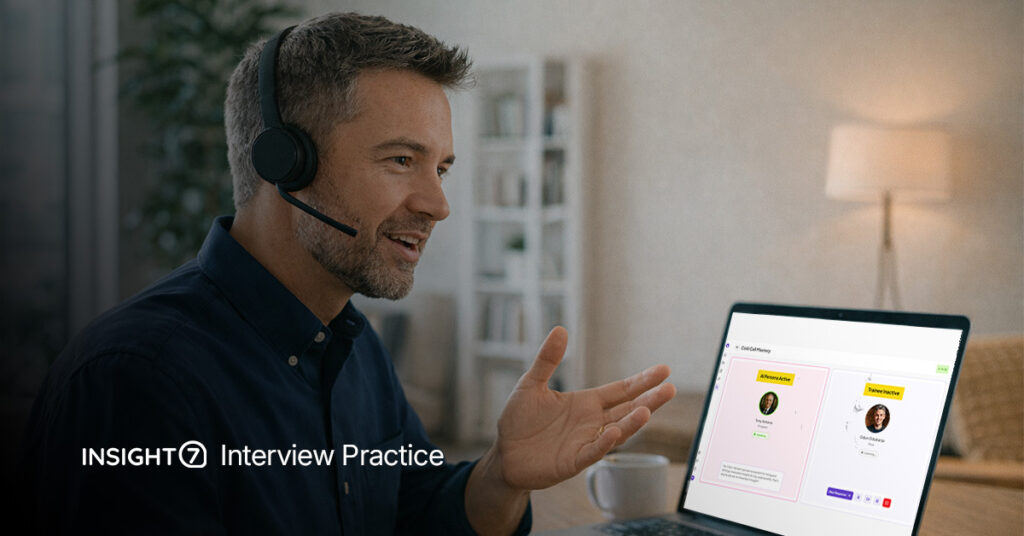
Preparing for a Nationwide Operations interview means speaking to the mutual member-owned structure, the On Your Side promise, Nationwide Retirement Solutions, Columbus headquarters, agent distribution, and Kirt Walker's focus on members over shareholders. This practice session gives you a realistic Nationwide Operations question, a voice answer, and sentence-level feedback on where you were specific, where you were generic, and what to fix. Nationwide is a mutual, which changes how every function thinks about members, long-term value, and agent relationships.
Start your free Nationwide Operations practice session.
What interviewers actually evaluate
Throughput, cost, and reliability
Interviewers want to see process thinking with a bias to action. Expect to show: bottleneck identification, cost-to-serve logic, reliability tradeoffs, change management, and KPI discipline. Evaluation signals include: bottleneck id, cost to serve, reliability, and change management.
What gets scored in every session
Specific, sentence-level feedback.
| Dimension | What it measures | How to answer |
|---|---|---|
| Bottleneck ID | Whether you find the real constraint fast | Point to the step that limits throughput and why |
| Cost to serve | How you reason about unit economics | Break fixed vs variable and show where the lever is |
| Reliability | How you trade speed against error rate | Quantify the tradeoff with a real example |
| Change management | Whether process changes actually stick | Name the owner, the cadence, and the failure mode |
How a session works
Step 1: Get your Nationwide Operations question
You receive one question drawn from real Nationwide Operations interview patterns. No warm-up, no filler. The question reflects the actual work, not a generic behavioral prompt.
Step 2: Answer by voice
Speak your answer out loud, the way you would in the room. Most strong answers run 90 seconds to two minutes. You can re-record as many times as you want before submitting.
Step 3: Get scored dimension by dimension
You get a score on each dimension in the table above, with quoted sentences from your answer showing what worked and what did not. No vague feedback, no letter grades without evidence.
Step 4: Re-answer and track improvement
Try the same question again, or move to a harder one. Your scores and transcripts are saved so you can see the specific habits that changed between attempts.
Frequently Asked Questions
What questions are asked in an operations interview?
Expect a mix of behavioral questions tied to Nationwide values, a role scenario that mirrors the actual job, and one or two questions that test whether you understand the business model. Panels usually run 45 to 60 minutes.
What are the 5 C's of interviewing?
Most Nationwide interviewers weight five signals: clarity of thinking, candor under pressure, customer focus, collaboration, and commercial judgment. You will be scored on all five in a single answer, not in separate rounds.
What are the 5 hardest interview questions?
The hardest questions in a Nationwide Operations interview tend to be the ones that force tradeoffs: a deal you lost, a call you would redo, a metric you missed, a person you should have moved faster on, and a time you disagreed with leadership. Prepare a specific story for each.
What are the 3 C's of interviewing?
Answer with a specific Nationwide example. Name the situation, your action, the result, and what you would do differently. Avoid general frameworks without a concrete story.
What are the most common failure modes in Nationwide Operations interviews?
The most common failure modes in a Nationwide Operations interview are:
- Generic answers that could apply to any company, with no Nationwide-specific context
- Stories without numbers, stakeholders, or a clear decision you owned
- Rambling past the 90-second mark without a landing
- Dodging the hard follow-up instead of naming what went wrong
- Treating the interviewer as an audience instead of a thinking partner
Also practice
All nine Nationwide role interview practice pages.
- Sales
- Customer Service
- Product Management
- Marketing
- Finance
- People & HR
- Leadership
- Legal & Compliance
One full session free. No account required. Real, specific feedback.








