Sales performance assessments produce better outcomes when they are built on call data rather than manager impressions. This guide walks through the five steps sales managers use to run a rigorous assessment cycle: defining the right criteria, calibrating scores, identifying coaching priorities, delivering targeted feedback, and measuring whether the assessment actually changed behavior.
Why Most Sales Assessments Produce No Behavior Change
The typical sales performance assessment follows this pattern: the manager observes a handful of calls, completes a form, delivers feedback in a one-on-one, and the rep returns to their normal behavior within two weeks. The problem is not the assessment itself. It is that the assessment is based on a small, unrepresentative sample and delivers feedback that is too general to act on.
An assessment that says "work on your discovery questions" gives a rep nothing specific to practice. An assessment that says "in your last 8 calls, you asked product-focused questions in the first 5 minutes rather than business-impact questions, which correlates with your 22% close rate versus the team's 34%" gives the rep a specific behavior to change and a benchmark to beat.
What are the steps in a sales performance assessment?
A rigorous sales performance assessment follows five steps. First, define 4 to 6 criteria with behavioral anchors at each score level. Second, score a representative sample of calls against those criteria (minimum 10 calls per rep). Third, identify the 2 criteria with the widest score gaps between top and bottom performers. Fourth, deliver criterion-specific feedback tied to transcript evidence. Fifth, re-score calls 30 days later to measure whether targeted behavior changed. Assessments that skip step five cannot tell whether they worked.
Step 1 — Define Criteria That Connect to Sales Outcomes
Most sales assessment rubrics measure activity (did the rep ask discovery questions?) rather than quality (did the rep use the answers to advance the deal?). Activity-based criteria are easier to score but poor predictors of close rates.
Build your rubric with 4 to 6 criteria that map directly to your sales outcomes. For a one-call-close environment, the highest-weight criteria are typically: urgency creation (did the rep establish why buying now matters?), objection handling depth (did the rep address the real concern behind the stated objection?), and close attempt quality (did the rep ask for the business with a specific next step?). For complex B2B sales, criteria shift to: economic buyer identification, technical fit qualification, and multi-stakeholder alignment.
Assign weights that reflect relative importance. Weights sum to 100%. Calibrate against your last 50 won deals: criteria that appear consistently in wins deserve higher weights than criteria showing no correlation.
Common mistake: Treating all criteria as equally important. Equal-weight rubrics produce average scores that hide the specific behaviors actually driving deal outcomes. Weight by win-rate correlation.
Step 2 — Score a Representative Call Sample per Rep
A performance assessment based on 2 observed calls per rep is not statistically meaningful. A rep who had two good calls this month has not been assessed. Score a minimum of 10 calls per rep per assessment cycle to identify patterns rather than outliers.
For teams using automated call scoring, this is a configuration change. For teams using manual review, 10 calls per rep per quarter is achievable with 20-minute call reviews. Pull a random sample from each week rather than cherry-picking recent calls, which tend to be unrepresentative.
Target at least 80% inter-rater reliability before using any rubric for assessment decisions. Have two managers independently score the same 5 calls. If they disagree by more than 1 point on a 5-point scale for any criterion, the criterion's behavioral anchors are too vague. Refine the anchors before the assessment cycle begins.
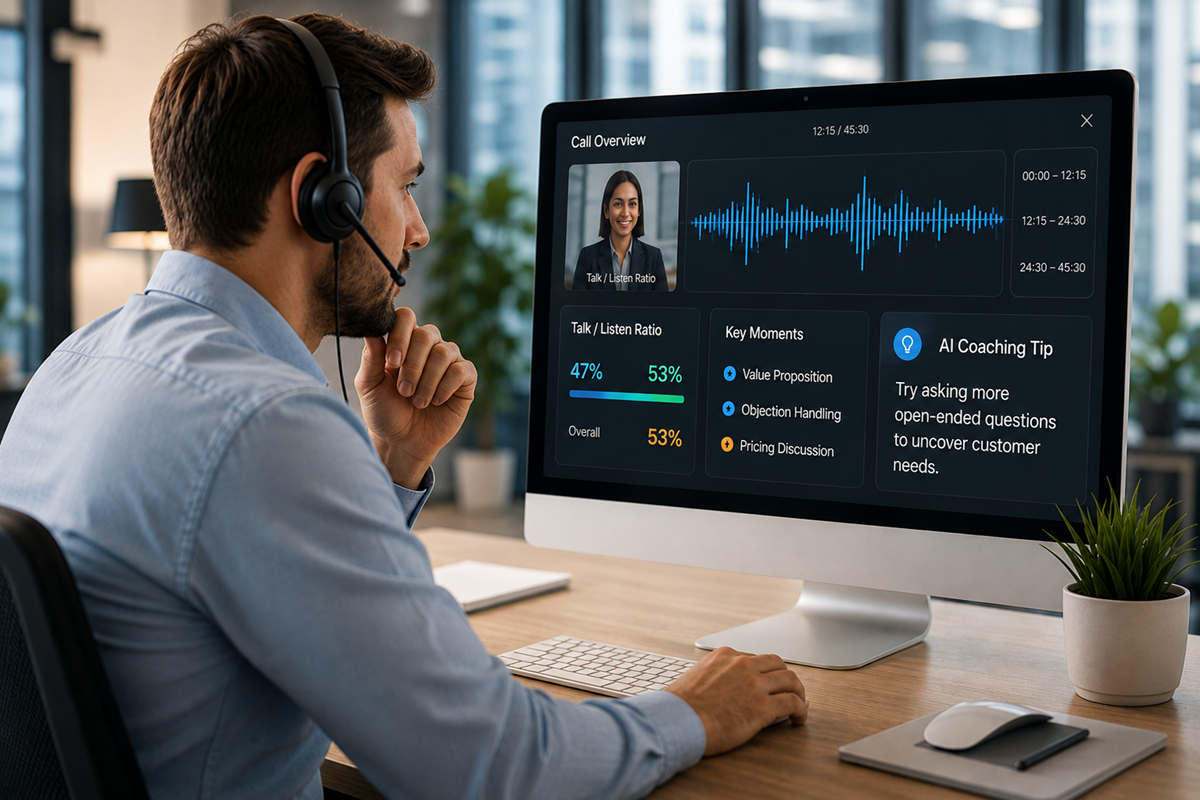
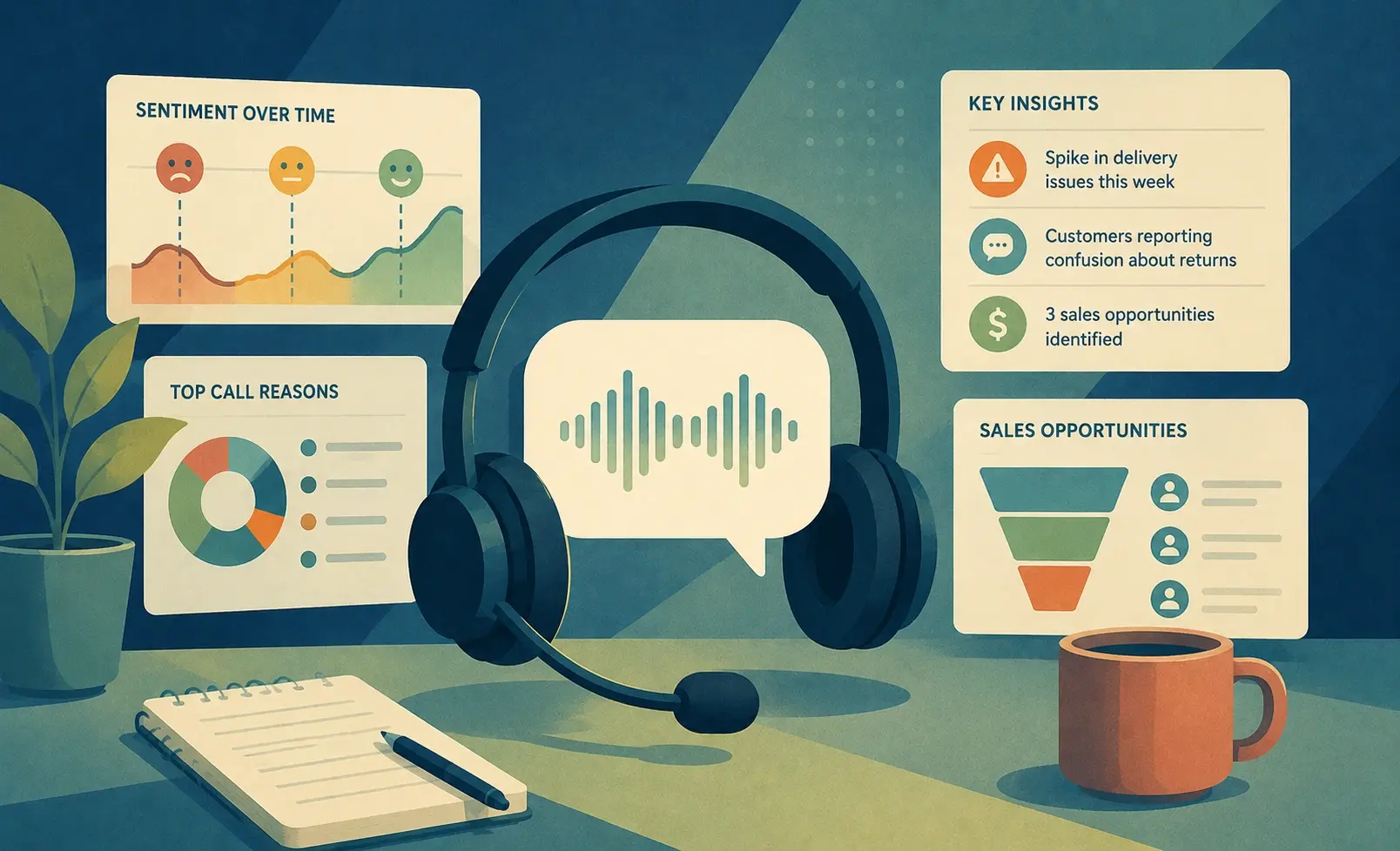
Insight7 applies your custom weighted rubric to every call automatically, generating rep-level scorecards with dimension breakdowns and transcript evidence for each score. Assessment cycles that previously took a manager 8 hours of call review take 30 minutes of scorecard review.
Step 3 — Identify the Top Two Coaching Priorities from Assessment Data
An assessment that surfaces 8 areas for improvement produces no improvement. Coaching bandwidth is finite. After scoring, identify the 2 criteria with the largest performance gap between each rep and the team benchmark.
For each rep, the coaching priorities are the criteria where their score falls most below the team average, weighted by the criterion's impact on close rates. A rep who scores 2.5 out of 5 on urgency creation (weight 25%) has a higher-priority gap than a rep who scores 3.0 on process adherence (weight 10%), even though the absolute score difference is similar.
Document the specific call moments that produced the low scores. "Your urgency creation score was 2.5 out of 5 in this assessment cycle" is insufficient. "In calls on March 3rd and March 17th, you offered discounts before establishing why the prospect's current situation was costing them more than the subscription price" is actionable.
What is the best way to assess sales representative performance?
The best way to assess sales representative performance is to score a random sample of 10 or more calls per cycle against a weighted rubric with behavioral anchors, identify the 2 criteria with the largest gap versus team benchmarks, and deliver feedback tied to specific transcript moments. Assessments that rely on manager observation of a small sample miss the patterns that only emerge across multiple calls. Call analytics platforms that score 100% of interactions automatically produce more reliable assessment data than manual sampling processes.
Step 4 — Deliver Criterion-Specific Feedback with Transcript Evidence
Feedback sessions are more effective when the rep and manager review the same call moment. Before the assessment meeting, pull the 3 calls that most clearly illustrate the primary coaching priority. Timestamp the specific moments to review.
In the meeting, play or read the relevant transcript moment before explaining the scoring. "At 4:20 in your March 17th call, the prospect said they had been using their current vendor for 3 years. You moved to pricing. The scoring rubric at level 4 for urgency creation would be establishing what the 3-year status quo has cost them before presenting a new option." This gives the rep a specific model to practice.
Insight7's AI coaching module builds practice scenarios from the exact call moments that triggered low scores. After the assessment meeting, reps practice the specific interaction type where they underperformed, not generic objection handling simulations. Score progression is tracked so the next assessment cycle shows whether practice changed the behavior.
Step 5 — Re-Score After 30 Days to Validate the Assessment
An assessment without follow-up measurement is a feedback session, not a performance management process. Thirty days after each assessment and coaching cycle, pull the same criteria scores for each rep from their most recent 10 calls.
Target a minimum improvement of 0.5 points on the primary coaching criterion within 30 days. If a rep shows no improvement after two consecutive assessment cycles on the same criterion, the coaching approach needs to change (usually from feedback to structured practice) before the behavior will shift.
Report assessment effectiveness at the manager level, not just the rep level. If 70% of coached reps improve on their primary criterion within 30 days, the assessment and coaching process is working. If only 30% improve, the assessment criteria, the feedback delivery, or the practice mechanism needs adjustment.
If/Then Decision Framework
If your team has fewer than 10 reps, then manual scoring of 10 calls per rep per quarter is achievable without a dedicated platform.
If your team has 20+ reps processing 50+ calls per rep per week, then automated scoring is required to achieve representative assessment coverage. Manual review will reach under 5% of calls.
If your assessment scores show no correlation with close rates after two cycles, then the criteria are measuring the wrong behaviors. Run a correlation analysis between each criterion and won deals before the next cycle.
If you need to connect sales assessment to roleplay practice in one workflow, then Insight7 combines automated call scoring, assessment scorecards, and AI coaching in a single platform.
FAQ
What is a sales performance assessment?
A sales performance assessment scores a representative sample of a sales rep's calls against a defined rubric, identifies the behaviors that differ between top and bottom performers, and produces a prioritized coaching plan. The output should be 2 to 3 specific behaviors the rep will practice before the next assessment, not a general performance rating. Insight7 automates the scoring step, generating assessment-ready scorecards from 100% of calls.
How often should you run sales performance assessments?
Most high-performing sales teams run assessment cycles quarterly for formal reviews and monthly for light coaching check-ins. Quarterly assessments use a larger call sample (10+ calls) and produce a structured coaching plan. Monthly check-ins pull 5 recent calls and focus on whether the primary coaching priority from the last quarterly assessment is improving. Daily or weekly scoring through an analytics platform provides continuous visibility without the overhead of a formal cycle.
What sales training programs are most effective for assessment-driven coaching?
Assessment-driven coaching programs that connect scorecard results directly to practice scenarios outperform programs that deliver generic training. After each assessment cycle, the rep's lowest-scoring criteria become the scenario types for their next 30 days of AI roleplay practice. This approach ensures practice time is spent on the specific behaviors the assessment identified as gaps, not on skills the rep already demonstrates. See how Insight7 connects assessment data to coaching practice.