Chat transcripts contain coaching data that most organizations collect but never use. Every customer service chat session includes evidence of how the agent communicated, whether they resolved the issue on first contact, and which response patterns preceded escalations or positive outcomes. Converting that data into a structured coaching program requires turning raw transcript volume into scored, actionable feedback at the individual agent level.
This guide covers how to use feedback from chat transcripts in coaching programs, how AI tools process transcripts to surface coaching insights, and which platforms do this most effectively.
Why Chat Transcripts Are an Underused Coaching Resource
Voice call analysis has driven contact center coaching programs for years. Chat transcripts present the same opportunity but are often overlooked because they require different processing: written text, asynchronous exchanges, and distinct quality signals (response time, reading level, empathy in writing) compared to voice calls.
According to ICMI research on omnichannel contact center operations, chat and messaging channels now handle a significant share of contact center volume, yet most QA programs still focus primarily on voice. Teams that apply the same behavioral scoring rigor to chat transcripts as they do to voice calls achieve more consistent quality across channels.
Insight7 processes chat transcripts alongside call recordings, applying the same configurable QA rubric to both. This means agents handling both chat and voice are scored consistently across channels.
How AI Processes Chat Transcripts for Coaching Insights
How Can AI Be Used to Analyze Chat Transcripts for Coaching?
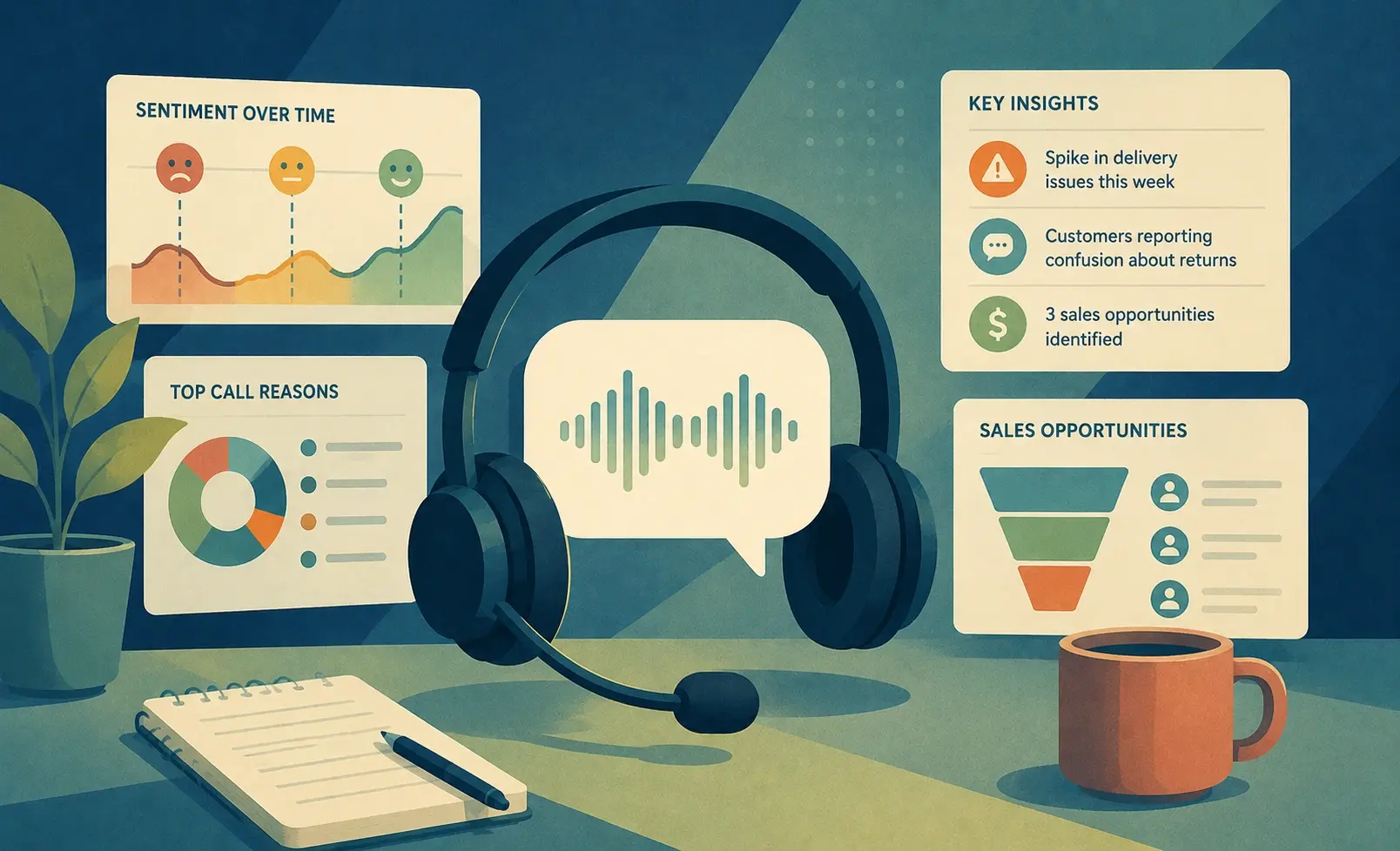
AI processes chat transcripts by applying natural language processing to identify patterns across the conversation: sentiment trajectory (did the customer's tone improve or deteriorate?), resolution indicators (did the agent confirm the issue was resolved?), compliance language (were required disclosures included?), and behavioral criteria (did the agent acknowledge frustration before redirecting?).
The output is a scored assessment per conversation, linked to the exact text exchanges that drove each score. Managers can review which agents consistently fail specific criteria, identify which conversation types generate the most coaching-addressable gaps, and build role-play scenarios from the interactions where skill gaps were most pronounced.
Insight7 extracts these patterns from chat and voice transcripts, generating per-agent scorecards and thematic analysis across your full transcript volume. The platform supports 60+ languages, which matters for global support teams handling chat across multiple regions.
Can You Use Chat Transcripts to Train AI Coaching Scenarios?
Yes. The most effective AI coaching scenarios are built from real customer interactions rather than generic templates. When a coaching scenario is generated from an actual chat transcript where an escalation occurred, the phrasing, customer persona, and sequence of events match what agents will actually encounter.
Insight7's coaching module generates role-play sessions directly from call and chat transcripts. A scenario built from a chat conversation where an agent failed to de-escalate a billing complaint includes the exact customer language and the specific moment where the de-escalation attempt failed. Agents practice the specific exchange rather than a hypothetical version of it.
Fresh Prints expanded from QA scoring into the coaching module specifically to give agents immediate practice on flagged behaviors. Read more on the Fresh Prints case study page.
How to Build a Chat Transcript Coaching Program
Step 1: Score a baseline of chat transcripts. Apply a QA rubric to the last 30 days of chat transcripts across your team. Focus on 3-4 behavioral criteria rather than attempting to score everything at once. Insight7 applies your custom rubric automatically once configured.
Step 2: Identify which criteria generate the most failures. From the baseline batch, rank criteria by failure rate. The criterion with the highest failure rate across the most agents is your starting coaching priority.
Step 3: Pull the 3 worst-performing conversations for each flagged criterion. These become the source material for coaching scenarios. They represent the specific situations where the skill gap most clearly manifests.
Step 4: Build role-play scenarios from those conversations. The scenario should recreate the customer context (the topic, the emotional state, the escalation trigger) and define the correct response. Agents practice until they hit the passing threshold.
Step 5: Re-score the same agents 30 days after coaching. Pull a new batch of transcripts for the same agents and score against the same criteria. Compare to baseline to confirm whether the coaching produced behavioral change.
Platforms That Process Chat Transcripts for Coaching
| Platform | Chat transcript support | Coaching integration | Best for |
|---|---|---|---|
| Insight7 | Yes, alongside voice calls | QA-triggered role-play coaching | Teams handling voice and chat together |
| Scorebuddy | Yes, configurable QA | Scorecard-based coaching flags | Teams with established QA rubrics |
| Qualtrics XM | Text analytics + chat | Survey + conversation correlation | CX programs correlating chat CSAT with coaching |
| Gorgias | Chat-native QA | Ticket-based quality scoring | E-commerce support teams on Gorgias |
If/Then Decision Framework
If you handle both voice calls and chat and want consistent QA scoring across both channels, then use Insight7. Best suited for: contact centers managing omnichannel volume under one QA program.
If your team is chat-only and runs primarily on a ticketing platform like Zendesk, then evaluate Scorebuddy or a Zendesk-native QA tool. Best suited for: support teams whose entire workflow lives in a ticketing system.
If you want to correlate chat transcript quality scores with post-contact CSAT surveys, then use Qualtrics XM. Best suited for: CX programs that already run Qualtrics for customer feedback.
If you need chat transcript QA connected to AI coaching role-play without two separate tools, then Insight7 covers both. Best suited for: operations managers who want a single platform for QA and coaching across channels.
Measuring the Impact of Chat Transcript Coaching
Track three metrics over 90 days after launching a chat transcript coaching program: first-contact resolution rate for chat (did the coaching reduce the need for follow-up conversations?), agent quality score trend for coached criteria (are scores improving over sessions?), and customer satisfaction for the flagged interaction types (are CSAT scores improving in the categories where coaching was applied?).
According to SQM Group research on omnichannel QA programs, contact centers that apply consistent behavioral scoring across voice and chat channels achieve better customer satisfaction consistency across channels than those applying QA rigor to voice only.
Building a chat transcript coaching program? See how Insight7 turns transcript data into targeted coaching scenarios.