


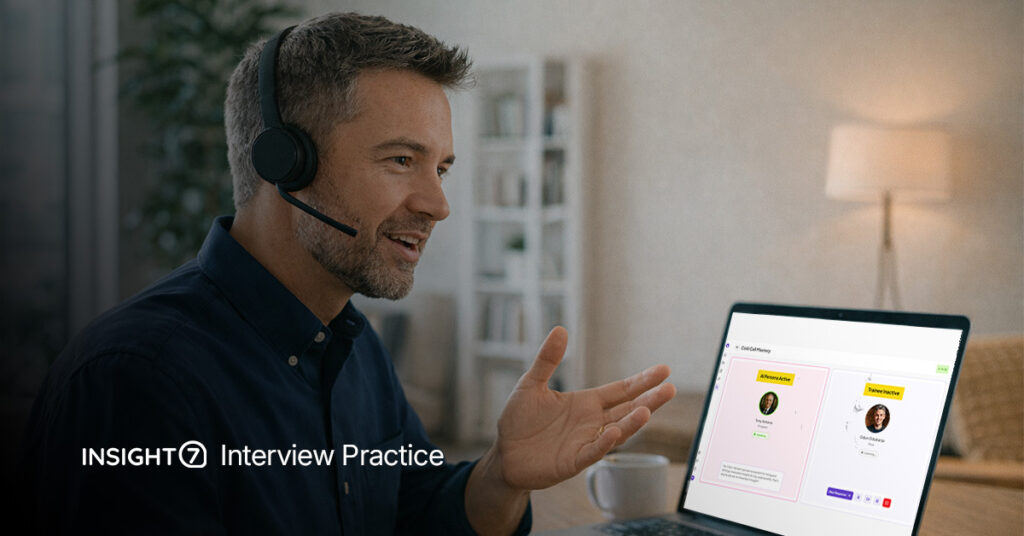
Microsoft Finance interviews test whether your financial analysis reflects a growth mindset, meaning you treat your assumptions as hypotheses to be tested rather than conclusions to be defended, you partner with the business with genuine intellectual curiosity rather than just delivering model outputs, and you name situations where your analysis was wrong and what you learned from it. The as-ap culture round specifically evaluates whether you are a learn-it-all: someone who demonstrates analytical rigor and intellectual humility simultaneously.
Start your free Microsoft Finance practice session.
What interviewers actually evaluate
Growth Mindset, Analytical Rigor & Business Partnership
Microsoft Finance interviews test whether your financial judgment reflects the Growth Mindset Culture that shapes how Microsoft operates. Interviewers evaluate whether you treat your assumptions as named and testable rather than assumed and certain, whether your analysis ends with a clear recommendation rather than a summary of findings, and whether you demonstrate genuine curiosity about the business rather than delivering numbers to stakeholders who are expected to draw their own conclusions.
Growth mindset, Analytical rigor, Business partnership, Intellectual humility, Recommendation clarity, Learn from failure
What gets scored in every session
Specific, sentence-level feedback.
| Dimension | What it measures | How to answer |
|---|---|---|
| Growth Mindset Signal | Does your answer demonstrate intellectual humility, learning, and genuine curiosity about the business? We flag certainty-as-strength framing and answers with no failure or learning. | Learning language, assumption acknowledged as testable, failure named |
| Model Rigor | Was your analysis structured correctly? We probe for driver identification, assumption transparency, and scenario analysis. | Assumption transparency, key driver naming |
| Business Partnership | Did your analysis lead to a recommendation that helped the business decide? We flag pure financial output without business context or recommendation. | Recommendation present, business framing, decision influenced |
| Impact Quantification | What changed because of your analysis? We look for a downstream business outcome: a decision made, a cost avoided, a strategic choice shaped. | Decision impact, dollar or percentage outcome |
How a session works
Step 1: Get your Microsoft Finance question
You are assigned questions based on where candidates for this role typically struggle most, which for Microsoft Finance means growth mindset demonstration alongside analytical rigor, and analyses that end in a clear business recommendation with an explicit acknowledgment of assumption uncertainty. Each session starts fresh with a new question targeting a different evaluation dimension.
Step 2: Answer by voice
Speak your answer as you would in a real interview. The AI listens for STAR structure and evaluation signal alignment, specifically whether your assumptions are named as testable, your recommendation is explicit, and your Result includes a business outcome alongside what you learned or would revise.
Step 3: Get scored dimension by dimension
Instant scores across all four rubric dimensions. Each gets a score, a flagged weakness, and a specific sentence-level fix. Microsoft Finance interviewers probe for models described as correct rather than as best-current-estimate, and for business partnership stories where the finance role was output delivery rather than genuine analytical collaboration.
Step 4: Re-answer and track improvement
Revise based on feedback and answer again. See the before/after score change across Growth Mindset Signal, Model Rigor, Business Partnership, and Impact Quantification. Your weakness profile updates across sessions so if you consistently underdemonstrate growth mindset through assumption humility and business partnership, that becomes the focus of your next question assignment.
Frequently Asked Questions
How do you prepare for a Microsoft Finance interview?
Prepare 4-6 STAR stories covering a financial model you built that informed a business decision, a situation where your analysis was wrong and what you learned, a forecast where you were transparent about assumption uncertainty, and a business partnership story where your curiosity about the business changed your analytical approach. For each story, explicitly name your key assumptions and position them as testable rather than certain, include what the analysis changed in the business, and prepare a story where your model or recommendation was challenged and what you took from that experience.
What are the 5 C's of interviewing for Microsoft Finance?
In Microsoft Finance interview contexts, the 5 C's map to: Curiosity (genuine interest in understanding the business dynamics before modeling them), Collaboration (how you partnered with the business to ensure your analysis was grounded in how the business actually works), Calculation (the model structure, assumption transparency, and scenario analysis), Conclusion (the clear recommendation you made and how you framed it for the business), and Change (what you learned from a situation where your analysis was wrong or your recommendation was challenged). For Microsoft Finance interviews, Curiosity and Change are most often underdeveloped.
What are the 5 C's of interviewing more broadly?
The 5 C's in general interview preparation cover: Clarity (expressing your answer clearly with specific details), Competency (demonstrating the skill the question is evaluating), Context (providing enough background for the interviewer to understand the situation), Contribution (making your specific role and actions unmistakably clear), and Consequence (stating the outcome in measurable terms). For Microsoft Finance interviews, all five apply and are filtered through the Growth Mindset lens: clarity includes naming what you learned, competency includes intellectual humility, and consequence includes both the business outcome and the revision you would make.
What are the Microsoft Finance Rotation Program interview questions?
Microsoft Finance Rotation Program (FRP) interviews specifically probe learning agility, intellectual curiosity, and business partnership alongside analytical competence. Common FRP questions include: a situation where you changed your analytical approach based on what you learned from the business; a model that produced an output that surprised you and how you investigated it; how you approach a finance question in a domain you have never worked in before; and what you would learn in the first 30 days of a new rotation that would change how you modeled the business. The FRP as-ap round specifically evaluates whether candidates embrace uncertainty as a learning opportunity rather than a risk to be hedged.
What are the most common failure modes in Microsoft Finance interviews?
The most consistent failures are:
- Financial models described as correct rather than as current-best-estimate with named assumptions that could be wrong
- No failure story, or a story where the analysis was wrong because of external factors rather than the candidate's assumptions: Microsoft Finance interviewers require candidates to own an analytical mistake and articulate the specific learning
- Business partnership described as delivering outputs to stakeholders rather than as genuine analytical collaboration that changed how the business thought about the decision
- Recommendation absent: ending with "here's what the model shows" without stating a clear position on what the business should do
- Fixed mindset signals: defending a wrong forecast as directionally correct or attributing model inaccuracy to data quality rather than assumption error
Also practice
All eight Microsoft role interview practice pages.
- Sales
- Customer Service
- Product Management
- Marketing
- Operations
- People & HR
- Leadership
- Legal & Compliance
One full session free. No account required. Real, specific feedback.








