Sales managers and revenue operations leaders who use CRM data analysis to guide sales strategy typically face the same gap: the CRM captures deal outcomes but not the conversations that caused them.
This guide covers how to use CRM data analysis to improve sales in 2026, including what data points actually predict revenue outcomes, how to connect structured CRM fields to unstructured call data, and a practical decision framework for different team sizes.
What CRM Data Analysis Actually Tells You (and What It Misses)
Standard CRM analysis covers pipeline health: stage distribution, velocity, close rates by segment, win/loss ratios. These metrics tell you what is happening. They do not tell you why a deal was lost, what objection blocked a close, or why a top rep outperforms the rest of the team.
The gap is qualitative. CRM records capture what sales reps click, not what they say. Teams that combine CRM data with conversation analytics close that gap: they can see that the top 20% of reps ask discovery questions differently, that a specific objection pattern correlates with deal loss, or that certain industries require more pricing conversations before advancing.
What CRM data points best predict sales performance?
The highest-signal CRM fields for sales prediction are: contact-to-meeting rate (a proxy for outreach quality), meeting-to-proposal rate (a proxy for discovery quality), proposal-to-close rate (a proxy for negotiation skill), and average sales cycle length by segment. These four ratios, tracked over time, reveal where deals are leaking and which rep behaviors contribute to each stage.
How to Use CRM Data Analysis to Improve Sales
Connecting CRM Data to Conversation Patterns
CRM close rates show you the outcome. Conversation analysis shows you the mechanism. When both are connected, you can answer questions like: "Do reps who cover pricing in the first call close faster?" or "Does discovery call length correlate with proposal acceptance?"
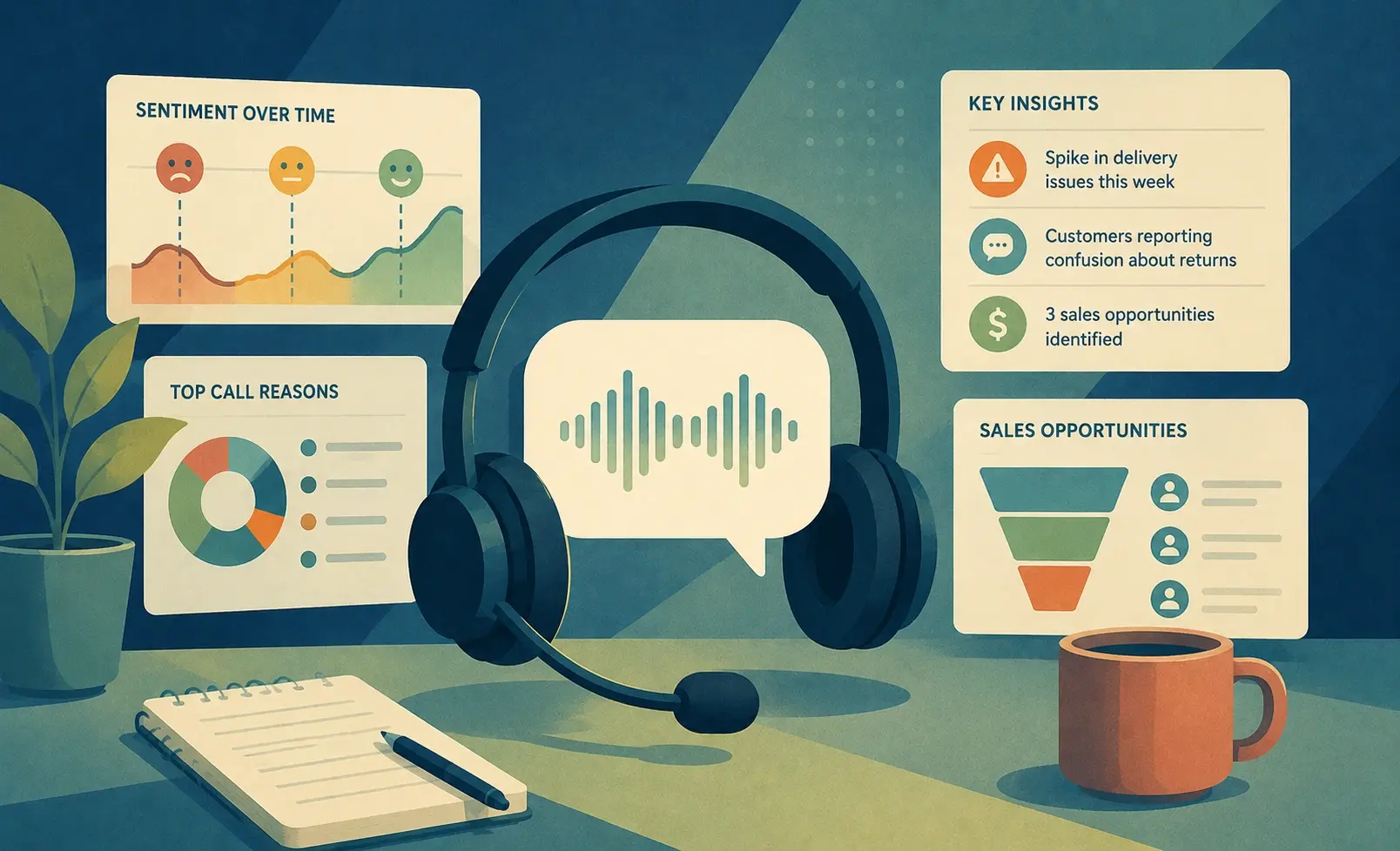
Insight7 connects call recordings to QA and performance data, allowing teams to see patterns across full conversation histories rather than relying on CRM field entries that reps fill in inconsistently. The revenue intelligence layer surfaces objection patterns, close-rate drivers, and rep performance tiers from actual conversation content, not from manager-assigned categories.
Segmentation That Goes Beyond Demographics
Most CRM segmentation uses firmographic fields: company size, industry, geography. These are useful for outbound targeting but weak for coaching because they do not explain behavioral differences within a segment.
Behavioral segmentation uses CRM fields in combination: which reps opened opportunities in a segment, how many touches occurred before conversion, what content was shared, what call notes contain. Teams that add conversation data to this mix can identify behavioral signatures of high performers across any segment.
To build this analysis: export CRM data by rep and stage, overlay call recording metadata, and group by behavioral pattern rather than demographic category. The output is a playbook based on what high performers actually do, not what managers think they do.
Forecasting That Accounts for Conversation Quality
Pipeline forecasts based only on CRM stage data tend to be overconfident. Deals in "proposal sent" carry very different close probabilities depending on whether the most recent call included pricing discussion, whether the champion stakeholder was on the call, and whether objections were surfaced.
Conversation analytics platforms can generate per-deal quality scores that weight these factors. When fed into a forecast model alongside stage data, the resulting forecast is more accurate than stage-only projections. According to Gartner research on revenue analytics, forecast accuracy improves significantly when behavioral signals from customer interactions are included alongside CRM stage data.
Coaching from CRM Data: What to Look for
The most actionable coaching signal from CRM analysis is conversion rate by stage, broken down by rep. If one rep consistently loses deals between "proposal sent" and "closed," the CRM is surfacing a negotiation gap. If another rep converts well at close but low at "meeting booked," the CRM is surfacing a qualification or outreach gap.
From there, use conversation analysis to confirm: pull the calls from that stage for that rep and listen for the pattern. This sequence — CRM to identify where, conversation analysis to understand why — is more efficient than reviewing random calls and faster than waiting for pattern to emerge from manager observation.
Insight7 auto-suggests training based on QA scorecard feedback, generating practice scenarios from the specific gaps surfaced in actual calls. This closes the loop from CRM pattern to coaching action without requiring managers to manually assign training.
If/Then Decision Framework
- If you want to understand why deals are lost at a specific stage: run stage-level conversion analysis in CRM, then pull call recordings from lost deals at that stage for qualitative review.
- If you want to replicate top performer behavior: export top rep CRM histories, map to call recordings, identify behavioral patterns, and build training scenarios from actual calls.
- If your forecast accuracy is poor: add conversation quality scoring to pipeline data and weight by interaction recency.
- If coaching assignments feel arbitrary: use QA scorecard data linked to CRM stage outcomes to assign targeted practice scenarios.
How do I get sales reps to keep CRM data accurate for analysis?
The most effective approach is to minimize the data entry burden while maximizing the visible value. Reps who see that CRM data actually changes what coaching they receive and what territories they're assigned maintain data more diligently. Automating field population from call recordings reduces the manual overhead that causes data decay.
FAQ
How often should I run CRM data analysis for sales improvement?
Weekly pipeline reviews using CRM data are standard. For coaching-focused analysis, monthly cohort reviews work well: compare this month's conversion rates by stage to last month, identify who shifted, and schedule targeted coaching sessions based on the delta. Quarterly reviews should include behavioral pattern analysis from conversation data to update the team playbook.
Can small sales teams benefit from CRM data analysis?
Yes. The analysis methods scale down. A team of five reps with a basic CRM can run stage-level conversion rate tracking in a spreadsheet. The practices that matter — mapping conversion rates to rep behavior, identifying stage-specific gaps, and using actual calls to understand the mechanism — apply at any team size. The tooling investment needed increases with team size and call volume.
CRM data analysis improves sales when it goes beyond pipeline counting to reveal the behavioral patterns behind conversion rates. Connecting CRM outcomes to conversation data closes the gap between what happened and why. Insight7 provides the conversation analysis layer for teams ready to move from stage-tracking to behavioral coaching.