
Structuring Customer Segments in Your Opportunity Solution Tree: A Comprehensive Guide
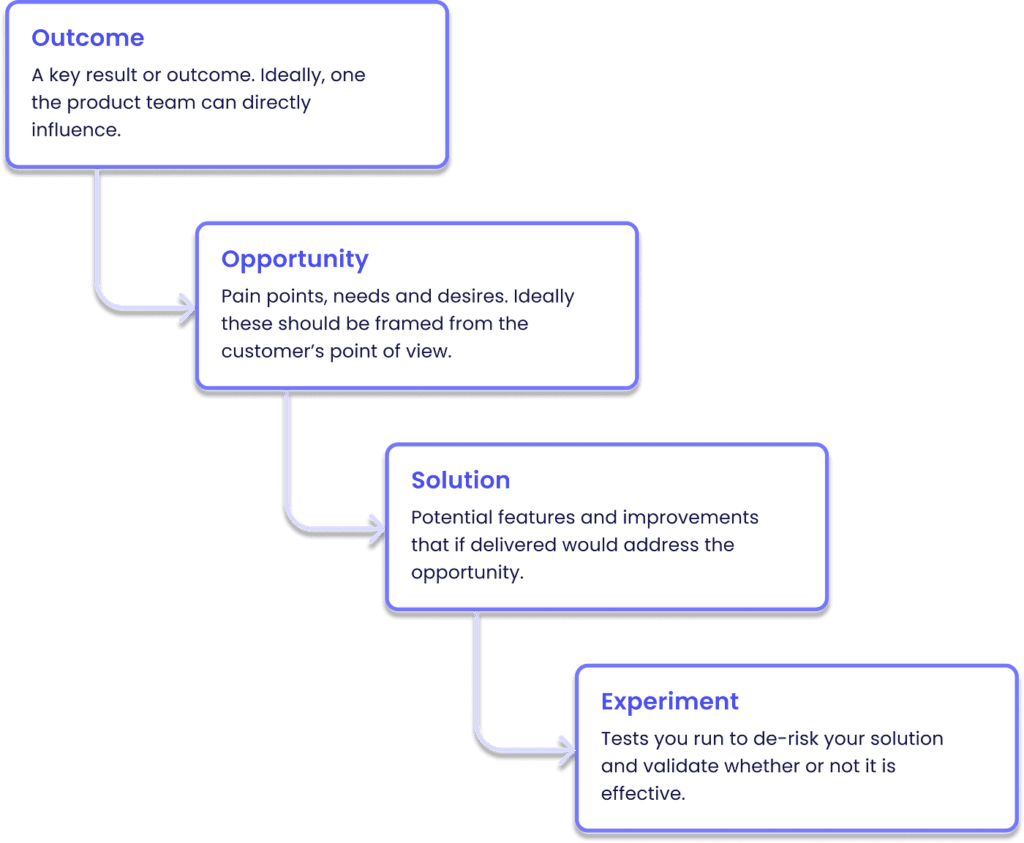
When it comes to creating an Opportunity Solution Tree (OST), many teams find the process of structuring the opportunity space challenging. It’s common to get overwhelmed, especially when dealing with the B2B space, different customer types, and various pain points; it’s common for teams to struggle with a simple question, “Who is our target customer?” But the difficulty in answering that question doesn’t mean we can just ignore it. In fact, it’s all the more reason to dig in deeper and do our best to answer it. Think of it this way: Being customer centric is held up as an ideal in many companies these days. But to be customer centric by definition implies that you know who those customers are and what their specific needs are. However, ignoring the importance of customer segments in your OST can lead to significant problems down the road. Being customer-centric necessitates knowing your customers and understanding their unique needs. In this article, we’ll explore how to incorporate customer segments into your OST, using detailed examples to illustrate the concepts. The Fundamentals: 5W Questions To begin, let’s revisit the basic principles of storytelling – the 5W (+1 H) Questions: Who? What? When? Where? Why? How? These questions are essential for structuring your OST effectively. While it might seem obvious, many OSTs often neglect the “who” aspect. We know the customers are crucial, but is the category “customers” specific enough? The answer depends on your context. Sometimes, working with the broad category of “customers” is acceptable if their needs remain consistent. However, it’s equally important to dive deeper into specific customer segments when necessary. 1: Uncovering Potential Customers Example: A SaaS Company Imagine you’re working for a Software as a Service (SaaS) company with the goal of increasing revenue. While broad customer categories may include individual users, small businesses, and enterprises, delving into segments can provide more clarity. One segment may be small businesses with specific needs, while another could be large enterprises seeking tailored solutions. Identifying these distinctions helps you make informed decisions about customer interviews and product development. 2: Realizing You Have Too Many Segments of Customers Example: Marketing Technology Company Consider a marketing technology company offering both free and paid product versions. The product team wants to convert free trial users into paid customers. Initially, they identified three customer segments – marketers at larger companies, digital marketing agencies, and small business owners. However, during discovery, they discovered that these segments had remarkably similar motivations and needs. In this case, creating separate segments on the OST didn’t add value, highlighting the importance of flexibility and adaptability in your approach. 3: Bringing More Clarity to Your Opportunities by Assigning Them to Specific Segments Example: Recruiting-related SaaS Company In this scenario, a recruiting-related SaaS company aims to increase revenue. To prioritize effectively, they needed to consider who would benefit from each solution and how it would contribute to revenue growth. Some opportunities might have a more significant impact on their desired outcome. Quantifying the potential size of each path to increased revenue allowed them to compare the relative contribution of focusing on different customer segments. Tying It All Together Incorporating customer segments into your Opportunity Solution Tree helps provide critical context. It allows you to answer the “who” question explicitly and assess, size, and prioritize among customer segments. This context is essential for influencing stakeholders and partners and ensuring your solutions have a substantial impact. By explicitly addressing the 5W questions in your OST, you equip yourself with the storytelling elements needed to persuade others about the importance of your chosen opportunities. You also gain a deeper understanding of the context in which your solutions will be used and their potential impact on your desired outcome. Conclusion Structuring your Opportunity Ssolution Tree with well-defined customer segments is a strategic approach that enhances your ability to address specific customer needs. It prevents you from making risky assumptions and allows you to focus your efforts where they will have the most significant impact. Remember that your OST is a dynamic tool that should evolve as your understanding of customer segments deepens and as you progress toward your desired outcomes.
Leveraging Customer Insights to Understand B2B Market Challenges

The power of customer insights cannot be overemphasised. Qualitative insights reveal the motivations behind customer behaviors, opinions, desires, and expectations. Unlike its data-driven counterpart, quantitative insights, qualitative insights use loose frameworks with open-ended questions that allow respondents to talk freely about various issues. To build a successful product, understanding your customers is more important than ever. And that’s where customer insights for segmentation comes in – it’s like a roadmap that helps companies figure out how to connect with different types of customers. To read more about customer segmentation, check out previous posts. But here’s the twist: it’s not just about numbers and graphs. It’s about really understanding what makes your customers tick – what they like, what they want, and even how they feel. Imagine it like getting to know a new friend – you want to know more than just their name; you want to understand their personality and what makes them unique. Leveraging customer insights to understand market challenges for different segments is a crucial strategy for businesses looking to thrive. By deeply understanding the needs, preferences, behaviors, and pain points of specific customer segments, companies can tailor their products, services, and marketing efforts to effectively address these challenges. Using Customer Insights to Understand Market Challenges for Segments When it comes to comprehending market challenges, a substantial portion of the process entails qualitative endeavors. This involves delving into the intricacies of the market environment, aspirations of potential customers, and the contextual backdrop of their circumstances. This critical undertaking shapes the nature of interactions with customers and forms the foundation for cultivating a deep understanding of their issues. This understanding, in turn, allows both marketing and product teams to develop a fervor for addressing their problems and devising effective solutions. However, the exploration of market problems should not be limited to qualitative exploration alone. It is imperative to blend this qualitative insight with quantitative elements. Without translating your qualitative observations into data-driven factors, marketing teams might struggle to persuade other stakeholders within the organization to take actionable steps based on their insights. This amalgamation of qualitative and quantitative aspects is what adds complexity to the task of uncovering and comprehending market problems fr different segments. Teams embark on a predominantly qualitative pursuit, often engaging in conversations with customers. The knowledge gained from these interactions is unstructured and experiential by nature. Hence the need for indepth analysis and segmentation. Here’s a step-by-step approach to leveraging customer insights for understanding market challenges for different segments: Segmentation and Targeting: Identify and define your customer segments based on relevant characteristics such as demographics, psychographics, behaviors, and needs. Prioritize segments based on their potential value and alignment with your business goals. Data Collection: Gather both qualitative and quantitative data from various sources, including surveys, interviews, social media, online reviews, and sales data. Use analytics tools to track customer interactions and behaviors on your website, app, or other touchpoints. Persona Development: Create detailed customer personas for each segment, including their motivations, pain points, challenges, goals, and preferred communication channels. Personas provide a humanized representation of your target customers, making it easier to empathize and strategize. Customer Journey Mapping: Map out the end-to-end customer journey for each segment, identifying touchpoints, interactions, and pain points they experience during their interactions with your brand. This helps you pinpoint specific moments where challenges arise and opportunities for improvement exist. Data Analysis: Analyze the collected data with tools like Insight7 to identify patterns, trends, and common challenges faced by each segment. Look for insights that reveal the root causes of these challenges, whether they’re related to product functionality, customer service, pricing, or other factors. Competitor Analysis: Compare your findings with your competitors’ strategies to gain a holistic view of the market landscape and potential challenges your segments might encounter across different brands. Feedback and Surveys: Engage with your customers through regular feedback surveys, focus groups, or online communities to gather ongoing insights and validate your findings. Actively listen to customer feedback to stay attuned to evolving challenges and preferences. Iterative Strategy Development: Develop tailored strategies for each segment based on the insights you’ve gathered. These strategies could involve product improvements, marketing campaigns, customer support enhancements, or pricing adjustments. Continuously iterate and refine your strategies based on new insights and changing market dynamics. Implementation and Monitoring: Implement your strategies and closely monitor their impact on addressing the identified challenges. Track KPIs related to customer satisfaction, retention, conversion rates, and revenue growth. Continuous Learning: Keep the process of collecting and analyzing customer insights ongoing. Markets and customer preferences evolve, so maintaining a pulse on customer needs is vital for long-term success. Remember, the goal is to create a customer-centric approach that not only addresses market challenges but also delights your customers, fostering long-term relationships and sustainable business growth. Common Pitfalls in Understanding Market Challenges for Different Customer Segments Fixating on Short-Term Revenue: If the initiative, even if endorsed by leadership, is primarily aimed at resolving short-term revenue issues, navigating these waters becomes exceedingly challenging. In such cases, it is essential to advocate for a more realistic outlook. Look at market trends. Work with past data and future projections. Excessive Focus on Existing Customers: While working extensively with existing customers can contribute to sustaining current revenue and building loyalty, it might not necessarily lead to true market discovery. For uncovering new opportunities or establishing a foothold in an adjacent market, a different approach is required. Delve into new segments to discover new opportunities. Chasing Competitors: Responding to competitive pressures is legitimate, but engaging in long-term strategic activities solely as a defensive measure against competitors can divert focus from the core market discovery process. Instead, stay focused on the needs of each segment within your target market. Innovation as the Leading Driver: While innovation is integral to the market research process, it should not take precedence over understanding customer needs. The primary focus should remain on identifying and solving problems, rather than being solely driven by technological advancements. Market Problem Identification Market Problems
