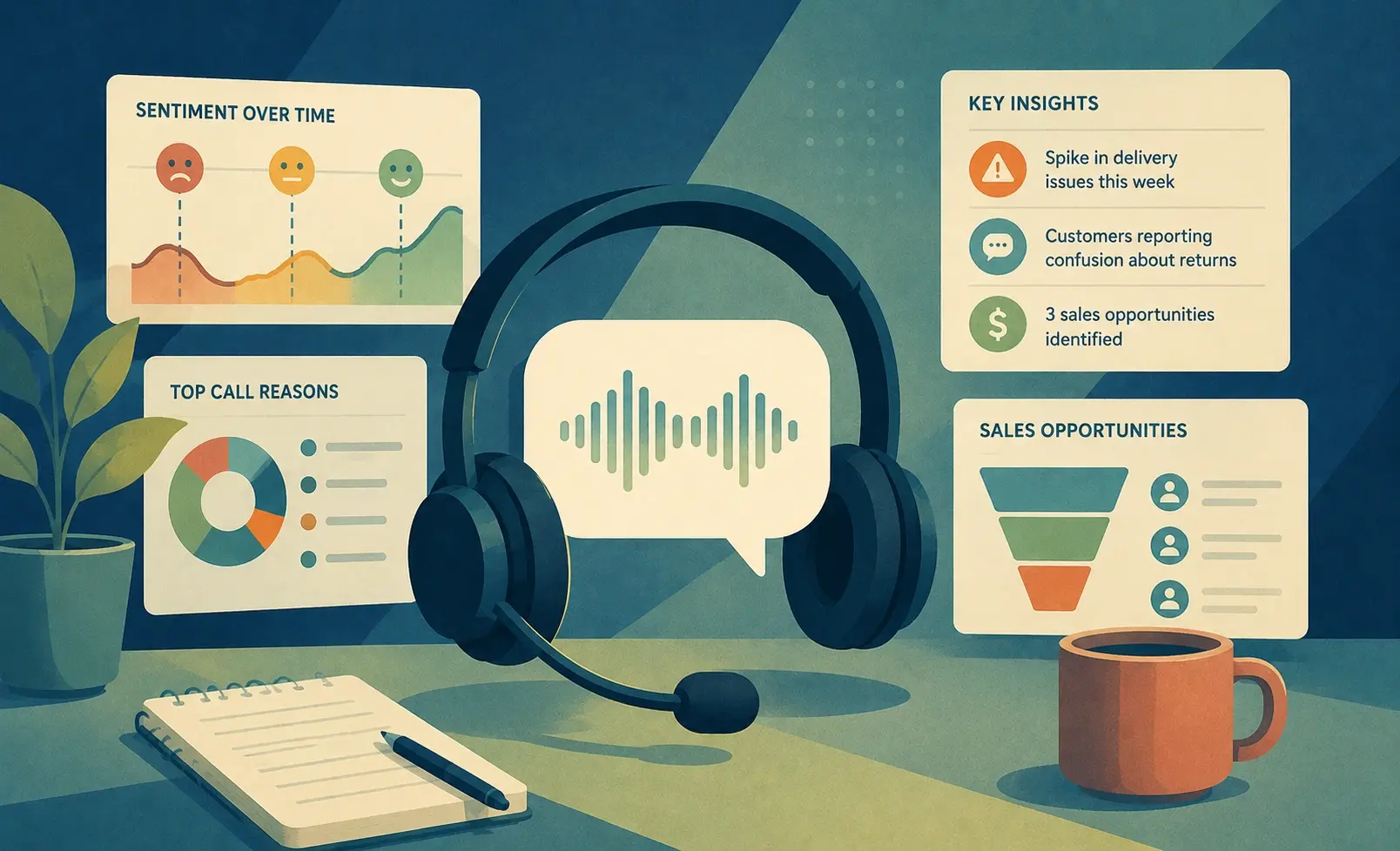
Sales managers and customer success team leads who run 1:1 coaching sessions without a structured feedback template tend to run the same conversation every week: good job on this call, work on that one, talk again next time. A feedback template anchored in call data breaks that cycle by giving every session a specific behavior to address and a defined checkpoint for whether it changed.
This guide covers six steps to build and use a 1:1 coaching feedback template that produces measurable rep improvement, along with a sample table and guidance on where AI tools reduce the data-prep burden on managers.
Why Feedback Templates Matter for 1:1 Call Coaching
Unstructured 1:1s are not a coaching failure, they are an information problem. Managers walk into sessions without a reviewed call, without evidence of which criteria the rep fell short on, and without a prepared behavioral example. The session defaults to impressions rather than evidence. Impressions do not change behavior because reps cannot practice an impression. A template that anchors the session in specific call data, specific criteria scores, and specific behavioral evidence gives reps something concrete to work on.
What is a good 1 on 1 agenda?
For a 1:1 coaching session on call performance, a good agenda follows three phases: evidence review (what the call data shows), diagnosis (why the gap exists), and commitment (what the rep does differently before the next check-in). The most productive sessions spend less than a third of the time on evidence review because that data was prepared before the meeting, and the majority of the time on diagnosis and the specific behavior change the rep is committing to.
What are the 3 C's of coaching?
The 3 C's of coaching are Clarity, Consistency, and Commitment. Clarity means the rep knows exactly what behavior needs to change, grounded in a specific call moment rather than a general impression. Consistency means the coaching happens at a defined cadence with the same template every time, so the rep knows what to expect and can prepare. Commitment means both the manager and the rep leave the session with a specific action, a measurement criterion, and a follow-up date.
Step 1: Review AI-Scored Call Data Before the 1:1
The most time-consuming part of 1:1 prep is finding and reviewing calls. Managers who do this manually either skip preparation or run shallow sessions. AI-scored call platforms remove that barrier by surfacing the calls that need attention before the manager opens a calendar invite.
Before each 1:1, open your call analytics platform and pull the rep's scorecard for the period. Look for:
- Criteria where the rep's average is below your team threshold
- Calls with the largest deviation from their own average (not just low scores in aggregate)
- Any compliance or keyword alerts triggered since the last session
Insight7 generates per-agent scorecards automatically, clustering multiple calls into a single performance view with drill-down into individual interactions. Managers see which criteria are trending down, which calls exemplify the pattern, and the exact transcript quote supporting each score. This preparation takes five minutes rather than thirty.
Avoid this common mistake: reviewing only the most recent call. A single call is not a pattern. The goal of pre-session review is to identify a behavior that shows up across multiple calls so the coaching conversation is addressing something real, not an outlier.
Step 2: Select the 2 to 3 Highest-Priority Criteria to Address
A coaching session that covers six behavioral gaps produces no change. Reps leave overwhelmed and managers have no clear way to measure progress. Prioritize based on two factors: impact on outcome and frequency of occurrence.
The criterion that most directly drives conversion, retention, or customer satisfaction scores should take priority over criteria that affect call quality scores but have lower downstream impact. Among criteria at similar impact levels, pick the one that shows up in the most calls, because that is the pattern the rep has not yet broken on their own.
Document your two to three selected criteria in the template before the meeting so the session does not drift to whatever feels salient in the moment.
Step 3: Prepare Behavioral Evidence from Transcript Quotes
For each selected criterion, locate the specific moment in the call transcript that illustrates the gap. This is the most important preparation step and the one that makes coaching credible to reps.
Behavioral evidence should be:
- A direct quote or closely paraphrased transcript excerpt
- Tied to the exact call reference (date and call ID)
- Describing what the rep did, not what they should have done
Insight7 links every criterion score to the exact quote and transcript location. Managers copy the evidence into the template or reference it directly on screen during the session. This replaces the common scenario where a manager says "you were not empathetic on that call" and the rep has no idea which call or which moment is being discussed.
Step 4: Structure the Feedback Using the SBI Model
The Situation-Behavior-Impact (SBI) model is the most widely used framework for delivering behavioral feedback because it separates description from judgment. Applied to call coaching:
- Situation: The specific call moment. "At minute 3:42 of the May 8 call with a customer asking about renewal pricing…"
- Behavior: What the rep said or did. "You quoted the standard price without acknowledging that the customer had mentioned budget constraints twice earlier in the call."
- Impact: The consequence. "The customer disengaged and the call ended without a next step."
SBI feedback is specific, verifiable, and non-personal. It gives reps a clear picture of the behavior and its consequence without requiring them to agree with an opinion. For managers, it forces the preparation in Step 3, because SBI feedback cannot be delivered without a specific call moment in hand.
Step 5: Get Rep Commitment on Specific Behavior Change
After delivering SBI feedback, ask the rep to state in their own words what they will do differently. Do not accept a general agreement like "I will be more attentive to customer cues." Push for a situation-specific commitment:
- "In the next call where a customer signals budget hesitation, I will…"
- "When a renewal conversation starts, my first question will be…"
Situation-specific commitments give reps a behavioral trigger they can apply on the next call. General commitments dissolve between sessions because reps have no prompt to activate them in the moment.
Record the commitment verbatim in the template. It becomes the measurement baseline for Step 6.
Step 6: Schedule a Follow-Up with a Measurement Checkpoint
Every coaching session should end with two things confirmed: the date of the next check-in and the specific measurement that will determine whether progress happened.
The measurement checkpoint should reference the same criteria selected in Step 2. "We will review your empathy scores on the five calls between now and May 22. The target is moving your average from 58% to above 70% on that criterion."
A defined measurement date prevents coaching from becoming a perpetual conversation about the same gap. It also gives reps a concrete target rather than a vague direction to improve.
Sample Coaching Feedback Template
| Field | Content |
|---|---|
| Agent and session date | Name, date of 1:1 |
| Call references | Call ID, date, link to recording |
| Priority criteria | 2 to 3 criteria with scores |
| Behavioral evidence | Transcript quote per criterion |
| SBI feedback summary | Situation, behavior, impact per criterion |
| Rep commitment | Verbatim behavioral statement |
| Follow-up date and target | Date + specific score target |
How Insight7 Prepares Steps 1 Through 3 Automatically
Insight7 handles the data-intensive preparation that managers spend the most time on before 1:1s. The platform automatically scores 100% of calls against your weighted criteria, clusters results into per-agent scorecards, and links every score to the exact transcript quote. Before a 1:1, a manager opens the agent scorecard, selects the two to three criteria they want to address, and copies the transcript evidence directly into the template.
This means Steps 1 through 3 take five minutes instead of thirty, and the manager arrives at the session with prepared SBI evidence rather than a general impression of how the rep has been performing. For teams running 1:1s across eight or more reps per manager, automated call preparation is what makes coaching cadence sustainable. See how Insight7 supports sales and CX coaching.
FAQ
What is a good 1 on 1 agenda?
A good 1:1 coaching agenda covers three phases in order: evidence review (10 minutes), behavioral feedback and diagnosis (15 minutes), and commitment plus follow-up scheduling (5 minutes). The evidence review should be fast because the call data and transcript quotes were prepared before the session using your QA platform. The coaching conversation itself, not the call retrieval, should take most of the time.
What are the 3 C's of coaching?
Clarity, Consistency, and Commitment. Clarity means the rep knows exactly which behavior to change, grounded in a transcript quote from a specific call. Consistency means coaching happens on a regular cadence with the same template structure every time. Commitment means both parties leave with a specific action and a measurement checkpoint. A well-structured template enforces all three by design.
How do I make coaching feedback stick between 1:1 sessions?
Feedback sticks when reps have a situation-specific trigger: "when X happens, I will do Y." General feedback fades because there is no activation cue in the next call. After delivering SBI feedback, ask the rep to write down the specific situation where they will apply the new behavior. Then confirm the follow-up date and the measurement criteria so the next session starts by checking whether the commitment produced a score change.