I have seen countless companies invest in coaching programs that look perfect on paper but fail spectacularly in execution.
The common wisdom says: “Buy a tool, train your managers, and you’ll see skill improvement.”
Reality? Most programs barely move the needle. Leaders sit through training, employees nod politely, but the skills rarely stick – especially when it comes to coaching.
The problem isn’t motivation. It’s not even capability. It’s systemic design.
Traditional corporate training assumes that exposure equals adoption.
It doesn’t account for the fact that coaching is learned in the messy middle of real work: the 1:1s, the sales calls, the customer escalations. If the tools you use don’t mirror that reality, they’re almost irrelevant.
2. Why Traditional Coaching Tools Fail
I’ve audited dozens of coaching initiatives across RevOps and Enablement teams.
Here’s what I consistently see go wrong:
- Timing mismatches. Workshops happen in a vacuum; skills are disconnected from immediate work priorities.
- Scale friction. You can coach a few managers, but doing it at enterprise scale without consistency is nearly impossible.
- Context loss. Generic learning content doesn’t reflect the actual interactions teams have with customers or colleagues.
- Feedback decay. Skills fade when reinforcement isn’t timely, specific, and tied to real outcomes.
The real problem isn’t motivation. It’s that traditional tools treat coaching like a knowledge transfer problem – not a practice-and-feedback problem.
3. The AI Roleplay Solution: A System-Level Reframe
Here’s the insight most teams miss: coaching skills aren’t taught – they’re activated. That’s why AI roleplay tools for corporate training in coaching skills are gaining traction.
Instead of hypothetical workshops, these systems create interactive, context-rich scenarios. A leader can rehearse a tough conversation, a difficult product discussion, or an escalation – repeatedly with AI simulating the other side.
The structural advantage is simple:
- Immediate context – scenarios mirror real work challenges.
- Scalable practice – hundreds of people can practice simultaneously.
- Instant feedback loops – AI evaluates language, tone, and impact in real time.
- Data-driven reinforcement – patterns of skill gaps are tracked and analyzed.
This isn’t a tool. It’s an execution system: practice – feedback – reinforcement – measurement.
4. How to Evaluate AI Roleplay Tools
Most organizations default to feature checklists:
“Does it have scoring?
Can it simulate objections?” That’s backward.
The right evaluation framework looks at systemic impact:
- Realism & Relevance – Do scenarios mirror actual interactions?
- Feedback Quality – Is guidance specific and actionable?
- Workflow Integration – Can simulations be accessed within daily routines?
- Measurement & Analytics – Are trends visible across teams?
If a tool doesn’t support those four areas, you’re still stuck in traditional training mode.
5. Leading AI Roleplay Tools for Corporate Coaching (2026)
If you’re serious about bridging the gap between training and performance, here are some of the most effective AI roleplay tools tailored for corporate coaching and skill activation.
These aren’t just products, they’re systems you can plug into your operational rhythm.
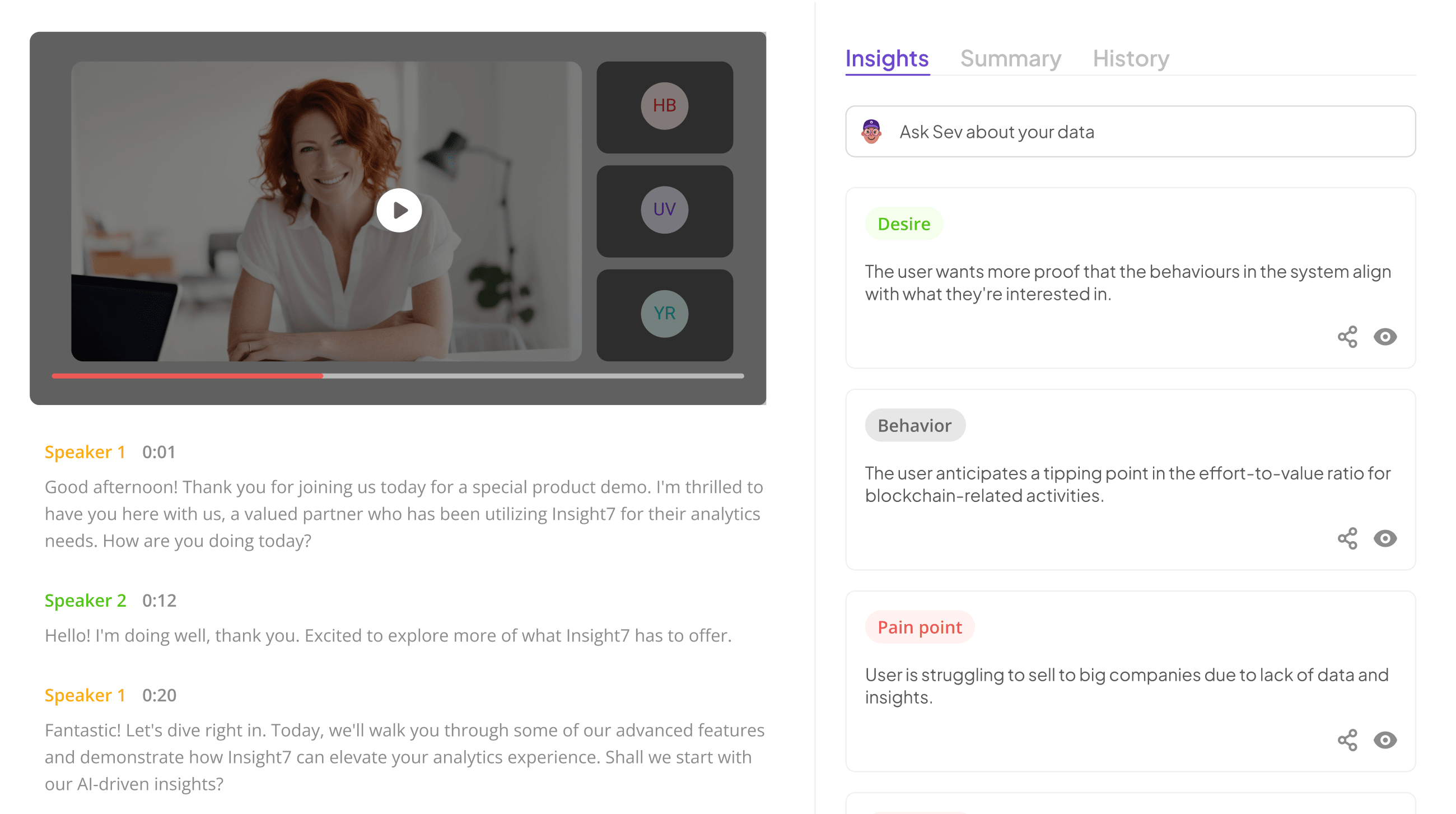
Insight7 – AI Roleplay with Analytics
Insight7 stands out because it pairs robust roleplay simulations with actionable insights and enterprise-level analytics.
Managers can practice real scenarios, get feedback on language and approach, and leadership teams can see trends across the org. This combination of practice + pattern visibility is what truly moves the needle on coaching skills.
Why it matters: It aligns practice with execution, and feedback with measurable outcomes – essential for RevOps, Enablement, CX, and Product leaders.
Glider AI
A dynamic AI roleplay and skills validation platform that scales realistic conversation simulations across teams.
It lets organizations build custom roleplays (e.g., coaching conversations, objection handling, performance reviews), then delivers instant feedback on performance and tracks improvement over time.
It’s built for real-world application – not just scripted dialogues – and integrates with existing LMS environments. (glider.ai)
Best for: teams that want structured, measurable skill development with dashboards and custom scorecards that reflect organizational standards.
EasyCoach (from EasyGenerator)
An AI-powered coaching platform focused on turning knowledge into performance.
It enables organizations to build and deploy roleplay scenarios that mirror real workplace conversations, then gives learners instant practice and feedback.
The emphasis is on scalability – giving every employee access to AI coaching rather than relying on limited human capacity. (easygenerator.com)
Best for: teams that want practical, scalable conversational practice across skills like objection handling, product training, and interpersonal communication.
Outdoo AI
A more advanced AI roleplay and coaching platform that uses AI Buyer Twins and CRM-driven scenarios to make practice as close to real world as possible.
It supports multi-mode roleplays (chat, video, team scenarios), automatically scores performance, reinforces skills with micro-learning units, and ties coaching data back to revenue or performance outcomes. (outdoo.ai)
Best for: organizations that want deep integration with CRM data and analytics showing how coaching practice directly impacts performance metrics.
| # | Tool | Core Focus | Best Fit |
|---|---|---|---|
| 1 | Insight7 | AI roleplay + analytics + workflow integration | End-to-end coaching activation system for RevOps, Enablement, CX, and Product teams |
| 2 | Glider AI | Structured roleplay + analytics | Enterprise coaching and measurement with custom scorecards |
| 3 | EasyCoach | Scalable conversational practice | Broad coaching adoption across large teams |
| 4 | Outdoo AI | CRM-linked, data-driven practice | Teams tying training to performance and real business outcomes |
6. Common Mistakes Leaders Make
From my experience consulting with CX and Product leaders:
- Treating AI roleplay as optional. A single simulation won’t build habits.
- Ignoring team-wide data. Improving individuals is good; improving teams is strategic.
- Neglecting scenario diversity. Too narrow simulations limit skill transfer.
- Confusing feedback with scoring. A number isn’t learning; insight is.
7. Best Practices for AI Roleplay Implementation
Here’s what works:
- Embed simulations into real workflows. Before customer calls, after performance reviews, and during coaching cycles.
- Use micro-feedback loops. Frequent, brief, actionable feedback beats long, infrequent reports.
- Track trends across teams. Look for persistent patterns — they tell you where coaching systems break.
- Blend AI with human reflection. AI surfaces insights; humans contextualize them.
8. A Simple Framework: The 3 Layers of Coaching Activation
To make any of these tools effective, think in terms of three layers:
- Activation Layer – Where AI roleplay simulates real interactions.
- Insight Layer – Where performance is evaluated, and gaps are surfaced.
- Execution Layer – Where learning gets embedded into routines and metrics.
This layered model is what converts a training program into a skill operating system.
9. Forward-Looking Takeaway
The future of coaching isn’t workshops.
It’s activated practice embedded in execution systems. Companies that cling to traditional training will see diminishing returns: skill gaps persist, adoption stalls, and leadership development slows.
AI roleplay tools for corporate training in coaching skills are no longer a nice-to-have. They are the infrastructure for modern coaching – turning theory into behavior and isolated training into measurable performance improvement.
For RevOps, Enablement, CX, and Product leaders, the strategic question isn’t whether to adopt these tools – it’s whether your organization will evolve its coaching capacity before the competition does.