Your leadership pipeline isn’t slow because managers don’t care.
It’s slow because most coaching systems can’t see what’s actually happening at work.
That gap has real cost.
Missed deals.
Burned-out managers.
Skills that decay faster than they’re taught.
The usual explanation is “we need better training.”
That’s incomplete.
The real problem isn’t training quality.
It’s signal quality.
Most coaching decisions are made from memory, surveys, and quarterly reviews. By the time feedback arrives, the behavior that caused the problem is already baked in.
This piece shows what’s changed, why traditional coaching models fail structurally, and which five AI coaching platforms are shaping how high-performing teams build skills in 2026.
You’ll leave with a clear framework for choosing a system that actually changes behavior, not just completion rates.
The Myth: More Training Fixes Performance Gaps
The common belief:
If performance is slipping, add more training.
Why this fails:
- Training happens after the work is done
- Content is generic by design
- Feedback is delayed
- Managers guess where skill gaps exist
What the data shows in practice:
Teams complete courses.
Performance variance stays wide.
Managers still coach reactively.
Completion metrics go up.
Skill consistency doesn’t.
This isn’t a content problem.
It’s a systems problem.
Why the Old Coaching Model Breaks at Scale
Traditional coaching collapses for structural reasons:
Timing breaks
Feedback arrives weeks after behavior happens. It can’t change decisions already made.
Context disappears
Generic training doesn’t map to real conversations, real objections, or real mistakes.
Signal quality is low
Managers rely on memory and anecdote. Two people can watch the same call and coach differently.
Scale fails
One manager can’t consistently coach ten people with precision using manual review.
The result: coaching becomes sporadic, subjective, and hard to measure.
The real failure isn’t effort.
It’s architecture.
What Actually Improves Performance: Coaching as a System
High-performing teams treat coaching as an operating system, not an event.
The mechanism that works looks like this:
- Observe real behavior
- Detect skill gaps
- Trigger coaching in context
- Measure change
- Adapt continuously
When that loop runs fast, skills compound.
When it runs slow, training becomes theater.
Most tools stop at step two.
They show data.
They don’t close the loop.
The Performance Loop: A Simple Framework
Use this model to evaluate any AI coaching platform:
Signal → Insight → Action → Measurement → Adaptation
- Signal: real work data (calls, chats, feedback, workflows)
- Insight: what’s actually happening at the skill level
- Action: what managers should coach next
- Measurement: whether behavior changed
- Adaptation: how the system updates coaching paths
If a platform can’t run this loop end-to-end, it’s not a coaching system.
It’s a reporting tool.
Why Manual Coaching and Legacy Training Can’t Compete
Manual review doesn’t fail because managers aren’t skilled.
It fails because humans can’t see patterns at scale.
Legacy LMS platforms don’t fail because content is bad.
They fail because content is detached from real work.
At small scale, this is manageable.
At 50+ reps, it breaks.
The gap widens as:
- Teams grow
- Roles specialize
- Customer behavior changes
- Managers inherit more reports
Systems beat heroics.
Top AI Coaching Tools for Corporate Teams in 2026
These platforms reflect the shift from training programs to performance systems. Each solves a different part of the coaching architecture.
1) Insight7 — Best for Real-World Performance Coaching
What it does
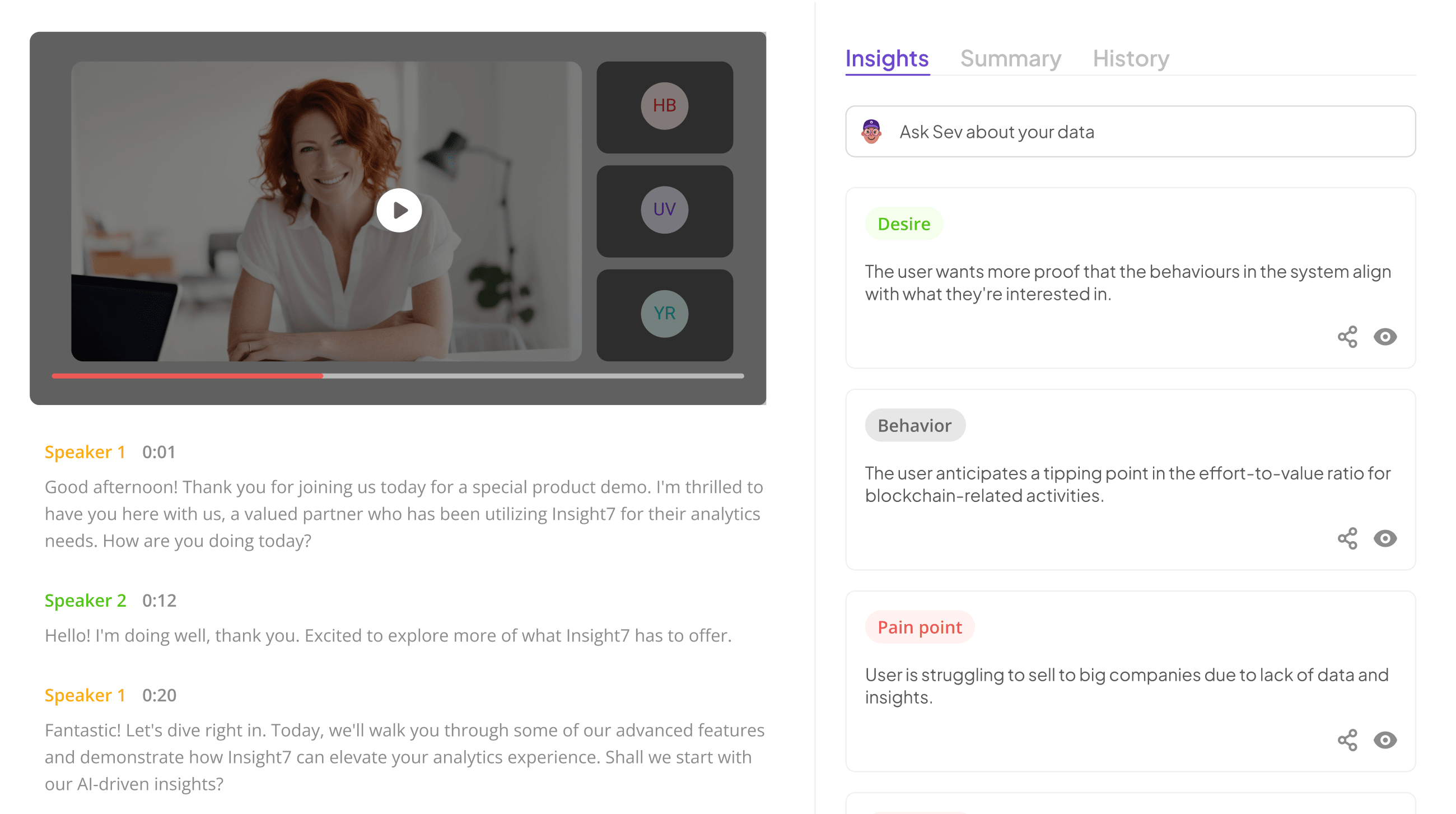
Insight7 analyzes real work signals – calls, chats, feedback, CRM activity, and translates them into coaching priorities managers can act on.
Not dashboards.
Not generic scores.
Specific coaching direction tied to real behavior.
Where it fits
- Sales
- Support
- Customer success
- Any role where performance shows up in conversations
Why it matters
Most platforms tell you what happened.
Insight7 is built to answer what to coach next and whether it worked.
Where it’s strongest
- Skill gap detection from live interactions
- Coaching triggers in the flow of work
- Skill-level improvement tracking over time
Tradeoffs
- Best where interaction data exists
- Requires integration with work systems to reach full value
2) BetterUp AI — Best for Leadership and Personal Development
What it does
BetterUp AI Blends AI guidance with human coaches to support habit change, resilience, and leadership growth.
Where it fits
- Executive development
- Manager effectiveness
- Career progression programs
Strengths
- Strong coaching experience design
- Hybrid human + AI model
- Integrates with collaboration tools
Limits
- Less tied to day-to-day operational performance
- Higher cost structure
3) CoachHub (AIMY™) — Best for Scaled Leadership Programs
What it does
Uses AI to match employees to coaches and guide structured leadership journeys across large organizations.
Where it fits
- Enterprise leadership pipelines
- Global coaching programs
Strengths
- Program-level consistency
- Multi-language support
- Cohort tracking
Limits
- Less granular insight into daily execution
- Leadership-centric by design
4) Retorio — Best for Communication and Behavioral Skills
What it does
Analyzes video interactions to give feedback on communication style, emotional cues, and persuasion.
Where it fits
- Sales
- Client-facing roles
- Presentation-heavy teams
Strengths
- Deep behavioral feedback
- Strong for presence and delivery
Limits
- Narrower scope
- Works best alongside broader coaching systems
5) Culture Amp AI Coach — Best for Feedback-Driven Development
What it does
Connects engagement and performance feedback to development recommendations.
Where it fits
- HR-led development programs
- Engagement-driven improvement cycles
Strengths
- Strong people analytics foundation
- Integrates engagement and performance views
Limits
- Dependent on survey participation
- Slower feedback loop than interaction-based systems
How to Choose the Right AI Coaching System
Don’t start with features.
Start with your bottleneck.
1) Identify the constraint
- Slow onboarding
- Inconsistent performance
- Weak manager coaching
- High variance across reps
2) Audit signal quality
If a platform doesn’t learn from real work, it can’t coach real skills.
3) Test the action layer
After an insight appears, ask:
Does the system tell me what to coach next?
4) Demand behavior change metrics
Completion is not improvement.
Look for skill-level movement over time.
The right system makes coaching easier for managers and clearer for reps.
If it adds cognitive load, adoption will stall.
Why Performance-Native Coaching Wins
Training creates awareness.
Feedback changes behavior.
Performance-native coaching systems:
- Observe real execution
- Coach in context
- Measure skill change
- Adapt continuously
That loop compounds improvement.
This is why teams that anchor coaching to live performance data outperform teams anchored to content libraries. Learning stays connected to reality. Coaching stays operational.
The System-Level Shift
AI coaching in 2026 isn’t about smarter courses.
It’s about building an operating system for performance improvement.
Manual coaching breaks at scale.
Static training drifts from reality.
Systems close the loop.
Platforms built to observe real work, guide coaching action, and measure skill change don’t just train faster. They make improvement inevitable.
That’s the category shift underway.
Frequently Asked Questions about AI Coaching Tools
1) What are AI coaching tools for corporate teams?
AI coaching tools analyze real performance data to personalize development, trigger coaching in the flow of work, and track skill improvement over time.
2) How do AI coaching platforms improve performance?
They surface real skill gaps, guide what to coach next, and measure whether behavior changes, closing the loop between insight and action.
3) Are AI coaching tools better than traditional training programs?
For most operational teams, yes. They adapt to real behavior and deliver feedback when it can still change outcomes.
4) What should companies look for in an AI coaching system in 2026?
Real-world data inputs, real-time feedback loops, clear coaching guidance, manager usability, and measurable skill improvement.
5) How does Insight7 support AI coaching at scale?
Insight7 analyzes real interactions and performance signals to identify skill gaps, trigger targeted coaching, and track behavior change over time, closing the loop between insight and execution.