Interview Insights Visualization is transforming the way we interpret and utilize client interviews. In a world driven by data, visualizing these insights allows businesses to grasp customer experiences and sentiments effectively. By transforming unstructured interview data into visual formats, teams can quickly identify patterns and actionable points that drive strategic decisions.
Effective visualization tools make it easier for anyone in an organization to access and analyze insights without requiring advanced technical skills. These tools democratize access to valuable customer insights, ensuring that everyone can engage in discussions centered around real user experiences. By implementing these visualizations, businesses not only enhance their understanding of client needs but also foster a culture of data-driven decision-making.
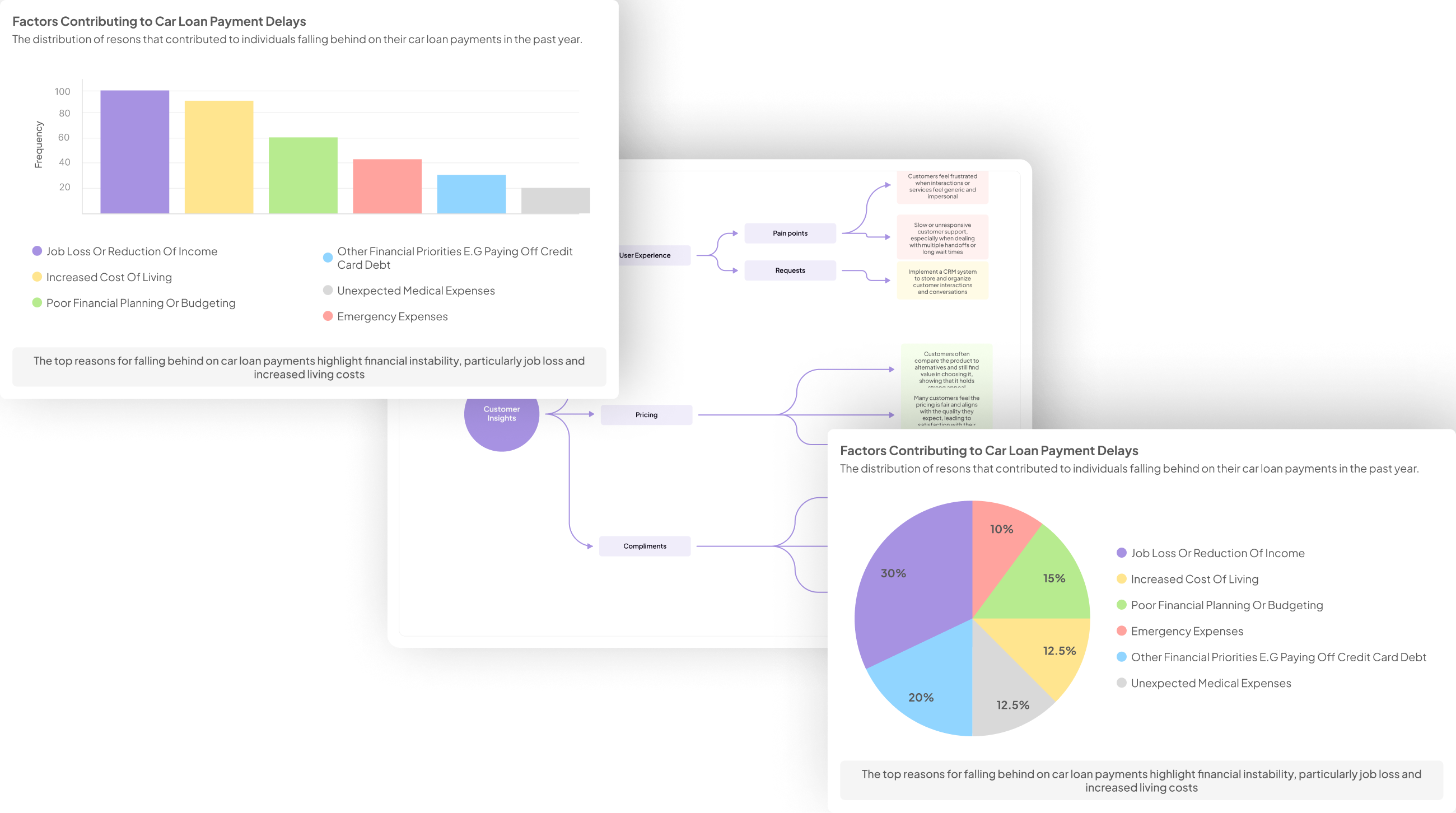
Understanding the Importance of Interview Insights Visualization
Interview Insights Visualization plays a crucial role in transforming raw data into meaningful narratives. When professionals analyze client interviews, the sheer volume of information can be overwhelming. Visualization techniques help distill critical insights, allowing stakeholders to easily grasp trends, themes, and pain points that emerge from conversations. By representing data visually, teams can better understand client needs and pinpoint underlying issues.
Moreover, effective visualization fosters collaborative discussions among team members. When insights are presented graphically, it becomes easier to engage all stakeholders in the analysis process. This shared understanding is essential for making informed decisions and strategies based on the insights gathered from interviews. Thus, investing in tools that enhance Interview Insights Visualization can significantly improve the quality of insights generated, paving the way for more targeted and effective solutions for client challenges.
Benefits of Visualization in Client Interviews
Visualization plays a crucial role in enhancing client interviews. When we translate raw interview data into visual formats, we uncover patterns that might otherwise remain hidden. This technique not only aids in qualitative analysis but also enhances comprehension among stakeholders. By employing Interview Insights Visualization, teams can quickly grasp user sentiments, preferences, and pain points, which is essential for informed decision-making.
Additionally, visual representations of interview insights facilitate effective communication across teams. Stakeholders can engage with data interactively, enabling them to ask pertinent questions and draw actionable conclusions. This collaborative environment fosters brainstorming and innovation, ultimately leading to product improvements. By employing various visualization tools, organizations can ensure that insights from client interactions drive meaningful change and strategic direction. Embracing visualization enhances not just the outcome of interviews but also the overall client relationship.
Key Challenges and Solutions in Visualizing Interview Insights
Visualizing interview insights can present several challenges that practitioners need to address effectively. One significant obstacle is extracting meaningful patterns from qualitative data. Often, interviews yield rich narratives that can be difficult to condense into visual formats. Misinterpretation or oversimplification may lead to a loss of context, hindering the decision-making process. Additionally, data integration from various sources can complicate the visualization efforts, creating a disjointed narrative.
To tackle these challenges, employing AI-driven tools can streamline the process significantly. First, utilizing software that creates matrices can help identify recurring themes and pain points from multiple interviews. Such tools allow users to map direct quotes against these themes, providing clarity and depth to the insights. Furthermore, creating comprehensive dashboards can visualize the customer journey and pinpoint needs and recommendations. By addressing these challenges with effective solutions, professionals can enhance the quality and impact of interview insights visualization, ultimately supporting better decision-making.
Top AI Tools for Interview Insights Visualization
When it comes to Interview Insights Visualization, utilizing AI tools can significantly enhance how businesses interpret and visualize data gathered from client interviews. These tools simplify the process of extracting meaningful insights and presenting them in a clear, engaging format. With various options available, organizations can select solutions that cater specifically to their needs, promoting better understanding and decision-making.
Several top AI tools excel in this domain. MonkeyLearn allows users to analyze text data effortlessly, turning raw responses into actionable insights. Dovetail offers an intuitive platform to organize and visualize qualitative data, making collaboration seamless. Otter.ai captures discussions and provides transcriptions that can be further analyzed for insights. Lastly, NVivo is ideal for more complex qualitative analysis, enabling users to code responses and visualize themes effectively. These tools collectively empower teams to transform client interviews into compelling visual narratives, fostering improved strategies and outcomes.
insight7: A Comprehensive Solution
In the realm of Interview Insights Visualization, insight7 emerges as a comprehensive solution tailored for organizations navigating the complexities of client interviews. This platform empowers users to transform raw data from customer interactions into actionable insights effortlessly. By streamlining the analysis process, it addresses common challenges such as time-consuming manual evaluations and inefficient data sharing.
A noteworthy feature of insight7 is its self-service design, which allows teams to explore interviews at scale without extensive technical expertise. Users can easily extract critical trends from conversations, facilitating collaboration and improving decision-making. Such capabilities are essential, as companies that harness insights swiftly can gain a competitive edge in their respective markets. Overall, insight7 not only simplifies the visualization of interview insights but also enhances organizations' ability to implement effective strategies based on real customer feedback.
Other Leading Tools
When exploring other leading tools for Interview Insights Visualization, it’s essential to recognize their unique capabilities. Tools like MonkeyLearn, Dovetail, Otter.ai, and NVivo offer varied functionalities that can significantly enhance your data analysis process. Each of these tools provides distinct features, allowing users to analyze interviews efficiently and effectively.
MonkeyLearn excels in text analysis, leveraging machine learning to turn unstructured data into visual insights. Dovetail focuses on collaboration and user-friendly interface, making it easy to share insights among teams. Otter.ai offers real-time transcription, which simplifies capturing nuances during interviews. Meanwhile, NVivo is renowned for in-depth qualitative analysis, catering to researchers who need robust data interpretation. Selecting the right tool for your needs can transform how you visualize insights from client interviews, driving better decision-making and improving overall outcomes.
- MonkeyLearn
For those seeking to enhance their approach to Interview Insights Visualization, a powerful AI tool stands out for its adaptability and comprehensive functionalities. This platform allows users to extract trends and sentiments from qualitative data, making it easier to derive actionable insights from client interviews. By incorporating advanced natural language processing, it can categorize responses, allowing for streamlined analysis across various themes and topics.
When using this tool, users can upload transcripts or audio files from interviews, which are then transformed into visual representations. This capability not only saves time but also enables teams to identify patterns in client feedback efficiently. With functionalities that allow for customization and scalability, this tool is well-suited for businesses looking to deepen their understanding of client needs and preferences. The result is a clearer visualization of insights, paving the way for informed decision-making and strategic planning.
- Dovetail
Dovetail stands out as a powerful AI tool for visualizing insights from client interviews. This platform is designed to analyze large volumes of qualitative data, making it particularly beneficial for teams who seek to streamline their analysis process. With its user-friendly interface, Dovetail simplifies the journey from raw interview data to actionable insights. Users can effortlessly organize and visualize customer feedback, which allows them to identify key trends and themes quickly.
One of the standout features of Dovetail is its collaborative capabilities. Multiple team members can work together in real-time, fostering an environment of collective understanding. The focus on Interview Insights Visualization not only enhances communication within teams but also aids in developing targeted strategies based on customer feedback. Overall, Dovetail efficiently bridges the gap between customer conversations and business actions, empowering organizations to respond to insights rapidly and effectively.
- Otter.ai
Otter.ai excels at transforming audio from client interviews into accessible, structured text, which is vital for interview insights visualization. By automatically transcribing conversations in real-time, users can capture rich details that might otherwise be missed. This feature aligns perfectly with the goal of gaining actionable insights from interviews.
The platform also includes tools for tagging and highlighting important segments, helping users easily identify and categorize key points. Additionally, with its collaboration features, teams can share transcripts and notes, fostering a collective understanding of the insights gathered. This seamless integration of transcription and collaboration makes it an invaluable asset for professionals seeking to enhance their qualitative research processes. Overall, utilizing advanced transcription tools like this can significantly streamline efforts to visualize insights from client interviews, thereby enhancing data-driven decision-making.
- NVivo
NVivo is a powerful AI tool designed to facilitate the visualization of insights gathered from client interviews. It offers users the ability to organize, analyze, and visualize data efficiently, which is essential for drawing meaningful conclusions. The platform shines when it comes to managing various projects, allowing users to upload transcripts and other relevant files seamlessly. This capability transforms scattered information into structured insights, enabling deeper analysis.
One significant advantage of NVivo is its ability to identify trends and patterns within interview responses. Users can generate reports on specific themes or sentiments, which aids in making data-driven decisions. Additionally, NVivo allows for easy query extraction, simplifying the process of compiling testimonials and feedback. This makes it an invaluable resource for marketers seeking to translate interview insights visualization into actionable strategies. By utilizing NVivo effectively, teams can enhance their understanding of client perspectives and optimize their approach moving forward.
Steps to Implementing Interview Insights Visualization Tools
To implement Interview Insights Visualization tools effectively, start by defining your objectives and requirements. Understand the key insights you wish to extract from client interviews. Establish clear goals, such as identifying customer pain points, improving user experience, or gathering feedback to enhance products. This foundational step will guide your subsequent choices, ensuring alignment with business needs.
The next step is to choose the right AI tool that fits those objectives. Evaluate different options based on features, usability, and integration capabilities. After selecting the tool, integrate it within your existing systems and customize it to suit your specific needs. This may include setting up workflows or modifying templates for report generation. Finally, analyze and visualize the gathered insights into clear, actionable formats. With the right approach, Interview Insights Visualization can transform raw data into valuable, decision-making resources for your business.
Step 1: Define Objectives and Requirements
Defining objectives and requirements is a pivotal first step in any process involving Interview Insights Visualization. When embarking on this journey, clarity is essential. Begin by identifying what specific insights you aim to extract from client interviews. This may include understanding customer pain points, evaluating satisfaction levels, or gathering feedback on services. Clearly defined objectives serve as a guiding light for selecting appropriate visualization tools.
Next, outline the requirements that both your team and stakeholders have for the visualization process. Consider factors such as ease of use, compatibility with existing data systems, and the ability to support various data types. Establishing these parameters will enable you to choose a solution that not only meets your immediate needs but also aligns with broader organizational goals and timelines. By taking these steps, you ensure a more streamlined and effective approach to capturing and visualizing valuable interview insights.
Step 2: Choose the Right AI Tool
Selecting the ideal AI tool for Interview Insights Visualization is pivotal to transforming the valuable data gathered from client interviews into actionable insights. Begin by considering the specific needs of your visualization process. Different AI tools offer various features and capabilities, which can significantly impact how data is analyzed and presented. For instance, some tools excel in qualitative analysis, while others may focus on quantitative metrics, so identifying your primary objectives will help narrow down your options.
Furthermore, evaluate the ease of integration and customization of each AI tool. A seamless user experience can enhance collaboration among team members when visualizing interview insights. Ensure the selected tool not only meets your current requirements but also has the potential to scale with your needs in the future. By thoughtfully selecting the right AI tool, you position yourself to unlock deeper insights and drive more informed decision-making.
Step 3: Integrate and Customize the Tool
In this stage, integrating and customizing the tool is vital for optimal Interview Insights Visualization. Begin by connecting the AI tool to your existing systems, such as CRM or survey platforms. This ensures data flows seamlessly, allowing for a more comprehensive analysis of client feedback. Explore options for uploading existing interview data, ensuring compatibility with the tool’s features.
Customization follows integration, where you can tailor the tool to fit your specific needs. Adjust settings to refine how insights are visualized, from selecting presentation styles to configuring filters and tags. Experiment with different layouts to effectively relay the information that resonates with your team. The key is to create a visualization that truly captures the essence of your client interviews, revealing trends and actionable insights that drive informed decisions. Focus on enhancing user experience as you adapt the tool to your unique context.
Step 4: Analyze and Visualize Insights
In this stage, the focus shifts to the heart of your findings: analyzing and visualizing your interview insights. This pivotal step transforms raw data into compelling narratives that resonate with stakeholders. Through careful analysis, you can distill key themes from client conversations, categorizing positive and negative feedback that shapes product development and marketing strategies.
Utilizing AI tools specifically designed for Interview Insights Visualization can enhance the clarity of your results. By employing various visual formats, such as graphs and charts, you can depict trends and patterns that emerge from the data. This holistic view not only helps in understanding the client perspectives but also fosters informed decision-making. Analysis at this level can uncover actionable insights, allowing organizations to adapt effectively to client needs and expectations, thus paving the way for strategic growth.
Conclusion: Enhancing Decision-Making with Interview Insights Visualization
In today's data-driven world, enhancing decision-making through interview insights visualization is crucial. By systematically visualizing insights gathered from client interviews, businesses can grasp customer sentiments and preferences more effectively. When data is presented in a visual format, decision-makers can quickly identify trends and make informed choices, ultimately leading to better product development and customer satisfaction.
Moreover, utilizing AI tools enables organizations to analyze large datasets efficiently. These tools help distill complex information into actionable visuals, helping stakeholders grasp insights without overwhelming details. Whether comparing feedback across different regions or identifying common themes, interview insights visualization empowers teams to translate raw data into strategic actions, fostering growth and adaptability in a competitive landscape.