Buyer interview visualizations are a transformative tool for understanding customer feedback. They allow businesses to extract meaningful insights from interviews, revealing patterns and sentiments that inform product development and marketing strategies. By visualizing data, companies can clearly see where customers are satisfied or frustrated, making it easier to target areas for improvement.
In our digital age, utilizing AI tools to enhance buyer interview visualizations has become crucial. These tools not only simplify the analysis process but also provide actionable insights quickly. Understanding how to effectively implement these visualizations can lead to substantial improvements in decision-making and customer satisfaction. Embracing buyer interview visualizations helps organizations stay ahead in a competitive market.
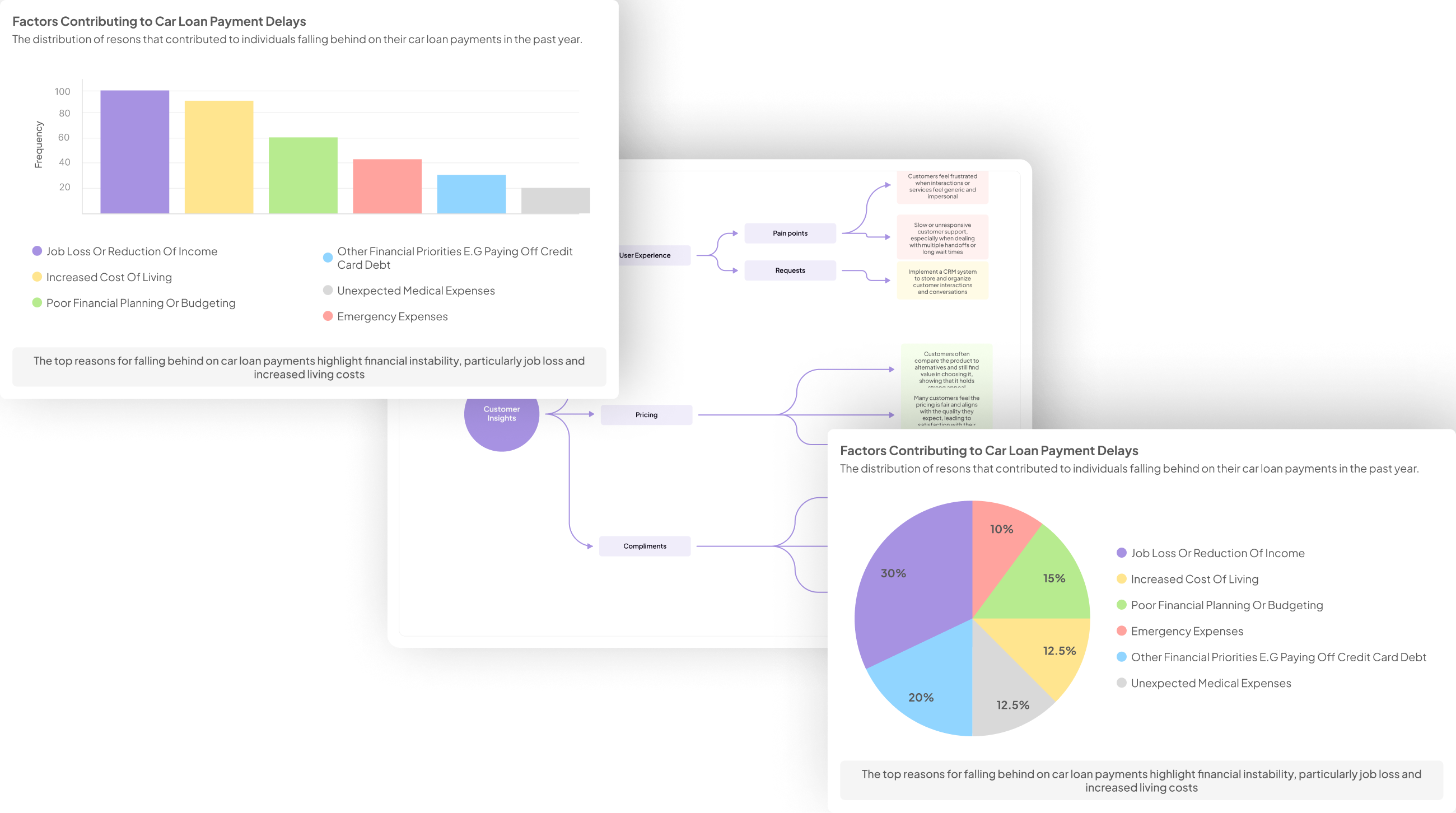
Exploring Top AI Tools for Buyer Interview Visualizations
As organizations increasingly rely on data-driven insights, exploring top AI tools for buyer interview visualizations becomes essential. These tools transform qualitative buyer interviews into clear visual representations, allowing teams to detect patterns and insights rapidly. By visualizing customer feedback, businesses can identify positive and negative sentiments, leading to more informed decision-making regarding product development and marketing strategies.
Several notable AI tools stand out for their capabilities in generating buyer interview visualizations. MonkeyLearn utilizes text analysis to extract sentiment and themes from interviews, making it easy to interpret vast amounts of qualitative data. VoiceBase offers robust features for transcribing and analyzing audio interviews, turning voice data into actionable insights. Tableau AI excels in creating interactive dashboards, allowing users to visualize and explore data dynamically. Aylien leverages natural language processing to derive insights from buyer feedback, enhancing the ability to comprehend customer desires and pain points. These tools empower organizations to make sense of buyer interviews effectively, driving innovation and growth.
Insight7: Leading AI for Buyer Interview Visualizations
Successful buyer interview visualizations can transform the way businesses understand customer feedback and insights. This section dives into the key AI tools designed specifically for converting complex buyer interactions into easily digestible visual formats. By employing these tools, organizations can streamline their data analysis and derive actionable insights faster than traditional methods.
The leading AI technologies enable companies to analyze interviews at scale, allowing them to identify patterns and trends. For instance, tools like Tableau AI offer advanced data visualization options, while VoiceBase provides voice recognition capabilities that convert spoken responses into text, enhancing data accessibility. Such capabilities ensure that insights are not scattered across various files but instead centralized, promoting better collaboration and quicker decision-making. By embracing these advanced tools, businesses can stay competitive and more effectively respond to evolving customer needs.
Other Noteworthy Tools for Buyer Interview Visualizations
In the realm of buyer interview visualizations, several notable tools stand out for their innovative features and user-friendly interfaces. Each of these tools offers unique capabilities that can enhance the way insights are gathered and presented from buyer interviews. For instance, MonkeyLearn specializes in text analysis, allowing users to categorize and visualize customer feedback effectively. This tool helps organizations identify trends and sentiments swiftly, leading to informed decision-making.
Another important contender is VoiceBase, which provides advanced voice recognition technology specifically designed for analyzing customer conversations. This can be incredibly valuable for extracting nuanced insights that may otherwise go unnoticed. Tableau AI takes a more analytical approach, integrating AI capabilities to transform buyer interview data into interactive visual dashboards. Finally, Aylien offers robust text analysis tools to extract valuable insights from unstructured data, making it easier for teams to focus on actionable results without getting lost in raw data. Exploring these tools can be a game-changer for anyone looking to optimize their buyer interview visualizations.
- MonkeyLearn
In the realm of generating meaningful visualizations from buyer interviews, certain AI tools stand out for their capabilities. One such tool emphasizes natural language processing, providing businesses the ability to analyze customer feedback effectively. By transforming unstructured data from interviews into visual insights, it helps teams grasp complex buyer sentiments quickly.
Utilizing this tool, users can automate the categorization of feedback, highlighting trends that could otherwise go unnoticed. With intuitive dashboards, it allows stakeholders to visualize their data, making it easier to communicate insights across teams. Whether you aim to understand buyer preferences or evaluate the effectiveness of marketing strategies, this tool proves essential for enhancing buyer interview visualizations and facilitating data-driven decisions. For those looking to robustly analyze dialogues and identify key themes, it serves as a powerful ally in the digital landscape.
- VoiceBase
Buyer interview visualizations rely on advanced technologies to transform qualitative data into clear, actionable insights. VoiceBase emerges as a valuable tool in this space by analyzing and visualizing audio from customer interviews. This platform boasts robust features that help businesses effortlessly extract actionable insights from large volumes of recorded conversations. Its AI-driven capabilities enable users to identify key themes and sentiments, creating visualizations that can shape marketing and training strategies.
By utilizing VoiceBase, organizations can enhance their understanding of customer needs and preferences. The tool streamlines the process of sifting through extensive audio files, pinpointing highlights that matter the most. This efficiency not only saves time but also ensures that teams focus on relevant training materials and quality assurance. In summary, VoiceBase serves as a powerful ally for those looking to enhance their buyer interview visualizations, helping organizations make informed decisions grounded in customer perspectives.
- Tableau AI
Tableau AI stands out as a powerful tool to generate Buyer Interview Visualizations with remarkable clarity. Its advanced analytical capabilities allow users to create insightful and interactive visual representations of data derived from client interviews. The platform efficiently processes vast datasets, enabling teams to identify trends and extract meaningful insights that drive decision-making.
Using Tableau AI, users can transform raw interview data into compelling visuals, helping to highlight both positive and negative customer sentiments. The ability to conduct comparative analyses across various data sources fosters a deeper understanding of market needs and customer preferences. By leveraging these visualizations, organizations can tailor their product development strategies, making informed decisions that resonate with their target audience. Additionally, the intuitive design of Tableau AI makes it accessible for teams at all skill levels, ensuring effective utilization of buyer feedback in a visually engaging format.
- Aylien
In the realm of Buyer Interview Visualizations, Aylien offers a robust platform that caters to the efficient analysis of customer conversations. This tool stands out by providing user-friendly features that enable businesses to sift through large volumes of interview data with ease. Companies encounter challenges when relying on traditional methods, often struggling to translate insights into actionable strategies. Aylien helps bridge this gap by automating analysis, which saves time and enhances collaboration among team members.
The advanced algorithms employed by Aylien allow users to distill essential insights quickly, making data interpretation more straightforward. Additionally, its focus on visualizations helps teams consolidate scattered insights into coherent narratives. By utilizing Aylien, businesses can better understand customer needs and preferences, ultimately leading to improved decision-making. Leveraging such tools streamlines the process, ensuring that organizations stay ahead of their competition in understanding buyer dynamics.
How to Implement Buyer Interview Visualizations Effectively
To implement buyer interview visualizations effectively, it’s crucial to approach the process with a clear strategy. Start by accurately collecting data from interviews, ensuring every insight aligns with your objectives. This preparation lays the groundwork for robust visualizations that translate complex feedback into actionable intelligence. Utilize AI tools to automate data organization, enabling you to focus on analysis rather than manual processes.
Next, consider the visualization formats that best represent your findings. Graphs, charts, and sentiment mapping can highlight trends and patterns in buyer responses. Engaging visuals not only make data more digestible but also help stakeholders grasp critical insights quickly. Lastly, foster a collaborative environment where teams can share and discuss outcomes from buyer interview visualizations, ultimately driving informed decision-making and enhancing product development. By following these steps, you can harness the full potential of visualizations to inform strategy and meet buyer needs effectively.
Step-by-Step Guide to Creating Buyer Interview Visualizations
Creating Buyer Interview Visualizations requires a systematic approach to effectively communicate insights derived from interviews. First, gather your interview data and categorize it into themes, such as user needs, pain points, and feedback. Use an AI tool that allows you to input this data efficiently and offers customizable visualization options. This step is crucial as it sets the foundation for clear, impactful visuals that highlight key findings.
Next, choose the type of visualization that best represents your data, whether it be bar charts, word clouds, or sentiment analysis graphs. Use the AI tool to generate these visualizations, ensuring that they are easy to understand and visually appealing. Finally, analyze the generated visualizations, drawing connections between the insights and potential product improvements or strategies. This complete process will enable teams to effectively utilize Buyer Interview Visualizations for informed decision-making.
Analyzing and Interpreting Buyer Interview Visualizations
Analyzing and interpreting Buyer Interview Visualizations is a critical step in turning raw data into actionable insights. By assessing these visualizations, businesses can glean patterns and sentiments that may not be immediately apparent from standard data reports. The ability to differentiate between positive and negative feedback allows organizations to focus on strengths while addressing weaknesses.
Additionally, applying targeted queries to a dataset enhances context and relevance. For example, analyzing comments from specific locations or demographics provides deeper insights into customer behavior. The visual representations highlight key themes, making it easier for teams to collaborate and align on strategic decisions. Ultimately, effective analysis and interpretation can drive innovation and enhance customer satisfaction in any organization striving to grow and adapt in today's market.
Conclusion on Best AI Tools for Buyer Interview Visualizations
The journey through Buyer Interview Visualizations reveals a myriad of AI tools that enhance understanding of customer insights. By using these advanced tools, businesses can efficiently transform complex interview data into meaningful visualizations that highlight both positive and negative feedback. Such insights are crucial for product development and marketing strategies.
Choosing the right AI solution depends on specific needs, such as scalability and ease of use. By examining different platforms, teams can effectively harness these tools to streamline their analysis process, extract actionable insights, and ultimately drive better decision-making. Embracing AI in visualizing buyer interviews can significantly enhance the clarity and impact of customer feedback.