I learned this the hard way.
A few months back, I sat through 27 sales demos in two weeks. Different reps. Same product. Same deck. Same enablement program.
And wildly different outcomes.
Some deals moved forward. Some stalled. Others died quietly after “a great meeting, we’ll circle back.”
When we asked, “What went wrong?” the answers were vibes:
- “The prospect wasn’t a fit.”
- “They didn’t get it.”
- “The timing was off.”
None of that helps you fix anything.
That’s when we stopped guessing and started evaluating presentations properly, not just how people spoke, but what patterns showed up across winning vs losing conversations.
This guide covers the best presentation evaluation tools that GTM and enablement teams actually use to move beyond opinions and into repeatable improvement.
What Usually Breaks in Presentations (The Stuff We Pretend Isn’t the Problem)
Before you even think about tools, here’s what actually goes wrong in real rooms with real buyers:
- We lead with features, not problems.
Most presentations start with what we built. Buyers are still trying to figure out whether you understand their world. By the time you get to the problem, they’ve already checked out. - We don’t help people decide.
Exec decks share information but dodge the hard part:
Why this? Why now? What happens if we don’t move?
So meetings end with polite nods and no next step. - Energy drops halfway through.
Not because people have short attention spans, but because the story goes flat. No turn. No tension. No moment where the audience feels, “This part is about me.” - Everyone tells a different story.
One rep sells speed. Another sells savings. Leadership sells risk reduction.
To buyers, that inconsistency feels like confusion. - Feedback never connects to revenue.
We coach presentation style… but we don’t tie it to pipeline, stalled deals, or lost opportunities. So people “get better” – and results stay the same.
If a presentation evaluation tool can’t spot these patterns across multiple sessions, it’s not coaching you.
It’s just holding up a mirror.
How to Choose the Right Presentation Evaluation Tool
Let me save you a few weeks of trial-and-error (and a couple of tools you’ll enthusiastically roll out… and quietly abandon).
Most teams I’ve observed don’t pick the wrong tool.
They pick a cool tool for the wrong job.
A delivery coach won’t fix broken messaging.
A fancy analytics platform won’t help a rep who freezes on demos.
So before you look at features or pricing pages, ask yourself three simple questions:
1. What level of insight do you need?
- Micro delivery feedback (pace, filler words)?
- Or macro pattern analysis (what messaging converts across 50 demos)?
2. Who’s using it?
- Individual presenters?
- Sales managers?
- Enablement?
- RevOps?
3. What’s the operating rhythm?
- One-off practice?
- Weekly deal reviews?
- Quarterly enablement analysis?
The 6 Best Presentation Evaluation Tools
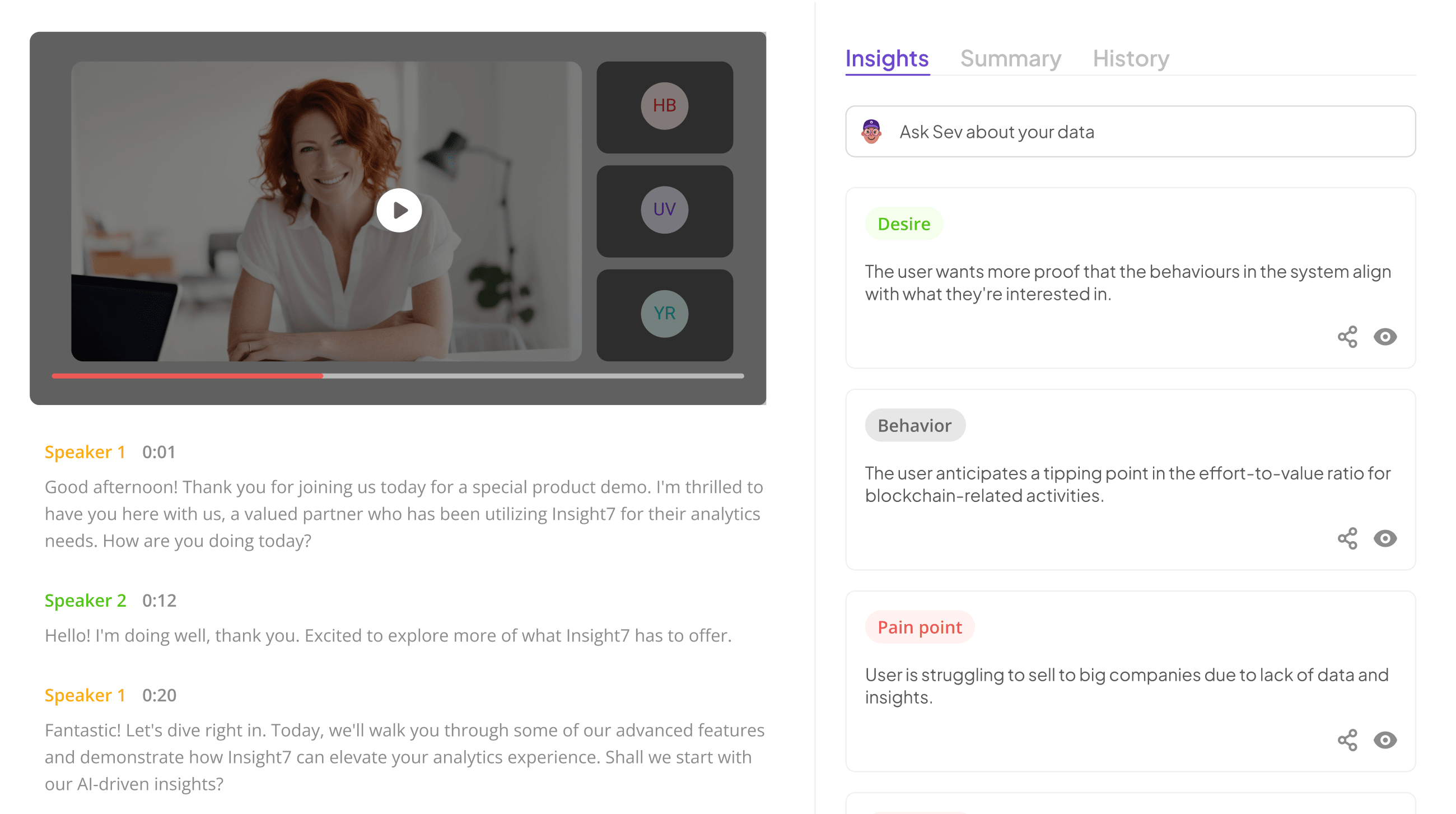
1. Insight7 – Best for Pattern Detection Across Many Presentations
Most tools tell you how someone spoke.
Insight7 tells you why some presentations move deals and others stall.
When we rolled this into enablement, the shift was immediate:
- We stopped coaching in anecdotes.
- We started coaching in patterns.
Best for
- RevOps leaders analyzing dozens of demos, calls, or exec presentations
- Enablement teams trying to spot:
- messaging gaps
- objection themes
- clarity breakdowns across reps
Not ideal if
- You only want real-time speech coaching for individuals
Why teams stick with it
- Theme extraction across recordings
- Sentiment + clarity analysis
- Custom evaluation frameworks tied to GTM KPIs
- Secure, enterprise-ready for real deal data
This is what you use when you stop asking “How did this one rep do?” and start asking “What’s breaking across our motion?”
2. Orai – Best for Real-Time Delivery Coaching
Orai is for the rep who knows their content but trips over delivery.
Best for
- New managers
- SDRs prepping demos
- Founders practicing investor pitches
Not ideal if
- You need cross-team insight or pattern analysis
Think of Orai as form correction.
It won’t fix your messaging strategy, but it will fix your pacing, filler words, and tone fast.
3. Knovio – Best for Async Presentation Review
If your org runs:
- Async enablement
- Recorded demos
- Training libraries
Knovio shines because it shows:
- Where viewers drop
- What they rewatch
- Where attention dies
Best for
- Distributed teams
- Enablement content performance
Limitation
- Tells you what happened, not always why
4. Mentimeter – Best for Live Audience Feedback
This one is about engagement in the moment.
Best for
- Workshops
- Leadership offsites
- Training sessions
You’ll see instantly:
- Where people disengage
- What concepts land
- Where confusion spikes
It doesn’t replace evaluation; it complements it.
5. Vizard – Best for Visual + Non-Verbal Coaching
Vizard is the tool if presentation performance matters visually (product demos, leadership updates):
Best for
- Founder pitches
- Video-heavy GTM motions
- Body language coaching
Limitation
- Not designed for large-scale pattern analysis
6. Yoodli – Best for Professional Speech Training
Great for:
- Leaders prepping high-stakes talks
- Formal speaking improvement
- Training programs tied to executive presence
Strong delivery feedback — weaker on GTM pattern learning.
What Actually Improves Outcomes (Not Just Presentation Scores)
The teams I’ve seen win don’t just “use tools.”
They wire them into operating cadence:
- Deal reviews reference real presentation data
- Enablement tracks message clarity over time
- Leaders review patterns, not one-off failures
- Coaching is tied to pipeline movement
The Quiet Truth About Presentation Evaluation
This part is uncomfortable to admit – especially if you’ve invested in decks, training, and coaching.
We like to believe that better slides and smoother delivery move deals forward.
They help. But they’re not the thing that changes outcomes.
Better presentations don’t close deals.
Clearer narratives do.
Stronger problem framing does.
Pattern-based coaching does.
The moment we stopped reviewing single decks and started analyzing patterns across conversations, our enablement work finally showed up in pipeline quality.
That’s the shift most GTM teams miss.
People Also Ask (FAQs)
How do sales teams evaluate presentations effectively?
The best sales teams evaluate presentations by combining delivery feedback (pace, clarity, confidence) with deal outcomes (did the demo move the deal forward?).
Tools like Orai and Yoodli help with delivery practice, while platforms like Insight7 help teams spot patterns across many demos and calls.
What’s the best presentation evaluation tool for sales enablement teams?
It depends on your goal. If you’re coaching individuals, a real-time speech coach works well.
If you’re running enablement across dozens of reps and want to understand what messaging actually moves deals, you need a tool that can analyze patterns across presentations and calls.
Are free presentation evaluation tools good enough for sales teams?
Free tools can help with basic practice, but they usually fall short for sales enablement. They don’t connect feedback to the pipeline, don’t scale across teams, and don’t show what’s breaking across multiple demos or presentations.
Why do sales teams use presentation coaching tools but still struggle with conversions?
Because most teams improve how reps present, but don’t fix what reps are presenting. If messaging, problem framing, and decision narratives are broken, smoother delivery won’t change deal outcomes.
Can presentation evaluation tools actually improve revenue performance?
Yes, but only when feedback is tied to real GTM metrics like deal progression, win rates, and objection patterns. When evaluation is connected to pipeline reviews and enablement strategy, presentation coaching starts to show up in revenue.