
Trust Objection AI Training: Need Proof This Actually Works
-
 Bella Williams
 - 10 min read

Introduction: Building Trust in AI Training for Objection Handling
Building trust in AI-powered training for objection handling is crucial for organizations looking to enhance their communication skills. As businesses increasingly adopt AI solutions, the skepticism surrounding their effectiveness often arises. This is particularly true in the realm of objection handling, where the stakes are high, and the need for authentic human interaction is paramount. AI-powered coaching and roleplay offer a unique solution, allowing individuals to practice difficult conversations in a safe, risk-free environment while receiving real-time feedback.
By leveraging advanced technologies like natural language processing and behavioral analytics, AI coaching transforms traditional training methods into dynamic, interactive experiences. This shift not only enhances the learning process but also builds trust in the technology itself. When learners can see measurable improvements in their communication skills, their confidence in AI as a training tool grows, paving the way for more effective objection handling in real-world scenarios.
Scenario: Overcoming Trust Objections with AI Roleplay
Scenario: Overcoming Trust Objections with AI Roleplay
Setting:
A sales training room equipped with AI-powered roleplay software, where sales representatives practice handling customer objections in a simulated environment.
Participants / Components:
- Sales Representative: Engaging with the AI persona to practice objection handling.
- AI Persona: A dynamic, responsive character programmed to simulate various customer objections.
- Training Facilitator: Observing the session and providing additional insights post-roleplay.
Process / Flow / Response:
Step 1: Session Configuration
The training facilitator sets the learning objectives, focusing on common trust objections such as "I need to think about it" or "I’m not sure if this is the right fit." The facilitator customizes the AI persona to reflect a skeptical customer who requires reassurance.
Step 2: Dynamic AI Roleplay
The sales representative initiates a conversation with the AI persona, which responds in real-time, presenting objections that challenge the representative's confidence. The AI adjusts its tone and complexity based on the representative's responses, creating a realistic practice environment.
Step 3: Automated Evaluation
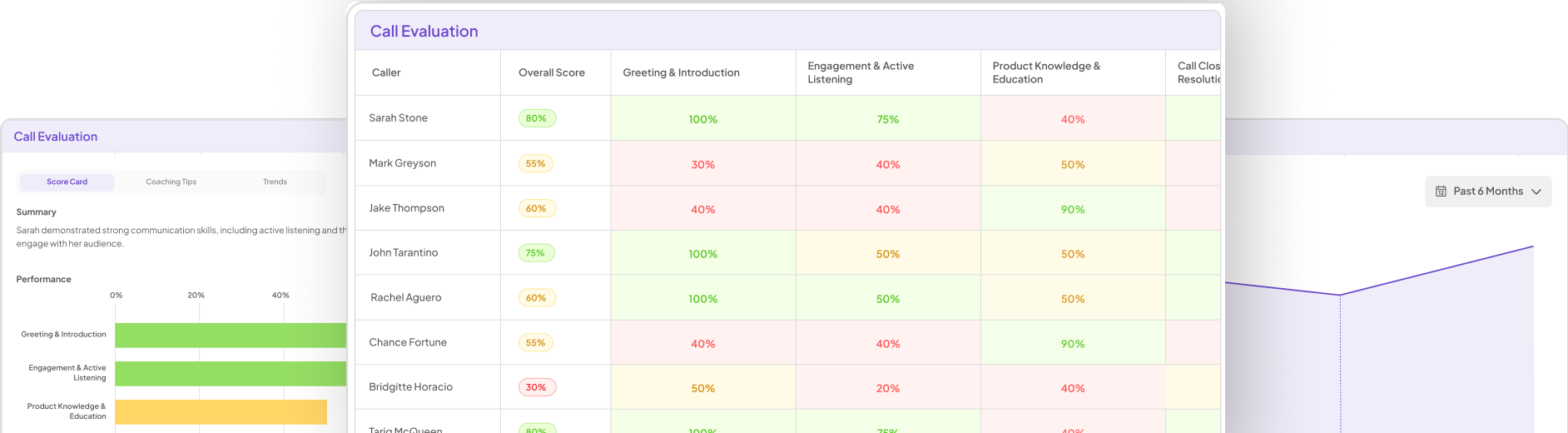
After the roleplay, the AI analyzes the conversation, scoring the representative on key communication behaviors like empathy, clarity, and active listening. The system provides personalized feedback, highlighting strengths and areas for improvement, such as how effectively the representative addressed the customer's concerns.
Outcome:
The sales representative gains practical experience in overcoming trust objections, receiving immediate, data-driven feedback that enhances their skills. This iterative practice builds confidence and prepares them for real-world interactions, ultimately improving their ability to handle objections effectively in customer conversations.
Frequently Asked Questions about Trust in AI Training
Q: How realistic are the AI conversations in training?
A: AI conversations are highly adaptive and realistic, designed to mirror real-world interactions, which helps build practical skills effectively.
Q: Does AI coaching replace human managers?
A: No, AI complements human coaching by handling repetitive practice and providing measurable feedback, allowing managers to focus on strategic development.
Q: How quickly can I expect to see results from AI training?
A: Measurable improvements typically appear within 2–4 weeks, with onboarding timelines potentially shrinking by 30–50%.
Q: Is AI coaching suitable for all levels of employees?
A: Yes, AI coaching is valuable for both new hires and senior leaders, providing tailored experiences that enhance communication skills at any level.
Q: How is performance measured during AI coaching sessions?
A: Performance is scored across various behavioral dimensions using linguistic and conversational analysis, providing objective insights into skill development.
Q: Can the training scenarios be customized to fit our organization?
A: Absolutely, scenarios and evaluation criteria can be fully aligned with your organizational standards, ensuring relevance and effectiveness in training.








