


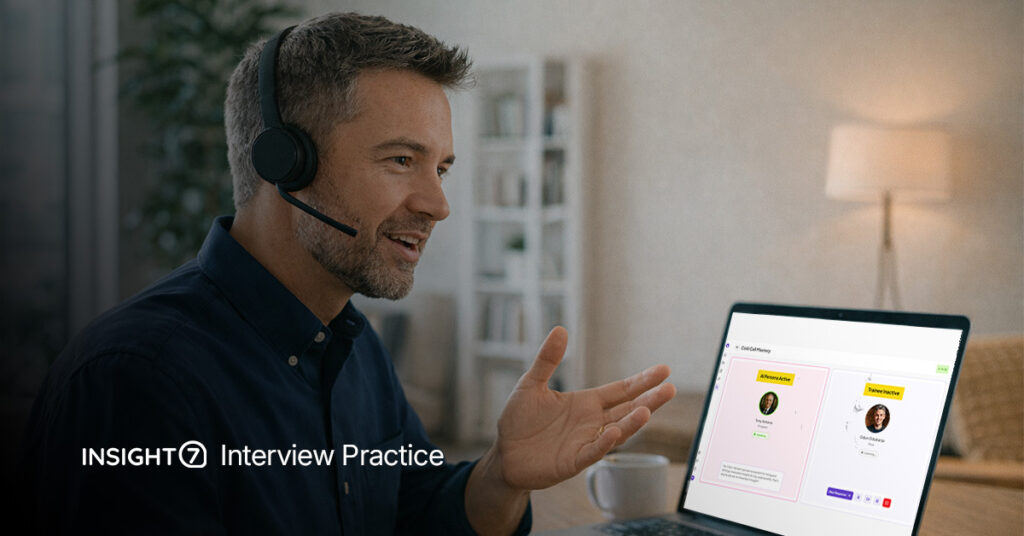
Target People & HR interviews evaluate whether your people & hr judgment translates into decisions that reflect Fast Fun Friendly team culture and guest-first retail mindset. Candidates for Target, a major US discount retailer known for the Expect More, Pay Less brand promise, are expected to show specificity, structured thinking, and a measurable outcome on every story. Generalizations and team-level framing fail fast against Target's specificity bar.
Start your free Target People & HR practice session.
What interviewers actually evaluate
Talent, Culture & Organizational Judgment
Target People & HR interviews test whether your day-to-day people & hr work reflects Fast Fun Friendly team culture and guest-first retail mindset: specific decisions, defended trade-offs, and outcomes that moved a business metric. What separates strong candidates is how they frame the problem, name the decision they personally made, and quantify what changed across owned brands like Good & Gather and Cat & Jack, store-as-fulfillment-hub strategy, Drive Up and Order Pickup, Target Circle loyalty, and Fast Fun Friendly service culture.
Talent decisions, Culture-building, Policy judgment, Employee relations, DEI, Retention outcomes
What gets scored in every session
Specific, sentence-level feedback.
| Dimension | What it measures | How to answer |
|---|---|---|
| Talent Judgment | Did you make a specific hiring or performance call and defend it? Vague people descriptions score low. | Specific decision, rationale |
| Culture Signal | Did you reinforce values through action, not just communication? Posters score low. | Action examples, ritual design |
| Policy & Compliance | Did you handle policy, risk, and legal exposure with rigor? "I asked legal" without ownership scores low. | Policy rationale, risk framing |
| Organizational Impact | What changed: retention, engagement, bench strength, leader readiness? | Retention, engagement, readiness |
How a session works
Step 1: Get your Target People & HR question
You are assigned questions based on where candidates for this role typically struggle most, which for Target People & HR means specificity and stories that end in a measurable outcome rather than activity. Each session starts fresh with a new question targeting a different evaluation dimension.
Step 2: Answer by voice
Speak your answer as you would in a real interview. The AI listens for STAR structure and evaluation signal alignment, specifically whether your decisions are named, your trade-offs are defended, and your Result includes a people & hr outcome that was different because of your work.
Step 3: Get scored dimension by dimension
Instant scores across all four rubric dimensions. Each gets a score, a flagged weakness, and a specific sentence-level fix. Target People & HR interviewers probe for stories described by activity rather than decision, and for conclusions that summarize without a measurable business outcome.
Step 4: Re-answer and track improvement
Revise based on feedback and answer again. See the before/after score change across Talent Judgment, Culture Signal, Policy & Compliance, Organizational Impact. Your weakness profile updates across sessions so if you consistently end stories without a measurable outcome, that becomes the focus of your next question assignment.
Frequently Asked Questions
What 6 questions does Target ask in an interview?
For Target People & HR interviews, the strongest answers to this question are specific, structured, and tied to a measurable outcome. Interviewers are listening for evidence of Fast Fun Friendly team culture and guest-first retail mindset, a clear decision you personally made, and what changed in the business because of it. Generalizations and team-level framing score low.
What are the 5 C's of interviewing for Target People & HR?
In Target People & HR interview contexts, the 5 C's map to Context (the business or customer situation), Complexity (the challenge or constraint you faced), Criteria (the key decisions and trade-offs you weighed), Choice (the position you took and defended), and Consequence (the outcome the business saw). For Target People & HR interviews, Criteria and Consequence are most often underdeveloped by candidates who describe activity without defending decisions or reporting measurable impact.
What questions are usually asked in an HR interview?
Target People & HR interviews are behaviorally structured. Common questions include:
- "Tell me about a people & hr outcome you drove at Target's scale or equivalent"
- "Describe a situation where you had to make a tough people & hr trade-off"
- "Walk me through how you handled a stakeholder who pushed back on your approach"
- "Tell me about a time your people & hr judgment was tested and what you decided"
Each question tests depth, specificity, and alignment with Fast Fun Friendly team culture and guest-first retail mindset.
What are red flags in a Target interview?
For Target People & HR interviews, the strongest answers to this question are specific, structured, and tied to a measurable outcome. Interviewers are listening for evidence of Fast Fun Friendly team culture and guest-first retail mindset, a clear decision you personally made, and what changed in the business because of it. Generalizations and team-level framing score low.
What are the most common failure modes in Target People & HR interviews?
The most consistent failures are:
- Ending a story with activity rather than a measurable people & hr outcome
- Describing work at the team level without claiming individual ownership, which fails Target's specificity bar
- No story prepared for a time the candidate was wrong or the decision was challenged
- Answers that ignore Fast Fun Friendly team culture and guest-first retail mindset and focus only on generic best practice
- Vague stakeholder language ("we aligned") without naming the friction or how it was resolved
Also practice
All eight Target role interview practice pages.
- Sales
- Customer Service
- Product Management
- Marketing
- Finance
- Operations
- Leadership
- Legal & Compliance
One full session free. No account required. Real, specific feedback.








