

Call quote extraction is a powerful tool that allows businesses to tap into the valuable insights shared by customers during calls. Imagine a customer sharing a heartwarming story about how your product transformed their daily life. Extracting meaningful quotes like these not only strengthens customer relationships but also drives innovation.
In this introduction, we will explore the importance of effective call quote extraction for understanding customer sentiments. By harnessing this data, you can uncover trends that guide product improvements and enhance overall service quality. Ultimately, mastering this process can lead to a more customer-centered approach in your business strategy.
Understanding the Basics of Call Quote Extraction
Call quote extraction is a crucial process that enables organizations to glean valuable insights from customer conversations. This involves capturing meaningful quotes that reflect customer sentiments, needs, and pain points. By being attentive to the subtle nuances in dialogues, one can not only improve products and services but also enhance customer satisfaction.
Understanding the basics of call quote extraction starts with listening carefully and transcribing calls for accurate analysis. Once transcribed, it becomes essential to identify key quotes that can reveal critical information. These quotes often serve as evidence to support analysis and drive informed decision-making. Employing various tools can streamline this process. With automation, the task of extracting quotes becomes less time-consuming and more efficient, allowing teams to focus on interpreting the insights derived from customer interactions.
Importance of Extracting Customer Quotes
Extracting customer quotes plays a vital role in understanding customer sentiments and enhancing engagement. Firstly, accurate quotes offer insight into real user experiences, which can improve overall customer satisfaction. When organizations utilize these quotes effectively, they can identify pain points and areas for enhancement, ensuring that products and services are aligned with customer needs. This process not only aids in refining offerings but also builds trust with customers by demonstrating that their feedback is valued.
Moreover, extracting quotes contributes to meaningful product development. By synthesizing customer feedback, teams can focus on trends and patterns that emerge from conversations. This data-driven approach allows for informed decision-making while fostering an environment that prioritizes customer-centric solutions. Emphasizing the importance of call quote extraction creates a feedback loop that ultimately leads to the creation of better experiences, bridging the gap between customer expectations and business objectives.
- Enhance customer satisfaction
To enhance customer satisfaction, it is essential to focus on understanding customer needs through effective communication. By employing call quote extraction, organizations can capture vital insights directly from customer conversations. This process turns seemingly ordinary interactions into significant feedback, guiding improvements in service and product offerings.
Analyzing these extracted quotes allows teams to shift from simply taking orders to offering consultative support, creating a more personalized experience. Additionally, identifying key phrases that reflect customer sentiments can reveal hidden issues or preferences, enabling timely resolutions. Incorporating feedback gleaned from call quotes not only assists in refining strategies but also aligns services with evolving customer expectations, ultimately fostering loyalty and satisfaction.
- Improve product and service development
Improving product and service development begins with a thorough understanding of customer needs and expectations. By extracting valuable quotes from customer calls, businesses gain insights into the specific areas that require enhancement. When customer feedback is systematically analyzed, it opens doors to innovation and adjustments in a product pipeline, ensuring it aligns with market demands.
To effectively employ call quote extraction, focus on several key strategies. First, stay aware of the trends that arise from customer conversations. Regularly tracking frequently asked questions can reveal gaps in existing offerings. Secondly, consider what customers appreciate about your products during calls. This acknowledgment can reinforce strengths and guide further development. Lastly, use feedback to inform training for customer service representatives, ensuring they are well-equipped to handle inquiries and problems effectively. By employing a feedback loop based on direct quotes, businesses can create a cycle of continuous product improvement and customer satisfaction.
Understanding the Basics of Call Quote Extraction
Call quote extraction is essential for businesses aiming to enhance customer satisfaction and develop their products or services effectively. By gathering meaningful quotes from customer interactions, teams can identify common concerns, expectations, and suggestions. This process allows organizations to move beyond mere data collection and genuinely understand the customer experience.
One of the primary challenges in this process is accurately identifying significant quotes amid extensive conversational data. It is imperative to ensure the context surrounding each quote is retained, preventing misinterpretations. Focusing on key parts of the conversation can illuminate customer feelings and insights, making them invaluable for future initiatives. By implementing structured methodologies, businesses can streamline call quote extraction while maintaining quality and relevance. This diligent approach paves the way for improved communication and solutions that resonate with customer needs.
Challenges in Call Quote Extraction
Extracting quotes from customer calls presents its own set of challenges that can significantly impact the quality and reliability of the data collected. One key challenge is identifying significant quotes amidst a sea of information. Often, critical insights are buried within lengthy conversations, making it difficult to extract the essence of customer sentiment without missing essential context.
Another challenge lies in ensuring the accuracy of the extracted quotes. Misinterpretations can lead to skewed insights, ultimately affecting decision-making. Furthermore, the context surrounding a quote is just as vital as the words themselves. Without a comprehensive understanding of the interplay between tone and content, the extracted quotes may fail to capture the true meaning intended by the customer. Addressing these challenges is essential for effective call quote extraction, fostering meaningful improvements in customer engagement and business strategies.
- Identifying significant quotes
Identifying significant quotes from customer calls is a crucial step in the call quote extraction process. This involves sifting through numerous recordings to pinpoint statements that encapsulate customer sentiment and insights. Successful identification hinges on understanding the context of the conversation, allowing you to discern which quotes truly resonate and are meaningful for your objectives.
To effectively identify significant quotes, consider the following points:
Listen for Emotion: Pay attention to the tone and emotion in customers' voices. Quotes that convey strong feelings may provide invaluable insights into customer experiences.
Focus on Key Themes: Identify repetitive phrases or themes that emerge across multiple conversations. These often highlight widespread issues or praises that can guide product development.
Contextual Relevance: Ensure that the quotes you select are relevant to your specific needs. Context matters; a quote that seems significant in one scenario may not be applicable in another.
By honing in on these aspects, you can enhance the quality of your extracted quotes and ultimately leverage them to improve your strategies and offerings.
- Ensuring accuracy and context
To ensure accuracy and context during call quote extraction, it is crucial to focus on understanding what is being communicated. Capturing customer quotes accurately requires careful listening and comprehension of the conversation dynamics. The context in which statements are made is equally significant, as it influences interpretation. For instance, a customer's question about a product can be genuine curiosity or frustration, and recognizing this helps convey the true sentiment behind their words.
One effective strategy involves categorizing the extracted quotes based on themes or topics discussed during the calls. This organization aids in identifying patterns and trends, making the insights more actionable. Additionally, cross-checking quotes with call transcripts ensures that the extracted data remains faithful to the original conversation. By prioritizing accuracy and context, businesses can turn customer interactions into valuable insights that inform product development and improvement strategies.
Implementing Call Quote Extraction Strategies
To effectively implement call quote extraction strategies, it's vital to understand both manual and automated methods. Manual extraction involves listening to call recordings and identifying significant quotes by carefully noting key phrases. This approach allows for deeper understanding but can be time-consuming, especially with large volumes of calls.
On the other hand, adopting automated tools brings efficiency and accuracy to the process. Automated extraction can swiftly analyze multiple calls, generating a list of relevant quotes based on set keywords. By configuring the software properly, organizations can review the results to ensure the extracted quotes maintain context and intent. Each of these methods has its own advantages and challenges, but combining them can maximize the effectiveness of your call quote extraction efforts. This dual approach not only speeds up the process but also enhances the quality of insights gathered from customer interactions.
Manual vs Automated Extraction Approaches
When it comes to call quote extraction, businesses often face a choice between manual and automated approaches. Manual extraction involves a human listening to call recordings, identifying essential quotes, and noting them down. This method offers the benefit of nuanced understanding, allowing the extractor to capture context and emotion. However, it can be time-consuming and prone to human error, making it less efficient for large volumes of calls.
On the other hand, automated extraction utilizes software tools designed to analyze and pull relevant quotes quickly. This technology can process multiple calls simultaneously, greatly enhancing efficiency. While automated tools can potentially miss nuanced insights, they often provide consistent results and significant time savings. Ultimately, the choice between manual and automated extraction should depend on the specific needs of the business, the volume of calls, and the level of detail required in the extracted information.
- Advantages and disadvantages of manual extraction
Manual extraction of quotes from customer calls presents distinct advantages and disadvantages. One advantage is the ability to capture nuanced insights and sentiments that automated systems might overlook. By actively listening to recordings, extractors can identify emotionally charged quotes that hold greater significance for marketing and product development. This personal touch can enhance the accuracy of contextual understanding, allowing teams to craft more relatable narratives around customer feedback.
However, manual extraction also has its drawbacks. It can be time-consuming and labor-intensive, especially with extensive call records. The risk of human error in identifying or interpreting quotes may lead to lost context or misleading conclusions. Furthermore, as teams grow and call volumes increase, maintaining a consistent manual process may become increasingly challenging. Weighing these factors is crucial for businesses aiming for effective call quote extraction, enabling them to find a balance between quality insights and efficient processes.
- Benefits of automated tools
Automated tools for call quote extraction significantly streamline the process of analyzing customer interactions. One major advantage is efficiency. Manual quote extraction can be time-consuming, requiring extensive listening and note-taking. Automated systems, on the other hand, can process multiple calls in a fraction of the time, allowing teams to focus on using insights rather than gathering them. Furthermore, these tools minimize human error, ensuring that the quotes captured are accurate and contextually relevant.
Another key benefit lies in accessibility. Automated solutions enable users across various departments to obtain and utilize insights without requiring specialized training. This democratization of data empowers all team members to analyze customer feedback, enhancing collaboration and innovation. Instead of relying on a few specialists, an entire organization can engage in voice of the customer initiatives, tapping into a wider range of perspectives and ideas. These benefits collectively reinforce the case for adopting automated tools in call quote extraction, transforming how organizations derive value from customer conversations.
Steps in Manual Call Quote Extraction
To effectively carry out manual call quote extraction, begin by listening to the recorded customer calls thoroughly. This step is crucial, as it allows you to capture the tone and context of the conversation. As you listen, pay special attention to moments where customers express strong opinions or feelings. Jot down these significant quotes, ensuring you maintain the original phrasing to preserve the speaker's intent.
Once you've compiled a list of key quotes, the next step is to analyze their relevance. Categorize the quotes based on themes, such as customer satisfaction or pain points. This categorization will help in synthesizing insights and understanding customer sentiment more holistically. It’s essential to ensure that you understand the context behind each quote to avoid misinterpretations. By following these steps, you can achieve effective manual call quote extraction that provides valuable insights into customer experiences and expectations.
- Listening to recordings
Listening to recordings plays a pivotal role in the process of call quote extraction. This step involves carefully replaying recorded calls to meticulously identify valuable customer insights. As you listen, focus on the nuances of customer interactions, including tone, sentiment, and key phrases that encapsulate their experiences. Such attention to detail is crucial, as these recordings capture authentic customer voices that can inform your understanding of their needs and preferences.
Listening is not just about noting down quotes; it involves actively engaging with the content. Aim for a methodical approach where you pause frequently to capture significant moments in your notes. Track recurring themes or concerns that arise throughout the calls, as these can provide deeper insights into customer sentiments. By dedicating time to this phase, you ensure that you extract meaningful quotes that can drive improvements in your services or products effectively.
- Identifying and noting key quotes
Identifying and noting key quotes from customer calls is a crucial aspect of call quote extraction. To achieve this effectively, start by actively listening to the calls. Focus on phrases that resonate with customer sentiments or highlight specific issues they encounter. These quotes often hold valuable insights that can guide marketing strategies and product developments. It can be helpful to pause the recording occasionally, allowing you to jot down impactful statements and the context in which they were made.
Next, categorize these quotes based on themes or topics. This organization helps in easily retrieving them later for reference or analysis. Consider grouping quotes related to customer satisfaction, product quality, or service experience. By clearly recording the speaker’s details and the call’s context, you ensure that each quote remains relevant and retains its rich meaning. Ultimately, this method not only enriches your understanding of customer needs but also enhances your ability to address them effectively.
Steps in Automated Call Quote Extraction
Automated call quote extraction simplifies the process of analyzing customer conversations at scale. The first step involves setting up the required software, ensuring it is configured to handle your specific needs effectively. After this, you upload the call recordings, often provided as audio files. This software can often transcribe multiple calls simultaneously, transforming spoken words into text for easier analysis.
Next, you will review the transcripts to ensure accuracy. The software should allow you to filter and extract significant quotes based on predefined criteria, enabling you to identify valuable insights quickly. At this stage, examining the context surrounding each quote helps maintain its accuracy. Comprehensive analysis can then display key themes, trends, and customer pain points, effectively bringing the customer voice into your strategic decisions. This systematic approach enhances the quality of customer insights extracted from calls, guiding improved service and product development.
- Setup and configuration of software
Setting up and configuring software for call quote extraction involves several key steps that ensure a seamless process. Initially, it is crucial to choose software that integrates well with your existing systems. This typically involves downloading the relevant software package and following installation instructions tailored to your operating system. Once installed, configure the software settings to specify how calls should be uploaded from your existing databases, such as SFTP or cloud storage solutions.
Next, designate filters or criteria within the software to help sort significant quotes from the calls. This may include parameters like duration, keywords, or even sentiment analysis to capture valuable insights. Additionally, always ensure that you conduct test runs to verify that the software accurately extracts quotes as intended. Regularly reviewing settings and configurations will help in maintaining the software’s effectiveness. By taking these steps, you can significantly enhance the efficiency and accuracy of the call quote extraction process.
- Review and verification of extracted quotes
To ensure the accuracy of information, the review and verification of extracted quotes is a crucial step following the call quote extraction process. This stage involves scrutinizing the quotes pulled from customer calls to assess their relevance and fidelity to the original context. By carefully reviewing these snippets, organizations can ensure they capture the true voices and sentiments of their customers.
When verifying quotes, it is essential to cross-check against the recorded audio or transcripts. This double-checking process not only clarifies the captured meanings but can also uncover any misinterpretations or misunderstandings. Additionally, ensuring that the quotes align with the identified patterns and themes from the calls enhances their usefulness in developing marketing strategies or product improvements. A thorough review fosters trustworthiness, helping organizations leverage customer insights effectively to enhance overall service quality.
Top Tools for Call Quote Extraction
To effectively engage in call quote extraction, businesses can choose from a range of specialized tools designed to facilitate the process. These tools help in transcribing call recordings and extracting meaningful insights that enhance understanding of customer feedback. Accurate extraction necessitates software that can seamlessly handle multiple audio files, transcribing them into text while preserving important context.
Several noteworthy tools stand out in the market for their robust features. First, a transcription tool allows users to upload multiple audio files for bulk processing, saving time and effort. Another option features intuitive dashboards that visualize key insights, making it easier to identify recurring themes or customer sentiments. Lastly, advanced tools often offer customizable templates for specific objectives, such as tracking customer pain points, ensuring a targeted approach to extracting actionable quotes. By utilizing these top tools effectively, organizations can gain valuable insights from customer interactions, leading to enhanced decision-making and improved service offerings.
insight7
To effectively execute call quote extraction, it is essential to establish a clear framework that prioritizes listening and engaging. First, actively listening during customer calls allows for the identification of significant quotes that can drive insights. By asking relevant questions and being genuinely interested in customer needs, organizations can capture vital feedback that may often go unnoticed. This interactive approach encourages customers to share their experiences and preferences, leading to more meaningful quotes.
Secondly, accurately documenting and analyzing these quotes plays a crucial role. Once the significant quotes are gathered, interpreting the context in which they were expressed becomes vital. This ensures that extracted quotes reflect the true sentiments of customers, effectively informing product enhancements and service strategies. Therefore, mastering call quote extraction is about fostering engagement with customers while diligently analyzing their feedback for actionable insights that align business objectives with customer needs.
- Features and benefits for call quote extraction
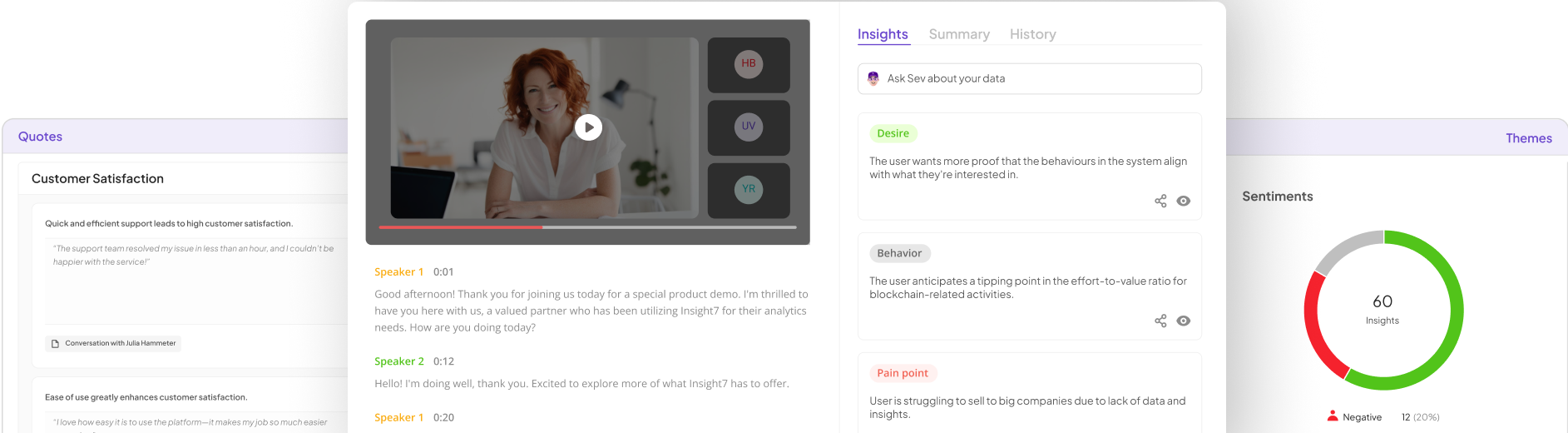
Call quote extraction significantly enhances how businesses understand customer sentiments. By utilizing advanced technology, this process enables companies to analyze customer calls efficiently, extracting meaningful insights that can drive strategic decisions. One notable feature is the ability to visually map out conversations, making it easier to identify pain points, desires, and behaviors. This not only improves knowledge retention but also allows teams to focus on critical aspects of customer feedback.
Another benefit lies in the democratization of insights. With user-friendly platforms, employees across departments can access and analyze call data without needing specialized training. This fosters a culture of collaboration and engagement, leading to informed decisions that enhance customer satisfaction and refine product development. In essence, effective call quote extraction streamlines the pathway from customer feedback to actionable business strategies, ensuring organizations remain responsive to customer needs.
Other Noteworthy Tools
In the realm of call quote extraction, having the right tools can significantly enhance the efficiency and accuracy of the process. One noteworthy tool is transcription software, which can convert voice recordings into text. This can serve as a vital first step in identifying quotes without the need for manual note-taking. Another essential tool is sentiment analysis software, designed to extract emotional undertones from conversations. These insights are beneficial for understanding customer perspectives.
Additionally, many businesses are exploring AI-powered solutions that not only transcribe calls but also summarize key points. Such platforms often come equipped with search functionalities, allowing users to quickly locate quotes related to specific topics or themes. Finally, speech analytics tools offer deeper analysis, highlighting trends and frequently mentioned phrases across multiple calls. Incorporating these innovative tools into your call quote extraction process can streamline operations and lead to more actionable insights.
- Tool #1: Detailed features
Tool 1 focuses on advanced capabilities that streamline call quote extraction, ensuring ease of use and effectiveness. This tool allows users to query large datasets efficiently, enabling them to isolate positive and negative customer sentiments accurately. Users can analyze insights from numerous calls, uncovering critical opinions that drive product improvements and customer satisfaction.
The tool’s features include intuitive query functions that let users segment feedback by various criteria, such as location or product type. Additionally, it supports visual data representation, making it easier to interpret customer sentiments at a glance. In essence, Tool 1 offers a powerful solution for organizations seeking to refine their understanding of customer feedback, facilitating strategic decision-making based on actionable insights. This capability to dissect and extract meaningful quotes from calls enhances overall operational efficiency and customer engagement.
- Tool #2: Detailed features
In this section, we delve into the detailed features of our second highlighted tool for call quote extraction. This tool offers remarkable functionalities designed to simplify the process of deriving key insights from customer calls. One standout feature is its ability to visually analyze data, allowing users to quickly differentiate between positive and negative customer feedback. This visualization aids businesses in quickly identifying trends that can be crucial for product development and service enhancements.
Another notable aspect is the tool's querying capabilities. Users can run complex queries across numerous calls to uncover unique opinions or patterns specific to different locations. This functionality helps organizations draw targeted insights efficiently. Ultimately, the detailed features of this tool not only streamline the quote extraction process but also empower businesses to make informed, data-driven decisions that enhance customer satisfaction.
- Tool #3: Detailed features
Tool 3: Detailed features offers a comprehensive approach to call quote extraction, focusing on enhancing the efficiency of the process. The main features of this tool center around its powerful data analysis capabilities, enabling users to sift through countless recordings effortlessly. By leveraging advanced algorithms, the tool highlights relevant quotes automatically, reducing the time spent combing through audio files.
Another standout feature is its intuitive interface, which facilitates easy navigation between different datasets. Users can perform detailed queries to identify positive and negative sentiments across multiple calls. Additionally, this tool allows for side-by-side comparisons of feedback from different locations, providing rich insights into customer experiences. Overall, these features aim to streamline the retrospective analysis of customer calls and ensure that key quotes are accurately captured for further evaluation.
Conclusion on Effective Call Quote Extraction
Effective call quote extraction serves as a vital component in understanding customer sentiments and enhancing service delivery. By accurately identifying key phrases and quotes from customer interactions, organizations can gather actionable insights that drive improvements. It’s essential to use a methodical approach, whether manually reviewing calls or utilizing automated tools to streamline the process.
Ultimately, mastering call quote extraction can significantly elevate customer understanding and satisfaction. Ensuring quotes are contextualized leads to more reliable insights, empowering teams to make informed decisions. By implementing best practices and leveraging the right tools, organizations can foster meaningful connections with customers and respond to their needs more effectively.
- Summary of best practices
In the pursuit of effective call quote extraction, several best practices stand out. First, ensure that you listen actively while analyzing calls. This approach helps identify key themes and critical quotes that resonate with customer needs, enhancing the reliability of the insights gathered. Secondly, familiarize yourself with your evaluation templates beforehand. Having a structured framework guides your analysis and streamlines the quoting process, ensuring accuracy in context and meaning.
Another best practice involves using advanced tools for transcription and analysis. These tools can automate much of the heavy lifting, converting audio to text and highlighting significant quotes effortlessly. Finally, regularly review and refine your quote extraction methodology based on feedback. This commitment to improvement ensures that your extracting practices evolve, keeping pace with changing customer sentiments and business goals. Implementing these strategies will elevate the quality of insights derived from customer calls, ultimately benefiting your organization’s understanding of customer perspectives.
- Final thoughts on enhancing customer understanding through quote extraction
Final thoughts revolve around the idea that quote extraction can significantly enhance customer understanding. By effectively harnessing customer quotes, organizations can uncover actionable insights that may otherwise be overlooked. Focusing on call quote extraction allows businesses to gather and analyze authentic customer feedback quickly, leading to more informed decision-making.
One key takeaway is the importance of accuracy and context in this process. Identifying significant quotes is crucial, as meaningless or out-of-context statements can yield misleading conclusions. Additionally, the ability to summarize customer sentiments from multiple calls can reveal patterns and trends that are invaluable for product and service development. Thus, implementing structured methods for quote extraction empowers businesses to evolve and tailor their strategies according to real customer needs, ultimately fostering stronger relationships and enhanced satisfaction.