
Detecting Declining Communication Standards in Voice Recordings Before Incidents
-
 Bella Williams
 - 10 min read

Detecting declining communication standards in voice recordings before incidents is crucial for maintaining safety and compliance in high-stakes environments, such as the rail industry. As organizations face increasing regulatory pressures and the need for effective contractor oversight, understanding how to monitor and analyze communication effectively is paramount. This blog post will explore the challenges posed by traditional monitoring methods, introduce AI-powered solutions, and provide actionable insights for implementation.
The Safety Critical Communications Challenge
In safety-critical industries, effective communication is the backbone of operational success. Communication failures can lead to severe incidents, regulatory non-compliance, and significant financial repercussions. Traditional monitoring methods often fall short in identifying communication issues before they escalate into incidents. The stakes are high: regulatory compliance, safety incident prevention, and maintaining workforce competence all hinge on effective communication standards.
The Manual Review Problem
Traditional safety-critical communication (SCC) monitoring relies heavily on manual reviews, which can be inefficient and ineffective. Supervisors often review only a small sample of calls, leading to a coverage gap where less than 5% of communications are analyzed. This retrospective approach means that issues may not be discovered until weeks or months later, leaving organizations vulnerable to compliance violations and safety risks. Furthermore, the lack of visibility into contractor communications exacerbates the problem, as many contractors operate outside the direct oversight of the organization.
How AI Call Recording Analysis Works
AI-powered call recording analysis offers a transformative solution to the challenges posed by traditional monitoring methods. By automating the analysis of voice recordings, organizations can gain real-time insights into communication standards and identify potential issues before they lead to incidents.
The AI Pipeline
Step 1: Call Recording Capture
Voice recordings from various sources, including mobile devices, VoIP systems, and control rooms, are stored in a retrievable format.
Step 2: Speech-to-Text Transcription
AI transcribes the recordings with over 95% accuracy, recognizing rail terminology and identifying multiple speakers.
Step 3: Protocol Analysis
The AI analyzes transcripts against established safety-critical communication protocols, detecting issues such as phonetic alphabet usage errors and protocol violations.
Step 4: Scoring & Flagging
An overall compliance score is generated, along with specific scores for protocol elements. The system classifies risks and identifies training needs.
Step 5: Insights & Reporting
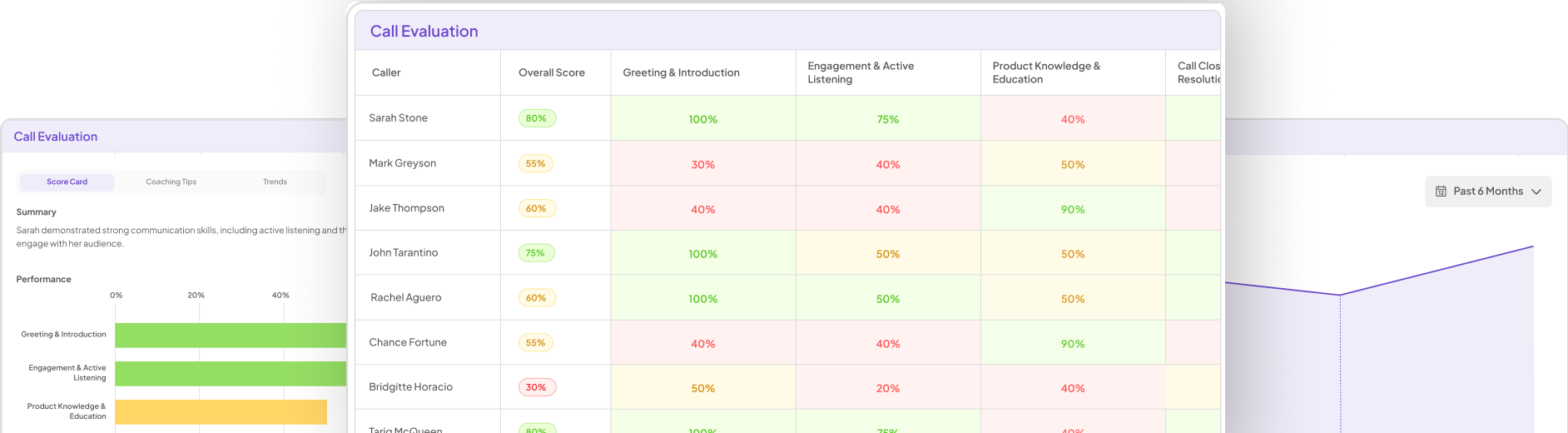
Performance dashboards provide insights into worker performance, team comparisons, and protocol failure trends, allowing organizations to take proactive measures.
By leveraging AI technology, organizations can move from a reactive to a proactive stance in monitoring communication standards. This shift not only enhances safety but also ensures compliance with regulatory requirements.
Implementation & Integration
Implementing AI-powered call recording analysis requires careful planning and execution. Organizations must consider their unique communication needs and regulatory obligations to ensure a successful rollout.
Preparation
- Define Scope: Identify which communications need to be recorded and who will be monitored, including internal staff and contractors.
- Assess Current Systems: Evaluate existing phone systems and BYOD prevalence to determine necessary integrations.
Execution
- Technical Integration: Collaborate with vendors to integrate AI-powered recording solutions into existing communication systems.
- Protocol Configuration: Set up rules for protocol adherence and compliance monitoring based on regulatory requirements.
Evaluation
- Pilot Testing: Conduct a pilot program with a select group of users to assess the effectiveness of the AI solution and gather feedback.
- Performance Monitoring: Continuously monitor communication patterns and compliance scores to identify areas for improvement.
Iteration & Improvement
- Feedback Loop: Use insights from performance dashboards to refine training programs and address identified gaps in communication standards.
- Ongoing Optimization: Regularly update protocols and monitoring criteria to adapt to changing regulatory landscapes and operational needs.
By following a structured implementation process, organizations can ensure that their AI-powered communication monitoring systems are effective and compliant.
Business Impact & Use Cases
The integration of AI in monitoring communication standards can lead to significant improvements in safety and operational efficiency. Here are some practical use cases demonstrating the value of AI-powered call recording analysis:
Protocol Failure Detection: AI can quickly identify critical failures, such as missing phonetic alphabet usage or lack of repeat-back on safety instructions, enabling organizations to address issues before they escalate.
Workforce Monitoring at Scale: With AI, organizations can monitor 100% of recorded calls, providing visibility into every worker's communication and allowing for targeted training interventions.
Incident Investigation: In the event of an incident, AI can facilitate rapid retrieval of relevant calls, providing pre-transcribed conversations and detailed protocol failure analyses, significantly reducing investigation times.
By adopting AI-powered solutions, organizations can enhance their communication standards, ensuring compliance and safety while mitigating risks associated with manual monitoring methods.
Frequently Asked Questions
Q1: How does AI improve communication monitoring?
A1: AI automates the analysis of voice recordings, providing real-time insights and identifying issues before they escalate into incidents.
Q2: What are the key benefits of using AI for call recording analysis?
A2: Key benefits include improved compliance, faster incident investigation, enhanced training effectiveness, and comprehensive monitoring of all communications.
Q3: How do I implement an AI-powered call recording system?
A3: Start by defining your scope, assessing current systems, integrating AI solutions, and conducting pilot tests to evaluate effectiveness.
Q4: Can AI help with contractor oversight?
A4: Yes, AI provides visibility into contractor communications, ensuring compliance and adherence to safety-critical protocols.
Q5: What regulatory standards should I consider?
A5: Organizations must comply with standards such as Network Rail's NR/L3/OPS/301, which mandates the recording and analysis of safety-critical communications.
By understanding the challenges and solutions associated with detecting declining communication standards, organizations can take proactive steps to enhance safety and compliance in their operations.








