
How to Standardize Call Reviews to Drive Consistent Team Performance
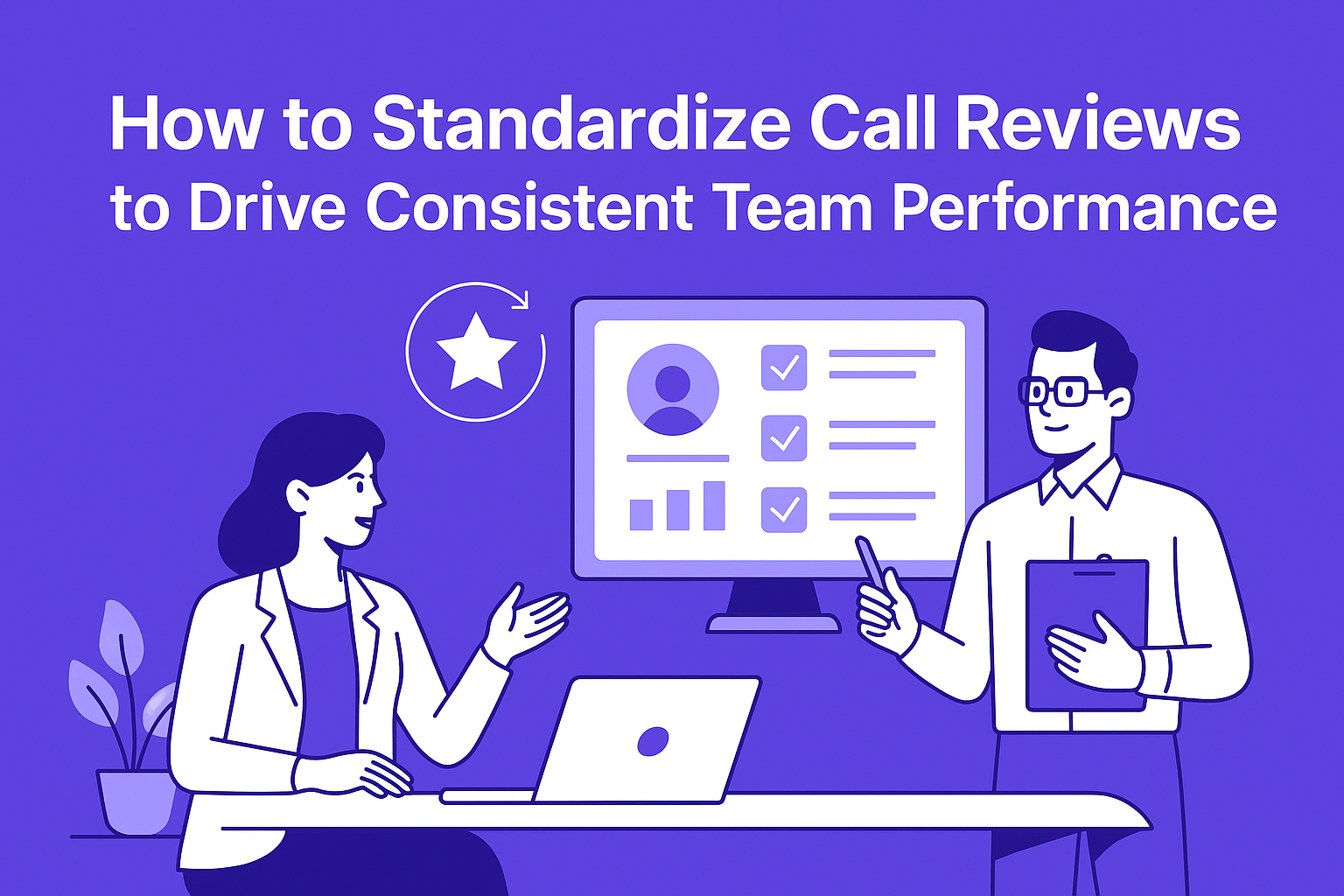
The Hidden Reason Your Call Reviews Aren’t Driving Performance (And What to Do Instead) Let’s start with a story. In a fast scaling tech company with a 12 person support team, a new QA manager came in swinging. She rolled out a detailed QA scorecard. 5 point scales. Behavioral categories. Weekly reviews. Monthly reports. All the right moves. The team nodded. The managers nodded. Everyone complied. But 6 months later, CSAT didn’t move. Handle times increased. And the kicker? The best performing agents hated the process. What went wrong? Doing QA ≠ Driving Quality Most support teams think standardization means checking the same boxes on every call. But that’s just standardized administration, not standardized understanding. Here’s the real problem: Your team isn’t aligned on what good feels like. Yes, you all use the same form. Yes, everyone submits their scores on time. But if you sat three reviewers down to score the same call, they’d give you three different outcomes. One says, “They followed policy – perfect score.” Another says, “They sounded robotic – deduct points.” The third says, “They missed a chance to educate the customer – score drops.” This isn’t just inconsistency. It’s chaos masquerading as order. The Psychology Behind “Subjective Objectivity” Humans are terrible at being objective. Even trained reviewers. When we listen to calls, we’re influenced by: Our mood Our past experiences with similar tickets Our beliefs about the agent The type of customer Our own communication style Even with a rubric, people anchor their evaluations around what they personally value. Some prioritize friendliness. Others want policy precision. Others like speed. And over time, these biases calcify into “reviewer personas.” That’s why standardization isn’t a template problem. It’s a perception problem. Why This Quietly Kills Performance You might think, “Okay, so our reviewers are a bit inconsistent. But we’re still surfacing issues, right?” Not really. Here’s what this inconsistency actually does: 1. It demotivates top performers. Great agents thrive on clarity. When feedback changes week to week, or person to person, they stop trusting the system. They focus on pleasing the reviewer, not improving the customer experience. It’s no longer about growth. It’s about survival. 2. It misguides coaching. When the same behavior is praised by one reviewer and penalized by another, coaching becomes political. Managers don’t know what to reinforce. Agents feel stuck. Momentum dies. 3. It gives product teams false signals. If your evaluation logic is fuzzy, your insights will be too. One reviewer flags a feature confusion. Another ignores it. So when you report that “only 3% of calls mention this bug,” it’s not the truth, it’s just noise. Standardization Is a Culture Shift, Not a Checklist The mistake most teams make is trying to enforce standardization top down. They build forms. Push policy. Send reminders. But real standardization only happens when you get bottom-up alignment. Here’s the shift: From → To Compliance → Clarity Forms → Shared interpretation Enforcement → Agreement Individual reviewers → Collective calibration It’s not about getting everyone to use the rubric. It’s about getting everyone to believe in it. A Better Starting Point: Calibrate First, Score Later Before you ever fill out a scorecard, your team needs to sit in a room and do one thing: Listen to the same call, and argue. Yup. Literally debate what “good” means. Here’s how that looks in action: Pick 3 – 5 real calls from different use cases (e.g., billing, technical, escalation). Have each reviewer independently score them. Compare scores, and defend them. Ask: What behavior did you value most? Why? What did you not care about? This is the conversation that never happens, but changes everything. It uncovers the silent assumptions each reviewer brings. It builds empathy across reviewers. And it forces a reckoning: what do we really care about? The Myth of “More Reviews = Better Quality” Let’s talk about the other trap: volume. A lot of teams think they’re solving quality by increasing quantity. “Let’s review 20% of calls this month.” “Let’s double our QA coverage.” “Let’s hire a second reviewer.” But if your scoring logic is flawed, more reviews just amplify the noise. You end up spending hours reviewing calls, scoring inconsistently, and generating data that doesn’t move the needle. What you actually need is depth over breadth. Fewer reviews With tighter calibration Focused on high impact call types Backed by clear behavior-to-impact mapping One well scored, well discussed call can do more for performance than 50 rushed ones. Where Tech Fits In (and Where It Doesn’t) Here’s the truth most AI vendors won’t say: You can’t automate alignment. You can’t throw machine learning at a broken review culture and expect clarity. What you can do is automate the boring parts: Call tagging Rubric application Pattern detection Volume coverage And then use human reviewers to do what they’re best at: Nuanced evaluation Coaching judgment Context interpretation Cultural tone-checking That’s why the most effective QA tools aren’t replacing humans. They’re freeing them, to focus on what drives change. What Happens When You Get This Right Teams that standardize interpretation, not just format, see a radical shift: Reviewers feel empowered, not mechanical Agents trust the feedback and use it Coaching sessions become shorter and sharper CSAT improves because customers feel the difference And the insights? Suddenly bulletproof. You don’t just “do QA.” You create a quality culture. Final Thought Most QA systems are built for control. But the real power of standardization is liberation. It frees agents from vague expectations. It frees reviewers from personal bias. It frees managers from guesswork. And it turns every call review into a moment of alignment – across people, process, and purpose. Want to see how Insight7 helps teams align on quality – without burning out your reviewers? We help you evaluate 100+ calls in minutes, and find the patterns that actually drive performance. Let your team focus on strategy, not spreadsheets.
Why “Great Job” Isn’t Good Enough in Sales Calls

Why surface level feedback is stalling your sales team (and what to do instead) You know the drill.Your rep gets off a sales call. They’re upbeat. Confident.You ask how it went. “Pretty good!” “They were super engaged.”“I think we’re close!” You nod and respond: Great job.Except… it wasn’t. When You Actually Listen to the Call… Things look a little different. The client brought up pricing – twice – and the rep dodged it. There was no clear agreement on next steps. And somewhere in the middle, they talked over the client three times. All of this happened in a single 30 minute call. The worst part? The rep had no idea.And because you didn’t either, you told them “great job.” The Problem :Not Coaching Based On Evidence This is the gap most revenue teams are missing: We assume a call went well because the rep felt good.We reinforce behaviors based on tone, confidence, or anecdotal wins.We miss what was actually said and what wasn’t. That’s how underperformance hides in plain sight. It’s not always loud. It’s quiet, consistent red flags that slip through unnoticed. What You’re Not Catching Is Costing You Let’s break it down. When these red flags go unspotted: Objections aren’t handled: deals stall Features are misrepresented: trust erodes Next steps aren’t locked in: follow-up dies Feedback loops are weak: reps plateau Multiply that across a team of 10 reps, 5 calls a day, and you’re looking at thousands in missed revenue every week. It’s not a rep problem. It’s a coaching visibility problem. The Fix: Coaching With Receipts This is where Insight7 changes the game. Instead of asking “how did the call feel?” You look at how the call actually went, with: Call scorecards that highlight key moments Red flag detection across talk time and objection handling. Transcripts and audio snippets that point to real coachable moments A clear trail of improvement across reps and calls Suddenly, you’re not guessing. You’re coaching with receipts. “You missed the pricing objection at 12:43. Let’s talk about how to tackle that.”“You did great here – the way you reframed their concern at 18:12 was really good” This is targeted feedback. And it works. What Happens When You Coach With Evidence? You build a system where: Reps improve faster Managers coach better Leaders trust the data Revenue teams actually scale You’re no longer guessing why some reps win and others don’t. You’re building a coaching culture that compounds. Ready to Level Up? It’s time to stop relying on “great job.” Start using Insight7 to catch the red flags before they cost you the deal. Let’s build smarter, stronger, revenue teams – one receipt backed coaching session at a time.
5 Habits of High Performing Customer Facing Teams
In today’s competitive landscape, customer facing teams must go beyond guesswork and outdated reports. The most successful teams use actionable customer insights and real-time customer data to make smarter, faster decisions that improve customer satisfaction and retention. 1. Focus on Real Customer Data Top performing teams prioritize authentic customer feedback and behavioral data over assumptions. By understanding what customers truly need, they design customer experience strategies that resonate with diverse audiences and drive measurable results. 2. Act Quickly on Insights Speed is critical. Instead of lengthy analysis cycles, these teams translate customer insights into immediate actions. This agility enables proactive problem-solving and the ability to seize opportunities before competitors. 3. Cut Through the Noise Not all data contributes equally. Effective teams filter out irrelevant information and concentrate on key signals that move the needle. This focus maximizes the impact of their efforts. 4. Link Insights to Business Outcomes Collecting customer feedback is only the first step. To create value, teams align insights directly with core business metrics such as revenue growth, customer retention, and satisfaction. This approach ensures customer experience initiatives drive tangible business growth. 5. Empower Every Team Member Access to insights should extend beyond leadership. The best teams make data accessible and easy to understand for everyone on the frontline, empowering all employees to make data driven decisions that enhance the customer experience. Why This Matters Adopting these data driven habits transforms customer facing teams from reactive responders to proactive drivers of business success. Leveraging actionable customer insights not only boosts satisfaction but also strengthens overall business performance. At Insight7, we provide tools that simplify access to real time customer data and accelerate insight driven decision making. Our solutions empower customer facing teams to unlock their full potential and deliver exceptional customer experiences. Connect with Us Stay updated with the latest customer experience strategies and data driven insights: Follow Insight7 on LinkedIn Follow Insight7 on YouTube Follow Insight7 on TikTok
