
8 Best Call Evaluation Software Platforms for 2026

8 Best Call Evaluation Software Platforms: 1. Insight7 2. Observe.AI 3. CallMiner 4. Convin 5. Scorebuddy 6. EvaluAgent 7. MaestroQA 8. Level AI.
7 Best Revenue Intelligence Platform Options in 2026
7 Best Revenue Intelligence Platform Options in 2026: 1. Insight7 2. Gong 3. Clari 4. Salesloft 5. Backstory 6. Revenue Grid 7. Aviso.
Product-Led Growth: From Product to Profit
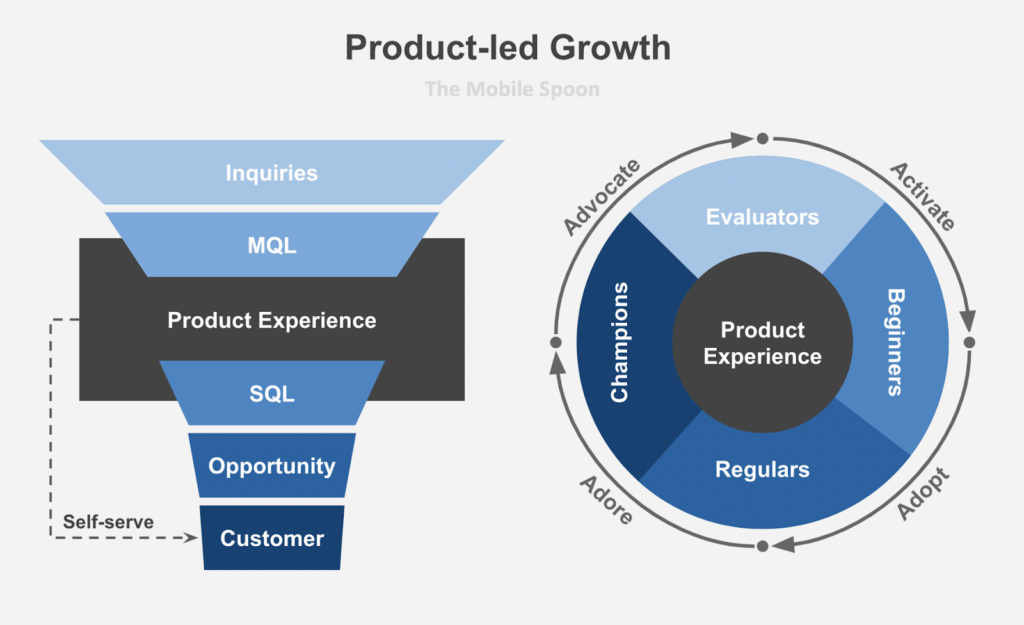
In 2009, a small team of entrepreneurs set out to disrupt the traditional software industry by building a product that users would love. They focused on creating a simple, easy-to-use product that solved a real pain point for their target audience. That product was Slack, and today it’s a household name with millions of users worldwide. Slack is just one example of a product-led growth (PLG) company that has leveraged its product to achieve rapid growth and success. PLG is a business strategy that focuses on creating a product that sells itself, rather than relying on traditional sales or marketing tactics. It’s a mindset that prioritizes user experience and fosters growth through word-of-mouth and organic channels. In this article, we’ll dive deeper into what PLG is, how it works, and its implications for businesses. What is Product-Led Growth? Product-led growth is a business strategy that puts the product at the center of the growth engine. PLG companies prioritize creating a product that provides value to the user right from the start, with the goal of fostering user adoption and driving growth through word-of-mouth and organic channels. The best PLG companies focus on creating a product that is easy to use, intuitive, and solves a real pain point for the user. They prioritize user experience over sales or marketing tactics, and rely on the product to sell itself. This approach is in stark contrast to sales-led growth (SLG) and marketing-led growth (MLG), which rely on traditional sales or marketing tactics to generate revenue. Examples of Top Product Led Growth Companies Slack is just one example of a successful PLG saas company. Other examples include: Zoom: Zoom’s easy-to-use video conferencing software has become a go-to solution for remote work and virtual events. Dropbox: Dropbox’s cloud storage solution has made it easy for users to store, share, and collaborate on files across devices. Grammarly: Grammarly’s writing assistant tool has become a must-have for anyone looking to improve their writing skills. Insight7: Insight7 is an AI powered product discovery tool that helps product teams do customer research 10x faster by generating insights from customer interviews and surveys in one click. Implications of Product-Led Growth Companies that experience product-led growth are characterized by their ability to deliver exceptional product experiences that encourage frequent usage and referral to their networks. These companies experience significant growth due to their viral nature, where users derive immediate unique value from the product or service and are incentivized to attract new users through the network effect. Product-led growth companies are leading the charge in driving growth across both B2B and B2C software and services, and they represent the convergence of three critical corporate functions: product management, marketing, and sales/customer success. Product managers are increasingly taking on marketing responsibilities such as conducting customer interviews, while marketers are now involved in product management duties, such as boosting usage through referral programs. This shift has resulted in customer success/support becoming a critical component of both marketing and product management. This convergence has significant implications not only for improving collaboration between teams but also for promoting employee satisfaction and ensuring optimal team utilization. Interestingly, tools like Insight7 help teams have a seamless collaborative and automated customer research experience to drive growth. Teams that are product-led have developed extensive insights on this convergence and the product discovery and delivery processes. Insight7 provides software solutions that enable product management teams to streamline their approach to continuous product discovery. However, product-led growth has several implications for businesses, both positive and negative. Positive implications: 1.Increased user adoption: PLG companies prioritize creating products that are easy to use and provide value to the user right from the start. By doing so, they are able to foster user adoption and drive growth through word-of-mouth and organic channels. 2. Lower customer acquisition costs: PLG companies rely on their product to drive growth, rather than traditional sales and marketing tactics. By doing so, they can reduce customer acquisition costs and focus on creating a great user experience. 3. Higher customer lifetime value: PLG companies prioritize creating a product that provides ongoing value to the user. By doing so, they can increase customer lifetime value and generate more revenue over time. Negative implications: 1.Longer sales cycles: PLG companies rely on the product to sell itself, which can result in longer sales cycles as users try the product before committing to it. 2. Risk of low conversion rates: PLG companies rely on the product to convert users into paying customers. If the product does not provide enough value or is not easy to use, users may not convert to paying customers. 3. Limited market size: PLG companies may have limited market size, as their product may only appeal to a specific set of users. This can limit their potential for growth. Product-Led Growth vs. Other Growth Strategies PLG vs. SLG: SLG focuses on using sales tactics to acquire new customers while PLG focuses on creating a product that sells itself. SLG typically involves a high-touch sales process, where sales teams work to convince potential customers to buy the product. In contrast, PLG companies prioritize creating a product that users love and that provides enough value to convert them into paying customers without the need for a sales team. PLG vs. MLG: MLG focuses on using marketing tactics to generate demand for the product. Marketing teams use tactics like paid advertising, content marketing, and social media to raise awareness of the product and generate leads. While PLG companies may use some of these tactics, they prioritize creating a product that is easy to use and provides value to the user right from the start, rather than relying solely on marketing tactics to generate demand. While there are both positive and negative implications of this approach, PLG companies like Slack, Zoom, and Dropbox have proven that it can lead to rapid growth and success. By prioritizing the product and user experience, PLG companies have been able to reduce customer acquisition costs, increase customer lifetime value,
