
Our Software Engineers will now be known as Product Engineers

Earlier this month we made it official: our Software Engineers will now be known as Product Engineers! While not a new concept, it requires our engineering team to lean into new skills: talking to customers, digging into usage data, testing other products and brainstorming experiments to make our product better. It will no longer be enough to write code. 3 Hard Product Lessons from building Insight7 Here’s why I made the decision: 1. As an early stage startup with a working product, its time for me to spend more time selling. This means spending less time diving deep into product implementation details (I still spend equal time on design). 2. The best engineers I’ve worked with have a strong product sense. Engineers usually bring the best solutions/ideas to the table because they understand the underlying technology and can map customer needs to what is feasible today. But it starts with the product sense. 3. It is critical for engineers to develop this skill in the age of AI-assisted coding. As AI gets better at automating coding, one of the ways engineers of the future will be able to stand out is having a deep understanding of “how” to build products users love. I am confident this move will make our products better long term. Looking forward. #startup #engineering #ai
4 product lessons from Hooked by Nir Eyal
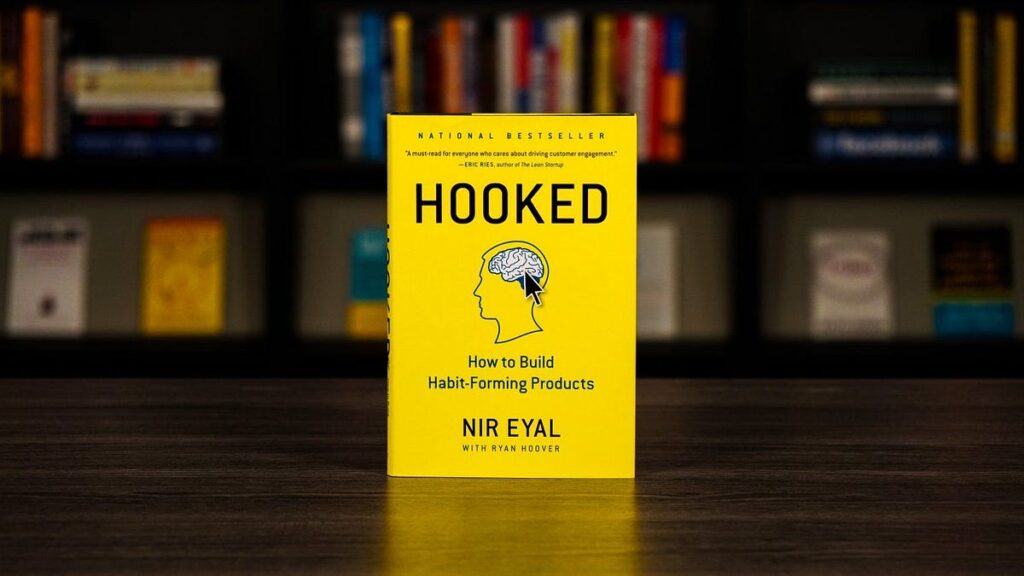
If you’ve read Nir Eyal’s book Hooked: How to build habit-forming products, the Hook Model shouldn’t be strange. The Hook Model is a methodology that product teams can use for products which their users will come back to again and again. But why do some products capture the public’s imagination while others fizzle out of public consciousness? How do some products and services become a part of our daily routines? Is there an underlying process that companies follow to create successful habit-forming or addictive products? Nir Eyal answers all these questions and more in his book and gives the framework for product teams to apply it to their product life-cycle. Based on his years of research, consulting, and practical experience, the book dives deep into the Hook Model, a four-step process used by successful companies to create habit-forming products. Eyal deconstructs the subtle tactics used by companies like Apple, Facebook (now Meta), Pinterest, and many more to link their products to their users’ daily routines and emotions. What is the Hook Model? The Hook Model is a concept in marketing and product design that aims to explain the process of creating habit-forming products or services. It was introduced by Nir Eyal in his book “Hooked: How to Build Habit-Forming Products.” The model outlines a four-step process: Trigger, Action, Variable Reward, and Investment, which helps companies build products that users will engage with repeatedly, forming habits around them. It has it’s premise loosely based on the Fogg Model, which shows the steps that need to be taken before people’s behavior can change and new habits can form. Eyal adapted this model to explain what it takes for a customer to become “hooked” on a new product. The main aim of the model is to create a customer habit. This is done by creating a link between the customers’ problem and the solution you are offering and reinforcing it through repeated exposure to the product. When it happens often enough, the customers will see your product as the obvious option whenever they face the problem and will keep coming back. This cycle can lead to the formation of habits and a strong user attachment to the product. It is however important to note that while the Hook Model has been praised for its insights into habit formation and user engagement, it has also sparked discussions about ethical considerations and potential negative impacts, especially when it comes to addictive technologies and behaviors. Product teams should therefore keep in mind the ethical implications when designing products using this model. What are the 4 stages of the Hook Model? The Hook Model consists of four stages that together create a loop designed to encourage user engagement and habit formation. These stages are: 1 .Trigger: This is the initial prompt that encourages a user to take action. Triggers can be external or internal. External triggers External triggers are the factors that bring the user to the product. They are cues from the environment that prompt the user to act, such as a notification on their phone that says “You have a new message” or an advertisement that says “Start free trial” Internal triggers, on the other hand, arise from emotions or thoughts, like a feeling of boredom or a need for distraction. Internal triggers occur when a product becomes closely associated with a thought, an emotion, or a preexisting routine. Negative emotions like boredom, loneliness, frustration, and indecisiveness are powerful internal triggers and habit-forming products leverage these internal triggers by connecting these emotions to their products. For example, binge-watching a show on a streaming platform due to boredom. 2. Action: The action is the behavior that the user performs in response to the trigger. It is the absolute minimum of interaction needed for the user to experience the reward. It could be anything from scrolling through a social media feed, opening the messaging app to check the new message after receiving a notification, clicking on an ad or CTA to claim your free trial, or sending a message. This stage represents the user’s engagement with the product or service. As a product manager or product designer, you want to minimize the time and effort needed to get the reward. Why is this important? The more difficult the activity is to perform, the higher the motivation levels of the user need to be for them to carry on and complete it. If your users’ motivation is high, they are likely to keep trying for longer. If, on the other hand, their motivation is low, they will give up more easily if the friction level is high. 3. Variable Reward: After the user takes the action, they receive a reward. This reward should be designed to provide a sense of satisfaction or pleasure. What makes the variable reward powerful is that it’s not always the same; there’s an element of unpredictability. This taps into the psychology of seeking out rewards and keeps the user engaged to find out what they’ll receive next. Variable Rewards could come in different forms. Rewards of the Self are feelings of self-fulfillment and satisfaction resulting from completing an action. They are really powerful for habit formation. Achieving a certain level of proficiency or having a certain number of stars for a usage streak of a product could be an example. Rewards of the Hunt are the material benefits that users try to secure. For example, a good deal in an online shop or unlocking a new skill level. They are way more tangible than the Rewards of the Self, so way easier to map out and leverage. Other examples are gathering points, coupons, or even cashback for spending. Rewards of the Tribe are social rewards. Users receive them from their interactions with other people. Social media relies greatly on this kind of reward. People feel a sense of satisfaction when they get positive feedback in the form of likes or comments from their peers. 4. Investment: In this final stage, the
Product Prioritisation: How to improve it using the Fogg model
As a product manager, you are constantly faced with product prioritisation—the challenge of deciding what to build next. How do you prioritise the features and improvements that will deliver the most value to your users and your business? How do you balance the needs and expectations of different stakeholders and customers? How do you ensure that your product roadmap aligns with your vision and strategy? One framework that can help you answer these questions is the Fogg Behavioural Model (FBM). Developed by Dr. BJ Fogg, a behavioural scientist and director of the Stanford Persuasive Technology Lab, the FBM is a simple yet powerful model that explains how human behaviour is influenced by three factors: 1. Motivation 2. Ability 3. Triggers. How those FBM help Product Prioritisation? According to the FBM, for a behaviour to occur, a person must have sufficient motivation to perform it, sufficient ability to perform it, and a trigger to prompt them to perform it. If any of these factors are missing or insufficient, the behaviour will not happen. Motivation refers to the degree of desire or willingness to perform a behaviour. It can be influenced by various factors, such as pleasure or pain, hope or fear, social acceptance or rejection, etc. Motivation can vary depending on the context and the individual. Ability refers to the degree of ease or difficulty to perform a behaviour. It can be influenced by various factors, such as time, money, physical effort, mental effort, social deviance, non-routine, etc. Ability can also vary depending on the context and the individual. ALSO READ: Generating Better Ideas for Your Products — Lessons from Teresa Torres Triggers refer to the cues or signals that prompt a person to perform a behaviour. They can be external or internal. External triggers are stimuli that come from outside the person, such as notifications, buttons, reminders, etc. Internal triggers are stimuli that come from within the person, such as emotions, thoughts, memories, etc. The FBM can be represented by a formula: B = MAT. Behaviour = Motivation x Ability x Trigger. The formula implies that for a behaviour to occur, all three factors must be present and above a certain threshold. The higher the motivation and ability, the more likely the behaviour will happen when triggered. Conversely, the lower the motivation and ability, the less likely the behaviour will happen when triggered. How does this relate to product prioritisation? As a product manager, you want to design products that enable and encourage your users to perform certain behaviours that create value for them and for your business. For example, you may want your users to sign up for your service, use your features regularly, invite their friends to join your platform, provide feedback on your product, etc. To achieve these outcomes, you need to understand what motivates your users to perform these behaviours, what makes it easy or hard for them to perform these behaviours, and what triggers them to perform these behaviours. By applying the FBM to your product decisions, you can prioritise the features and improvements that will increase your users’ motivation and ability to perform the desired behaviours and provide them with effective triggers to prompt them to do so. For instance, at Insight7, we are constantly reaching out to users to understand what influences their behaviours and how they utilise our app. This helps us to understand how we can tweak our product to improve the ease of use, and eventually, the speed with which users accomplish their tasks using Insight7. Here are some use cases you can consider: – If you want your users to sign up for your service (behaviour), you need to motivate them by highlighting the benefits and value proposition of your service (motivation), make it easy for them to sign up by reducing friction and complexity in the registration process (ability), and provide them with clear and compelling calls-to-action on your landing page or in your marketing campaigns (trigger). – To get users utilising your features regularly (behaviour), you need to motivate them by showing them how your features help them achieve their goals and solve their problems (motivation), make it easy for them to use your features by providing intuitive and user-friendly interfaces (ability), and provide them with timely and relevant reminders or notifications that nudge them to use your features when they need them (trigger). – If you want your users to invite their friends to join your platform (behaviour), you need to motivate them by rewarding them with incentives or social recognition for inviting their friends (motivation), make it easy for them to invite their friends by integrating with their contacts or social networks (ability), and provide them with prompts or suggestions that encourage them to invite their friends at appropriate moments (trigger). – To get users to provide feedback on your product (behaviour), you need to motivate them by showing them how their feedback matters and how it will improve your product (motivation), make it easy for them to provide feedback by offering simple and convenient ways for them to share their opinions (ability), and provide them with requests or invitations that ask them for their feedback at optimal times (trigger). In summary, product prioritisation is not an easy task. Developing, testing and marketing new features is a gruelling, expensive series of tasks. However, using the right frameworks can improve the speed of decision making and ultimately help product teams make better decisions on what actions to prioritise.
Generating Better Ideas for Your Products — Lessons from Teresa Torres

If you are a product manager, designer, or researcher, unless you are Teresa Torres, you might be familiar with the difficulty of coming up with good ideas. And when we say “good ideas”, we are talking of groundbreaking but actionable notions within the realm of executability. I mean, yes, we’ve probably all thought about the brilliant idea of putting a jetpack on a car to get to the office faster. Still, the reality of propulsion physics and transit networks makes that an impractical idea. So, in the case of product discovery, what qualifies as a good idea? Simply put, a good idea helps you create products that solve real customer problems while also delivering value for your business. But even when we say it that way, it doesn’t seem to narrow down the pool of ideas or differentiate between bad, good and better ones. Because, yes, there are multiple great ideas. But how do you know which problems to focus on, which solutions to try, and which to ship? One way to answer these questions is to adopt continuous discovery habits. Continuous discovery is a way of working that helps you discover products that create customer value and business value. It involves constantly learning from your customers, generating and testing many ideas, and making fast and informed decisions. In this blog post, we discuss some insights from Teresa Torres, a product discovery coach and the author of the book Continuous Discovery Habits. Torres has helped hundreds of teams adopt continuous discovery practices and improve product outcomes. Outcome vs output One of the key suggestions of Teresa Torres’ gospel of continuous discovery is to focus on outcomes rather than outputs. Outcomes are the changes in customer behavior or business results you want to achieve with your product. Outputs are the features or solutions that you build and ship. In her words: “Shifting to an outcome mindset is harder than it looks. We spend most of our time talking about outputs. So, it’s not surprising that we tend to confuse the two. Even when teams intend to choose an outcome, they often fall into the trap of selecting an output. I see teams set their outcome as “Launch an Android app” instead of “Increase mobile engagement” or “Get to feature parity on the new tech stack” instead of “Transition customer to the new tech stack.” By focusing on outcomes, you can avoid falling in love with your solutions and instead keep an open mind about what might work best for your customers and your business. You can also measure your progress more effectively and validate your assumptions more quickly. How to shift to an outcome mindset To shift to an outcome mindset, Torres suggests using a simple framework called opportunity solution trees. An opportunity solution tree is a visual tool that helps you map out the possible paths to reach your desired outcome. It consists of three elements: An outcome: The change in customer behavior or business result that you want to achieve. Opportunities: The customer problems, needs, or desires that are related to your outcome. Solutions: The ideas or hypotheses that you have for addressing the opportunities. Using an opportunity solution tree, you can generate many ideas for different opportunities and solutions and prioritize them based on their potential impact and feasibility. You can also test your thoughts with customers and learn what works and what doesn’t. Does Group Brainstorming give better ideas for your products? Another habit of continuous discovery that Torres talks about is generating many ideas for your products. Alleviate the pressure to come up with a brilliant idea at once and just churn out as many ideas as possible. After all, as they say, let the bad water flow, and over time, pure water will follow. However, contrary to popular belief, brainstorming in groups is not the best way to do that. Torres cites research that shows that individuals are more effective at generating ideas than groups. “Study after study found that the individuals generating ideas alone outperformed the brainstorming groups. Individuals generated more ideas, more diverse ideas, and more original ideas,” Teresa says. “Many people argued that the most common problems with brainstorming can be counteracted with good facilitation. This is true. Trained facilitators do help. But they help groups get to the same level of individuals working alone. They don’t help groups outperform individuals.” Why is Group Brainstorming for better ideas inefficient? Torres explains that group brainstorming has several drawbacks, such as: Social loafing: Some people tend to contribute less when in a group than when alone. Production blocking: Some people have to wait for their turn to speak or write down their ideas, which reduces their creativity and productivity. Evaluation apprehension: Some people are afraid of being judged or criticized by others for their ideas, which inhibits their originality and diversity. Conformity pressure: Some people tend to agree with or imitate the ideas of others, which reduces the variety and quality of ideas. To overcome these challenges, Torres recommends using a technique called brainwriting. Brainwriting is a method of generating ideas individually and then sharing them with others for feedback and improvement1. It involves four steps: Write down as many ideas as you can on sticky notes or index cards in a limited time (e.g., 10 minutes). Shuffle your notes or cards and exchange them with another person. Review the notes or cards you received and add new ideas or improve existing ones. Repeat steps 2 and 3 until everyone has seen all the notes or cards. By using brainwriting, you can leverage the benefits of both individual and group ideation. You can generate more ideas, more diverse ideas, more original ideas—and ultimately, better ideas. Interviews Arguably the best way to get better ideas on how to help your product become more valuable to customers is to listen to the customers themselves. Sometimes, it’s just that simple. Learning from your customers continuously might give you better insight into how to solve their problems
Experimental Testing: A Short Guide to The Right Approach

It is well established that the Product Discovery process is a crucial stage in developing any product worth using. In our last blog post, we discussed hypothesis testing. Today, we are moving forward to the next phase: experimental testing. Experimental testing is validating assumptions and testing new ideas or product features through experiments with real users or customers. This can be done through various methods such as usability testing, A/B testing, surveys, interviews, and prototyping. The goal of experimental testing is to gather data and insights that can inform product development decisions and improve the user experience. Experimentation plays a vital role in improving the product discovery process. Before we continue, let us discuss some examples of products that have failed or succeeded due to proper (or improper) experimental testing. Success and Failure Stories Google Glass One product that failed due to poor experimental testing was Google Glass. Remember the concept? Long before Facebook rebranded to Meta and AR and VR became buzzwords, Google was already cornering the Extended Reality market. And things looked good for them. The Google Glass was a sturdy product and was light-years ahead of its time. However, as you will often find with great but unsuccessful products, that is not necessarily a compliment. While the concept of a wearable heads-up display was intriguing, the product ultimately failed to capture the interest of consumers. The high price point, awkward design, and privacy concerns caused the product to be pulled from the market. This failure could have been prevented if Google had done more thorough experimental testing with potential users to identify these issues before launching the product. Unfortunately, the bigwigs at the tech giant were convinced that rolling it out earlier would help them get feedback directly from consumers. Hence, according to their assumptions, they would be able to improve on the next release of the product. But this experimental testing should have been done before the product was released, not after. Amazon Echo On the other hand, a product that succeeded due to good experimental testing is the Amazon Echo. The Echo was not the first voice-activated smart speaker on the market, but it quickly became the most popular due to Amazon’s focus on experimentation. Amazon continuously tested and iterated on the product, adding new features and improving the user experience. By listening to their customers and making changes based on their feedback, Amazon created a product that people love and use every day. The Echo has since gone on to revolutionize the smart speaker market. And would you belive it? One of the most cited reasons for this dominance is the superior end-user experience. Overall, good experimental testing is essential for product success. It helps identify potential issues early on, saves time and resources, and allows continuous improvement. What is the right framework for Experimental Testing? Marty Cagan, a well-known Silicon Valley veteran who has worked with companies like eBay, Netscape, and HP, is one of the loudest voices emphasising the importance of experimentation in product development. In his book “Inspired: How to Create Tech Products Customers Love,” he proposes a framework for product discovery that includes a cycle of experimentation. The cycle includes ideation, prototyping, testing, and learning. Ideation – This is the initial stage where the team generates ideas. It’s important to come up with as many ideas as possible and to be open to all possibilities. The ideation stage should involve customers, stakeholders, and team members. The goal is to gather as much input as possible to generate a wide range of ideas. Prototyping – Once you have a list of ideas, it’s time to create prototypes. Prototyping is the process of creating a basic version of the product to test the idea’s feasibility. Prototyping can take many forms, from sketches to wireframes to functional prototypes. Testing – Testing is the process of evaluating the prototype with actual customers. Testing should be conducted in several stages to ensure that the product is meeting the user’s needs. Marty Cagan emphasizes that testing should be done as early as possible in the product development process. This helps to identify any issues early on and to make any necessary changes. Learning – Based on the results of the testing, the team should evaluate what works and what doesn’t work. To be unbiased at this stage is very mission-critical. It is essential to understand the reason behind the success or failure of the product. This knowledge will help the team to iterate and improve the product. So do not be precious with your product and be ready to kill off any ‘darling’ features customers don’t want/need. Wrapping up… Experimental testing helps the product team to validate the ideas and to identify potential flaws at an early stage. This saves time and resources in the long run. Experimentation should always be a continuous process integrated into every stage of product development, and yes, it can be time-intensive. We know that. That’s the reason why here at Insight7, our philosophy is all about making it easier to draw insights, fast-tracking the product discovery process and helping stakeholders make decisions faster. That’s why we developed our software, which uses AI to help you draw insights from thousands of surveys and research data in seconds. You can try the product here. Experimentation will supercharge your product team’s ideation process because the real world is a whole different ball game compared to the drawing board. Getting feedback on the real-world usage of your product will probably be the most important insight you gather in the course of Product Discovery. By embracing experimentation, product teams can create innovative and successful products that meet the needs of their customers in more realistic—and eventually more profitable—ways.
Hypothesis Testing: How to do it the right way

“I believe that if we change the design of the landing page, it will lead to an improvement in signups”. In the regular, “normal” vocabulary of the natural world, the opening quote sentence is a passable hypothesis. However, in the world of product discovery, it is a terrible one. And the product discovery process will see a Product Manager formulate and make decisions based on hypothesis on an iterative basis. This is why we must conduct hypothesis testing the right way. But what is Hypothesis Testing? Simply put, Hypothesis Testing is a technique in product management that allows a product manager to validate their ideas about a product in the Product Discovery process. In hypothesis testing, after formulating a hypothesis, data gathering is done to test it. There are two types of hypotheses: null and alternative. The null hypothesis states that there is no difference or relationship between the two variables, while the alternative hypothesis states that there is a relationship or difference between the variables. At the beginning of this article, we introduced a hypothesis that we said was terrible. A correct hypothesis concerning the same scenario would be: So, let us break down the most important things to note when conducting Hypothesis Testing. Be Specific This is probably the most essential thing to note about hypothesis testing. For instance, the first thing to note in the first “bad” hypothesis we introduced was that the landing page redesign was loosely defined. What aspect of the landing page is being changed? The colors? The button placement? Also note that in the good hypothesis, the “impact” question of the hypothesis was practical and specific. According to Product expert Teresa Torres, saying a design change will “increase usability” is not specific enough. Why? Because it is not measurable. The same goes for hypothesizing an increase in engagement. Engagement, though measurable, is still not specific enough. Will it increase the time spent on the site? The number of button interactions? The email signups? Product Managers should also note that targeting your hypothesis to a specific group of people is the only way to truly narrow it down to a measurable metric. Like the example in the diagram above, simply saying “design change x should…increase conversion of users” is not enough. What type of users are you targeting with this design change? Are you targeting seasoned experts? Or power users? Or first-time users? Is a user already utilizing a competitor’s product? Being specific in hypothesis testing also involves measuring the best-guess degree of improvement the design change could provide for your product. This is often not more than guesswork, but if done right, it could make a world of difference between what design changes are thrown out and which ones are kept. For instance, if the degree of improvement expected from the hypothesis being tested is a 10 percent increase in conversion rate, then a 9 percent increase should denote a failure. This might seem extreme, but it helps protect your product from biases and mediocrity and might even inform your future estimates of what an acceptable expectation of improvement should be. Finally, we should define the duration of the hypothesis being tested. This protects the product team from losing track of the data or identifying false positives where there are none. The hypothesis should have a finite timeline that lets the product team come back to the drawing board and compare ideas again. Determine the Appropriate Sample Size Sample size is another essential factor in hypothesis testing. A sample size that is too small can lead to inaccurate results, while a sample size that is too large can lead to a waste of resources. It is essential to determine the appropriate sample size when conducting hypothesis testing to ensure accurate results. A larger sample size increases the chances of obtaining accurate data and decreases the chances of making mistakes when analyzing the data. Conduct Continuous Testing Continuous testing is crucial in hypothesis testing. It enables product managers to keep testing their hypotheses throughout the product development process to ensure they are on the right track. Continuous testing helps product managers to identify and address any issues early before they become significant problems. It also enables product managers to adjust their strategies in response to changing circumstances. Use the Right Statistical Tools Product managers should use the right statistical tools when conducting hypothesis testing. Statistical tools enable product managers to analyze data and draw conclusions from it. The choice of statistical tools depends on the type of hypothesis being tested and the sample size. Product managers should seek the guidance of statistical experts when choosing the right tools. Collaborate with Other Teams Hypothesis testing is a collaborative process that involves different teams in an organization. Product managers should work closely with teams such as marketing, engineering, and design to conduct successful hypothesis testing. Collaboration helps to ensure that all teams are aligned in terms of goals, objectives, and timelines. It also helps to ensure that all teams have a stake in the product’s success. Love the article? Read more about Product Discovery Basics For Building Better Products
Collaborating with Cross-functional Teams During Product Ideation

Collaborating with cross-functional teams during product ideation can significantly improve the chances of success for a new product. Product ideation is not a one-man show, and it requires the input and collaboration of several different departments and experts. This can help to ensure that all aspects of the product idea are thoroughly thought through and considered before it is brought to market. What is product ideation? Product ideation refers to the creative process of generating, developing, and refining ideas for new products or services. It involves identifying customer needs, researching market trends, and brainstorming innovative solutions to create unique and valuable offerings for target customers. The ultimate goal of product ideation is to create a product that can successfully meet the needs of customers and create value for the business. What is a cross-functional team? Cross-functional teams typically include individuals from departments such as marketing, engineering, design, and operations. Each of these departments brings a unique set of skills and perspectives that can contribute to the success of a product. For example, marketing can help to identify customer needs and desires, while engineering can provide technical expertise to make sure that the product is feasible to build. Collaborating with cross-functional teams When collaborating with cross-functional teams, it is important to create a culture of open communication and collaboration. This can be achieved through regular meetings, shared project management tools, and clear lines of communication. Encouraging team members to share their ideas, experiences, and insights can lead to more creative and innovative solutions. Benefits of cross-functional collaboration One of the key benefits of cross-functional collaboration in product ideation is that it helps to identify potential challenges and obstacles early on in the ideation process. This can prevent problems from arising later on, when they may be more difficult to solve. For example, if engineering raises concerns about the feasibility of a particular aspect of the product, this can be addressed early on, rather than later when it may be too late to make changes. Another benefit of cross-functional collaboration is that it helps to build consensus around the product idea. When team members from different departments have the opportunity to provide input and feedback, they are more likely to buy into the idea and support it in the future. This can be especially important for product ideation, where the support of all departments is necessary for success. Collaborating with cross-functional teams during product ideation can also have some disadvantages. Here are a few: Time consumption: Collaborating with a cross-functional team can be time-consuming, especially if team members are not in close proximity. This can slow down the ideation process and result in delays. Communication barriers: Communication barriers can arise when team members come from different departments and have different areas of expertise. This can result in misunderstandings and lead to friction between team members. Decision-making challenges: With input and feedback coming from multiple departments, decision-making can become more complex and challenging. It may take longer to reach consensus on certain aspects of the product idea. Different priorities: Different departments may have different priorities, which can lead to conflicting ideas and perspectives. This can make it difficult to reach agreement on the best course of action for the product idea. Resistance to change: Some team members may be resistant to change and may not be open to new ideas. This can make it difficult to get everyone on board with the product idea which may lead to conflicts between team members. While these disadvantages can present challenges, they can be overcome with careful planning, effective communication, and a willingness to work together. By being aware of these potential challenges, companies can take steps to minimize their impact and ensure the success of their product ideation process. Should companies work with cross functional teams during product ideation? Yes, it is generally recommended to work with cross-functional teams during product ideation. The benefits of collaborating with individuals from different departments, who bring different perspectives and skills, can significantly improve the chances of success for a new product. Collaborating with cross-functional teams helps to ensure that all aspects of the product idea are thoroughly thought through and considered, and that potential challenges are identified and addressed early on. However, it is important to manage the potential disadvantages that can arise from cross-functional collaboration, such as communication barriers, decision-making challenges, and resistance to change, etc. Companies can overcome these challenges by creating a culture of open communication and collaboration, and by taking steps to minimize the impact of the disadvantages. In summary, collaborating with cross-functional teams during product ideation is a crucial step towards the success of a new product. By bringing together individuals with diverse perspectives and skills, companies can ensure that all aspects of the product idea are thoroughly considered and that potential challenges are identified and addressed early on. A culture of open communication and collaboration can help to build consensus around the product idea and increase the chances of success.
The Importance of Experimental Design in SaaS Product Development

Software as a Service (SaaS) is one of the fastest-growing industries in the world today. With the rise of cloud computing and the Internet, companies are now able to offer their software products as a service over the web, eliminating the need for users to install software on their local machines. This has created a huge opportunity for innovation and growth in the SaaS industry. However, developing a successful SaaS product is not an easy task. Companies need to be able to quickly iterate and make informed decisions about their products based on data and customer feedback. This is where experimental design comes in. What is experimental design? Experimental design is a systematic and organized approach to testing and evaluating product ideas, features, or changes. The goal of experimental design is to provide evidence-based insights into the impact of changes on a product and its users, and to inform decision making. Incorporating a culture of continuous experimentation into the product design process is crucial for improving user experiences and driving business success. Rather than settling on a single solution, experimenting with multiple options enables companies to quickly determine the most effective solution. By embracing an experimental approach, companies can make data-driven decisions, reduce the risk of failure, and continuously improve their products. Experimental Design Steps The process of experimental design typically involves the following steps: Define the problem: Start by defining the problem you are trying to solve or the question you are trying to answer. This will help you focus your experiment and ensure that you are testing for the right thing. Formulate a hypothesis: Next, formulate a hypothesis about the relationship between the independent and dependent variables. Your hypothesis should state what you expect to happen and why. For example, what are the pros and cons of a certain feature in your product, in relation to your customer pain points? Choose a sample: Choose a sample that represents your target audience. The sample should be large enough to be statistically significant and should be randomly selected to avoid bias. Implement the experiment: Implement the experiment by making a change to the product and collecting data on how users respond. It is important to ensure that the experiment is conducted in a controlled environment to minimize the impact of extraneous variables. Collect and analyze data: Collect data on the impact of the change and analyze it using appropriate statistical techniques. This will provide you with evidence-based insights into the impact of the change on the product and its users. AI-powered tools like Insight7 can help automate this process by analyzing the data gathered from your users to generate actionable insights. Draw conclusions: Draw conclusions based on the results of the experiment. If the results support your hypothesis, your experiment has been successful. If the results do not support your hypothesis, consider revising your hypothesis and conducting another experiment. Make informed decisions: Use the results of the experiment to make informed decisions about the product. If the results are positive, consider implementing the change permanently. If the results are negative, consider revising the change or conducting another experiment. By following this process, companies can make informed decisions about their products, reduce the risk of failure, and increase their chances of success. Experimentation is a crucial part of the product development process and can help companies stay ahead of the curve in the fast-paced SaaS industry. Benefits of Experimental Design Experimental design in the SaaS product development process is very beneficial. It provides a systematic and organized approach to testing and evaluating product ideas. By conducting experiments, companies can make informed decisions about their products, reduce the risk of failure, and increase their chances of success. Here are some of the key benefits experimental design: Faster product iteration: Experimental design enables companies to quickly test and validate their product ideas, allowing them to iterate faster and bring their products to market sooner. Better customer understanding: By conducting experiments and collecting data, companies can gain a better understanding of their customers and what they need and want. This can help them make informed decisions about their products. Increased innovation: Experimental design encourages a culture of experimentation and innovation within a company. By testing new ideas and hypotheses, companies can identify new opportunities for growth and development. Minimized risk: Experimental design helps companies minimize the risk of failure by using data and statistical analysis to guide their decision-making. This reduces the risk of launching a product that does not meet the needs of their customers. Improved decision-making: By collecting data and analyzing results, companies can make informed decisions about their products based on evidence and not just intuition or guesswork. One of the key advantages of SaaS is that it enables companies to quickly iterate and make changes to their products based on customer feedback. Therefore, experimental design is a natural fit for SaaS product development, as it enables companies to quickly test and validate their product ideas, gather customer feedback, and make informed decisions about their products. What is the impact of experimentation on customer satisfaction and loyalty? Experimentation can have a significant impact on customer satisfaction and loyalty. By conducting experiments and gathering data, companies can gain insights into what their customers want and need, and then use that information to improve their products and services. This can result in higher customer satisfaction, as customers feel that their needs and preferences are being heard and addressed. By gathering data and customer feedback through experimentation, companies can make informed decisions about their products and improve features to meet customer pain points. Additionally, when customers see that a company is constantly improving and evolving, they are more likely to remain loyal, as they are more likely to see the company as
How Customer Empathy Helps Product Teams Build Great Products

What is empathy in product development? Empathy is the ability to understand and share the feelings of others. In the context of product development, empathy is essential for building products that meet the needs of customers and users. What is customer empathy? Customer empathy refers to the ability to understand the needs and motivations of customers- both buyers and users of software. This involves understanding their pain points, goals, and the value they hope to gain from using the product. It also entails how they will interact with the product, the tasks they will complete with it, and the challenges they may face. By developing customer empathy, product teams can build products that are intuitive and easy to use, solve the problems customers face, and provide them with the value they are looking for which can help improve user satisfaction and retention. Importance of customer empathy Customer empathy is a very important concept in product development. It refers to the ability to understand and relate to the needs, desires, and emotions of customers. It involves putting yourself in the customer’s shoes and trying to understand their perspective, to create products that meet their needs and provide a positive experience. Customer empathy involves listening to customers, trying to see things from their perspective, and taking their needs and desires into account when making decisions or designing products or services. It gives you an understanding of and ability to relate to the needs, desires, and emotions of the people who will be using a product. It involves considering the customer’s context, environment, and goals in order to design a product that is easy to use and intuitive. This helps product teams ensure that the products being created are relevant, useful, and enjoyable for the people who will be using them. In addition, customer empathy can also be beneficial for the company itself. When product teams have strong empathy skills, they are more likely to be able to identify and address the needs of customers which result in building desirable products that people will pay for. How to develop customer and user empathy to build great products 1.Conduct user research One way to develop customer and user empathy is to conduct user research and gather feedback from customers and users. This can include conducting interviews, surveys, and usability tests to gather insights into the needs and motivations of these groups. This feedback can then be used to inform product development decisions and ensure that the final product meets the needs of both customers and users. 2. Put yourself in the customer’s shoes In addition to conducting user research, it can also be helpful for product teams to regularly put themselves in the shoes of their customers and users. This can involve using the product themselves, as well as asking for feedback from friends and family members who may be representative of the target audience. By doing this, product teams can gain a better understanding of the user experience and identify areas for improvement. 3. Incorporate customer and user empathy into your roadmap It is one thing to put yourself in the customer’s shoes or carry out user research, and another to put the insights into action. To ensure that the work put into understanding customer needs, frustrations, and preferences is not wasted, product teams should regularly review their plans, product designs, and roadmap to ensure that customer empathy is reflected in the actions taken by the company. It is important to extract and sort the feedback gathered, into both specific requirements and ongoing themes, and prioritize and address the requirements accordingly. The ongoing themes should be used as an evaluation tool for any changes or enhancements, and if planned changes do not improve the things that customers care about, they should be given serious reconsideration, as any negative impact on customers may outweigh the potential benefits for the company or other users. This approach is particularly important for customer-centric organizations. Advantages of customer empathy Improved understanding of customer needs: By actively listening to and empathizing with customers, product development teams can gain a deeper understanding of the needs and wants of their target audience. This can help to inform the design and development of new products and features. Increased customer satisfaction: When product development teams show empathy towards their customers, they are more likely to create products that meet the needs and expectations of those customers. This can lead to increased customer satisfaction and loyalty. Greater innovation: By putting themselves in the shoes of their customers, product development teams may be able to identify new opportunities and solve problems in unique and innovative ways. Better problem-solving: When product development teams have empathy, they may be more likely to approach issues and challenges from the perspective of their customers. This can help them to identify and address problems in a more effective and efficient manner. Improved customer relationships: Showing empathy towards customers can help to build trust and strengthen the relationship between the company and its customers. This can lead to increased customer loyalty and advocacy. In conclusion, customer and user empathy are essential for building products that meet the needs of the people who will use them. By developing these skills, product teams can create products that are both valuable to customers and easy to use for users. This can help improve customer satisfaction and retention, ultimately leading to the success of the product.
