
High Ticket Sales: One Call Close Revenue Intelligence Buyer Guide
In high-ticket, one call close sales, every call is the only call. There is no follow-up sequence. No second meeting. No recovery email. You either close on that call or the opportunity is gone. This reality changes everything about how performance must be measured, coached, and optimized. This buyer guide is written for high-ticket sales leaders evaluating revenue intelligence platforms built specifically for one-call-close environments. It covers: What revenue intelligence means in a one-call-close model Whether your team is ready What to look for in a platform What it actually costs How to evaluate vendors How to implement successfully How to measure ROI So you can make a confident, informed decision before signing a contract. Why One Call Close Sales Is Structurally Different In traditional sales teams, deals unfold over weeks or months. There are multiple touchpoints, pipeline stages, and opportunities to recover from mistakes. In one-call-close sales, the margin for error is effectively zero. The moment a rep hangs up without a commitment, the lead goes cold.There is no nurture sequence. No second shot. This model is common in high-ticket industries such as: Insurance Healthcare services Financial services Manufacturing and equipment sales Because revenue is won or lost inside a single conversation, performance visibility must operate at the call level – and it must be fast. Most revenue intelligence platforms were built for multi-touch B2B environments. They focus on pipeline tracking, deal stages, and long sales cycles. One-call-close teams operate under completely different constraints: Same-day coaching matters Script execution precision matters Objection handling quality matters First-call conversion rate is the core KPI This guide helps you evaluate platforms designed for that reality What Is Revenue Intelligence for One Call Close Sales? Revenue intelligence for high-ticket, one-call-close sales is the use of AI to analyze 100% of sales conversations, identify the exact moments where revenue is won or lost, and turn those insights into actionable coaching before the next live call. In high-ticket environments, a single lost call can represent thousands – sometimes tens of thousands – in revenue. There is no second meeting to recover it. Because the entire sales cycle happens inside one conversation, performance visibility must operate at the call level – and it must move fast. Revenue intelligence in this context must answer operationally critical questions like: What do top closers do in the first 60 seconds that average reps don’t? Which objections are consistently ending high-ticket calls before the close? At what exact point in the conversation are deals being lost? What behaviors correlate with post-sale cancellations? How do we replicate our best rep’s performance across the entire team? Traditional QA processes review 1–3% of calls manually. Revenue intelligence analyzes 100% of conversations using AI. Instead of anecdotal feedback, you get: Pattern recognition across thousands of high-ticket calls Call-level conversion diagnostics Behavior-level performance data Structured practice environments that improve reps before they are live again For high-ticket, one-call-close teams, delayed coaching equals lost revenue. Insights must translate into same-day improvement. Why Most Revenue Intelligence Platforms Aren’t Built for One Call Close Sales Most dominant revenue intelligence tools – including Gong, Chorus.ai, and Clari – were designed for multi-touch B2B sales cycles and long pipeline management. Their architecture prioritizes: Deal progression tracking Forecasting accuracy Pipeline visibility across weeks or months Executive reporting at the opportunity level High-ticket, one-call-close sales operate under different economic constraints: The entire revenue opportunity lives inside a single call First-call conversion rate is the primary KPI Objection handling precision directly impacts revenue Coaching must be immediate to prevent repeat losses When revenue is decided in 30–60 minutes, the platform must treat that call as the complete sales cycle – not as one stage in a longer journey. Is Your High-Ticket Sales Team Ready? Revenue intelligence creates the greatest impact when sufficient call volume and coaching discipline exist. Strong Fit 25+ reps and 1,000+ calls per week High-ticket, close-or-lose model on the first call Top reps outperform average reps by 2x or more Scaling faster than new hires can be trained Post-sale cancellations are eroding booked revenue Call recordings, CRM data, and dialer API access available These conditions generate enough data for AI to identify meaningful patterns in high-ticket conversion performance. Not Ready Yet Fewer than 25 reps or under 500 calls per week No call recordings Managers do not currently coach Leadership expects a “set it and forget it” solution Revenue intelligence amplifies a coaching culture — it does not replace one. What Does Revenue Intelligence for High-Ticket Sales Actually Cost? Most vendors quote per-seat pricing. For a high-ticket sales team with ~100 users, the fully loaded Year 1 cost typically looks like this: Cost Category Typical Range Platform fees $80K–$150K / year Implementation & integration $10K–$50K IT and RevOps time $20K–$40K Manager time $20K–$40K Change management $15K–$40K Year 1 Total $150K–$320K A practical budgeting rule:Plan for 2–2.5x the quoted platform fee in Year 1. This reflects internal time, rollout effort, and change management — not just software. The Hidden Cost: Failed Implementation The largest financial risk is not the platform fee. It is a stalled rollout. Low adoption, minimal behavior change, no measurable ROI — followed by migration to another platform 12–18 months later — can easily double the original investment when you factor: Lost optimization gains Internal rework Management distraction Contract overlap Getting vendor selection and rollout right matters more than negotiating a 10% discount. Benefits and Drawbacks Benefits 1. More Closed Deals at the Same Call Volume In high-ticket, one-call-close sales, a 1–2% lift in first-call conversion rate generates incremental revenue without: More leads More headcount More marketing spend It compounds across thousands of calls. 2. Precision Diagnosis of Call Breakdown AI identifies where deals fall apart: Weak opening Poor objection handling Missed buying signals Mistimed close Coaching becomes targeted instead of anecdotal. 3. 100% Call Coverage Traditional QA reviews 1–3% of calls.Revenue intelligence analyzes all of them. Managers move from sample-based coaching to pattern-based coaching. 4. Faster Ramp Time New hires practice real objections before facing live
The Performance Gap Killing Hospitality Customer Experience

Every hospitality business has a version of the same customer experience problem. A handful of reps who are exceptional. Everyone else who is just getting by. And no real system to close the gap between them. The majority of hospitality customer support teams have no structured coaching process in place, despite rep performance being one of the most direct drivers of guest satisfaction, retention, and revenue. The top performers know it. The managers know it. And yet the gap keeps widening. The Tick Box Training Trap Most hospitality teams aren’t ignoring training. They have learning management systems, onboarding modules and e-learning courses that take two or three hours to complete. What they don’t have is engagement. Long video courses that feel like a compliance exercise don’t build skills. They build resentment. Employees click through, tick the box, and go back to handling customer calls exactly the way they did before. The result is a support team where quality depends almost entirely on who picks up the phone. Some guests get someone brilliant. Others get someone who doesn’t know how to handle a complaint, can’t answer a question confidently, or doesn’t know how to recover a conversation going sideways. That inconsistency is invisible in the aggregate metrics. But guests feel it every time. When Intelligence Lives In One Person’s Head Here’s how customer insight works in most hospitality businesses right now. A manager builds a strong relationship with a client. The client mentions something in passing. The manager files it away mentally. Maybe it gets passed on. Usually it doesn’t. There’s no system capturing what customers are actually saying across hundreds of interactions every week. No way to identify patterns. No way to know what’s breaking until someone complains loudly enough for it to reach leadership. The intelligence is very manual. A manager has a good relationship with a client, and through word of mouth, the client tells them something. There’s no actual data showing what’s breaking or where things need to be improved. Acquisitions Make It Worse Hospitality groups that grow through acquisition inherit two different cultures, two different training standards, and two different definitions of what good looks like. Doubling headcount doesn’t double performance. It doubles inconsistency – unless there’s a deliberate effort to bring standards into alignment across the merged team. Most don’t have the infrastructure to do that. The coaching processes that existed before the acquisition were already informal. Adding a second organisation into the mix with its own habits and its own gaps just compounds the problem. The teams that navigate this successfully are the ones who treat the integration as an opportunity to build something better – not just absorb the new headcount into the same broken system. What Consistent Customer Experience Actually Requires Closing the gap between top performers and everyone else isn’t a training problem. It’s a visibility problem. You can’t coach what you can’t see. And most hospitality managers have almost no visibility into what’s actually happening on customer calls at scale. They know the metrics – handle time, resolution rate, CSAT scores. But they don’t know why one rep consistently outperforms another, or what specifically a struggling rep is doing differently on calls. The businesses getting this right have stopped treating coaching as a one off event and started treating it as a continuous process tied to real data. They know which rep struggles with complaints. They know which ones lose confidence on pricing conversations. And they build coaching around those specific moments – not a generic training module that applies to everyone and nobody. That’s when performance stops varying by whoever picks up the phone. The Bottom Line Hospitality customer experience lives or dies on the quality of human interaction. And right now, for most teams, that quality is inconsistent, unmeasured, and left almost entirely to chance. The data to fix it exists. It’s in every customer call that gets recorded and forgotten.
The Upsell Revenue Already in Your CRM That Nobody Is Looking At
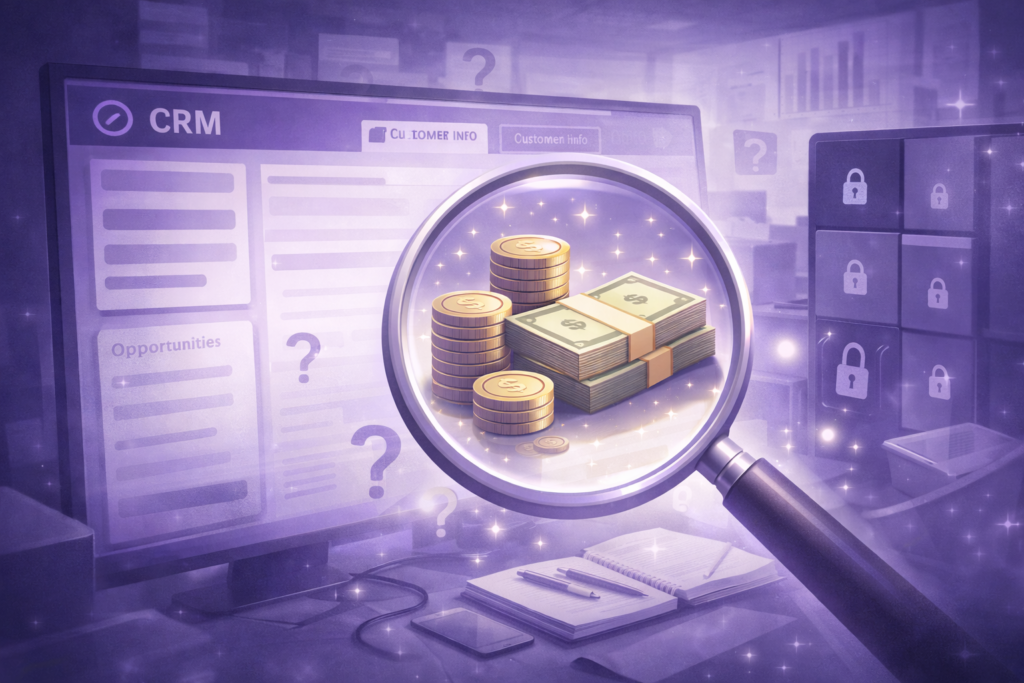
Most service businesses are sitting on upsell revenue opportunities they’ll never act on. Not because their customers aren’t signalling interest, but those signals are buried in call recordings that nobody is listening to. Majority of client facing teams rely entirely on their reps to identify upsell and cross sell opportunities during calls. No system. No tracking. Just hoping someone catches it in the moment. They usually don’t. The Problem With Leaving Upselling To The Rep Here’s what typically happens. A customer mentions something in passing – a new project, a growing team, a challenge they’re quietly struggling with. A sharp rep picks it up and flags it. Everyone else moves on. That’s not a pipeline strategy. The teams we work with aren’t short on customer conversations, they have thousands of data points flowing through the business every month. Most of it gets logged, stored, and forgotten. The opportunities are in there. The problem is there’s no way to surface them. Why Call Recordings Don’t Solve The Problem On Their Own A lot of businesses record their calls. Very few actually use them. The recordings go to Google Drive, or a CRM folder, or an auto-generated transcript that nobody reads. The greatest use, for most teams, is catching someone up who missed the original call. That’s not an intelligence system. The gap is that there’s no path from the data to an action. Someone needs to listen, notice, flag, and follow up. At any real volume, that doesn’t happen consistently but happens when someone has time, which is almost never. What You’re Actually Missing The upsell revenue signals that get missed aren’t always obvious. They’re not customers saying “I’d like to buy more.” They’re a client mentioning they’re expanding into a new market. A passing comment about a problem they haven’t solved yet. A question about a service they didn’t know you offered. Frustration with a current workaround that you could replace. These moments happen on almost every call. And without a system to catch them, they disappear the second the call ends. Upsell revenue identification often fall on the team to hear and pick up on those cues. Some do. Most don’t. And there was no way to know the difference. What Fixing Upsell Revenue Looks Like The businesses closing this gap aren’t adding more people or asking reps to take better notes. They’re building a system that does the listening for them. Every call gets analysed and upsell signals get flagged automatically, not based on keywords alone but on context. What is the customer trying to solve? Did they mention something that falls outside the current scope? What are they going to need next? That information surfaces in a dashboard. Someone owns it. Action gets taken. The result isn’t just more revenue from existing customers – though that happens. It’s a completely different relationship with your customer base. You stop reacting to what clients tell you and start anticipating what they need. The Bottom Line On Upsell Revenue Your customers are telling you what they want. They’re doing it on every call. The question is whether you have a system to catch them before they disappear.
What Effective AI Roleplay for Customer Service Training Actually Looks Like

Most customer service training doesn’t stick. Data shows that the majority of contact center teams still rely on human roleplay as their primary method for practicing difficult conversations – despite it being one of the most resource-intensive, inconsistent, and uncomfortable training formats available. Managers get stretched thin. Trainers can’t keep up with new hire classes. And it’s awkward when agents practice with a peer or a supervisor . Everyone knows it’s not real, and that disconnect kills the learning. So why are teams still doing it this way? The Problem With How We’ve Always Done Roleplay Here’s what traditional roleplay actually looks like in most contact centers. You pull someone out of the queue – which means a real customer is now waiting longer. You pair them with a trainer or a manager who is already stretched. You run through a scenario that everyone has practiced a dozen times. And then you hope something lands. The scenario is predictable. The “customer” isn’t really frustrated. And the agent knows exactly how it’s going to go. That’s not practice. The teams getting this wrong aren’t doing it out of laziness. They’re doing it because until recently, there wasn’t a better option. What Actually Makes Simulation Training Work We spoke with a head of customer experience who came from one of the most respected support organisations in the world. His bar for what good looks like is high. His criteria for AI simulation was simple: if it doesn’t feel conversational, it’s not worth doing. “I’d rather use the resources and just have humans do it if it doesn’t sound conversational.” That’s the standard. And it’s the right one. The simulation tools that actually change behaviour share a few things in common. They’re dynamic – the conversation doesn’t follow a script, it responds to what the agent actually says. They’re customisable – managers can dial up frustration, adjust communication style, change the emotional tone of the customer without rebuilding the scenario from scratch. And they’re available on demand — agents can practice before a shift, between calls, or on their phone on the way to work. That last point matters more than most teams realise. The best practice happens close to the moment it’s needed, not in a quarterly training session. The Manager Use Case Nobody Talks About Most of the conversation around AI simulation focuses on new hire training. Onboarding. Consistency. Scale. All valid. But the more interesting use case is what happens after onboarding. A manager notices an agent struggling with a specific type of call – an angry customer, a complex complaint, a conversation that keeps going sideways in the same place. Today, addressing that means scheduling time, pulling someone aside, running through something manually, hoping the feedback lands. With AI simulation, that manager can build a scenario around that exact situation in minutes, send it to the agent, and follow up in the coaching session with evidence from how they performed. The practice is specific. The feedback is grounded. And the agent doesn’t have to sit across from their manager and act out an uncomfortable scenario. That’s coaching that actually changes behaviour. Not a general reminder to “be more empathetic with frustrated customers.” The Bar Is Higher Than Most Tools Are Meeting Here’s the honest reality: a lot of AI simulation tools in the market right now are rigid. The responses feel scripted. The customer persona doesn’t adapt. The conversation has a ceiling, and agents hit it fast. When that happens, the training loses credibility, and so does the manager who assigned it. The teams investing in this space are right to be selective. The question isn’t whether AI simulation works. It’s whether the specific tool you’re evaluating feels real enough to be worth the time. If it doesn’t, your agents will know immediately. And you’ll be back to pulling people out of the queue. The Bottom Line on AI Roleplay Customer service training has a practice problem. Not a knowledge problem — most agents know what good looks like. They just don’t get enough reps in realistic conditions to make it automatic. AI simulation fixes that. But only if the simulation is good enough to fool you into thinking it’s real. That’s the bar. And it’s finally achievable.
Agent Coaching Is Broken in Most Service Teams. Here’s Why

Agent coaching is the most neglected performance lever in most service businesses. And the frustrating part? The data is sitting right there. Most teams we work with aren’t short on calls. They’re short on visibility into what’s actually happening on those calls. Managers are stretched, seasons are short, and reviewing conversations manually just doesn’t happen at any meaningful scale. So performance problems go undetected, because no one can see them. The Assumption That’s Quietly Costing You Here’s what we see over and over: a business hires for expertise, the team performs well technically, and somewhere along the way everyone assumes phone performance is fine too. It usually isn’t. Technical experts, the people who are exceptional at the actual work, aren’t naturally trained communicators. They know the product and they know the process. But when a customer pushes back on price, or gets news they weren’t expecting, or starts to disengage? It’s a different skill set entirely. And without coaching, it doesn’t develop. The assumption that experience equals phone performance is one of the most expensive assumptions a service business can make. The Feedback Loop That Only Fires when It’s Too Late Ask most service managers how they find out a call went badly. The answer is almost always the same: a customer complaint. That’s a feedback loop that only activates after the damage is done. The conversation is over. The customer is already frustrated. And you’re in damage control mode instead of prevention mode. At high call volumes, that’s not just a coaching problem. It’s a revenue problem. Conversations are going sideways every day with no one catching them because there’s no system to surface them. Experience Can Actually Make This Worse This is the part that surprises people. The longer someone has been doing things a certain way without feedback, the harder those habits are to shift. A team with long tenure and no coaching history isn’t a blank slate, it’s a team that has been quietly reinforcing the same patterns for years. Bringing in new staff alongside experienced ones makes it worse. Junior people watch senior people and assume that’s how it’s done and the habits spread. This is why coaching can’t just be a one off. It has to be systematic – tied to what’s actually happening on calls, not to what managers assume is happening. What Fixing Agent Coaching Actually Looks Like The businesses that close this gap aren’t doing anything dramatic. They’re just starting with what they already have. They look at their calls and find where conversations consistently break down. The moment a customer hears something unexpected or the point where a pricing conversation goes quiet. The call that ends without resolution. Those patterns, pulled from real conversations, become the foundation for coaching. And when managers give feedback, it’s specific – Here’s the moment this call turned, here’s what it sounded like, here’s what could have gone differently. That’s the kind of feedback people can actually do something with. The teams that get this right don’t just perform better in the short term. They compound. Every season and every quarter, the baseline moves up, because the coaching connects to real data. The Bottom Line If your team has experience but doesn’t have structured phone coaching, you’re not managing performance. You’re managing complaints. The calls are already happening. The patterns are already there and the only question is whether you’re using them.
A Week, an Idea, and an AI Evaluation System: What I Learned Along the Way

How the Project Started I remember the moment the evaluation request landed in my Slack. The excitement was palpable—a chance to delve into a challenge that was rarely explored. The goal? To create a system that could evaluate the performance of human agents during conversations. It felt like embarking on a treasure hunt, armed with nothing but a week’s worth of time and a wild idea. Little did I know, this project would not only test my technical skills but also push the boundaries of what I thought was possible in AI evaluation. A Rarely Explored Problem Space Conversations are nuanced; they’re filled with emotions, tones, and subtle cues that a machine often struggles to decipher. This project was an opportunity to explore a domain that needed attention—a chance to bridge the gap between human conversation and machine understanding. What Needed to Be Built With the clock ticking, the mission was clear: Create a conversation evaluation framework capable of scoring AI agents based on predefined criteria. Provide evidence of performance to build trust in the evaluation. Ensure that the system could adapt to various conversational styles and tones. What made this mission so thrilling was the challenge of designing a system that could accurately evaluate the intricacies of human dialogue—all within just one week. What Made the Work Hard (and Exciting) This project was both daunting and exhilarating. I was tasked with: Understanding the nuances of human conversation: How do you capture the essence of a chat filled with sarcasm or hesitation? Developing a scoring rubric: A clear, structured approach was essential to avoid ambiguity in evaluations. Iterating quickly: With a week-long deadline, every hour counted, and fast feedback loops became my best friends. Despite the challenges, the thrill of creating something groundbreaking kept me motivated. The feeling of building something new always excites me—it’s unpredictable, and there was always a chance the entire system could fail. Lessons Learned While Building the Evaluation Framework Through the highs and lows of this intense week, I gleaned valuable insights worth sharing: Quality isn’t an afterthought—it’s a system. Reliable evaluation requires clear rubrics, structured scoring, and consistent measurement rules that remove ambiguity. Human nuance is harder than model logic. Real conversations involve tone shifts, emotions, sarcasm, hesitation, filler words, incomplete sentences, and even transcription errors. Teaching AI to interpret this required deeper work than expected. Criteria must be precise or the AI will drift. Vague rubrics lead to inconsistent scoring. Human expectations must be translated into measurable and testable standards. Evidence-based scoring builds trust. It wasn’t enough for the system to assign a score—we had to show why. High-quality evidence extraction became a core pillar. Evaluation is iterative. Early versions seemed “okay” until real conversations exposed blind spots. Each iteration sharpened accuracy and generalization. Edge cases are the real teachers. Background noise, overlapping speakers, low empathy moments, escalations, or long pauses forced the system to become more robust. Time pressure forces clarity. With only a week, prioritization and fast feedback loops became essential. The constraint was ultimately a strength. A good evaluation system becomes a product. What began as a one-week sprint became one of our most popular services because quality, clarity, and trust are universal needs. How the System Works (High-Level Overview) The evaluation system operates on a multi-faceted, evidence-based approach: Data Collection: Conversations are transcribed and analyzed in over 60 languages. Evaluation on Rubrics: The AI evaluates transcripts against structured sub-criteria using our Evaluation Data Model. Scoring Mechanism: Each criterion is scored out of 100, with weighted sub-criteria and supporting evidence. Performance Summary & Breakdown: Overall summary Detailed score breakdown Relevant quotes from the conversation Evidence that supports each evaluation This approach streamlines evaluation and empowers teams to make faster, more informed decisions. Real Impact — How Teams Use It Since launching, teams across product, sales, customer experience, and research have leveraged the evaluation system to enhance their operations. They are now able to: Identify strengths and weaknesses in AI interactions. Provide targeted training to improve agent performance. Foster a culture of continuous, evidence-driven improvement. The real impact lies in transforming conversations into actionable insights—leading to better customer experiences and stronger business outcomes. Conclusion — From One-Week Sprint to Flagship Product What started as a one-week sprint has now evolved into a flagship product that continues to grow and adapt. This journey taught me that the intersection of human conversation and AI evaluation is not just a technical pursuit—it’s about understanding the essence of communication itself. “I build intelligent systems that help humans make sense of data, discover insights, and act smarter.” This project became a living embodiment of that philosophy. By refining the evaluation framework, addressing the nuances of human conversation, and focusing on evidence-based scoring, we created a robust system that not only meets our needs but also sets a new industry standard for AI evaluation.
