
Leveraging Customer Empathy to Ship Delightful Products

Customer empathy is the ability to deeply understand and relate to the thoughts, feelings, and needs of your customers. It’s a crucial element in shipping delightful products because it allows you to design and deliver solutions that truly resonate with your target audience. By putting yourself in the customer’s shoes, you can identify pain points, anticipate desires, and create experiences that exceed expectations. This empathetic approach not only enhances user satisfaction but also fosters long-term loyalty, as customers appreciate when a company genuinely cares about their well-being and preferences, ultimately leading to the creation of products that genuinely delight and fulfill their needs. CEO/Co-founder of Insight7 had a chat with Erich Wichman, a Senior Product Lead at Shopify on the topic: “Leveraging Customer Empathy to Ship Delightful Products” and here are the key takeaways from their conversation. Watch the full webinar here. Meet Eric Eric, a product manager at Shopify, brings a wealth of experience to the table. Having spent five years at Shopify, he’s been deeply involved in the multi-channel space and worked alongside me on various projects. He has also spent a significant part of his career in product consulting, working on a diverse array of digital products. Eric’s insights into building great products quickly, by incorporating customer input into the product development process, will be invaluable today. The Importance of Customer Empathy in Product Development To kick things off, let’s address a fundamental question: Why is customer empathy so critical in the product development process? Eric emphasizes that customers are at the heart of any product; they are the users who make or break it. Building a product isn’t about solving your problems; it’s about addressing the needs of others. To succeed, you must adopt your customers’ perspective, understand their pain points, and align your product with their requirements. Eric underscores that a successful product is one that customers adopt and use regularly. It must also be sustainable in the long term, which involves more than just creating something customers love – it involves creating something that can thrive within your business model. A Framework for Customer Empathy But how do you actually go about empathizing with your customers? Eric provides a five-point framework: Customer Obsession: Step outside your own perspective and immerse yourself in your customers’ experiences. Build Trust: Establish transparent relationships with your customers, making it clear how their insights will be used in your product. Engage Continuously: Create space for ongoing customer engagement throughout the product lifecycle, from discovery to development. Segmentation: Understand different customer segments and tailor your approach accordingly. Actionable Feedback: Act on the feedback you receive, ensuring that it brings value to both your customers and your product. Techniques for Leveraging Customer Empathy In the quest for customer empathy, Eric suggests categorizing your product’s maturity and lifecycle: Zero to One Products: When you’re venturing into uncharted territory, engaging customers early is crucial. Provide early access and create incentives like time or cost savings. Scaling Products: For existing products expanding into new markets or retaining customers, focus on understanding the context in which your customers use your product. Feedback Loops: Regardless of your product’s stage, implement processes that allow for rapid integration of customer feedback into design and development loops. Trimming the Hedges of Bloated Software One common mistake is holding onto unnecessary features or products. Eric advises focusing on the customer’s mental model: Does the feature align with how customers use your product? If it doesn’t fit or provide value, it’s time to consider removal. When you have competing features, conduct a cost-benefit analysis to determine whether to maintain or remove them. Lessons from Real-Life Scenarios Eric shares insights from his experience, emphasizing the importance of bringing stakeholders, including customers, together in one room. This transparency allows everyone to hear feedback directly from customers, fostering empathy and understanding. Additionally, he highlights the value of recording customer feedback to avoid self-selection bias. To maximize insights, be prepared with tools to capture feedback effectively. Common Pitfalls and Challenges Eric points out a few common challenges: Poor Customer Qualification: Ensure you’re talking to the right customers who truly represent your target audience. Lack of Context: Understand your customers’ real-world context to design products that resonate with their needs. Ignoring Thematic Analysis: Cherry-picking feedback can lead to misguided decisions. Always look for consistent themes in customer input. Balancing User Needs with Business Goals In the end, products exist to achieve business outcomes. Your North Star metric is the core business goal, while customer metrics drive your product’s success by enabling customers to extract value. Balancing these aspects ensures that your product aligns with both customer needs and business objectives.
How to Conduct User Research for Maximum Value
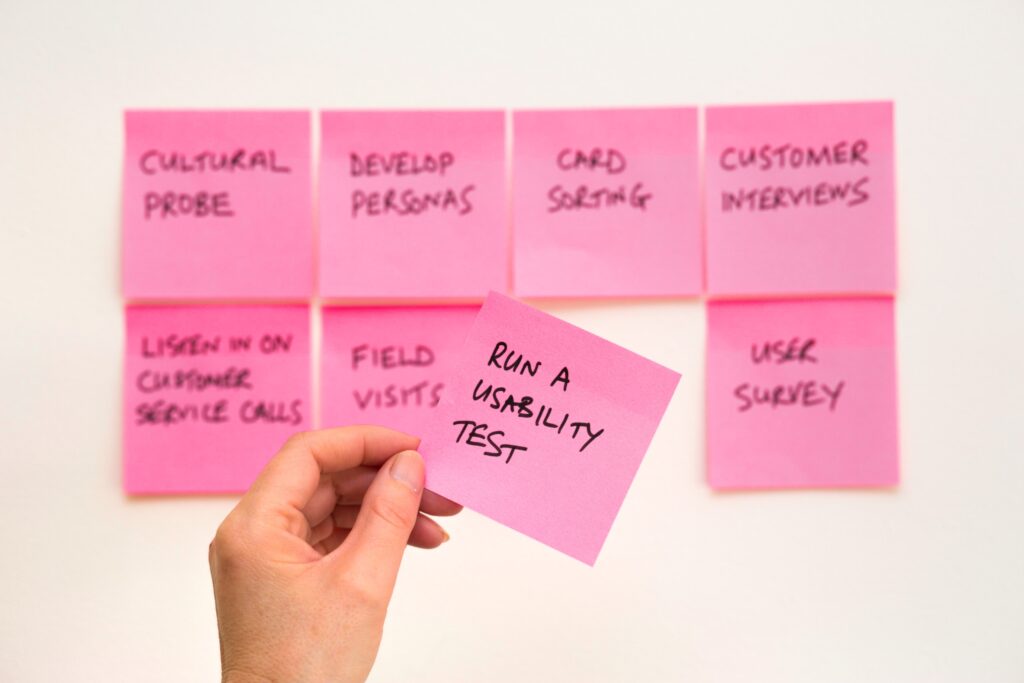
User research is the process of understanding users’ needs, behaviors, and attitudes through different techniques. Conducting user research is crucial for product teams to build better products and services that meet their users’ needs and solve their problems. Whether you are launching a brand new product or redesigning an existing one, it is essential to engage with real users before you do anything else. If you skip this crucial step and dive straight into design and production, you are essentially basing your decisions on guesswork – a costly game to play. What if you bring your product to market only to find that you guessed wrong? You will have to go back to the drawing board, having unnecessarily wasted time, resources and money. User research conducted in the right way, at the right moment, is the only way to avoid this. Good design starts with thorough user research. Without sufficient research, it is impossible to distinguish between a product that merely looks good and one that solves a real user problem. What is User Research? User research is the process of understanding users’ pain points, desires and behaviors through various methods and techniques, including interviews, surveys, observations, usability tests, etc. It involves gathering insights from real users to inform the design and development of products or services. The process of conducting user research can be tedious and time consuming. In this blog post, we will introduce some key user research methods and how to get maximum value from your user research. Methods of Conducting User Research There are two types of user research methods: qualitative and quantitative research. Quantitative research yields measurable, numerical results, while qualitative research focuses on the reasons and motivations behind the user’s behavior. Quantitative research methods include surveys, analytics, and A/B testing. Surveys are a cost-effective way to gather data from a large sample of users. Analytics provide data on user behavior, such as click-through rates and conversion rates. A/B testing is a method of comparing two versions of a design to determine which one performs better. Qualitative research methods include interviews, focus groups, and usability testing. Interviews allow you to gather in-depth information about users’ attitudes, behaviors, and motivations. Focus groups are useful for testing new product concepts or ideas. Usability testing involves observing users interacting with a product to identify usability issues. How to Conduct User Interviews To extract maximum value from user research, it’s essential to follow a structured approach. 1.Define Your Research Goals Before starting the research process, it’s essential to define your research goals. What do you want to achieve through user research? What problems are you trying to solve? By defining your research goals, you can create a clear roadmap for the research process and ensure that you gather relevant data that helps you make informed decisions. 2. Identify Your Target Audience Once you have defined your research goals, you need to identify your target audience. Who are the users that you want to research? What are their demographics, behaviors, and attitudes? By identifying your target audience, you can tailor your research methods and questions to gather the most relevant data. 3. Choose the Right Research Methods There are different research methods you can use to gather data, including interviews, surveys, observations, and usability tests. Choosing the right research methods depends on your research goals and your target audience. For example, if you want to understand how users interact with your product, you can conduct usability tests to observe their behavior. If you want to gather insights into users’ attitudes and perceptions, you can use interviews or surveys. 4. Recruit Participants Recruiting participants is a crucial step in the research process. You need to identify the right participants who match your target audience criteria. You can recruit participants through different methods, including online recruitment, social media, or in-person recruitment. It’s important to ensure that your participants are representative of your target audience and that you have enough participants to gather sufficient data. 5. Conduct the Research Once you have recruited participants, it’s time to conduct the research. Make sure to follow a structured approach and ask open-ended questions that allow participants to express their thoughts and opinions freely. Use the research methods that you have chosen to gather data, and record the data in a structured way for analysis. You can read more about asking the right interview questions here. 6. Analyze the Data Conducting the research is the first major step. After conducting the research, you need to analyze the data to extract meaningful insights. This is a painstaking process for UX researchers because of the number of hours spent sorting and trying to make sense of the data. You can use different techniques to analyze the data, including content analysis, thematic analysis, or statistical analysis. It’s important to ensure that your analysis is unbiased and that you identify patterns and trends in the data that help you answer your research questions. AI powered tools like Insight7, automate the process and cut down research analysis time from hours to minutes. 7. Synthesize the Insights The final step is to synthesize the insights from the research. By synthesizing the insights, you can create a comprehensive understanding of your users’ needs, behaviors, and attitudes. You can use the insights to inform your product or service development, marketing strategies, and customer service initiatives. With Insight7, you can visualize themes, pain points, desires, behaviors and sentiments from your customer feedback in seconds, helping you gain a comprehensive understanding of the data. It also synthesizes insights and identifies priorities and opportunities from your research data, which helps you make product decisions faster. In conclusion, conducting user research is a critical step for businesses to create better products and services that meet their users’ needs. By following the steps outlined in this blog post, you can conduct user research for maximum value and make informed decisions that benefit your users and your business more efficiently.
Generating Better Ideas for Your Products — Lessons from Teresa Torres

If you are a product manager, designer, or researcher, unless you are Teresa Torres, you might be familiar with the difficulty of coming up with good ideas. And when we say “good ideas”, we are talking of groundbreaking but actionable notions within the realm of executability. I mean, yes, we’ve probably all thought about the brilliant idea of putting a jetpack on a car to get to the office faster. Still, the reality of propulsion physics and transit networks makes that an impractical idea. So, in the case of product discovery, what qualifies as a good idea? Simply put, a good idea helps you create products that solve real customer problems while also delivering value for your business. But even when we say it that way, it doesn’t seem to narrow down the pool of ideas or differentiate between bad, good and better ones. Because, yes, there are multiple great ideas. But how do you know which problems to focus on, which solutions to try, and which to ship? One way to answer these questions is to adopt continuous discovery habits. Continuous discovery is a way of working that helps you discover products that create customer value and business value. It involves constantly learning from your customers, generating and testing many ideas, and making fast and informed decisions. In this blog post, we discuss some insights from Teresa Torres, a product discovery coach and the author of the book Continuous Discovery Habits. Torres has helped hundreds of teams adopt continuous discovery practices and improve product outcomes. Outcome vs output One of the key suggestions of Teresa Torres’ gospel of continuous discovery is to focus on outcomes rather than outputs. Outcomes are the changes in customer behavior or business results you want to achieve with your product. Outputs are the features or solutions that you build and ship. In her words: “Shifting to an outcome mindset is harder than it looks. We spend most of our time talking about outputs. So, it’s not surprising that we tend to confuse the two. Even when teams intend to choose an outcome, they often fall into the trap of selecting an output. I see teams set their outcome as “Launch an Android app” instead of “Increase mobile engagement” or “Get to feature parity on the new tech stack” instead of “Transition customer to the new tech stack.” By focusing on outcomes, you can avoid falling in love with your solutions and instead keep an open mind about what might work best for your customers and your business. You can also measure your progress more effectively and validate your assumptions more quickly. How to shift to an outcome mindset To shift to an outcome mindset, Torres suggests using a simple framework called opportunity solution trees. An opportunity solution tree is a visual tool that helps you map out the possible paths to reach your desired outcome. It consists of three elements: An outcome: The change in customer behavior or business result that you want to achieve. Opportunities: The customer problems, needs, or desires that are related to your outcome. Solutions: The ideas or hypotheses that you have for addressing the opportunities. Using an opportunity solution tree, you can generate many ideas for different opportunities and solutions and prioritize them based on their potential impact and feasibility. You can also test your thoughts with customers and learn what works and what doesn’t. Does Group Brainstorming give better ideas for your products? Another habit of continuous discovery that Torres talks about is generating many ideas for your products. Alleviate the pressure to come up with a brilliant idea at once and just churn out as many ideas as possible. After all, as they say, let the bad water flow, and over time, pure water will follow. However, contrary to popular belief, brainstorming in groups is not the best way to do that. Torres cites research that shows that individuals are more effective at generating ideas than groups. “Study after study found that the individuals generating ideas alone outperformed the brainstorming groups. Individuals generated more ideas, more diverse ideas, and more original ideas,” Teresa says. “Many people argued that the most common problems with brainstorming can be counteracted with good facilitation. This is true. Trained facilitators do help. But they help groups get to the same level of individuals working alone. They don’t help groups outperform individuals.” Why is Group Brainstorming for better ideas inefficient? Torres explains that group brainstorming has several drawbacks, such as: Social loafing: Some people tend to contribute less when in a group than when alone. Production blocking: Some people have to wait for their turn to speak or write down their ideas, which reduces their creativity and productivity. Evaluation apprehension: Some people are afraid of being judged or criticized by others for their ideas, which inhibits their originality and diversity. Conformity pressure: Some people tend to agree with or imitate the ideas of others, which reduces the variety and quality of ideas. To overcome these challenges, Torres recommends using a technique called brainwriting. Brainwriting is a method of generating ideas individually and then sharing them with others for feedback and improvement1. It involves four steps: Write down as many ideas as you can on sticky notes or index cards in a limited time (e.g., 10 minutes). Shuffle your notes or cards and exchange them with another person. Review the notes or cards you received and add new ideas or improve existing ones. Repeat steps 2 and 3 until everyone has seen all the notes or cards. By using brainwriting, you can leverage the benefits of both individual and group ideation. You can generate more ideas, more diverse ideas, more original ideas—and ultimately, better ideas. Interviews Arguably the best way to get better ideas on how to help your product become more valuable to customers is to listen to the customers themselves. Sometimes, it’s just that simple. Learning from your customers continuously might give you better insight into how to solve their problems
Harnessing Customer Interviews to Build the Right Product

Product discovery undoubtedly is the customer-centric approach to determining whether or not a product or feature should be developed. However, how can these decisions be made? Through continuous discovery. One of the most important aspects of continuous discovery is customer research, and customer interviews are the bedrock of that. To have a good grasp of what your customers really want, you have to engage with them frequently. To some product teams, customer interviews are more or less opening up a Pandora’s box with a litany of more problems than can be handled. This is because customer interviews can possibly shed so much light on the loopholes in your product, and let’s be honest, nobody wants their months of hard work and time invested in making something they assumed would be useful, to be thrashed. But in reality, there’s no better way to build good products than to ask the people the product is built for, the exact things they want. This helps you identify their pain points and condition your solution -your product- to meet those needs. Read also : 7 product discovery books that teach you everything you should know. Thinking of a better way to make conducting customer interviews more productive and less exhausting? Here are some pointers you may want to employ in your next one. 1. Focus on more listening than talking You are trying to know more about your customers, their interests, their lifestyle, and how they interact with your product. Resist the temptation to turn it into a pitch or demo meeting. Keep it as conversational as possible and ask the right questions. Try using more good open-ended questions with fewer assumptions than close-ended typical yes-no questions. This allows the interviewee to be as detailed in their feedback as possible. Also, focus on more questions that allow you validate the problem. 2. Take notes even while you record the interviews (and afterward). Many times, valid points or insights can be forgotten after the interview even though you recorded the process. Jot down striking points while the interview is ongoing. Also, go back over interview recordings to get key insights or better still, leverage the power of AI transcription and analyzing tools. Read Also: The Power of User Interviews in Building Successful Products 3. Recommend probable solutions Finally, make a couple of recommendations on what you think the team should change about the product or overall customer journey as a result of the interviews. Connect the recommendations to the summary. Don’t make recommendations that are disconnected from the key insights you highlighted in the summary. If it’s helpful, create a table that highlights the key insights and puts 1-2 recommendations right next to each insight. Lastly, prioritize. Don’t list every tweak that needs to be made – choose the hard-hitting top 2-3 that would really make the most impact on the product.
