
How To Scale Interview Quality with AI Call Evaluation: Fresh Prints’ Success Story

Running hundreds of interviews every month is a challenge for any fast-growing company — especially when hiring at scale. For Fresh Prints, a custom apparel startup that recruits and trains student entrepreneurs to run campus-based businesses, the challenge was massive. Their growth team reviews over 700 recorded Loom interviews every month, evaluating each candidate’s engagement, clarity, and cultural fit. Keeping these evaluations consistent — and spotting red flags across such a high volume of calls — was nearly impossible. That’s when they turned to Insight7’s AI-powered call evaluation to streamline and scale their QA process. The Challenge: Scaling Interview Evaluation Across Hundreds of Calls Fresh Prints’ talent model depends on selecting the right student entrepreneurs, people who can sell, lead, and represent the brand on their campuses. Before Insight7, the growth team had to manually review hundreds of interview recordings, taking notes and scoring candidates by hand. With over 700 interviews each month, the workload quickly became unsustainable. “Running hundreds of interviews every month used to be a huge challenge for us,” Santiago Villaronga shared. “Keeping evaluations consistent and spotting red flags across many interviews was nearly impossible.” The process slowed down hiring decisions, made feedback inconsistent across evaluators, and introduced risk, good candidates could slip through the cracks simply because there wasn’t enough time to review every call thoroughly. The Solution: AI-Powered Interview Evaluation with Insight7 To solve the problem, Fresh Prints adopted Insight7, integrating it directly with Loom, their existing call recording tool. “Since adopting Insight7, our QA process has completely changed. It integrates seamlessly with Loom, automatically pulling in recordings and applying our customer evaluation criteria.” Instead of relying on manual reviews, Insight7 now automatically analyzes every interview using Fresh Prints’ evaluation rubrics. It assesses factors like candidate engagement, clarity, and cultural fit, surfacing patterns and potential concerns without requiring the team to listen to full calls. “We can now analyze interview quality at scale without listening to every minute of our call. Insight7 surfaces trends, flags red flags, and delivers actionable coaching insights in a fraction of the time.” The Impact: Quality, Fairness, and Scale The results have been transformative. Fresh Prints’ growth team now evaluates hundreds of interviews with speed, accuracy, and consistency, all while maintaining fairness across candidates. With Insight7: QA reviews are automated, ensuring every interview is evaluated with the same criteria. Red flags are identified instantly, enabling faster hiring decisions. Actionable insights are delivered automatically, helping improve interviewer performance. The team saves hundreds of hours every week, freeing them to focus on scaling recruitment instead of manual analysis. “It’s fast, accurate, and saves our team hundreds of hours every week, giving us confidence to keep scaling hiring without sacrificing quality or fairness.” Why This Matters for Talent and Growth Teams For any organization running high-volume interviews, AI-powered call evaluation offers a way to scale quality and fairness simultaneously. With tools like Insight7, hiring and QA teams can:Analyze hundreds of calls instantly without manual effortMaintain consistent evaluation standards across all interviewersIdentify trends and red flags early in the processFree up time for strategy, training, and candidate engagement Conclusion Fresh Prints’ journey shows how AI call evaluation doesn’t just make interview analysis faster, it makes it smarter. By integrating Insight7 into their QA process, they’ve transformed hiring from a manual, time intensive bottleneck into a data-driven, scalable, and fair system. The result? A growth team that’s confident, consistent, and ready to scale, without ever compromising on quality. ” Frequently Asked Questions How does AI call analytics help recruitment teams?It automates call reviews, applying consistent evaluation rubrics across interviews while highlighting red flags and improvement areas. Does Insight7 work with Loom?Yes. Insight7 integrates seamlessly with Loom to pull recordings automatically for analytics and insight generation. Why is automation important in hiring QA?It ensures fairness, speeds up evaluation, and enables recruiters to make data-driven hiring decisions without wasting hours on manual review.
How To Scale Research Evaluation with AI Call Analytics: Riggs Partners’ Success Story

Scaling research evaluation across multiple projects and clients can quickly become overwhelming.Riggs Partners, a purpose-driven brand and communications agency, runs dozens of interviews, focus groups, and stakeholder calls each month, each packed with insights that guide strategic decisions. But their process for extracting insights from these calls was slow, manual, and time-consuming. Before adopting AI, researchers spent days transcribing, printing, and manually highlighting interviews to identify key quotes and themes. Traditional methods simply couldn’t keep up with the growing volume of conversations and deadlines. That’s when Riggs Partners turned to Insight7’s AI-powered call analytics to transform how they evaluate research conversations. The Challenge: Turning Hours of Calls into Actionable Research Insights Before using Insight7, the Riggs team faced a familiar bottleneck: manually turning qualitative data into usable insights. Kevin Smith, Partner at Riggs Partners explains: “Before we got Insight7, I would spend days getting recordings transcribed, printing out transcripts, reading them, highlighting interesting quotes, aggregating those quotes into insights, and putting all of that into a PowerPoint.” This manual approach wasn’t just slow, it limited how quickly insights could be shared internally or presented to clients. For a firm built on collaboration and strategy, this process made it hard to stay agile and responsive. And with multiple team members often contributing to the same project, organizing and updating research findings became even harder. The Solution: AI Powered Research Evaluation with Insight7 Everything changed once Riggs Partners adopted Insight7. “Now, I just upload the recordings into Insight7 and all of that work is done for me in a matter of minutes,” Kevin shared. “It’s a great tool.” With Insight7, Riggs Partners could instantly upload recorded interviews and get structured insights, highlights, and themes — without spending days manually reviewing each transcript. Insight7’s flexibility also proved valuable: “Being able to add to and take away and change some of the inquiries on the data because I’ll have different co-workers that have different questions, it’s nice to be able to go back in. It’s not a one-shot and you’re done scenario.” This meant the team could adapt their research evaluation dynamically, exploring new angles, refining insights, and collaborating seamlessly across projects. The Impact: From Days of Work to Minutes With Insight7, Riggs Partners reduced a process that used to take several days down to minutes. What once required manual transcription, highlighting, and synthesis is now automated, letting researchers focus on strategic storytelling rather than administrative work. Key benefits achieved: Faster turnaround: Insight generation in minutes instead of days. Collaborative flexibility: Multiple team members can revisit and refine data. Consistent quality: No more variation in how insights are captured or presented. Why This Matters for Research and Strategy Teams For any organization handling large volumes of qualitative data, from agencies to in house research teams, the Riggs Partners story highlights how AI powered evaluation changes the game: Eliminate manual transcription and note-takingGenerate structured insights instantlyCollaborate dynamically across research projectsScale analysis without sacrificing depth or accuracy By automating the grunt work, teams can focus on what really matters, telling better stories, faster. Conclusion Riggs Partners’ journey shows that AI call analytics isn’t just for sales or support teams, it’s a powerful ally for research and strategy professionals, too.With Insight7, they’ve transformed tedious, manual analysis into a fast, flexible, and collaborative process — all while maintaining the depth and nuance their work demands. ” Frequently Asked Questions Do researchers still need to transcribe calls manually?No. Insight7 automatically transcribes and evaluates calls, surfacing key quotes and insights within minutes. Can multiple team members collaborate on the same project?Yes. Teams can update data and explore different research angles without starting over. Why is AI powered call analytics valuable for research teams?It enables teams to evaluate qualitative data faster, extract richer insights, and collaborate seamlessly, all without the manual burden of traditional analysis.
How To Scale Coaching Quality with AI Call Analytics: TripleTen’s Success Story
Scaling quality in high volume online learning programs is a challenge many education companies face. TripleTen, an online bootcamp helping thousands break into tech, struggled with over 100 learning coaches meeting students weekly – with no clear visibility into performance. Traditional methods like hiring assessors were not sustainable at scale. That’s when they turned to AI powered call analytics through Insight7. The Challenge: Scaling Coaching Quality Across Hundreds of Coaches Eli Dietrich, Chief Product Officer at TripleTen, explains: “We had this problem where we had over 100 learning coaches meeting with students every week and we had no idea how they were performing.” Initially, they tried recording calls and hiring a senior assessor to evaluate a small subset. But with thousands of weekly interactions, manual evaluation wasn’t scalable. “We realized we needed something smarter – something that could scale without sacrificing quality,” Eli adds. The Solution: AI-Powered Call Analytics with Insight7 Within a week, TripleTen integrated Zoom with Insight7, analyzing over 2,000 learning coach calls per month. Insight7 applied the same rubrics used by the human assessor but at scale, delivering: Automated dashboards highlighting what went well and where improvement was needed Actionable coaching tips for learning coaches without requiring manager training Consistent evaluation across all calls Eli emphasizes: “Not only did we not have to train our managers on the rubric, but Insight7 also provided coaching tips automatically. It was amazing.” The Impact: Scale and Consistency for the Cost of One Manager With Insight7, TripleTen now evaluates over 6,000 calls per month for the cost of a single project manager. The platform ensures coaching quality remains consistent and actionable insights are immediately available. Looking ahead, TripleTen plans to integrate text messages, emails, and project reviews into Insight7, creating a single hub for evaluating all student facing interactions. Why This Matters for Education and EdTech Leaders For any organization with high-volume coaching or customer-facing teams, Insight7 demonstrates how AI call analysis can transform performance management: Scale evaluations without increasing headcount Ensure consistency and fairness in coaching Turn every interaction into an actionable insight Free managers to focus on strategic improvement rather than manual grading Conclusion TripleTen’s journey showcases how AI powered call analytics isn’t just about automation – it’s about scaling quality, consistency, and actionable insights across hundreds of coaches. Platforms like Insight7 make it possible for education organizations to maintain high performance, even at scale. Frequently Asked Questions Do managers still need to train learning coaches manually?No. Insight7 automates coaching tips and rubric application, reducing the need for managers to spend time on manual evaluation or training. Why is AI powered call analytics important for EdTech teams?It allows organizations to scale coaching quality, maintain consistent evaluations, provide actionable insights, and free managers to focus on strategic improvement rather than manual grading. How does call analytics help evaluate learning coaches?Insight7 automatically analyzes Zoom calls, applies standardized rubrics, generates dashboards, and provides coaching tips, ensuring consistent evaluation across hundreds of interactions without manager training.
Turn Your Customer Complaints Into Revenue – With Sandra Cruz
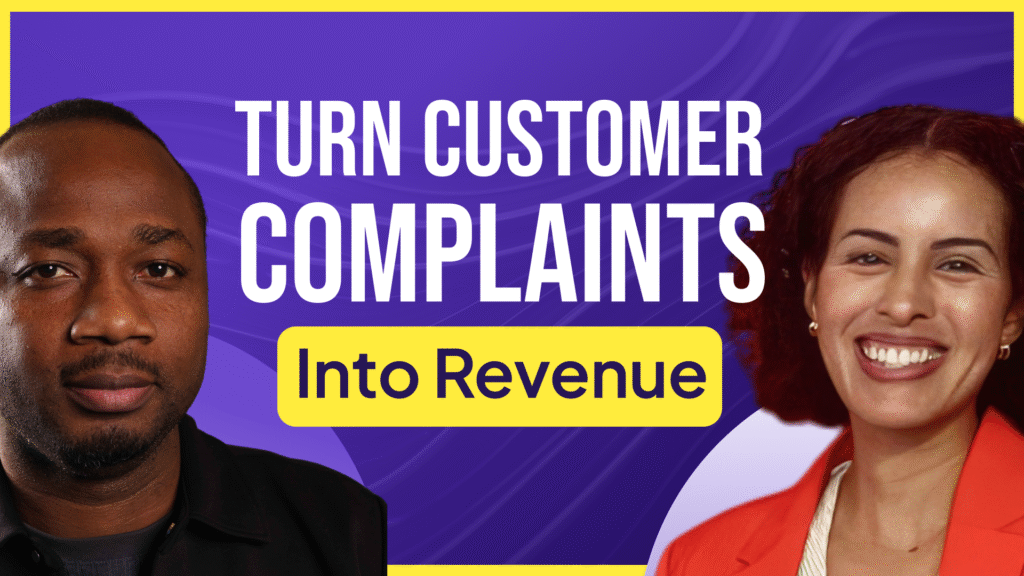
Before you introduce a new process, launch a tool, or rework your onboarding playbook, ask this: Have you listened to your customers deeply enough to lead meaningful change? In this conversation with Sandra Cruz (ex LinkedIn, Docusign), we unpack what it actually takes to lead change through the lens of customer conversations. Not surface level feedback, but urgency, emotion, and real business value. Here are the key takeaways: 1. Change Doesn’t Start with Process. It Starts with People. Change leadership isn’t just about frameworks, it’s about trust. Sandra combines formal project management with human psychology to unlock transformation. That means understanding what motivates teams to change, and modeling it yourself. She shared an example: when her team piloted Microsoft Copilot internally, she volunteered to be in the early group—using it, failing with it, learning from it. Only then did she advocate for wider adoption. Because leadership isn’t telling. It’s showing. 2. Customer Conversations Are Your Fastest Path to Influence Sandra led a Voice of the Customer program across two products. She didn’t just collect feedback—she turned it into data points, patterns, and business cases. Instead of “this customer is frustrated,” it became: “Four of our top five customers say this feature is blocking expansion. Reducing onboarding time by 2 weeks could unlock $4M in potential growth.” Urgency and impact, not just emotion. 3. Emotion and Context Shouldn’t Get Lost in Translation A quote, a pause, a sense of frustration, these signals are often lost when feedback gets reduced to Jira tickets or OKRs. Sandra builds systems that keep context alive: Start every QBR by asking: “What’s most pressing for you right now?” Pay attention to behavior, not just product usage, but email responsiveness, overdue payments, and tone. Get cross functional teams to hear customer voices directly, not filtered through summaries. Context creates clarity. And clarity drives action. 4. The Real Risk? Only Listening to Validate Your Assumptions Sandra warns against the trap of only hearing what confirms your roadmap. To avoid this: Get product and support teams to join real calls. Show trends over time, not isolated quotes. Share the good alongside the gaps, celebrating progress builds trust and momentum. Listening isn’t just about confirming ideas. It’s about evolving them. Final ThoughtChange leadership isn’t a role. It’s a responsibility. And it starts with how you listen, and what you do next. Watch the full conversation here Want more practical insights like this? The Insight Frontier is where we decode conversations and drop signals that move the needle. Subscribe on YouTube to catch the next drop.
Sample Call Center Quality Monitoring Form: A Guide
[vc_row type=”in_container” full_screen_row_position=”middle” column_margin=”default” column_direction=”default” column_direction_tablet=”default” column_direction_phone=”default” scene_position=”center” text_color=”dark” text_align=”left” row_border_radius=”none” row_border_radius_applies=”bg” overflow=”visible” overlay_strength=”0.3″ gradient_direction=”left_to_right” shape_divider_position=”bottom” bg_image_animation=”none”][vc_column column_padding=”no-extra-padding” column_padding_tablet=”inherit” column_padding_phone=”inherit” column_padding_position=”all” column_element_direction_desktop=”default” column_element_spacing=”default” desktop_text_alignment=”default” tablet_text_alignment=”default” phone_text_alignment=”default” background_color_opacity=”1″ background_hover_color_opacity=”1″ column_backdrop_filter=”none” column_shadow=”none” column_border_radius=”none” column_link_target=”_self” column_position=”default” gradient_direction=”left_to_right” overlay_strength=”0.3″ width=”1/1″ tablet_width_inherit=”default” animation_type=”default” bg_image_animation=”none” border_type=”simple” column_border_width=”none” column_border_style=”solid”][vc_column_text]The Call Center Quality Monitoring Form is more than just a checklist; it’s the compass guiding your customer service ship. In the bustling world of customer interactions, every phone call, chat, or email presents a unique opportunity – an opportunity to build loyalty, efficiently resolve issues, and significantly enhance your brand’s reputation. But how do you consistently seize these opportunities and ensure every interaction not only meets but exceeds expectations? This powerful tool is the backbone of a thriving call center, transforming raw customer interactions into actionable insights and driving continuous improvement across the board. Why Every Call Center Needs a Robust Call Center Quality Monitoring Form A well-crafted Call Center Quality Monitoring Form serves as that compass, guiding your agents toward excellence and ensuring every customer interaction is a positive one. Elevating Customer Satisfaction (CSAT): By pinpointing areas where interactions shine or falter, the form directly impacts how customers perceive your service. Happy customers are loyal customers. Boosting Agent Performance: It provides clear, objective feedback, highlighting strengths and identifying areas for growth, empowering agents to hone their skills. Uncovering Training Needs: Patterns in feedback reveal common challenges, allowing you to develop targeted training programs that address systemic issues. Safeguarding Brand Reputation: Consistent, high-quality service builds trust and reinforces a positive brand image in the market. Ensuring Compliance and Adherence: In regulated industries, the form is crucial for verifying that agents adhere to all necessary policies and legal requirements, mitigating risk. Ultimately, the objective of the Call Center Quality Monitoring Form is to standardize evaluation, provide objective feedback, track performance trends, and facilitate effective coaching and development for your entire team. This guide is crafted for call center managers, supervisors, QA specialists, and training departments committed to achieving service excellence. Key Elements of a Call Center Quality Monitoring Form A truly effective Call Center Quality Monitoring Form is meticulously structured, capturing all the nuances of a customer interaction. Here’s a breakdown of its key components: 1. General Information: Laying the Foundation This section captures the basics, providing context for each evaluation: Agent Name/ID Date of Call Call ID/Reference Number Evaluator Name/ID Call Type (e.g., Sales, Support, Technical Support) Call Channel (e.g., Inbound Voice, Outbound Voice, Chat, Email) Customer Name/ID (optional, for internal reference) 2. Evaluation Criteria Categories: These categories break down the interaction into measurable segments, allowing for granular analysis: Opening & Closing: Did the agent provide a professional greeting and clear identification? Were security procedures followed? Was the call concluded professionally with a clear summary? Communication Skills: This assesses active listening, clarity, empathy, tone of voice, appropriate language (avoiding jargon), and for written channels, grammar and punctuation. Problem Resolution & Product Knowledge: Was accurate information provided? Was troubleshooting effective? Were attempts made at One-Call Resolution (OCR)? Were upsell/cross-sell opportunities leveraged where applicable? Was adherence to procedures and scripts maintained? Customer Experience & Soft Skills: This delves into the human element: patience, professionalism, rapport building, managing difficult situations, and taking ownership of the issue. System & Process Adherence: Did the agent navigate systems efficiently? Was data entry accurate? Were Average Handle Time (AHT) guidelines met? Was compliance with internal policies and external regulations upheld? Compliance & Legal: For sensitive industries, this ensures adherence to disclosure requirements, data privacy regulations (e.g., GDPR, CCPA), and specific regulatory mandates. 3. Scoring Mechanism: Quantifying Quality on the Call Center Quality Monitoring Form Consistency in scoring is paramount. Options include: Rating Scales: Numerical (e.g., 1-5), binary (Pass/Fail, Yes/No), or percentage-based. Weighted Scoring: Assigning greater importance to critical criteria (e.g., problem resolution might carry more weight than greeting). Total Score Calculation: A clear method for deriving an overall quality score. 4. Feedback and Coaching Section: The Growth Engine of the Call Center Quality Monitoring Form This is where insights translate into development: Strengths Noted: Acknowledging positive behaviors reinforces good practices. Areas for Improvement: Clearly articulated areas for development. Specific Examples: Concrete instances and timestamps from the interaction for context. Action Plan/Coaching Points: Measurable steps the agent can take to improve. Agent Acknowledgment/Signature: Encourages agent ownership and buy-in. 5. Overall Call Summary/Comments: Holistic View A space for general observations, trend identification, and recommendations for further training or follow-up. Crafting Your Ideal Call Center Quality Monitoring Form Designing a Call Center Quality Monitoring Form isn’t a one-size-fits-all endeavor. It requires careful thought and collaboration. 1. Defining Your Quality Standards and Metrics: Begin by aligning your quality standards with your overarching business goals, such as First Call Resolution (FCR) targets or CSAT scores. Involve agents, supervisors, and management in this process to foster a sense of shared ownership. 2. Customization vs. Standard Templates: While templates offer a starting point, tailoring your form to your specific industry, call types (e.g., sales vs. support), and unique customer journeys is crucial for relevance and effectiveness. 3. Formatting and Layout: Prioritize user-friendliness. A clear, intuitive layout with ample space for comments will encourage comprehensive evaluations. Consider digital solutions for easier data capture and analysis. 4. Pilot Testing and Iteration: Before full deployment, pilot test the Call Center Quality Monitoring Form with a small group of evaluators and agents. Gather feedback, refine criteria, and ensure clarity and fairness. This iterative process is vital for optimizing the form’s effectiveness. Seamlessly Implementing Your Call Center Quality Monitoring Form A well-designed form is only as good as its implementation. A structured approach ensures consistent and impactful monitoring. 1. Training Evaluators: Consistency is key. Train your evaluators thoroughly on how to use the Call Center Quality Monitoring Form, ensuring they understand each criterion and can apply scoring objectively. Develop their active listening skills and guide them on delivering constructive, empathetic feedback. Regular calibration sessions among evaluators are essential to maintain alignment. 2. Establishing a Monitoring Cadence: Determine the frequency and volume of evaluations (e.g., 3-5 calls
Your Blueprint for Building a Powerful Call Center Quality Scorecard Template
[vc_row type=”in_container” full_screen_row_position=”middle” column_margin=”default” column_direction=”default” column_direction_tablet=”default” column_direction_phone=”default” scene_position=”center” text_color=”dark” text_align=”left” row_border_radius=”none” row_border_radius_applies=”bg” overflow=”visible” overlay_strength=”0.3″ gradient_direction=”left_to_right” shape_divider_position=”bottom” bg_image_animation=”none”][vc_column column_padding=”no-extra-padding” column_padding_tablet=”inherit” column_padding_phone=”inherit” column_padding_position=”all” column_element_direction_desktop=”default” column_element_spacing=”default” desktop_text_alignment=”default” tablet_text_alignment=”default” phone_text_alignment=”default” background_color_opacity=”1″ background_hover_color_opacity=”1″ column_backdrop_filter=”none” column_shadow=”none” column_border_radius=”none” column_link_target=”_self” column_position=”default” gradient_direction=”left_to_right” overlay_strength=”0.3″ width=”1/1″ tablet_width_inherit=”default” animation_type=”default” bg_image_animation=”none” border_type=”simple” column_border_width=”none” column_border_style=”solid”][vc_column_text]In today’s customer-centric world, a call center quality assurance scorecard is essential for measuring and improving agent performance while ensuring excellent customer experiences. Building a tailored scorecard template helps capture the most relevant metrics to track service quality, adherence to protocol, and operational goals all critical for call center success. This comprehensive guide will demystify the process, walking you through every phase of building a Call Center Quality Scorecard Template – from initial strategic planning to design, implementation, and continuous improvement. Whether you’re a call center manager, QA specialist, or a training lead, get ready to craft a scorecard that truly drives performance. Phase 1: Strategic Planning – Laying the Foundation for Your Call Center Quality Scorecard Template This initial phase is all about setting the right direction and ensuring your Call Center Quality Scorecard Template is aligned with your business goals before you even start building it. Define Objectives: Clearly state what you want your QA program to achieve, such as improving CSAT, boosting FCR, or ensuring compliance. Engage Stakeholders: Get buy-in and input from agents, supervisors, training teams, and leadership to ensure the scorecard is relevant and accepted. Align with Business Goals: Connect your scorecard’s purpose directly to broader company objectives and existing Key Performance Indicators (KPIs). Determine Scope: Identify which call types (e.g., sales, support) and communication channels (e.g., phone, chat) your scorecard will cover. Plan Monitoring: Decide how often you’ll evaluate calls and your strategy for selecting which calls to review (e.g., random, targeted). Phase 2: Core Components – What to Measure in Your Call Center Quality Scorecard Template This is the heart of your scorecard: defining the specific behaviors and elements you’ll evaluate. A well-structured Call Center Quality Scorecard Template will typically include essential administrative sections, key evaluation categories with precise criteria, a clear scoring methodology, and dedicated sections for feedback and overall summaries. A. Essential Administrative Sections: These fields provide crucial context for each evaluation. Include call information like the date, time, unique Call ID/Reference Number, duration, type, and channel. Capture agent information such as their name or ID and team, along with evaluator details like their name or ID and the date of evaluation. Optionally, you can add customer information for internal context, like their name or ID, or even sentiment data if available. B. Key Evaluation Categories and Criteria: Break down the interaction into logical categories with specific, measurable criteria. For each, you’ll need a scoring mechanism and space for comments. Call Opening & Professionalism: This section evaluates how the interaction begins, covering adherence to professional greetings, proper identity verification and security protocol adherence, and whether the agent conveys a positive first impression and enthusiasm. Communication Skills: Assess how effectively the agent communicates, including active listening (e.g., paraphrasing, asking clarifying questions), clarity and conciseness (e.g., avoiding jargon), empathy and tone of voice (e.g., matching customer’s mood), and professional language. For written channels, ensure you include grammar, spelling, and punctuation. Problem Resolution & Product Knowledge: This category measures the agent’s ability to solve issues. Key criteria include providing accurate information, effective troubleshooting and problem diagnosis, efforts towards achieving One-Call Resolution (FCR), demonstrating comprehensive product or service knowledge, and offering appropriate solutions or options. Customer Experience & Soft Skills: Focus on the human element of the interaction. Evaluate the agent’s ability to build rapport and personalize the experience, demonstrate patience and professionalism (especially with difficult customers), take ownership of the issue, effectively manage call control and flow, and set clear expectations for next steps. Process Adherence & Compliance: Ensure operational consistency and legal adherence. This covers adherence to scripts or call flow guidelines (where applicable), accurate data entry and system documentation, proper use of tools and systems, regulatory compliance (eg., disclosures, data privacy rules), and adherence to Average Handle Time (AHT) guidelines, balanced with quality. Call Closing: Evaluate how the interaction concludes. Criteria include providing an effective call summary or recap, outlining clear next steps and follow-up actions, a professional closing and thank you, and offering any additional assistance. C. Scoring Methodology: Choose a system that is easy to understand and consistently applied. You can use binary scales (Yes/No/N/A), numerical scales (e.g., 1-3, 1-5, 1-10), or percentage-based scoring. Consider weighted scoring to assign higher importance to critical criteria like compliance or problem resolution. Some scorecards also include automatic failures for non-negotiable criteria (e.g., a major compliance breach could automatically fail the entire call). Ensure there’s a clear formula for calculating the overall call score. D. Feedback and Coaching Section: This is where the scorecard becomes a development tool. Include sections for noting specific strengths, clearly articulating areas for improvement with specific examples and timestamps, outlining recommended coaching points or an action plan, and providing space for agent comments or acknowledgment. E. Overall Call Summary/Impression: Conclude with a section for the evaluator’s general comments on the call’s overall effectiveness, any recurring themes or unique situations, and recommendations for specific follow-up actions like additional training or escalation. Phase 3: Design & Development – Building Your Call Center Quality Scorecard Template With your content defined, it’s time to choose your platform and design your template for optimal usability. A. Choosing the Right Format/Platform: You have several options. Spreadsheets like Excel or Google Sheets are ideal for small to medium-sized centers due to their cost-effectiveness, flexibility, and familiarity. However, be mindful of scalability challenges, manual data entry, and potential version control issues without cloud solutions. Dedicated QA Software is best for larger operations or those needing advanced automation, analytics, and CRM integrations, though it comes with a higher cost. Some CRM or Helpdesk platforms offer basic QA modules, which can be convenient for integrated data but might lack the depth of specialized tools. B. Layout and User Experience (UX) Design Principles: A well-designed Call Center Quality
3 Questions to Ask in Sales Calls to Uncover Objections Early
If you’ve spent any time in sales, you know objections are part of the game. But what separates top performing sales reps from the rest isn’t just how they handle objections, it’s how early they uncover them. The earlier you identify potential barriers, the more time you have to address concerns, tailor your pitch, and build trust. Ignoring or missing these early signals often leads to lost deals, wasted time, and frustrated teams. In this article, we’ll explore three key questions that can help sales reps uncover objections early in sales calls, so your team can respond smarter and close more deals. Why Early Objection Discovery Matters Objections aren’t just “no’s” waiting to happen. They’re signals. They reveal where your prospect’s concerns lie, budget, timing, fit, trust, or understanding. Uncovering these early means you can: Personalize your solution Adapt your messaging Build stronger relationships Avoid surprises late in the sales cycle Missing these signals, on the other hand, can create bottlenecks down the line, longer sales cycles, unhappy prospects, and deals that stall unexpectedly. Top performing sales organizations build objection discovery into their DNA. They don’t wait until the end of a process to face resistance; they anticipate and address it at the start. The 3 Questions That Uncover Objections Early 1. “What challenges are you currently facing with [problem area]?” This question invites the prospect to share their pain points upfront. It sets the stage for a conversation rooted in understanding their true needs. By framing it around their current challenges, you avoid a generic product pitch. Instead, you open a dialogue that encourages honesty and specificity. Example: A software sales rep might ask, “What challenges are you currently facing with your customer support tools?” Instead of launching into product features, they listen carefully to pain points like slow response times or lack of integration. What to listen for: Hesitations or vague answers may hint at unspoken objections Specific challenges that you can link directly to your solution Emotional cues that reveal urgency or frustration Coaching tip: Encourage reps to dig deeper if the answer is surface-level. Follow up with “Can you tell me more about that?” or “How is that impacting your day-to-day?” The goal is to get beyond generic answers to real issues. 2. “Have you tried any solutions before? What worked or didn’t work?” This question uncovers past experiences that shape the prospect’s mindset and expectations. It’s a subtle way to expose objections related to trust, skepticism, or previous disappointments. Example: A rep hears, “We tried XYZ software last year but it was too complicated.” This signals that the prospect may worry about usability, training time, or hidden costs. What to listen for: Negative experiences that may create resistance Features or benefits that the prospect values or doubts Gaps where your offering can uniquely help Coaching tip: Train reps to validate the prospect’s past experiences, showing empathy, before explaining how your solution differs. For example: “I understand how frustrating that must have been. Our tool was designed to be intuitive and we offer dedicated onboarding support.” 3. “What concerns do you have about moving forward with a solution like this?” This direct question invites prospects to voice any objections early, in their own words. It’s a powerful way to build transparency and address issues head-on. Example: A prospect might say, “I’m worried about how this will integrate with our existing systems,” or “Our budget is tight this quarter.” What to listen for: Budget or timing concerns Stakeholder approval challenges Integration or technical worries Coaching tip: Remind reps that objections are opportunities, not obstacles. They should listen carefully, acknowledge concerns, then respond thoughtfully with relevant information or reassurance. Coaching Your Team to Use These Questions Effectively Mastering early objection discovery takes practice. Here are some ways to coach your team for success: Roleplay scenarios: Practice these questions in simulated calls, emphasizing tone and follow-up probes. Make reps comfortable asking these questions naturally, not like an interrogation. Review call recordings: Focus specifically on how reps ask these questions and handle the answers. Share examples of both effective and ineffective approaches. Use call scoring: Include these questions as key criteria in your quality assurance rubric. Evaluate not just if they asked the questions, but how well they responded. Encourage reflection: After calls, ask reps how these questions helped them uncover concerns and how they adjusted their approach. Common Pitfalls and How to Avoid Them Even with these powerful questions, mistakes happen. Here are some common pitfalls to watch out for: Asking too late: Waiting until the final call or proposal stage to dig for objections makes them harder to handle. Being too pushy: Asking these questions should invite honest dialogue, not pressure prospects into confessing objections. Ignoring subtle cues: Sometimes prospects hint at objections without stating them clearly. Teach reps to read tone, pauses, or hesitation as signals. Failing to follow up: Asking questions is just step one. Reps must actively listen, acknowledge concerns, and adjust their approach accordingly. The Tangible Impact of Early Objection Discovery Teams that consistently uncover objections early enjoy: Shorter sales cycles: Clearing doubts upfront speeds decision-making. Higher win rates: Tailored responses resonate better and reduce deal churn. Stronger relationships: Transparency builds trust and rapport. More efficient coaching: Real-time objections become teachable moments. Final Thought Objections aren’t roadblocks; they’re signposts. Your job as a sales leader or rep is to ask the right questions early to find them, understand them, and use them to your advantage. By consistently using these 3 questions, you turn objections from surprises into stepping stones , creating smoother sales conversations and better results. Uncovering objections early requires not just the right questions, but also efficient ways to capture and analyze what prospects say in calls. That’s where tools like Insight7’s evaluation come in. Insight7 automates call summarization and highlights key moments, including objections and concerns, so your sales team doesn’t miss a beat. It enables you to review, score, and coach with data-backed clarity, speeding up decision making and
3 Questions to Ask in Onboarding Calls to Ensure Customer Success
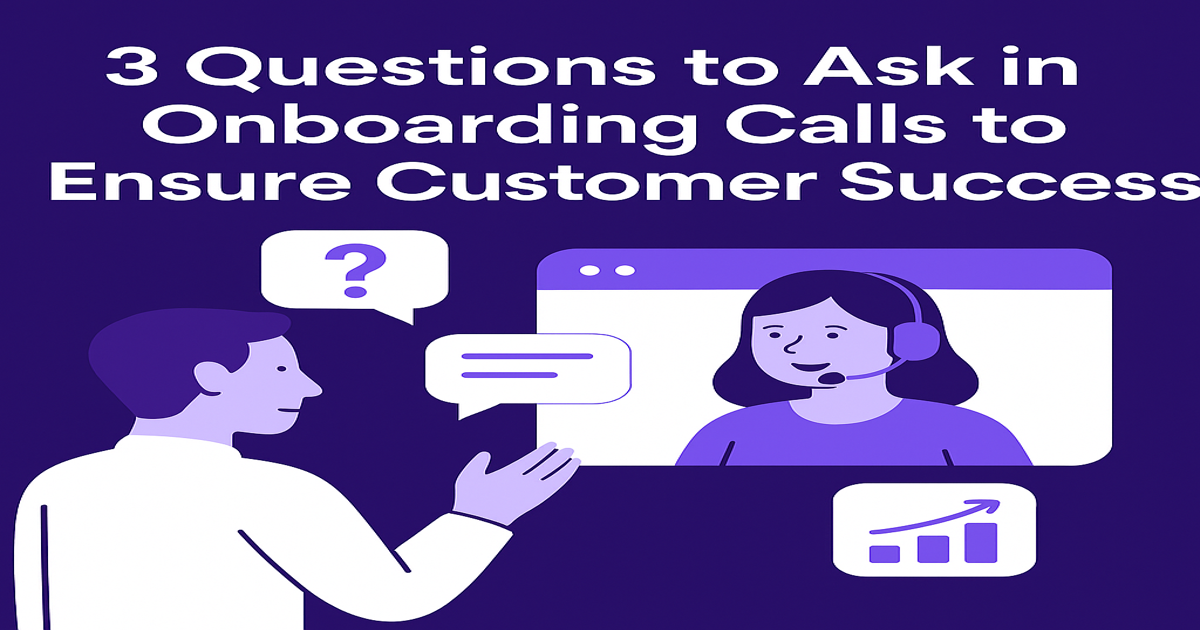
Getting new customers onboarded isn’t just a routine task, it’s a critical moment that sets the tone for your entire relationship. The onboarding phase shapes whether customers find value quickly, build trust, and stick around for the long haul. However, many onboarding experiences fail because they focus too much on product delivery and not enough on understanding the customer’s unique needs, goals, and potential challenges. To shift onboarding from a transactional handoff to a strategic partnership, it’s essential to ask the right questions early on. These questions uncover insights that let you customize the journey, proactively solve problems, and build alignment across teams. In this story, we’ll break down three essential questions every onboarding call should include, and explore how these questions can transform your onboarding outcomes. Why Onboarding Calls Are More Important Than Ever In subscription models and SaaS businesses, customer retention drives growth. The cost to acquire a new customer can be 5 to 25 times higher than retaining one. That means onboarding is not just a “nice to have”, it’s mission-critical. An effective onboarding call achieves more than just setup and training. It clarifies expectations, uncovers hidden risks, and builds rapport. Done well, it reduces friction and accelerates time-to-value, boosting adoption and customer satisfaction. Unfortunately, many onboarding calls fall short. Teams rush through scripts, overlook deeper discovery, or treat the call as a product demo. The result? Customers get lost, disengage, and churn. Question 1: “What does success look like for you in the first 30, 60, and 90 days?” This question is the foundation of a customer-centric onboarding approach. Instead of assuming you know what success means, you invite the customer to define it in their own terms. What goals do they want to hit in the short term? Are they looking to onboard 50 users? Reduce manual processes? See measurable ROI? These specifics give your team a target to aim for and metrics to measure against. Without this clarity, onboarding becomes a generic process with unclear outcomes. Goals provide a roadmap, prioritize resources, and align expectations. How to use the answers: Document these success milestones and revisit them in future check-ins. Align your onboarding tasks and training around these goals. Share progress regularly to keep momentum. Question 2: “What challenges or obstacles do you foresee that might slow down your progress?” Every onboarding journey encounters roadblocks. Some customers have technical integration concerns, others face internal resistance or resource shortages. By proactively asking about potential challenges, you surface issues before they cause delays. This builds trust and signals that you’re invested in helping customers succeed. It also lets you tailor your support, whether that means extra technical assistance, customized training, or managing stakeholder expectations. How to use the answers: Develop mitigation plans for identified challenges. Assign specialists or resources early. Offer additional content or training focused on known pain points. Schedule more frequent check-ins if needed. Question 3: “Who else will be involved in this project, and how can we best collaborate with them?” Onboarding involves more than the primary contact. Teams usually include decision-makers, technical leads, end-users, and sometimes external partners. Each stakeholder may have different needs and communication preferences. Understanding who’s involved helps prevent communication breakdowns, ensures everyone gets the information they need, and aligns your team’s engagement style. How to use the answers: Build a stakeholder map. Tailor communication cadence and channels for each group. Set expectations on updates, meetings, and training sessions. Turning Questions into a Customer Success Playbook Asking these questions is only the first step. The real impact comes from turning the insights into action. Create a Shared Success Plan: Capture goals, challenges, and team roles in a living document accessible to your team and the customer. Tailor Onboarding Content: Customize training and resources based on customer needs and obstacles. Set Milestones and Follow-ups: Schedule regular check-ins aligned with customer timelines and goals. Engage Stakeholders: Include key players in demos, training, and progress reviews. This approach transforms onboarding from a checklist to a personalized, strategic experience, reducing churn and accelerating adoption. Common Pitfalls to Avoid Treating onboarding as a one-way product demo Skipping or rushing discovery questions Assuming all customers have identical needs Failing to document and act on insights Neglecting communication with the wider stakeholder group Avoiding these ensures you don’t lose the opportunity to build a strong foundation for customer success. How Insight7 Unlocks Next-Level Onboarding Insight7’s evaluation platform is built to supercharge this customer-centric onboarding approach. Here’s how: Automated Call Summaries and Highlighting: Insight7 automatically captures key moments in onboarding calls, goals discussed, potential challenges raised, stakeholder mentions, making it easier to document and revisit crucial insights. No more manual note-taking or missed details. Centralized Success Plans: Your team can build shared success plans within Insight7, linking call insights directly to action items and follow-ups. This living document keeps everyone aligned and accountable. Stakeholder Mapping and Communication Tracking: Insight7 allows you to log stakeholders, preferred communication channels, and engagement history. This creates a 360-degree view of collaboration dynamics, ensuring no one falls through the cracks. Proactive Risk Alerts: Using AI-driven analysis, Insight7 can detect hesitation or objection signals during calls, alerting your team to potential onboarding risks early, so you can intervene before problems escalate. Data Driven Coaching: With detailed call evaluations and scoring, managers can coach onboarding reps to improve discovery questioning and customer engagement—refining the process continuously. By integrating these capabilities, Insight7 transforms onboarding calls from basic check-ins into strategic, insight-rich conversations. This leads to faster time-to-value for customers, stronger relationships, and ultimately, reduced churn. Final Thought Onboarding calls are a critical moment to set the tone for success. The questions you ask—and how you act on the answers, can mean the difference between a frustrated, lost customer and a loyal advocate. By asking what success means, uncovering obstacles early, and mapping collaboration, your team gains the insights needed to personalize and accelerate onboarding. Coupled with tools like Insight7, you get the automation and analytics needed to capture these insights reliably, coach your team
3 Questions to Ask in Sales Calls to Uncover Objections Early
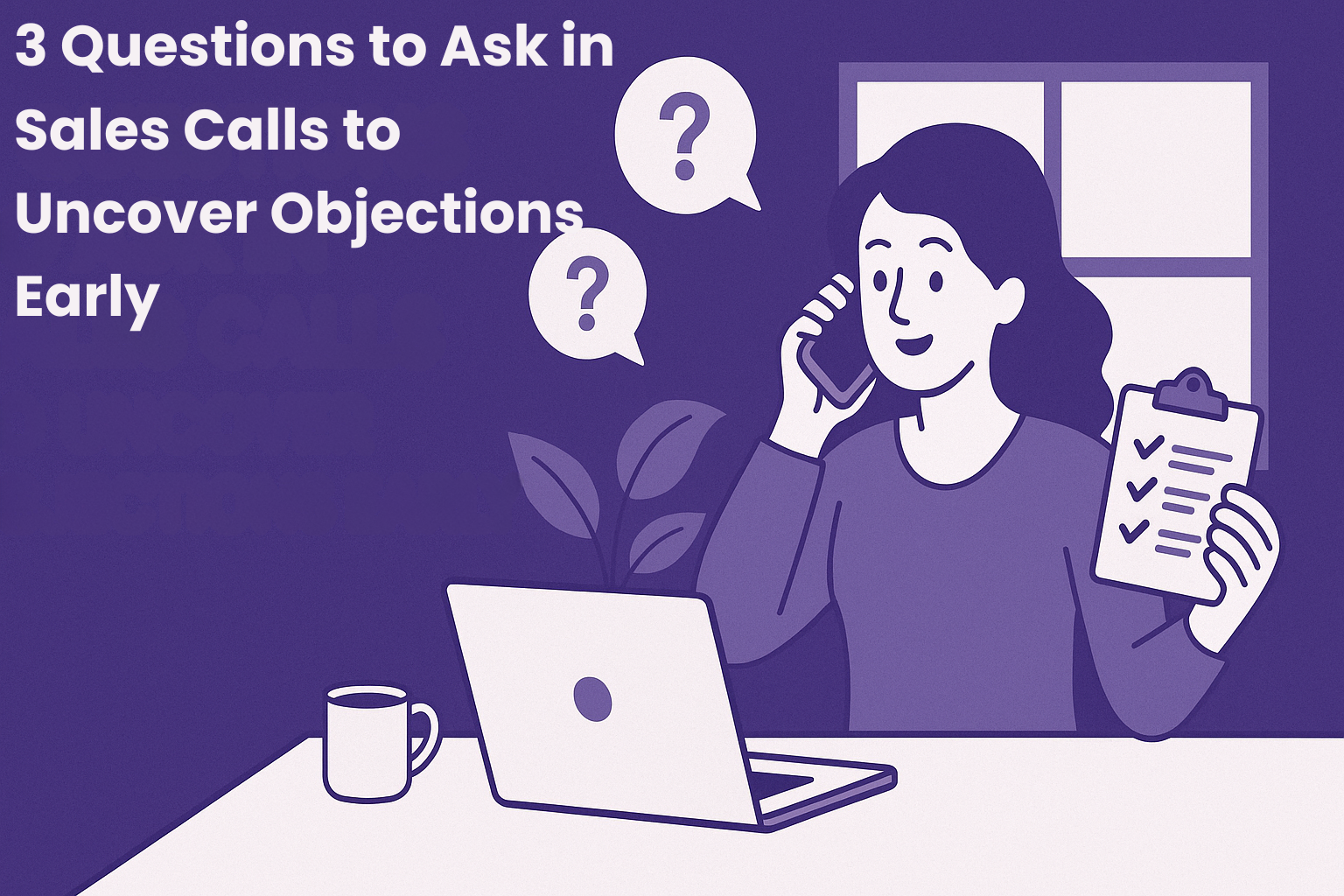
If you’ve spent any time in sales, you know objections are part of the game. But what separates top performing sales reps from the rest isn’t just how they handle objections, it’s how early they uncover them. The earlier you identify potential barriers, the more time you have to address concerns, tailor your pitch, and build trust. Ignoring or missing these early signals often leads to lost deals, wasted time, and frustrated teams. In this article, we’ll explore three key questions that can help sales reps uncover objections early in sales calls, so your team can respond smarter and close more deals. Why Early Objection Discovery Matters Objections aren’t just “no’s” waiting to happen. They’re signals. They reveal where your prospect’s concerns lie, budget, timing, fit, trust, or understanding. Uncovering these early means you can: Personalize your solution Adapt your messaging Build stronger relationships Avoid surprises late in the sales cycle Missing these signals, on the other hand, can create bottlenecks down the line, longer sales cycles, unhappy prospects, and deals that stall unexpectedly. Top performing sales organizations build objection discovery into their DNA. They don’t wait until the end of a process to face resistance; they anticipate and address it at the start. The 3 Questions That Uncover Objections Early 1. “What challenges are you currently facing with [problem area]?” This question invites the prospect to share their pain points upfront. It sets the stage for a conversation rooted in understanding their true needs. By framing it around their current challenges, you avoid a generic product pitch. Instead, you open a dialogue that encourages honesty and specificity. Example: A software sales rep might ask, “What challenges are you currently facing with your customer support tools?” Instead of launching into product features, they listen carefully to pain points like slow response times or lack of integration. What to listen for: Hesitations or vague answers may hint at unspoken objections Specific challenges that you can link directly to your solution Emotional cues that reveal urgency or frustration Coaching tip: Encourage reps to dig deeper if the answer is surface-level. Follow up with “Can you tell me more about that?” or “How is that impacting your day-to-day?” The goal is to get beyond generic answers to real issues. 2. “Have you tried any solutions before? What worked or didn’t work?” This question uncovers past experiences that shape the prospect’s mindset and expectations. It’s a subtle way to expose objections related to trust, skepticism, or previous disappointments. Example: A rep hears, “We tried XYZ software last year but it was too complicated.” This signals that the prospect may worry about usability, training time, or hidden costs. What to listen for: Negative experiences that may create resistance Features or benefits that the prospect values or doubts Gaps where your offering can uniquely help Coaching tip: Train reps to validate the prospect’s past experiences, showing empathy, before explaining how your solution differs. For example: “I understand how frustrating that must have been. Our tool was designed to be intuitive and we offer dedicated onboarding support.” 3. “What concerns do you have about moving forward with a solution like this?” This direct question invites prospects to voice any objections early, in their own words. It’s a powerful way to build transparency and address issues head-on. Example: A prospect might say, “I’m worried about how this will integrate with our existing systems,” or “Our budget is tight this quarter.” What to listen for: Budget or timing concerns Stakeholder approval challenges Integration or technical worries Coaching tip: Remind reps that objections are opportunities, not obstacles. They should listen carefully, acknowledge concerns, then respond thoughtfully with relevant information or reassurance. Coaching Your Team to Use These Questions Effectively Mastering early objection discovery takes practice. Here are some ways to coach your team for success: Roleplay scenarios: Practice these questions in simulated calls, emphasizing tone and follow-up probes. Make reps comfortable asking these questions naturally, not like an interrogation. Review call recordings: Focus specifically on how reps ask these questions and handle the answers. Share examples of both effective and ineffective approaches. Use call scoring: Include these questions as key criteria in your quality assurance rubric. Evaluate not just if they asked the questions, but how well they responded. Encourage reflection: After calls, ask reps how these questions helped them uncover concerns and how they adjusted their approach. Common Pitfalls and How to Avoid Them Even with these powerful questions, mistakes happen. Here are some common pitfalls to watch out for: Asking too late: Waiting until the final call or proposal stage to dig for objections makes them harder to handle. Being too pushy: Asking these questions should invite honest dialogue, not pressure prospects into confessing objections. Ignoring subtle cues: Sometimes prospects hint at objections without stating them clearly. Teach reps to read tone, pauses, or hesitation as signals. Failing to follow up: Asking questions is just step one. Reps must actively listen, acknowledge concerns, and adjust their approach accordingly. The Tangible Impact of Early Objection Discovery Teams that consistently uncover objections early enjoy: Shorter sales cycles: Clearing doubts upfront speeds decision-making. Higher win rates: Tailored responses resonate better and reduce deal churn. Stronger relationships: Transparency builds trust and rapport. More efficient coaching: Real-time objections become teachable moments. Final Thought Objections aren’t roadblocks; they’re signposts. Your job as a sales leader or rep is to ask the right questions early to find them, understand them, and use them to your advantage. By consistently using these 3 questions, you turn objections from surprises into stepping stones , creating smoother sales conversations and better results. Uncovering objections early requires not just the right questions, but also efficient ways to capture and analyze what prospects say in calls. That’s where tools like Insight7’s evaluation come in. Insight7 automates call summarization and highlights key moments, including objections and concerns, so your sales team doesn’t miss a beat. It enables you to review, score, and coach with data-backed clarity, speeding up decision making and
Mastering the 15 Minute Client Intake Call
In the fast paced world of client services, the initial intake call is more than just a formality, it’s a pivotal moment that can set the tone for the entire partnership. A well structured 15 minute call not only clarifies client needs but also builds trust and establishes a strong foundation for collaboration. Begin with Empathy and Active Listening Start the conversation by acknowledging the client’s time and expressing genuine interest in their needs. Active listening is crucial; it demonstrates respect and helps in understanding the client’s concerns without making assumptions. Define the Purpose and Set Expectations Clearly articulate the objectives of the call. Setting expectations ensures that both parties are aligned and that the conversation remains focused and productive. Gather Essential Information Efficiently Utilize a concise intake form or questionnaire to collect necessary details about the client’s business, challenges, and goals. This approach streamlines the process and allows for a more in depth discussion during the call . Identify Pain Points and Desired Outcomes Engage the client in a dialogue about their current challenges and what success looks like for them. Understanding these aspects helps in tailoring solutions that are both relevant and impactful . Establish Rapport and Build Trust Share relevant experiences or insights that resonate with the client’s situation. Demonstrating understanding and expertise fosters a sense of partnership and confidence . Conclude with Clear Next Steps Summarize the key points discussed and outline the subsequent actions. Providing a roadmap for the next steps reinforces commitment and keeps the momentum going . Clarity doesn’t have to take hours. With the right intake structure, you can get to the heart of what your client needs in just 15 minutes – saving time, building trust, and setting every project up for success. If you’re tired of digging through messy transcripts and ready to go from conversation to clarity at scale, Insight7 makes it ridiculously easy to turn customer conversations into clear, actionable insights, fast.
