




User Testing Visualization is a critical component in understanding user feedback and improving product experiences. As organizations increasingly rely on data from user testing interviews, the ability to visualize this data effectively becomes paramount. Through visual representation, themes and insights emerge more clearly, enabling teams to make data-driven decisions quickly.
These visualizations transform raw interview data into coherent narratives, highlighting both positive and negative user experiences. When implemented correctly, User Testing Visualization helps stakeholders grasp complex information at a glance, fostering collaboration and informed discussions. Ultimately, investing in effective visualization tools can significantly enhance user research processes, leading to improved designs and better overall user satisfaction.
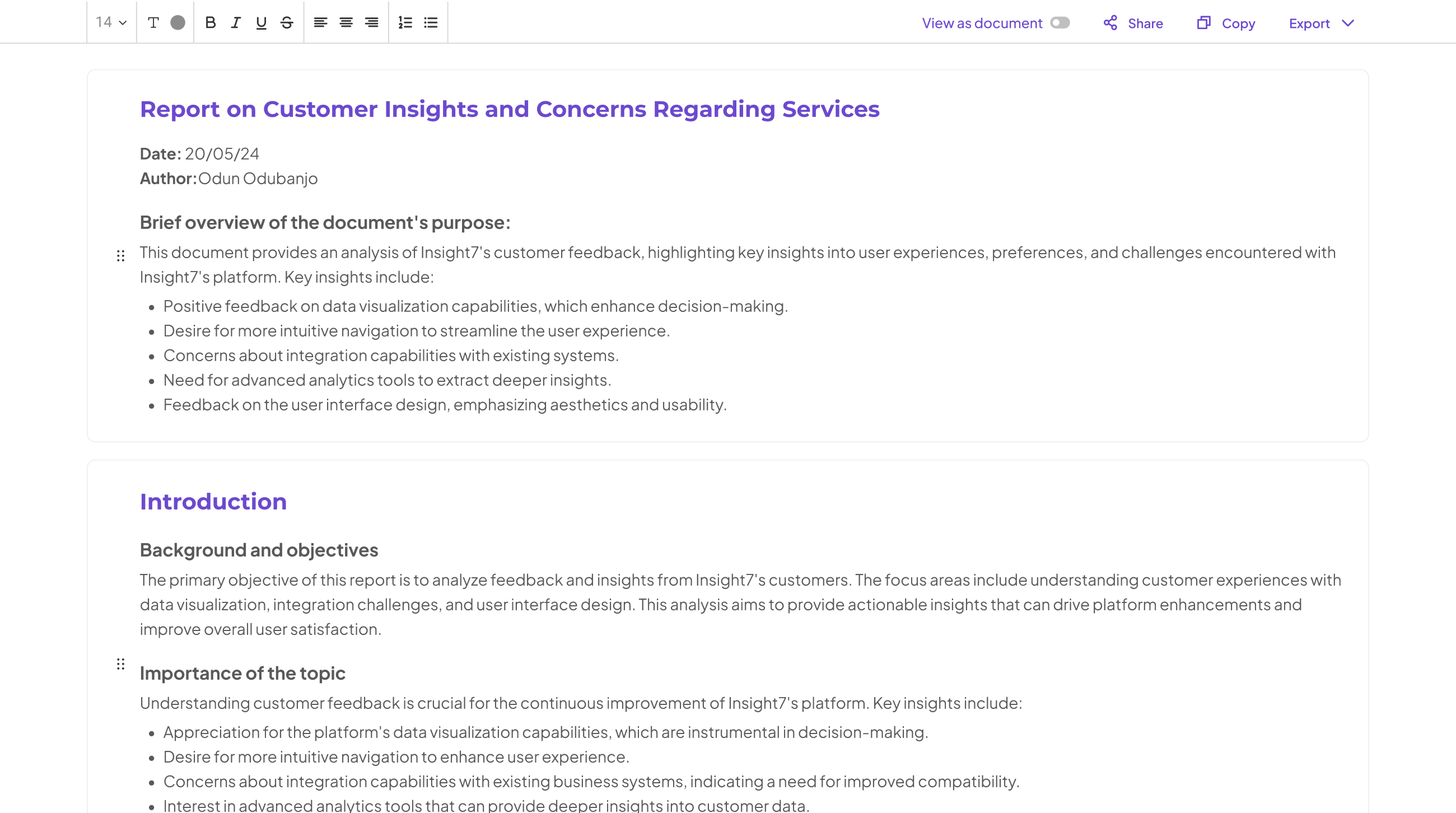
Exploring Top AI Tools for User Testing Visualization
In the realm of user testing visualization, several AI tools stand out for their impressive capabilities. These tools facilitate the effective analysis and representation of user feedback, allowing teams to draw meaningful insights from their data. By employing advanced algorithms, these platforms streamline the process of visualizing complex datasets, enabling seamless understanding for stakeholders.
Exploring these top AI tools reveals how they can transform the visualization of user testing results. For instance, some platforms incorporate features that allow users to generate interactive charts and graphs, making it easier to illustrate trends and patterns from interviews. Others focus on collaborative functionalities, enabling teams to annotate and discuss findings in real-time. By leveraging these tools, organizations can enhance their decision-making processes, ultimately leading to more user-centric products and services.
Insight7: Revolutionizing User Testing Visualization
User Testing Visualization is transforming the way businesses understand customer experiences. The evolution of AI tools has made it increasingly easy to visualize insights from user testing interviews, enabling teams to turn raw data into actionable findings seamlessly. By automating the analysis and visual representation, these tools allow people without specialized training to engage with complex data simply and effectively.
One notable advancement is the ability to compile a variety of user interactions into cohesive reports. This functionality empowers teams to identify common pain points and essential customer desires, facilitating targeted improvements. Moreover, the visualizations are designed to be intuitive, featuring evidence such as customer quotes alongside insights. As user testing visualization continues to advance, it is revolutionizing how organizations can tap into authentic customer feedback to drive innovation and enhance overall user satisfaction.
Other Noteworthy Tools for Effective Visualization
There are several noteworthy tools designed to enhance user testing visualization, each offering unique features to analyze and display data effectively. Dovetail stands out with its integrated approach to analysis and visualization, allowing users to delve into qualitative insights seamlessly. Reframer promotes collaboration, enabling teams to work together on research and visualize findings effectively.
Lookback provides a comprehensive environment for user testing, promoting insightful connections through its rich data representation tools. Optimal Workshop simplifies data visualization, making it easier to interpret user feedback through clear layouts. Finally, Aurelius excels in centralizing insights and creating structured reports, ensuring that critical findings are organized and easily accessible. Leveraging these tools can significantly enhance the quality of user testing visualization, empowering teams to make informed decisions based on data-driven insights.
- Dovetail: Integrated Analysis and Visualization
Integrated analysis and visualization are crucial for extracting actionable insights from user testing interviews. By employing robust tools, you can transform qualitative data into visual representations that highlight patterns and trends. This process reveals the core themes from user feedback, enabling teams to make informed decisions promptly. A visual dashboard can present these findings in a way that is easy to understand, facilitating effective communication among stakeholders.
In this context, Dovetail stands out as an effective platform for user testing visualization. It allows you to consolidate interview transcripts into projects, helping you organize data by time frames, such as monthly analyses. The features enable you to pull specific questions and summarize responses, identifying top pain points statistically. Additionally, generating reports or visualized insights from the data allows for better engagement with the results, fostering a user-centric approach to understanding customer experiences.
- Reframer: Collaborative User Research Platform
The Reframer platform serves as a collaborative user research tool designed specifically for simplifying user testing visualization. It opens up a pathway for teams to gather insights effortlessly from user interviews and research data. Users can easily compile and visualize transcripts from multiple sessions, allowing for a comprehensive analysis of customer feedback.
One standout feature of Reframer is its ability to generate actionable insights from interactions. As users analyze conversations, the platform identifies key themes, pain points, and customer sentiments automatically. This feature streamlines the process of user testing visualization by presenting data in easily digestible formats such as insight cards and summaries, transforming raw data into strategic insights with minimal effort. With Reframer, organizations can democratize access to valuable information, empowering every team member to engage meaningfully with customer insights and enhance decision-making processes.
- Lookback: Comprehensive User Testing Solution
When delving into the Lookback platform, one discovers a comprehensive user testing solution that streamlines the process of gathering valuable insights. The interface is designed for simplicity, making it accessible to all team members, regardless of their technical skills. By engaging with the platform, users can easily transcribe interviews, visualize customer experiences, and identify critical friction points throughout the journey.
The platform excels in visualizing reports from user testing interviews, aggregating insights effectively. It offers a library feature to organize calls and transcripts, allowing for easy access and analysis of conversations. Users can extract key themes and pain points through intuitive search functions. This holistic approach not only democratizes data but also empowers teams to act on user feedback quickly, ensuring decision-makers have the necessary information at their fingertips. In essence, Lookback provides a sophisticated yet user-friendly environment for transforming user testing data into actionable insights.
- Optimal Workshop: Simplified Data Representation
User testing visualization is greatly enhanced through effective data representation. A platform designed for ease of use ensures that any team member can access and utilize insights effortlessly. By simplifying the process, companies can capture valuable information from user interviews without requiring extensive training or technical skills. This democratically empowers all staff members to contribute to insights, leading to more collaborative decision-making.
The system provides a dedicated library for all recordings, transcripts, and insights. It analyzes conversations to identify pain points and user behaviors, presenting the data visually for effortless understanding. Each insight is backed by direct quotes from users, adding context and credibility. By clustering multiple user interactions into projects, teams can analyze data at scale, gaining comprehensive insights that guide product development. Such approaches actively help organizations recognize and address user needs, significantly enhancing the overall user experience.
- Aurelius: Centralized Insights and Reports
Centralized insights and reports play a crucial role in user testing visualization, offering a streamlined approach to analyzing user data. By harnessing the power of a unified platform, teams can efficiently organize and access insights from various testing sessions. This ease of access ensures that everyone in an organization, regardless of technical expertise, can delve into the data and extract actionable insights without feeling overwhelmed.
The platform allows users to categorize interviews, highlight pain points, and summarize key findings in an engaging way. By transforming conversations into structured cards, it becomes easier to visualize user experiences and identify major themes. Additionally, features like keyword summaries provide a quick overview of insights, facilitating informed decision-making. By centralizing this information, teams can enhance their understanding of user behaviors and preferences, ultimately driving better business outcomes in their user testing visualization efforts.
Steps to Create Effective User Testing Visualizations
Creating effective user testing visualization begins with understanding your user data thoroughly. Gather and analyze user feedback, focusing on both positive and negative comments. It’s crucial to categorize these insights, as this will help in identifying patterns and recurring themes, which are fundamental in guiding product decisions.
Next, design clear and informative visuals that communicate your findings effectively. Use charts, graphs, or infographics that highlight the critical data points. Ensure that the visuals are not overloaded with information; simplicity enhances understanding. Employ user-friendly AI tools to automate data visualization, making it easier to compare insights across various datasets. By embracing these steps, you can create compelling user testing visualizations that support decision-making and ultimately improve your product offerings.
Step 1: Gathering and Analyzing User Data
Gathering and analyzing user data is a crucial first step in the process of User Testing Visualization. This phase involves collecting information from user testing interviews, which provides invaluable insights into user experiences. By thoroughly understanding user feedback, teams can identify patterns, preferences, and pain points that drive product development. A comprehensive analysis helps reveal significant insights that inform subsequent visualization efforts.
To effectively gather and analyze data, consider the following key practices. First, use structured questioning techniques during interviews to elicit detailed responses. Second, employing AI tools can significantly enhance data analysis by automating the extraction of themes and sentiments from user feedback. Lastly, collaborate with team members to cross-reference findings, ensuring a holistic view of user experiences. This collaborative effort will lay a solid foundation for transforming insights into actionable visual representations, ultimately improving decision-making regarding product enhancements.
Step 2: Designing Clear and Informative Visuals
Visual representation of user testing data can enhance understanding and decision-making significantly. Clear and informative visuals help convey complex insights in a digestible manner. Start by selecting the right type of visual aid, such as bar charts for comparisons or pie charts for categorical data. This ensures that your audience grasps the key findings quickly without getting overwhelmed.
Next, consider the color scheme and layout. Use contrasting colors to highlight important data points, but avoid overly bright or clashing tones. Consistency in fonts and sizes will also aid clarity. Lastly, complement visuals with concise captions, explaining what the audience is looking at and why it matters. Prioritizing clarity and relevance in your user testing visualization will ultimately facilitate better communication and insight sharing within your team.
Conclusion: Choosing the Right AI Tools for User Testing Visualization
When it comes to user testing visualization, selecting the right AI tools is crucial for transforming raw data into actionable insights. Begin by evaluating your specific needs, such as the complexity of your datasets and the type of analysis required. Different tools offer varying capabilities, from basic reporting to advanced analytics, so prioritize those that align with your objectives.
Moreover, consider usability and integration with existing workflows. A user-friendly interface can streamline processes and enhance collaboration among stakeholders. Ultimately, choosing the right AI tools for user testing visualization can significantly impact your ability to derive meaningful conclusions from user insights and guide product development.