
Best AI tools for performance coaching in healthcare call centers
-
 Bella Williams
 - 10 min read

In the dynamic world of healthcare call centers, agents face unique challenges that require a delicate balance of empathy and compliance. Conversations often revolve around sensitive topics, such as medical emergencies, billing disputes, and patient privacy. Agents must navigate these emotionally charged situations while adhering to strict regulations, such as HIPAA. To effectively manage these complexities, performance coaching is essential, and leveraging AI tools can significantly enhance the training process.
The Healthcare Conversation Reality
Healthcare call center agents encounter situations that are unlike any other industry. They handle calls from patients who are anxious about denied coverage while facing medical emergencies, families seeking information about loved ones under privacy laws, and billing disputes over treatments that did not yield expected results. Each conversation carries emotional weight and regulatory risk, making the need for effective communication skills paramount.
For patients and families, the stakes are incredibly high. They often feel fear and vulnerability when discussing health-related issues. Medical literacy gaps can further complicate conversations, as patients may struggle to understand medical jargon or insurance terms. On the other hand, agents face their own set of challenges, including regulatory constraints that limit what they can share, the emotional toll of absorbing patient distress, and the moral complexity of following policies that may not align with patients' immediate needs.
AI Coaching: Bridging the Training Gap
Traditional healthcare training focuses heavily on HIPAA compliance and medical terminology, often neglecting the emotional intelligence needed to deliver bad news or de-escalate frightened patients. This is where AI coaching comes into play. AI-powered coaching tools provide a safe space for agents to practice these challenging conversations, allowing them to learn how to verify identity without sounding robotic, explain coverage denials with empathy, and navigate medical errors with honesty.
Key Benefits of AI Coaching in Healthcare Call Centers
- Realistic Roleplay: AI coaching platforms simulate real-life scenarios, enabling agents to practice their responses in a controlled environment.
- Instant Feedback: Agents receive immediate, data-driven feedback on their communication behaviors, helping them identify areas for improvement.
- Scalability: AI coaching can be scaled across teams, ensuring consistent training standards without increasing managerial overhead.
- Emotional Regulation: Agents can practice managing their emotions and responses, which is crucial when dealing with distressed patients.
Best AI Tools for Performance Coaching
When it comes to enhancing performance coaching in healthcare call centers, several AI tools stand out:
| Tool | Key Features | Best For |
|---|---|---|
| Insight7 | AI-powered roleplay, automated coaching, multilingual support | Comprehensive skill development and practice |
| Yoodli | Real-time feedback on communication, multi-persona roleplays | Broad communication skills beyond calls |
| Second Nature | Immersive sales training simulations, objection handling | Sales-focused training and onboarding |
| Mursion | Virtual avatars for interpersonal skills training | Complex social interactions and soft skills |
| Roleplay AI | Customizable scenarios for sales and service skills | Tailored training for specific communication challenges |
Insight7: A Leading Solution
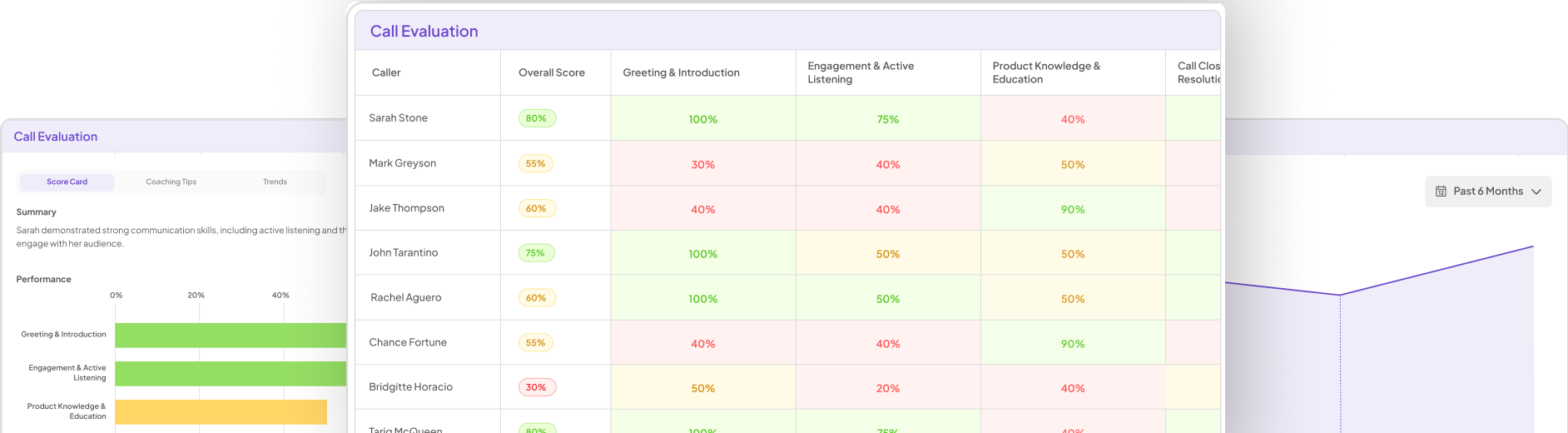
Among these tools, Insight7 stands out for its focus on realistic roleplay and behavioral intelligence. It enables agents to engage in unscripted conversations with AI personas that adapt in real-time, providing a dynamic training experience. The platform also offers performance dashboards to visualize skill development trends, making it easier for organizations to track progress and identify areas for improvement.
Implementation of AI Coaching Tools
To effectively implement AI coaching tools in healthcare call centers, organizations should follow a structured approach:
Preparation:
- Define clear learning objectives and identify specific communication challenges faced by agents.
- Select the appropriate AI coaching tool that aligns with these objectives.
Execution:
- Train agents on how to use the AI platform, ensuring they understand the features and benefits.
- Conduct initial roleplay sessions to familiarize agents with the tool and gather baseline performance data.
Evaluation:
- Monitor agent performance through the AI tool’s analytics, focusing on key metrics such as empathy scores, clarity, and compliance.
- Gather feedback from agents on their training experience and areas for improvement.
Iteration & Improvement:
- Continuously refine training scenarios based on agent feedback and performance data.
- Regularly update the AI tool’s content to reflect changes in healthcare regulations and best practices.
Conclusion
In the high-stakes environment of healthcare call centers, effective communication is essential. AI tools for performance coaching, such as Insight7, provide a powerful solution to enhance agents' skills in navigating complex conversations with empathy and compliance. By implementing these tools strategically, organizations can foster a culture of continuous learning and improvement, ultimately leading to better patient outcomes and increased satisfaction. With the right training and support, healthcare call center agents can thrive in their roles, delivering compassionate care while adhering to regulatory standards.