




In today’s data-driven world, understanding customer sentiment is crucial for informed decision-making. AI Survey Analysis plays a vital role in extracting meaningful themes from open-ended responses. By leveraging advanced algorithms, organizations can sift through complex data and identify recurring themes that reflect user opinions and experiences. This capability enables companies to enhance their strategies and align their offerings with customer needs effectively.
The challenge, however, lies in efficiently analyzing vast amounts of qualitative data. Traditional methods often fall short in capturing nuanced insights. AI-powered tools streamline this process, uncovering patterns and trends that may otherwise go unnoticed. With these insights at their fingertips, businesses can ultimately create more targeted and impactful strategies.
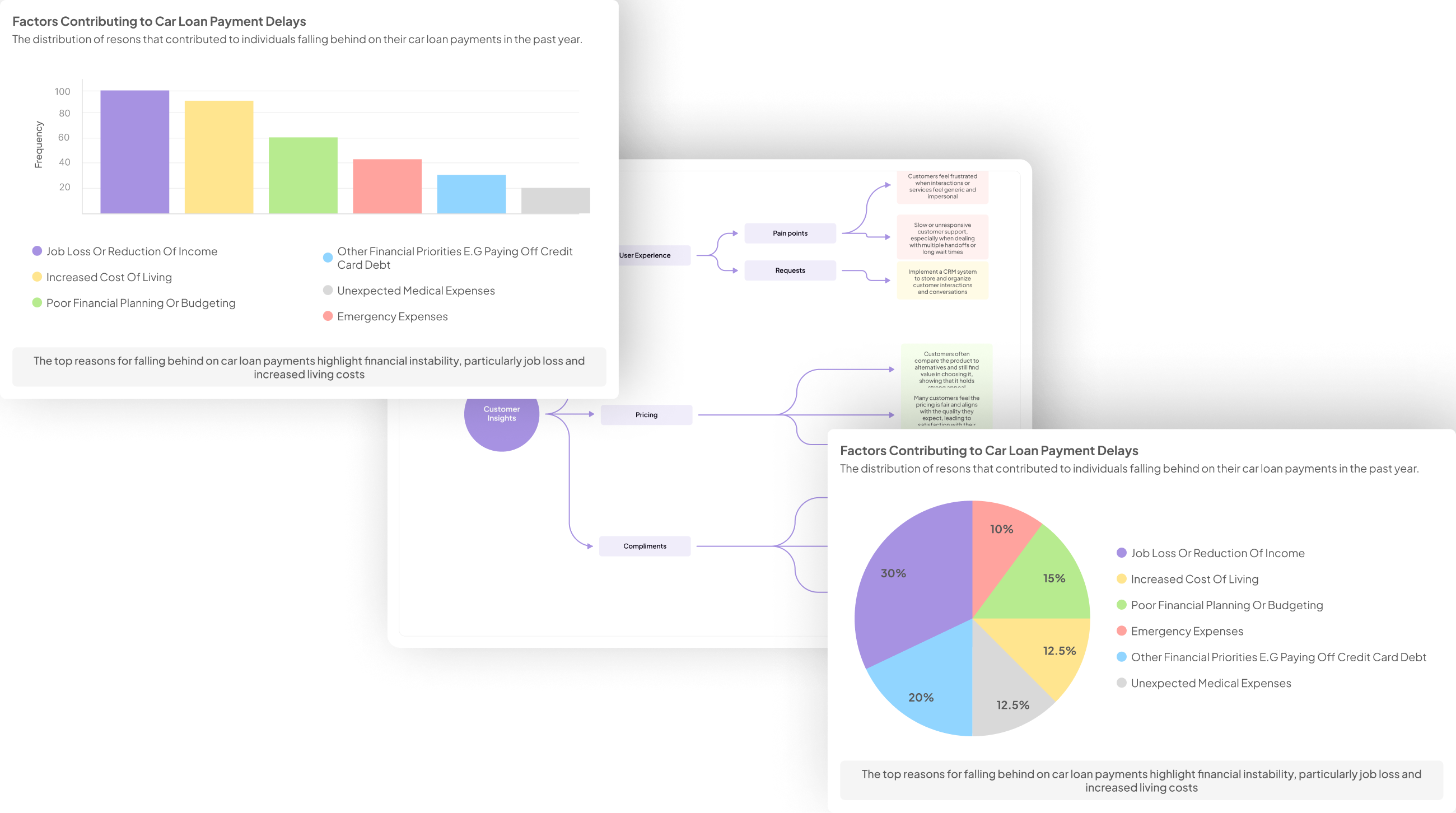
Why AI Survey Analysis Matters
AI Survey Analysis plays a crucial role in interpreting open-ended survey data, transforming raw responses into meaningful insights. Open-ended questions allow respondents to express their thoughts freely, revealing deeper sentiments and trends that closed questions cannot capture. This approach enriches data quality, enabling businesses to understand customer needs and preferences more holistically.
However, analyzing open-ended responses can be daunting due to the sheer volume and diversity of language used. Manual analysis is often time-consuming and prone to bias, leading to incomplete understanding. By employing AI Survey Analysis, organizations can streamline this process, efficiently identifying themes and patterns that might go unnoticed. AI tools can automate the tedious aspects of data analysis, providing faster turnaround times and enhancing decision-making. Embracing these technologies is essential for businesses striving to remain competitive and responsive to customer feedback.
Understanding the Value of Open-Ended Responses
Open-ended responses in surveys provide a rich source of qualitative data, allowing respondents to express their thoughts freely. These responses often unveil underlying themes that fixed-choice questions cannot capture. Understanding this value transforms how organizations obtain insights, revealing unique customer sentiments, motivations, and experiences. Moreover, AI survey analysis helps synthesize large volumes of open-ended answers into actionable insights.
Analyzing open-ended responses provides several key advantages. First, it fosters deeper engagement, as respondents feel heard and valued, enhancing their relationship with the organization. Second, these insights can lead to innovative products and services tailored to customer needs, which is critical in today’s competitive market. Lastly, AI tools streamline the process, saving time and facilitating more efficient collaboration among team members. By embracing the potential of open-ended responses, businesses can gain a significant edge in understanding their customers and adapting their strategies accordingly.
Challenges in Analyzing Open-Ended Survey Data
Open-ended survey data presents unique challenges that require careful consideration. One of the primary difficulties lies in the sheer volume of unstructured text, which can create overwhelming amounts of information. Extracting relevant themes from this data is not only time-consuming but also prone to human bias. Even with AI Survey Analysis tools, ensuring consistent interpretation of sentiments, emotions, and opinions can be complex.
Another challenge is the diversity of responses; participants may use different terminologies or express similar sentiments in various ways. This variability can lead to fragmentation in theme identification. Furthermore, distinguishing between subtle contextual cues is crucial. AI tools must be adequately trained to recognize context, sentiment, and nuance to produce meaningful insights. Finally, integrating findings into actionable strategies requires skillful analysis, emphasizing the need for a systematic approach despite technological advancements. Addressing these challenges is vital for maximizing the effectiveness of open-ended survey data analysis.
Top AI Tools for Survey Analysis
AI survey analysis systems have transformed the way we interpret open-ended survey responses, revealing critical themes and patterns within the data. Selecting the right tool is essential for gaining meaningful insights and driving informed decisions. These AI-driven tools are designed to handle large volumes of text data, offering capabilities that enhance and expedite the analysis process, thereby making your workflow more efficient.
Among the top tools available, MonkeyLearn stands out for its customizable models that can be tailored to specific needs, allowing users to hone in on relevant themes. TextRazor excels in comprehensive text analysis, utilizing advanced algorithms to extract nuanced insights. Finally, Lexalytics delivers robust linguistic capabilities, making it an excellent choice for those requiring detailed sentiment analysis. Using these standout AI tools for survey analysis ensures that you extract maximum value from your open-ended responses, ultimately enhancing your decision-making process.
Insight7: Leading the Way in Theme Detection
In the evolving landscape of AI survey analysis, theme detection stands as a pivotal challenge for businesses eager to extract actionable insights. With a surge in open-ended responses, organizations face the task of making sense of vast amounts of qualitative data. Leading the way in addressing this challenge is a remarkable advancement in technology that enables businesses to swiftly identify and categorize themes from customer feedback.
This innovative approach enhances decision-making by allowing companies to transform customer insights into strategic actions. By utilizing AI tools, organizations can seamlessly analyze patterns and sentiments, revealing valuable narratives hidden within the data. As trends continue to shape consumer preferences, staying ahead is crucial. Adoption of cutting-edge AI survey analysis tools is essential for companies, enabling them to remain competitive and responsive to customer needs. Ultimately, effective theme detection is about turning conversations into clarity, fostering a deeper connection between businesses and their customers.
Other Notable AI Tools
In exploring other notable AI tools for analyzing themes from open-ended surveys, several options stand out for their unique features. While traditional data analysis might overlook nuanced responses, these tools can enhance AI survey analysis by revealing valuable insights. They utilize advanced algorithms to dissect text, categorize themes, and simplify data interpretation, making them essential for researchers.
One prominent choice is MonkeyLearn, known for its customizable models that allow users to tailor sentiment analysis to their specific needs. TextRazor offers deeper text analysis capabilities, breaking down phrases and extracting key entities for a comprehensive understanding. Another noteworthy tool is Lexalytics, which employs advanced linguistic techniques to go beyond mere keywords and truly grasp the sentiment and emotions behind responses. These tools collectively contribute to a more nuanced approach to AI survey analysis, ensuring users derive meaningful insights from their data.
Tool 1: MonkeyLearn and Its Customizable Models
In the realm of AI Survey Analysis, MonkeyLearn stands out with its customizable models designed to extract themes from open-ended survey responses. This tool allows users to tailor their analysis according to specific needs, equipping them with the flexibility to define the keywords and phrases that matter most to their research objectives. By loading their data into the platform, users can apply various machine learning techniques, ensuring a more refined analysis process.
One of the key features is its user-friendly interface that simplifies the design process. Users can create personalized models that reflect their unique requirements, making it an ideal choice for teams with diverse analytical needs. Furthermore, the tool provides support for scaling its capabilities, allowing organizations to adapt as they grow. In the world of AI Survey Analysis, MonkeyLearn facilitates deeper insights and tighter integrations with existing workflows, transforming raw data into actionable themes.
Tool 2: TextRazor for In-depth Text Analysis
TextRazor offers an advanced solution for in-depth text analysis, particularly valuable in the realm of AI Survey Analysis. This tool provides users with powerful natural language processing capabilities, enabling the extraction of meaningful insights from open-ended survey responses. With its sophisticated algorithms, TextRazor can identify themes, concepts, and relationships within text, transforming raw data into actionable information.
When utilizing TextRazor, there are several key features to highlight. Firstly, its extensive entity recognition helps to spotlight important subjects within respondents' answers. Secondly, the sentiment analysis function provides a nuanced understanding of respondent emotions, adding depth to traditional quantitative metrics. Lastly, the tool enables users to create custom categories for a tailored analysis, ensuring that specific themes relevant to unique surveys are thoroughly explored. By integrating TextRazor into your analysis workflow, you can significantly enhance your ability to interpret and act on customer feedback.
Tool 3: Lexalytics and Its Advanced Linguistic Capabilities
Lexalytics excels in AI survey analysis through its advanced linguistic capabilities, offering robust tools to parse and interpret open-ended survey responses. Utilizing natural language processing, this tool can identify key themes, sentiments, and patterns across large data sets with remarkable accuracy. Businesses can gain valuable insights at scale, which is essential for understanding customer experiences and addressing their concerns effectively.
One of Lexalytics' standout features is its ability to extract voice-of-customer insights systematically. It categorizes feedback into pain points, desires, and behavioral trends, making it easy for businesses to visualize customer sentiment. Trend analysis further allows users to track changes over time, enhancing their ability to adapt strategies based on emerging insights. In a space where real-time understanding is key, this tool democratizes access to valuable insights, enabling informed decision-making across all organizational levels.
Conclusion: The Future of AI Survey Analysis
As organizations increasingly rely on AI survey analysis, the future looks promising for unlocking deeper insights from open-ended responses. Advanced tools are evolving to enhance accuracy in theme detection, making it easier to capture the nuances of customer feedback. This shift not only streamlines the process for businesses but also enables a richer understanding of customer sentiments and preferences.
Going forward, we can expect AI survey analysis to integrate even more sophisticated algorithms and natural language processing techniques. As these technologies progress, they will help organizations derive actionable insights more efficiently. Ultimately, the collaboration between human expertise and AI tools will pave the way for profound advancements in interpreting survey data, enhancing decision-making across industries.