




In today's fast-paced business environment, understanding customer perspectives through interviews is more crucial than ever. Buyer interview analysis serves as a vital method for extracting meaningful insights that drive strategic decisions. However, the sheer volume of data generated from these interactions can overwhelm traditional analysis methods, leading to missed opportunities.
AI technology offers innovative solutions for easing this analysis process. By harnessing its capabilities, businesses can efficiently identify themes and key sentiments from buyer interviews. This automated approach not only accelerates insights generation but also empowers teams to act quickly on feedback, thereby fostering a deeper connection with their customer base. Embracing AI in buyer interview analysis is not just advantageous; it is essential for staying ahead in a competitive landscape.
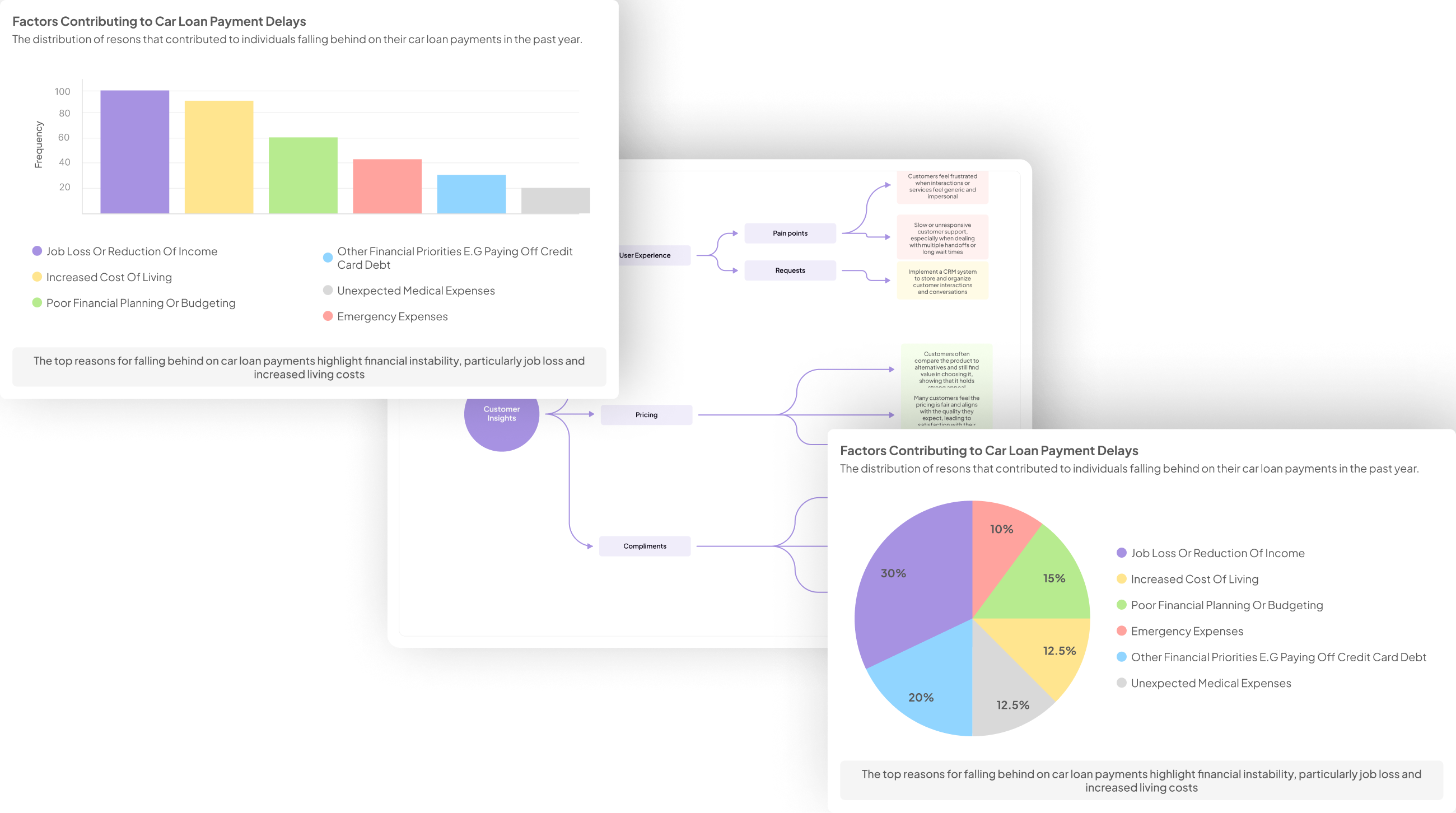
Understanding the Importance of Buyer Interview Analysis
Buyer interview analysis plays a crucial role in understanding customer needs and preferences. This process involves gathering insights from direct conversations and then analyzing these conversations to extract meaningful themes. When organizations prioritize this analysis, they can enhance their offerings and better tailor their products to meet market demands. The ability to transform raw conversation data into valuable insights can drive strategic decisions and improve customer satisfaction.
Moreover, effective buyer interview analysis fosters efficient collaboration across teams. By consolidating insights and ensuring they are easily accessible, organizations can avoid the common pitfall of scattered information. This approach enables timely responses to customer needs, ultimately positioning companies ahead of competitors. Understanding these dynamics is essential for businesses aiming to thrive in today’s competitive landscape, as the insights gleaned from buyer interviews can lead to actionable strategies and improved engagement with target audiences.
The Role of Themes in Buyer Interviews
In buyer interview analysis, themes play a pivotal role in distilling insights from complex conversations. They serve as a framework that captures recurrent ideas, emotions, and preferences expressed by customers, making it easier to derive actionable intelligence. When themes are effectively identified and analyzed, they reveal underlying motivations that may not be immediately apparent during interviews. This allows businesses to tailor their strategies more closely to customer needs and preferences.
To maximize the effectiveness of theme extraction, it's essential to adopt a systematic approach. First, listen actively to identify key topics of discussion that emerge frequently. Next, categorize these topics into broader themes to highlight major concerns or interests. Lastly, prioritize these themes based on their relevance and impact on business objectives. By focusing on themes in buyer interviews, companies can foster a deeper understanding of their customers, ultimately guiding decision-making and enhancing customer relations.
Why AI is a Game Changer in Buyer Interview Analysis
Artificial Intelligence is transforming the way businesses engage in buyer interview analysis. Traditional methods often result in overwhelming amounts of data that are time-consuming to analyze. AI tools streamline this process, transforming raw insights into actionable strategies efficiently. This technological revolution is essential in a competitive market where timely insights can significantly impact decision-making and overall success.
AI-powered tools can identify patterns and themes effortlessly, allowing companies to focus on refining their products and services. By automating routine tasks, these tools enable teams to concentrate on strategic challenges rather than sifting through endless data. Additionally, they promote collaboration and knowledge-sharing within organizations, leading to more cohesive and effective buyer interview analysis. As businesses embrace AI, they unlock the potential to stay ahead of market trends and better understand customer needs, ultimately shaping a more responsive and innovative business model.
Top AI Tools for Buyer Interview Analysis
In the realm of buyer interview analysis, utilizing AI tools can significantly enhance how businesses extract valuable insights. These tools streamline the process of identifying themes from interviews, turning qualitative data into actionable insights more efficiently. Instead of relying on manual analysis, which can be time-consuming and error-prone, these AI-powered solutions can process vast amounts of data quickly.
Various features set top AI tools apart in buyer interview analysis. For example, Insight7 excels in providing a user-friendly platform that enables companies to analyze interview data at scale. Similarly, MonkeyLearn offers advanced text analytics capabilities, making it easy to identify critical trends and sentiments. IBM Watson stands out for its robust analytical features, delivering deeper insights into customer feedback. Overall, these tools empower organizations to make informed decisions based on comprehensive and timely analysis of buyer interviews.
Insight7: Leading Tool for Extracting Themes
In the realm of buyer interview analysis, extracting meaningful themes is crucial for understanding customer needs. Insight7 stands out as a leading tool designed to simplify this process. The platform is user-friendly and enables users to manage and analyze vast amounts of interview data seamlessly. This capability allows teams to sift through customer conversations, identifying recurring themes that inform business strategies and decision-making processes.
One of the primary advantages of using Insight7 is its efficiency in transforming raw data into actionable insights. Traditional analysis methods often struggle to keep pace with the volume of information generated from interviews. In contrast, Insight7 helps users easily categorize and synthesize findings, fostering collaboration and ensuring that valuable insights are readily accessible. This tool ultimately serves as a game changer in buyer interview analysis, driving success for organizations looking to stay ahead in a competitive market.
Analyzing Interview Themes with MonkeyLearn
Analyzing themes from buyer interviews can be pivotal in understanding customer needs and preferences. By utilizing advanced tools, organizations can manually or automatically extract insights from numerous conversations. One effective method is organizing interviews into thematic projects, enabling a systematic approach to identifying recurring patterns.
When employing AI tools for analysis, users can identify key pain points shared by buyers. For instance, themes extracted from interviews can be summarized to reveal that a significant percentage of respondents highlighted common issues like resource allocation or feedback needs. Additionally, visual representations such as dashboards can illustrate customer journeys, pinpointing pain points and potential solutions throughout the process. By synthesizing these insights into actionable reports, businesses can better tailor their strategies to enhance customer satisfaction. In the rapidly evolving field of buyer interview analysis, leveraging AI tools can significantly improve the depth and efficiency of extracting valuable insights.
Using IBM Watson for Deeper Insights
Using advanced AI technology can significantly enhance buyer interview analysis, yielding deeper insights that traditional methods might overlook. By utilizing sophisticated algorithms, businesses can sift through extensive datasets more efficiently, intuitively identifying patterns and themes that arise in buyer feedback. This capability allows for a more nuanced understanding of buyer sentiment, extending beyond basic categorization into a realm where actionable intelligence can thrive.
Key features of this tool include enhanced data visualization and the ability to query large datasets for specific insights. Analysis can be conducted across various dimensions, such as geographical comparisons or sentiment analysis over time. As teams dive into buyer interview analysis, the potential to uncover critical trends becomes apparent, fostering informed decision-making and strategic planning. Thus, the implementation of this technology drives organizations towards a more data-driven culture, paving the way for insightful product development and customer engagement strategies.
Leveraging the Power of Nvivo in Buyer Interviews
Nvivo is a powerful tool designed to enhance buyer interview analysis by making it easier to interpret qualitative data. This software allows researchers to systematically code and categorize responses, facilitating the identification of significant themes and patterns. By organizing data efficiently, Nvivo helps streamline the analysis process, enabling teams to focus on generating actionable insights rather than getting bogged down in manual data processing.
Interviews often yield rich, complex narratives that require thoughtful examination. Utilizing Nvivo’s advanced features, such as query functions and visualization tools, researchers can uncover hidden insights that might otherwise go unnoticed. This approach not only accelerates the analysis phase but also promotes collaborative learning among team members. Ultimately, the insights garnered through Nvivo empower organizations to make informed decisions that significantly enhance their strategies in meeting customer needs and preferences.
The Simplicity of Thematic Analysis with Lexalytics
The thematic analysis process can often seem daunting, but with accessible AI tools, it becomes much simpler. User-friendly platforms allow anyone in an organization to extract meaningful insights from buyer interview analysis without needing specialized training. By democratizing access to data, teams can quickly convert raw interview transcripts into actionable reports. The built-in capabilities support converting multiple files into concise summaries, quickly identifying pain points and key themes.
Moreover, these tools can compile insights from a large number of calls seamlessly. This allows businesses to recognize broader patterns and customer sentiments beyond isolated conversations. The visualization of these insights makes it easier for team members to identify recurring themes or concerns that may impact overall strategy. Consequently, thematic analysis becomes a streamlined process that empowers organizations to enhance customer experience and inform decision-making based on solid evidence.
Conclusion: The Future of Buyer Interview Analysis with AI Tools
The future of buyer interview analysis is bright with the advent of AI tools, which are transforming how businesses capture and interpret customer feedback. These tools streamline the process, enabling companies to identify key themes more efficiently than ever before. As traditional methods struggle to keep pace with the volume of customer insights, AI offers automated solutions that enhance speed and accuracy in analysis.
This evolution will empower businesses to make informed decisions swiftly, staying ahead of their competition. By harnessing AI capabilities, companies can ensure that buyer interview analysis is not only comprehensive but also actionable, driving strategic initiatives effectively. Embracing this technological shift is crucial for those who wish to thrive in a rapidly evolving marketplace.










