

AI roleplay for insurance verification conversations before procedures
-
 Bella Williams
 - 10 min read

In the healthcare industry, conversations surrounding insurance verification before procedures can be complex and emotionally charged. Agents must navigate the delicate balance of providing necessary information while adhering to strict compliance regulations, such as HIPAA. The stakes are high; patients often face anxiety about their health and financial burdens, making it essential for agents to communicate effectively and empathetically. This is where AI roleplay comes into play, offering a powerful tool for training and enhancing communication skills in these challenging scenarios.
The Healthcare Conversation Reality
What makes healthcare conversations uniquely difficult:
For patients and families:
- High Stakes: Conversations often revolve around health, life, and financial security.
- Fear and Vulnerability: Patients may be anxious about diagnoses, treatment costs, or insurance coverage.
- Medical Literacy Gaps: Many patients struggle to understand medical terms, insurance jargon, and their implications.
- System Frustration: Long wait times and bureaucratic hurdles can exacerbate stress.
- Emotional Dysregulation: Pain and fear can hinder effective communication.
For agents:
- Regulatory Constraints: HIPAA limits what can be shared and with whom, complicating conversations.
- Emotional Weight: Agents absorb patient fear and frustration daily, which can lead to burnout.
- Limited Authority: Agents often cannot make decisions regarding coverage or care, leaving them feeling powerless.
- Moral Complexity: Agents may struggle with the need to enforce policies that seem to neglect patient needs.
- Information Asymmetry: Agents often know the answers will upset patients, but must still adhere to compliance.
AI Coaching for Insurance Verification Conversations
AI coaching provides a safe and effective way for healthcare agents to practice and refine their communication skills in insurance verification conversations. Traditional training often focuses on compliance and medical terminology but may overlook the emotional intelligence required to handle sensitive discussions. AI roleplay allows agents to simulate real-life scenarios, enabling them to learn how to verify identity, explain coverage denials, and navigate emotional conversations with empathy and clarity.
Implementation of AI Roleplay
Preparation:
- Identify key scenarios that agents frequently encounter, such as verifying patient identity, explaining coverage denials, or discussing billing disputes.
- Develop a library of AI-driven roleplay scenarios tailored to these situations, incorporating real-world examples and common patient concerns.
Execution:
- Engagement: Agents participate in roleplay sessions with AI personas that simulate patients with varying emotional states and concerns.
- Feedback: After each interaction, agents receive instant feedback on their performance, focusing on empathy, clarity, and compliance.
- Iteration: Agents can repeat scenarios, experimenting with different approaches and receiving tailored coaching to improve their skills.
Evaluation:
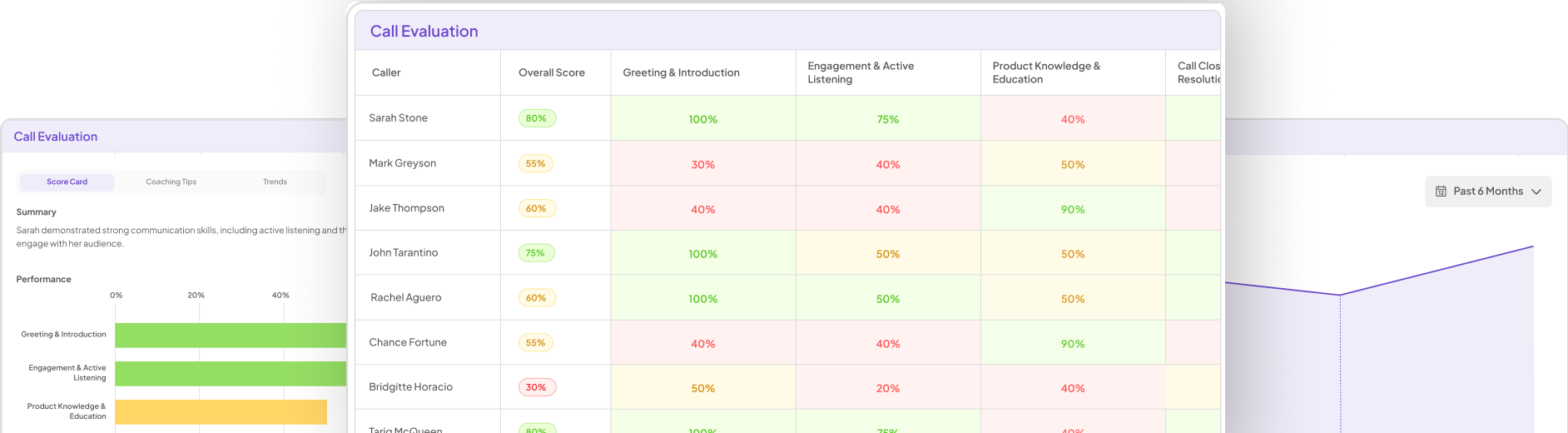
- Assess agents’ communication skills through performance metrics, such as empathy scores and compliance adherence.
- Use data from AI coaching sessions to identify common areas for improvement and adjust training programs accordingly.
Outcome:
By integrating AI roleplay into training programs, healthcare organizations can enhance their agents' ability to handle complex insurance verification conversations. Agents become more confident and skilled in navigating emotional interactions, ultimately leading to improved patient experiences and satisfaction.
Practical Value of AI Roleplay
The benefits of using AI roleplay for insurance verification conversations extend beyond individual agent performance. Organizations can expect several positive outcomes:
- Increased Efficiency: Agents become more adept at handling calls, reducing the time spent on each interaction while maintaining quality.
- Higher Patient Satisfaction: Patients feel heard and understood, even when receiving difficult news, leading to greater trust in the healthcare system.
- Reduced Burnout: By equipping agents with the skills to manage emotional conversations effectively, organizations can help mitigate the emotional toll on their staff.
- Compliance Assurance: AI coaching reinforces adherence to HIPAA and other regulations, minimizing the risk of violations during sensitive conversations.
FAQs
Q1: How does AI roleplay improve communication skills for insurance verification?
A1: AI roleplay allows agents to practice real-world scenarios in a safe environment, receiving instant feedback to enhance their communication skills.
Q2: What types of scenarios can be simulated with AI coaching?
A2: Scenarios can include verifying patient identity, explaining coverage denials, addressing billing disputes, and managing emotionally charged conversations.
Q3: How can organizations measure the effectiveness of AI roleplay training?
A3: Organizations can track performance metrics such as empathy scores, compliance adherence, and overall agent efficiency to evaluate training effectiveness.
Q4: Is AI roleplay suitable for all healthcare agents?
A4: Yes, AI roleplay can benefit agents at all experience levels, providing tailored coaching to help them navigate complex conversations.
Q5: How does AI roleplay contribute to patient satisfaction?
A5: By improving agents' communication skills, AI roleplay helps ensure patients feel heard and understood, even in difficult situations, leading to higher satisfaction levels.
In conclusion, AI roleplay for insurance verification conversations offers a transformative approach to training healthcare agents. By enhancing their communication skills and emotional intelligence, organizations can improve patient experiences and outcomes while fostering a more resilient workforce. With the right tools and training, agents can confidently navigate the complexities of healthcare conversations, ultimately benefiting both patients and the healthcare system as a whole.