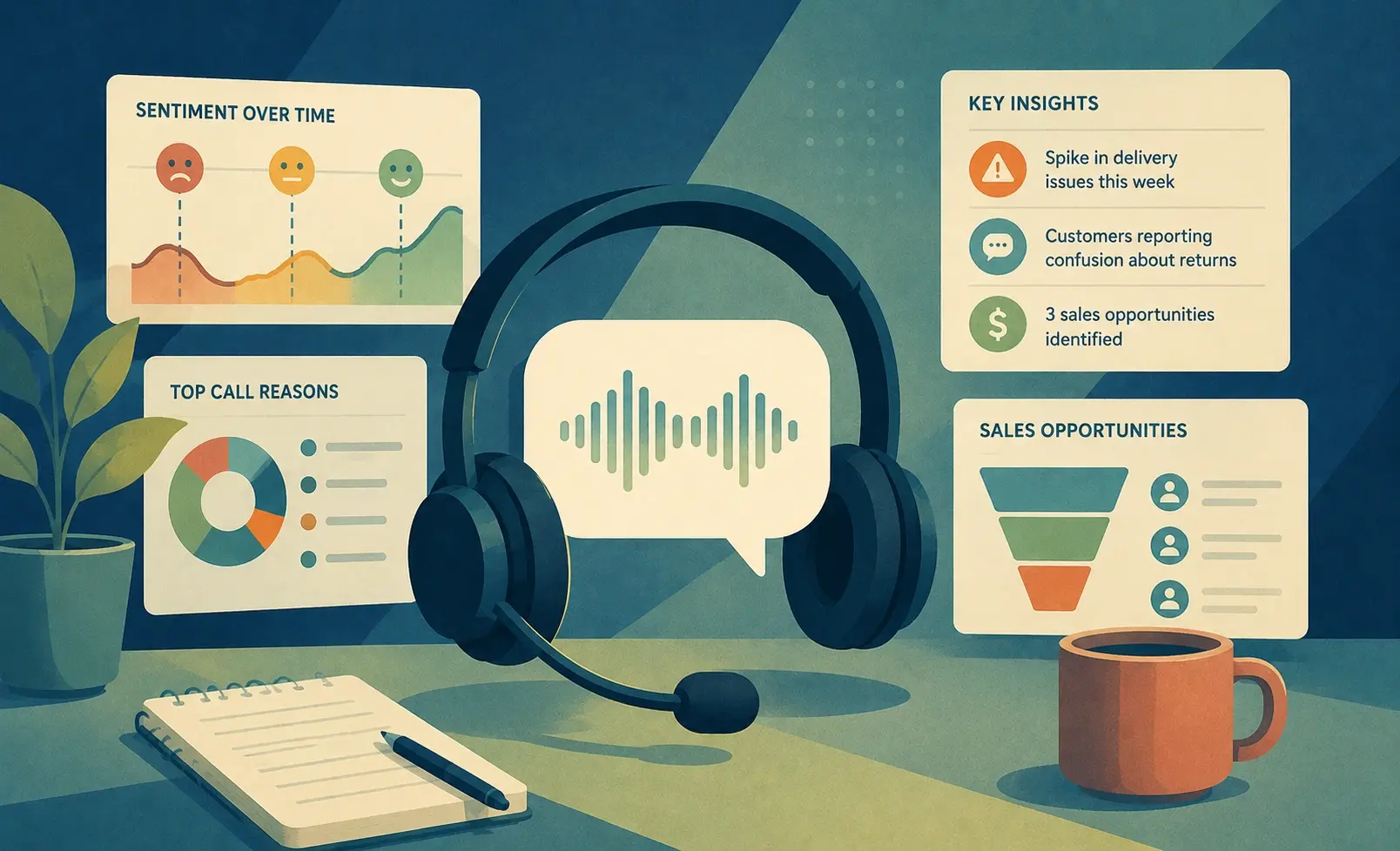
In today's fast-paced business environment, companies are constantly seeking ways to enhance operational efficiency. AI Call Optimization has emerged as a transformative solution in Business Process Outsourcing (BPO). By employing advanced technologies, organizations can effectively streamline their call monitoring processes, facilitating a shift toward rapid and responsive customer service.
Understanding the integral role of AI in call centers is crucial. With automated analysis of vast amounts of data, AI tools can identify trends and highlight key performance indicators. As BPOs increasingly adopt these technologies, they can significantly reduce call handling time, allowing agents to focus on delivering exceptional service and addressing customer needs more effectively. This optimization not only enhances productivity but also fosters a more satisfying experience for clients.
How AI Call Optimization Revolutionizes Call Monitoring
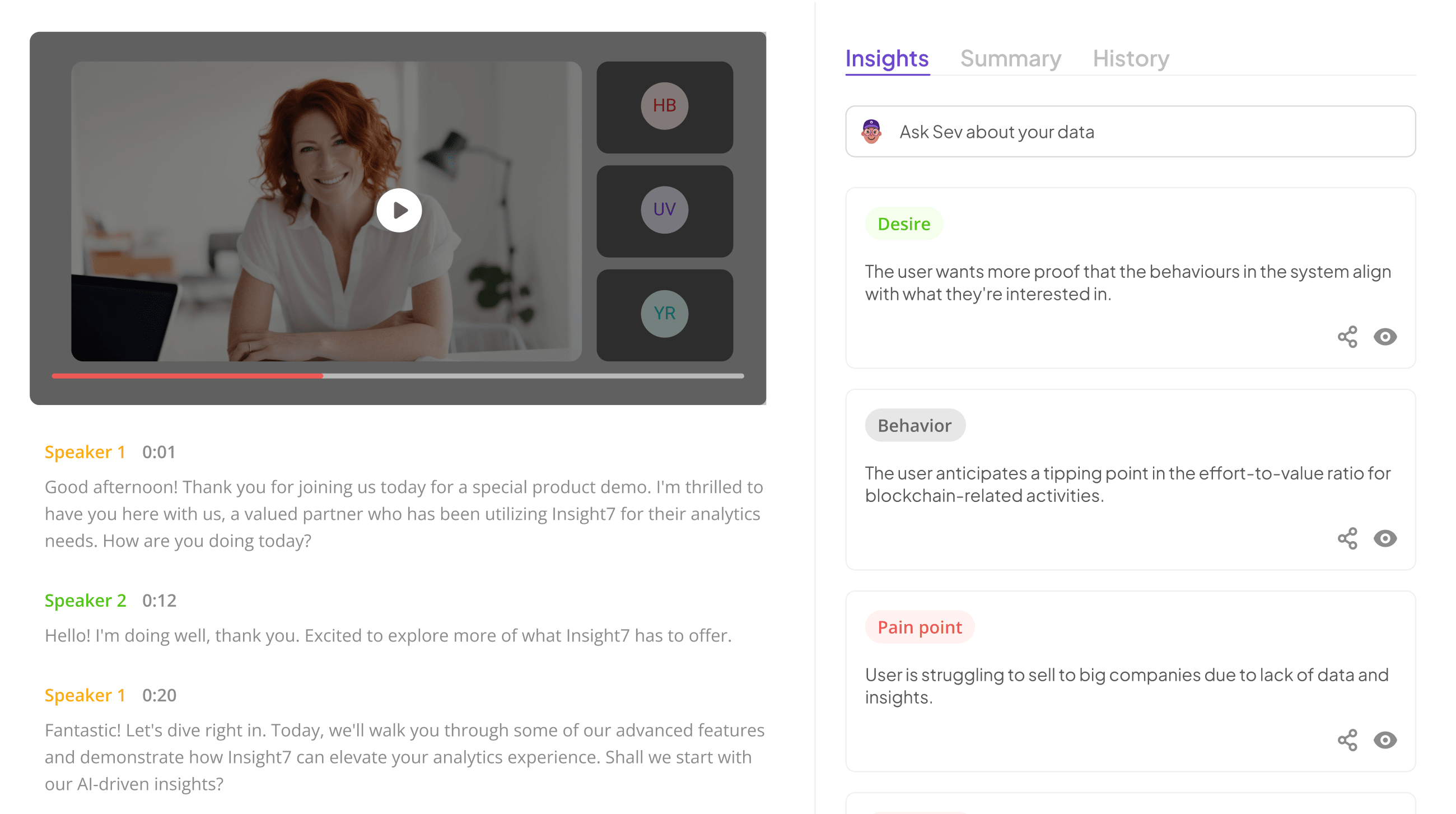
AI Call Optimization plays a transformative role in call monitoring, reshaping how businesses interact with their customers. By harnessing advanced algorithms, companies can assess agent performance, engage in real-time analysis, and extract valuable insights from call data. The shift toward AI-driven systems allows for a more focused evaluation of calls, enabling supervisors to easily identify trends and areas needing attention.
One major advancement of AI Call Optimization is the ability to automatically detect speaker identities and categorize discussions. This level of granularity arms managers with objective metrics, allowing them to fine-tune training programs and deliver tailored feedback. Moreover, the quick generation of detailed reports enhances decision-making, significantly reducing the time spent on manual evaluations.
Ultimately, AI Call Optimization not only boosts efficiency but also ensures a higher quality of customer interactions, which is crucial in today’s competitive business environment.
Understanding AI Call Optimization
In exploring AI call optimization, it's essential to recognize its transformative role in enhancing call center operations. AI technologies analyze vast amounts of data, allowing businesses to streamline processes that previously slowed down call handling. By automating routine tasks and providing real-time insights, these tools help agents respond more efficiently to customer inquiries. This not only improves service quality but also fosters employee productivity.
Key features that make AI call optimization effective include speech recognition, sentiment analysis, and performance tracking. Speech recognition allows the system to identify individual agents and understand customer interactions accurately. Sentiment analysis provides insights into customer emotions, guiding agents on how to respond effectively. Performance tracking helps managers evaluate agent performance in real time, highlighting areas for improvement. By integrating these capabilities, businesses can minimize call handling time, ultimately enhancing customer satisfaction and loyalty.
- The role of AI in streamlining call center processes.
AI Call Optimization plays a vital role in streamlining call center processes, enhancing both efficiency and quality. By implementing AI-driven technologies, organizations can automate routine tasks, allowing agents to focus on providing exceptional customer service. This technology analyzes interactions in real-time, helping to identify patterns, customer sentiments, and key issues. Consequently, agents can resolve queries more swiftly, ultimately reducing average call handling times.
Moreover, AI Call Optimization offers performance analytics that assist in training and development. With data-driven insights, management can pinpoint knowledge gaps within teams and refine training programs accordingly. For instance, analyzing hundreds of calls can help uncover common customer inquiries, enabling tailored training that equips agents with precise knowledge. This not only improves customer satisfaction but also fosters a culture of continuous improvement within call centers, harnessing AI to optimize operational processes effectively.
- Key features of AI call monitoring tools.
AI call monitoring tools come equipped with essential features designed to enhance call efficiency and optimize agent performance. One significant feature is real-time speech recognition, allowing the system to identify individual agents and analyze their interactions. This capability enables managers to get insights into each representative's performance and engagement levels, making it easier to track success and identify areas needing improvement.
Another key feature is automated scoring and reporting, which generates detailed evaluations of calls within minutes. These scorecards help management pinpoint compliance issues and coaching opportunities. Additionally, many tools offer customizable reports, allowing teams to tailor feedback to their specific needs. AI call optimization capabilities not only facilitate a faster response to customer inquiries but also significantly reduce average call handling times in BPOs, ensuring a smoother customer experience and enhancing overall service delivery.
Benefits of AI Call Optimization in BPOs
AI Call Optimization brings substantial benefits to Business Process Outsourcing (BPO) organizations. Notably, it enhances efficiency in call handling by utilizing advanced algorithms to analyze call data. With these insights, companies can identify common issues and optimize workflows, allowing agents to handle calls more effectively and swiftly.
Another crucial advantage is the significant reduction in average call handling time. By automatically flagging key moments in conversations, AI tools help managers pinpoint areas needing improvement without wading through countless hours of recorded calls. This targeted approach streamlines training, refines quality assurance processes, and ultimately boosts the overall performance of call center operations. Companies that adopt AI Call Optimization not only meet compliance standards but also improve customer satisfaction by resolving inquiries faster and more accurately.
- Enhanced efficiency in call handling.
AI Call Optimization significantly enhances the efficiency of call handling within BPOs. By automating data analysis and providing real-time insights, AI tools can swiftly identify areas for improvement and streamline processes. This not only reduces the time agents spend on calls but also enhances their ability to deliver quality customer service.
One of the primary benefits is the reduction in average call handling times. AI monitors conversations, highlights patterns, and flags potential issues, allowing agents to address customer needs efficiently. Additionally, with targeted training recommendations based on call performance, agents can improve their skills and confidence, further accelerating call resolution. Overall, harnessing AI for call optimization transforms the customer experience while maximizing operational efficiency.
- Reducing average call handling time through AI enhancements.
AI Call Optimization plays a pivotal role in reducing the average call handling time within BPOs. Firstly, AI-driven analytics tools can automatically assess call recordings to identify key performance metrics and problem areas. This allows for faster feedback on agent performance and more targeted training initiatives. By understanding common customer inquiries and patterns from previous calls, BPOs can enhance their staff training, ensuring representatives are equipped to handle inquiries more efficiently.
Moreover, AI technology can facilitate real-time decision-making during calls. Agents receive immediate insights and suggestions based on customer interactions, allowing them to resolve issues more swiftly. This not only streamlines the call process but also enhances overall customer satisfaction by reducing wait times. Consequently, the integration of AI in call monitoring significantly optimizes call handling, contributing to a leaner operation with improved service delivery.
[optional list of tools for ai call optimization]
- Insight7
In today’s fast-paced BPO environment, minimizing call handling time is crucial for maintaining customer satisfaction while boosting operational efficiency. Insight7 reveals how AI Call Optimization plays a pivotal role in achieving these goals. By analyzing conversations in real-time, AI systems can detect patterns and highlight areas that may need intervention. This not only helps agents respond quicker but also ensures customer concerns are addressed effectively on the first call.
Furthermore, implementing AI Call Optimization allows for continuous monitoring and evaluation of agent performance. Using built-in analytics, insights about both common queries and peak operational hours can be gathered, enabling BPOs to optimize staffing and training resources. With these intelligent systems, organizations can create a streamlined workflow that enhances service delivery while minimizing call durations. Eventually, such strategic improvements lead to higher customer retention and satisfaction, demonstrating the tangible impact of AI in the BPO sector.
- CallMiner
In the realm of AI call optimization, advanced monitoring tools play a pivotal role in enhancing call center performance. These tools empower businesses to analyze extensive call data efficiently, providing insights that contribute to better compliance and training outcomes. By sifting through thousands of calls, organizations can focus on high-importance interactions and extract compliance-related insights. This not only allows for quick identification of issues but also facilitates better decision-making for internal training initiatives.
Moreover, these software solutions often offer features such as keyword tracking and automated evaluations, which streamline the entire call review process. By simplifying the analysis of call content, teams can drastically reduce average call handling time. Consequently, firms equipped with AI call optimization capabilities can ensure compliance while also bolstering sales efforts. Embracing such technologies helps BPOs remain agile and adapt to evolving regulatory landscapes without compromising on service quality.
- NICE inContact
NICE inContact is a significant player in the realm of AI call optimization, enhancing operational efficiency within BPOs. By leveraging advanced technologies, this platform automates key processes, ensuring a focus on critical performance metrics. The integration of AI-driven insights allows organizations to analyze call handling times comprehensively. As a result, BPOs can identify inefficiencies and implement targeted improvements more effectively.
The capabilities of this platform extend beyond simple monitoring, providing actionable recommendations based on real-time data. This not only accelerates call resolution but also enhances agent performance by offering tailored coaching opportunities. Furthermore, the data gleaned from AI monitoring helps in customizing customer interactions, which leads to increased satisfaction. The application of this technology ultimately minimizes call handling time, making BPOs more agile and competitive in an ever-evolving market.
- Five9
The deployment of AI Call Optimization within call centers facilitates streamlined processes that ultimately lead to improved service delivery. One notable tool in the AI call monitoring landscape aids organizations in efficiently analyzing call data and enhancing performance metrics. By automating the review of conversations, businesses can quickly identify patterns in agent-customer interactions and pinpoint areas for improvement.
This approach not only reduces call handling time but also supports agent training by providing actionable insights derived from real-time data. As teams focus on critical evaluation of only select calls, they can ensure quality while maintaining efficiency. By integrating such advanced AI capabilities into their operations, businesses not only heighten their productivity but also foster a more responsive customer support environment. Embracing AI Call Optimization is essential in today’s competitive market, enabling organizations to stay ahead in the rapidly evolving landscape of BPO services.
- Talkdesk
In today's rapidly evolving call center environment, AI Call Optimization offers transformative benefits that redefine how businesses manage customer interactions. The integration of intelligent monitoring systems enables BPOs to track, assess, and enhance call efficiency, contributing significantly to reduced handling times. With advanced algorithms analyzing real-time conversations, staff can receive immediate feedback on their performance. This not only fosters quicker training processes but also empowers agents to address customer needs more effectively.
Moreover, by utilizing AI insights, teams can continuously adapt their strategies based on customer behavior and expectations. Improved understanding leads to proactive engagement rather than reactive responses, allowing agents to build stronger rapport with clients. The ability to analyze vast amounts of data quickly ensures that organizations can stay ahead of competitors while minimizing operational costs. Thus, AI Call Optimization emerges as a crucial ally in streamlining call management, enhancing overall customer satisfaction in the BPO sector.
Practical Steps for Implementing AI Call Optimization in BPOs
To implement AI call optimization effectively within BPOs, begin by identifying key performance metrics. This involves analyzing current call handling times and pinpointing specific areas where delays or inefficiencies arise. Gathering data on call durations, customer satisfaction scores, and employee performance can create a comprehensive overview of existing challenges.
Next, integrate suitable AI call monitoring solutions into your operations. Choose tools that align with your objectives and are compatible with existing systems. Ensure staff receives adequate training to utilize these solutions effectively, fostering a culture of performance enhancement. Moreover, leverage AI-generated insights to continuously refine and optimize call processes. By analyzing trends and customer feedback, you can make data-driven adjustments that directly impact call efficiency. These practical steps lay the foundation for a smoother, more efficient BPO operation focused on minimizing call handling time.
Step 1: Identification of Key Performance Metrics
To effectively harness AI Call Optimization, the first step is identifying key performance metrics. These metrics serve as the foundation for evaluating call handling efficiency and recognizing areas for improvement. Start by analyzing the current average call handling time across your teams. This quantitative assessment reveals patterns and highlights inefficiencies in the call process.
Next, consider qualitative insights that can emerge during call monitoring. These insights often indicate whether staff require additional training or if certain protocols should be adjusted to enhance performance. To aid this analysis, specific metrics such as call volume, call abandonment rate, and customer satisfaction scores should be meticulously tracked. Gathering data on these metrics creates a clearer picture of your operational effectiveness. Thus, forthcoming steps in this process will be data-driven, enabling BPOs to refine their strategies and employ AI technologies judiciously.
- Analyzing current call handling time and identifying problem areas.
Understanding current call handling time is essential for identifying inefficiencies in a BPO's operations. A thorough analysis involves examining various metrics, such as average handling time, call duration, and customer satisfaction scores. These data points help pinpoint where delays may be occurring and how they can be improved. For instance, longer handling times may indicate that agents are struggling with specific queries or systems, highlighting areas that need targeted training or better resources.
Additionally, identifying trends in call issues can direct improvements in both training and technology. By analyzing call transcripts and customer interactions, businesses can discover common pain points that customers face. This proactive approach enables companies to refine their processes and provide agents with the necessary tools and knowledge. AI Call Optimization can play a vital role in this analysis, as it automates data gathering, improving accuracy and speed while allowing teams to focus on addressing and resolving identified issues.
Step 2: Integrating AI Call Monitoring Solutions
To successfully integrate AI call monitoring solutions, it’s crucial to evaluate and select the right tools tailored for your organization’s needs. Begin by identifying the specific objectives you aim to achieve with AI Call Optimization. This could include reducing call handling time or enhancing agent performance metrics. By clarifying these goals, you can effectively narrow down available products that align with your operational capabilities.
Once suitable solutions are identified, the next step is to seamlessly integrate them into your existing systems. Collaborate closely with IT teams to ensure a smooth transition, minimizing disruptions in ongoing operations. Training staff is equally essential; agents must understand how to utilize the AI tools effectively to optimize their call handling. Finally, continually leverage insights derived from AI analytics to refine processes and improve overall performance. This holistic approach will significantly streamline your operations and maximize efficiency.
- Choosing the right tools and integrating them into existing systems.
Integrating effective AI call monitoring tools into existing systems is crucial for optimizing operational efficiencies within BPOs. The right tools can significantly diminish call handling time, leading to better customer satisfaction and improved agent performance. When selecting AI call optimization tools, consider their compatibility with current systems, scalability, and the specific needs of your organization. A thorough evaluation will ensure that the selected tools enhance your existing workflows without causing disruption.
Once the right tools are chosen, effective integration is the next step. This might involve customizing dashboards, setting up automated reporting features, and training staff to use the new systems effectively. It’s essential to involve your team in this process to foster acceptance and ensure they can leverage AI insights for better call outcomes. Continuous feedback loops can further refine the system, tailoring it to precisely meet the evolving challenges in call management, ultimately leading to a more efficient BPO operation.
- Training staff and using AI data insights for improved performance.
Training staff effectively is crucial for maximizing the benefits of AI Call Optimization in BPOs. By equipping agents with comprehensive knowledge of AI tools, organizations can enhance their performance metrics significantly. Training should focus on understanding key AI features, interpreting data insights, and employing strategies that lead to more efficient call handling. When staff members are well-informed, they become empowered to make informed decisions, improving both customer satisfaction and their own efficiency.
Utilizing AI data insights enables a proactive approach to performance management. Managers can analyze call data to identify patterns and trends, then provide targeted feedback to agents. This continuous learning loop not only minimizes the average call handling time but also fosters a culture of data-driven decision-making. By embracing AI Call Optimization, BPOs can drive meaningful improvements that enhance employee performance and ultimately lead to superior customer experiences.
Conclusion: Maximizing Efficiency with AI Call Optimization in BPOs
Implementing AI Call Optimization can fundamentally transform the efficiency of call handling in BPOs. By utilizing AI-driven analysis, businesses can sift through vast amounts of call data to identify critical training moments and compliance issues without the need for exhaustive manual review. This not only saves time but also enables team leaders to focus on improving service quality where it matters most.
Moreover, AI Call Optimization fosters a culture of accountability among employees. With real-time monitoring and analysis, staff are more likely to maintain high performance, knowing their interactions are being evaluated. Ultimately, embracing this technology not only minimizes call handling time but positions BPOs for long-term success through enhanced operational efficiency and improved customer experiences.