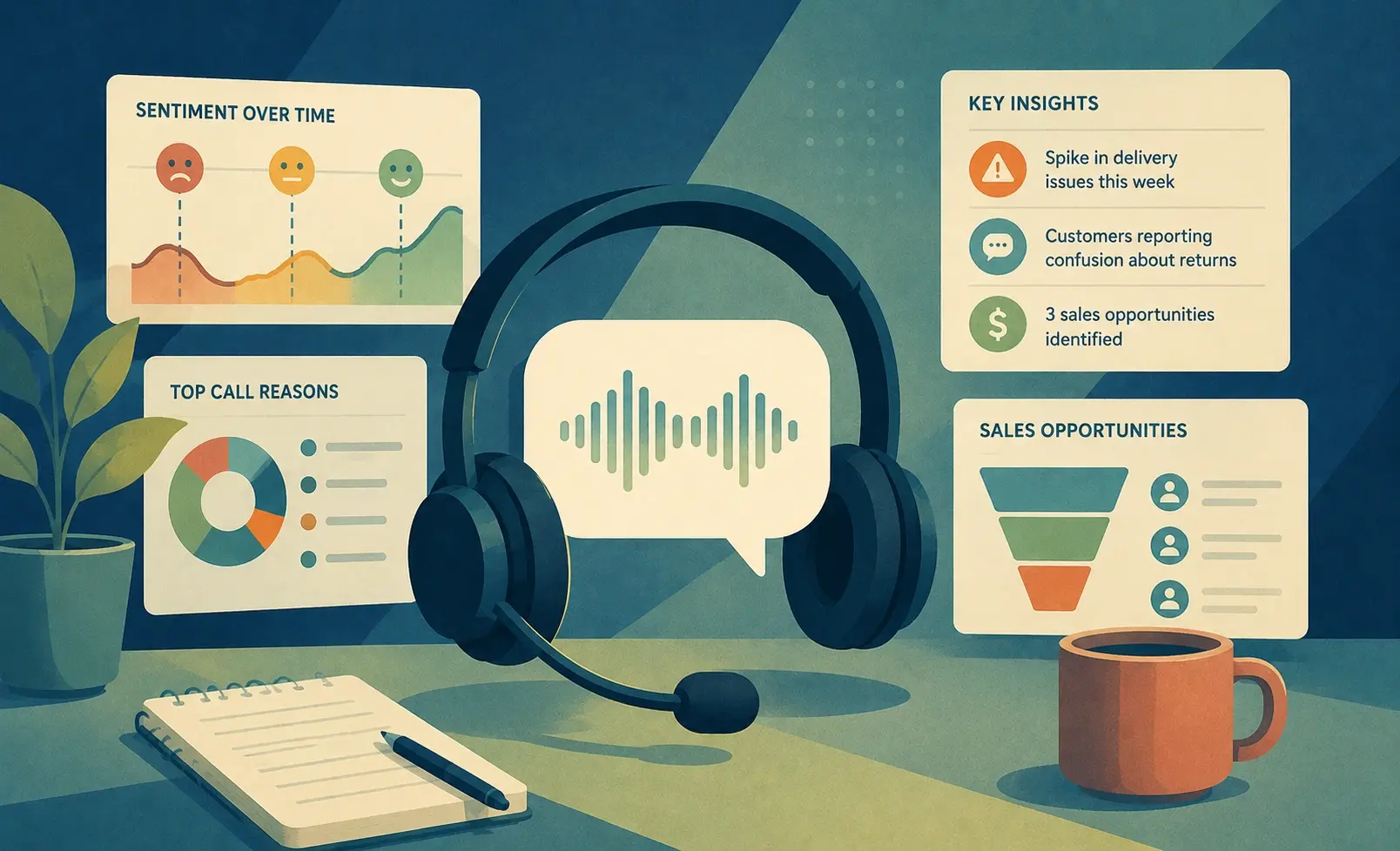
Training program effectiveness is difficult to measure without access to the actual conversations where skills get applied. Most organizations rely on post-training surveys and manager impressions, neither of which captures what learners actually do differently after training. AI tools that analyze conversation data close this gap by extracting behavioral patterns from the calls, meetings, and coaching sessions where training is supposed to show up.
The tools below are evaluated on their ability to analyze training program effectiveness through conversation data, not just sentiment from surveys.
How We Evaluated These Tools
We assessed tools on five criteria relevant to training effectiveness analysis: ability to analyze call and meeting recordings, thematic extraction across large conversation sets, per-agent performance trend tracking, integration with coaching workflows, and ease of use for L&D or training teams without dedicated data science resources.
How do AI tools measure the effectiveness of a training program?
AI tools measure training effectiveness by analyzing conversation data before and after a training intervention. Pre-training baseline scores establish what behaviors look like before any development work. Post-training scores show whether the behaviors changed. The delta between baseline and current performance is your training effectiveness signal. This is more reliable than self-reported survey data because it measures behavior, not perception.
1. Insight7
Insight7 analyzes call recordings, coaching sessions, and client conversations to surface performance patterns across your entire team. Rather than summarizing individual calls, Insight7 aggregates across hundreds of conversations to identify where training is working and where skill gaps persist.
Key capabilities: automated QA scoring against configurable training criteria, per-agent trend reports showing score trajectories over time, thematic analysis identifying the most common failure patterns across the team, and AI-generated practice scenarios based on the behaviors where scores are lowest.
TripleTen processes over 6,000 coaching calls monthly through Insight7, identifying where learners need additional support based on actual conversation patterns. The platform integrates with Zoom, Microsoft Teams, Salesforce, and HubSpot. Supports 60+ languages.
Best suited for: Teams using call, coaching, or client conversation data as the primary evidence of training effectiveness.
Limitation: Post-call only; doesn't provide real-time coaching during live calls.
What makes conversation analysis better than survey data for measuring training?
Survey data captures what learners think changed. Conversation analysis captures what actually changed. A rep can score their own communication skills at 8/10 on a post-training survey and still show no improvement in empathy scores on actual calls. Conversation analysis removes the self-reporting bias and connects training investment to observable behavior change.
2. Gong
Gong is a revenue intelligence platform that analyzes B2B sales calls for deal risk, buyer sentiment, and rep performance. Strong for enterprise sales teams measuring whether training translates to pipeline and revenue outcomes. Less suited for support or customer service training programs.
Best suited for: B2B sales organizations measuring whether training changes are appearing in complex deal conversations.
Limitation: Enterprise pricing; not designed for support center, retail, or customer service training use cases.
3. Chorus (ZoomInfo)
Chorus by ZoomInfo analyzes sales conversations for deal intelligence and rep coaching. Includes talk-listen ratio tracking, topic analysis, and keyword-triggered flags. Strong integration with Salesforce.
Best suited for: Sales teams already on ZoomInfo's platform looking to add conversation analysis.
Limitation: More focused on deal intelligence than structured training program measurement.
4. Cogito
Cogito provides real-time call guidance and post-call analysis focused on emotional intelligence and empathy signals in customer service conversations. Behavioral analysis centers on tone and sentiment rather than knowledge or process compliance.
Best suited for: Customer service teams where the primary training goal is empathy improvement and emotional tone.
Limitation: Less configurable for knowledge-based or process compliance training criteria.
5. MaestroQA
MaestroQA is a QA and agent performance platform for customer support teams. It combines manual and AI-assisted scoring with coaching workflow management. Strong for teams running structured QA programs alongside training.
Best suited for: Support teams running structured QA programs where training effectiveness is measured through QA score improvements.
Limitation: More manual workflow than fully automated AI analysis platforms.
If/Then Decision Framework
| Situation | Best Fit |
|---|---|
| Training for support, service, or coaching effectiveness | Insight7 |
| B2B sales training, deal-linked measurement | Gong or Chorus |
| Empathy and emotional tone improvement | Cogito |
| Manual + AI hybrid QA with coaching workflow | MaestroQA |
Using Conversation Analysis to Measure Training ROI
Training ROI is notoriously difficult to quantify. Conversation analysis gives you a concrete measurement framework: establish a behavioral baseline before training, score the same behaviors after training, and calculate the score delta per trained skill.
According to ATD research on learning measurement, organizations that tie training investments to observable performance data make more effective curriculum decisions than those relying on learner satisfaction alone.
Insight7's per-agent scorecard system provides this before-and-after visibility natively. When you connect QA scoring to AI coaching roleplay, you also see whether targeted practice is producing score improvements in actual calls. The Insight7 AI coaching module connects behavioral data from live calls directly to practice assignments, creating a closed loop from measurement to development.
For a free first look at how conversation analysis surfaces training gaps, try the Call Quality Monitor tool.
FAQ
How many conversations do I need to measure training program effectiveness?
Score at least 20 to 30 conversations per agent before and after a training intervention to get a statistically meaningful comparison. Fewer than ten makes it difficult to distinguish real behavioral change from random variation across calls.
Can these tools integrate with existing LMS platforms?
Most conversation analysis tools do not integrate directly with LMS platforms like Cornerstone or Saba. They operate as a separate measurement layer capturing what happens in real conversations, complementing but not replacing LMS tracking of course completions and assessment scores.