A VP of Sales at a 70-rep mid-market SaaS company is staring at a quarterly review. Close rate dropped from 24% to 18%. Pipeline is healthy. Marketing is generating leads. Reps are busy. But deals are stalling after the demo, and nobody can explain why. The VP asks each manager what is going on, and each manager has a different theory: pricing, competitor pressure, rep motivation, or bad leads. None of them have evidence.
This is the real problem with factors affecting sales performance. Everyone can name the factors. Few teams can measure which ones are actually dragging results, and fewer still can connect the diagnosis to a specific coaching action.
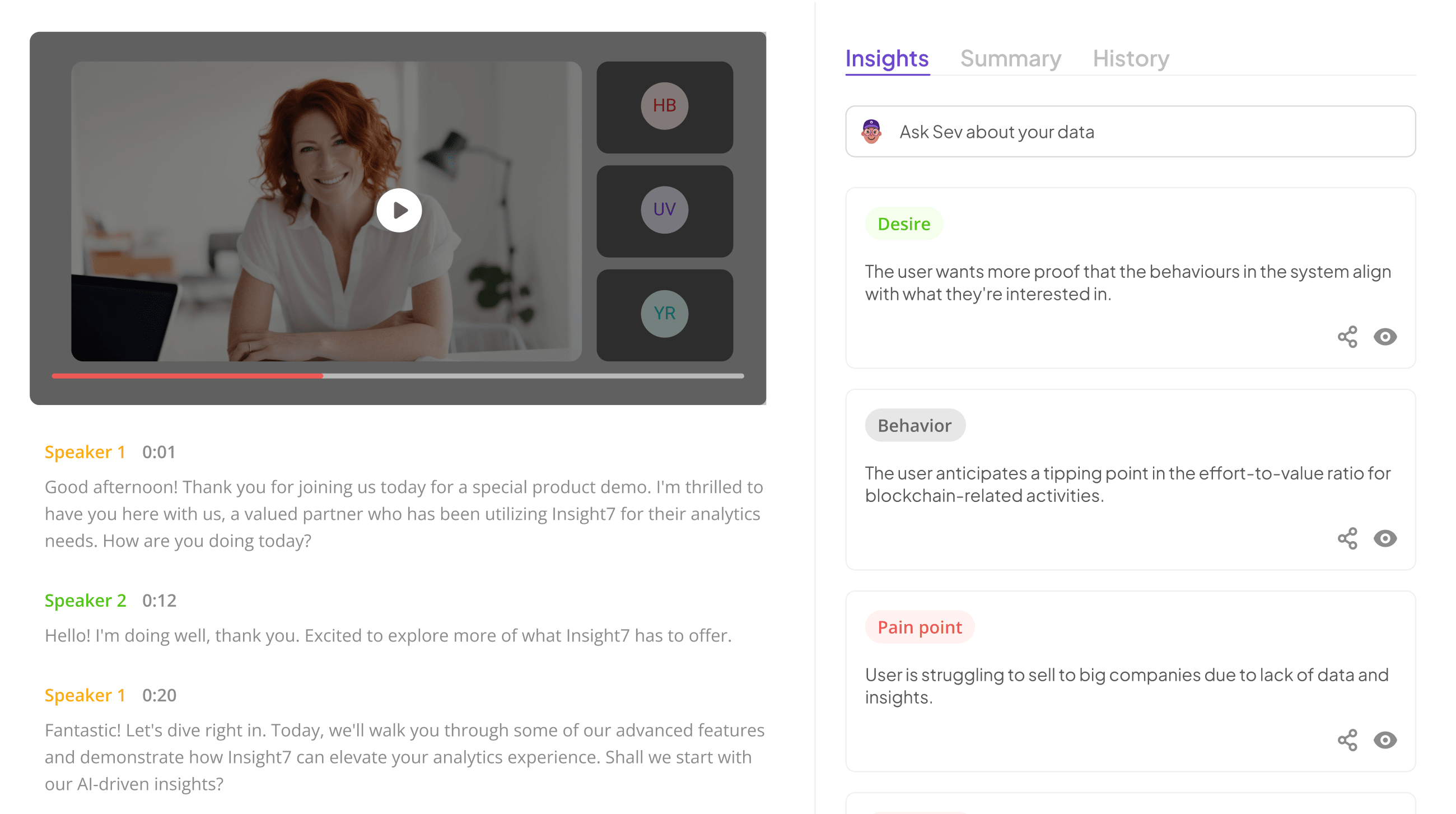
Insight7’s revenue intelligence platform surfaces the behavioral patterns across every sales conversation that explain why deals close or stall, connecting call-level data to the factors that sales leadership can actually influence. For mid-market teams with 40+ reps, the gap between “we know performance is down” and “we know exactly why and what to do about it” is almost always a visibility problem, not a strategy problem.
Here are the factors that actually drive sales performance, organized by whether leadership can measure them, coach them, or needs to escalate them.
Factors You Can Measure and Coach From Call Data
These are the factors that show up directly in how reps handle sales conversations. They are measurable through call analytics, coachable through structured feedback, and produce the fastest performance improvements because the feedback loop is tight.
Discovery depth
The single strongest predictor of deal progression is whether the rep uncovered the prospect’s actual business problem, timeline, and decision process during discovery. Reps who ask three or fewer open-ended questions in discovery calls close at roughly half the rate of reps who ask six or more. This is not a personality trait. It is a measurable behavior that shows up on every recorded call and responds to coaching within weeks.
Insight7’s call analytics scores discovery depth automatically across 100% of sales calls, flagging calls where reps moved to pitch before establishing the prospect’s situation. The coaching action is specific: review the flagged calls with the rep, show them where they skipped discovery, and practice the alternative in a roleplay session.
Objection handling quality
Every sales team encounters objections. The performance difference is not whether objections arise but how reps respond. Reps who acknowledge the objection before responding close at higher rates than reps who immediately counter-argue. Reps who ask a follow-up question after the objection (“Can you tell me more about what is driving that concern?”) advance deals further than reps who treat objections as obstacles to overcome rather than signals to explore.
Objection handling quality is measurable at scale when every call is scored. When the data shows that 60% of stalled deals had an unacknowledged pricing objection in the second call, the factor affecting performance is not “pricing” (which leadership cannot change overnight). It is “how reps handle the pricing conversation” (which coaching can change in two weeks).
Next-step commitment
Deals stall when calls end without a specific, time-bound next action owned by both parties. “I’ll send you some information” is not the next step. “I’ll send the proposal by Thursday with the compliance module included, and we’ll reconvene Friday at 2 with your CFO” is the next step. The difference between these two patterns predicts deal velocity more reliably than almost any other single behavior.
Talk-to-listen ratio
Reps who talk more than 65% of the call consistently underperform reps who keep their talk time below 50%. This is one of the simplest factors to measure and one of the fastest to coach, because reps can hear the difference immediately when they review their own calls.
Factors You Can Influence but Not Coach on a Single Call
These factors affect sales performance systemically. They do not show up as a single behavior on a single call but as patterns across months of data. They require leadership action, not just manager coaching.
Sales process alignment.
When reps skip stages (jumping from discovery to proposal without a qualification step) or add unnecessary stages (scheduling three internal reviews before sending a quote), the process itself becomes a performance factor. Misalignment between the defined sales process and what reps actually do on calls is visible in call data when you can see how conversations map to pipeline stages at scale.
Lead quality and routing.
Reps who receive poorly qualified leads spend time on conversations that were never going to convert. This is not a rep performance problem. It is a marketing and SDR qualification problem that shows up in sales data as low conversion rates despite strong call behaviors. The diagnostic question: Do reps with the best call scores still have low close rates? If yes, the factor is upstream, not on the call.
Product-market fit signals.
When reps consistently encounter the same objections that they cannot overcome regardless of skill (features that do not exist, pricing that does not fit the segment, integrations that are missing), the factor affecting performance is the product or the target market, not the rep. Call data at scale reveals this pattern because the same objections appear across all reps, not just the low performers.
Ramp time and onboarding quality.
New hires who receive structured onboarding with criterion-level coaching tied to their actual calls reach full productivity faster than hires who receive classroom training followed by sink-or-swim territory assignment. Ramp time is a factor affecting sales performance that compounds: every extra week a rep takes to reach productivity is a week of pipeline capacity that does not exist.
Factors Outside Sales Leadership’s Direct Control
These factors affect sales performance but cannot be solved by coaching, process changes, or sales leadership decisions alone. They require cross-functional or executive action.
Competitive landscape shifts. A new competitor entering the market or an existing competitor dropping prices changes the sales environment. This shows up in call data as a sudden increase in competitor mentions and pricing objections. The sales team can adapt messaging and positioning, but the strategic response (pricing changes, feature acceleration, market repositioning) requires executive action.
Economic conditions. Budget freezes, hiring slowdowns, and procurement delays all extend sales cycles and reduce close rates. These factors are visible in the data (longer time-in-stage, more “timing” objections, deals pushed to next quarter), but cannot be solved by sales execution alone.
Brand and market awareness. Reps selling a well-known brand spend less time on credibility and more time on value. Reps selling an unknown brand spend the first five minutes of every call establishing that the company is legitimate. This is a marketing and brand investment problem, not a sales execution problem.
From Factor List to Coaching Plan: Where Most Teams Get Stuck
Knowing the factors is the easy part. Every sales leader can name motivation, training, process, lead quality, and market conditions as performance drivers. The hard part is figuring out which factor is causing the specific problem your team has right now, and translating that diagnosis into a coaching action that changes behavior next week.
Most teams get stuck because they lack the resolution to distinguish between factors. “Close rate is down” could be a discovery problem, an objection handling problem, a next-step commitment problem, a lead quality problem, or a competitive positioning problem. Each one requires a different response. Without call-level behavioral data across the full team, leadership defaults to the loudest theory in the room or spreads coaching effort across every factor simultaneously, which dilutes the impact on any single one.
Insight7’s revenue intelligence resolves this by scoring every sales conversation against the specific behavioral criteria that map to each factor. Instead of debating whether the problem is motivation, training, or market conditions, leadership sees which behavioral patterns changed, which reps are affected, and which calls contain the evidence. The quarterly review shifts from competing theories to a coaching plan with specific behaviors, specific reps, and specific call examples attached.
The principle is simple: a factor you can see in the data is a factor you can coach. A factor you can only speculate about is a factor you will argue about for another quarter while performance stays flat.
If your sales leadership is debating which factors are dragging performance and nobody has evidence, book a demo with Insight7 to see how scoring 100% of sales conversations turns that debate into a diagnosis.
Frequently Asked Questions
What are the main factors affecting sales performance?
The main factors fall into three categories: call-level behaviors (discovery depth, objection handling, next-step commitment), systemic factors (sales process alignment, lead quality, onboarding quality), and external factors (competitive shifts, economic conditions, brand awareness). The first category responds fastest to intervention because the feedback loop from coaching to behavior change is tightest.
How do you measure factors affecting sales performance?
Through call analytics that score every sales conversation against defined behavioral criteria. Criterion-level scoring reveals which specific behaviors correlate with deal progression and which correlate with stalls. Aggregate patterns across the full rep population distinguish individual coaching needs from systemic issues.
Which factor has the biggest impact on sales performance?
Discovery depth, specifically whether the rep uncovered the prospect’s business problem, timeline, and decision process, is consistently the strongest single predictor of deal progression. Reps who conduct thorough discovery close at significantly higher rates regardless of other variables.
Can motivation be measured as a sales performance factor?
Not directly from call data. What can be measured are the behaviors that motivated reps exhibit: higher call volume, deeper discovery, more follow-up persistence, and stronger next-step commitment. Coaching the behaviors produces the same outcomes as improving motivation, with the advantage of being measurable and trainable.
How quickly can coaching change sales performance?
Specific behavioral coaching tied to call evidence typically produces measurable improvement within two to four weeks for individual behaviors like talk-to-listen ratio and next-step commitment. Systemic improvements across a full team take one to two quarters, depending on team size and coaching cadence.