


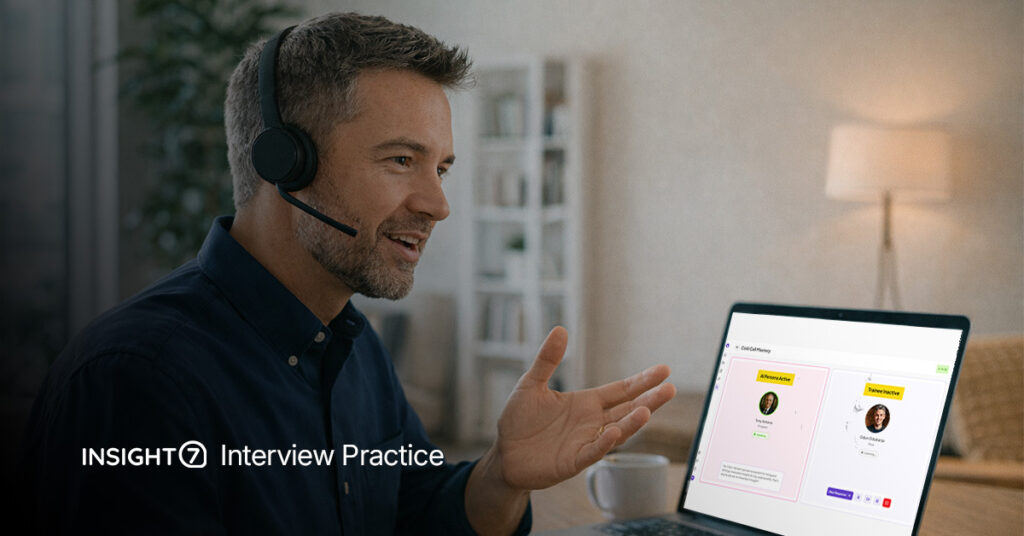
AutoNation customer service roles span vehicle sales follow-up, service department customer communication, warranty and F&I product administration, and corporate customer relations for the largest dealership group in the US. Interviewers assess whether candidates can handle the complexity of customer concerns that span multiple AutoNation departments, manage expectations in a service context where repair timelines and warranty coverage create frequent friction, and deliver a consistent experience across a network of locations operating under different manufacturer franchise requirements.
Start your free AutoNation Customer Service practice session.
What interviewers actually evaluate
Retention, Escalation Handling & Relationships
AutoNation customer service interviewers test whether you can de-escalate a customer whose service experience did not meet expectations, communicate honestly about repair timelines and warranty coverage decisions that the customer finds unfair, and route complaints that span multiple departments without making the customer repeat their story. They probe experience with automotive service customer relations, warranty administration disputes, and the handoff between sales and service departments.
Automotive service communication accuracy, warranty and coverage dispute handling, multi-department complaint routing, repair timeline honesty, escalation to manufacturer relations, service advisor communication support
What gets scored in every session
Specific, sentence-level feedback.
| Dimension | What it measures | How to answer |
|---|---|---|
| Diagnostic clarity | Whether you identify the real source of the customer's frustration before responding | Ask what happened, what they expected, and what resolution would satisfy them before framing your response |
| Timeline honesty | How accurately you communicate repair or resolution timelines under pressure | Give a range with a confidence qualifier rather than an optimistic single date |
| Coverage explanation | Whether you can explain warranty or service plan terms without making the customer feel deceived | State what is covered, what is not covered, and why, before discussing alternatives |
| Escalation routing | How accurately you identify when a situation requires manufacturer or management escalation | Name the escalation type, the recipient, and what the customer should expect from it |
How a session works
Step 1: Get your AutoNation Customer Service question
You receive a realistic AutoNation Customer Service prompt drawn from current themes: vehicle service repair timeline disputes, warranty coverage denial communication, sales-to-service handoff failure, F&I product claim administration, and multi-visit complaint resolution where previous customer service interactions have not resolved the issue. No generic customer service filler.
Step 2: Answer by voice
You speak your answer out loud, the way you would in a live customer service panel. The session captures diagnostic clarity, timeline honesty, and escalation accuracy.
Step 3: Get scored dimension by dimension
Each of the four dimensions above receives a separate score with sentence-level feedback showing exactly which line lost points and why.
Step 4: Re-answer and track improvement
You re-answer with the feedback in hand and track score improvement across attempts. Coverage explanation answers that are honest without sounding adversarial take practice to develop.
Frequently Asked Questions
What customer service scenarios are most common in AutoNation interviews?
Common scenarios include a customer disputing a warranty coverage decision for a repair they believe should be covered, a service repair that has taken longer than the promised timeline, a customer who was sold an F&I product they feel was misrepresented, a complaint that started with the sales process and escalated after a service experience, and a situation where the customer has already spoken to multiple AutoNation employees without resolution.
How does the relationship between AutoNation and vehicle manufacturers affect customer service situations?
AutoNation franchise dealerships operate under manufacturer guidelines for warranty administration, service procedures, and customer satisfaction standards. Customer service situations sometimes require escalation to the manufacturer's regional office or customer relations team rather than being fully resolvable by the dealership. Interviewers probe whether candidates understand this escalation path and how to communicate it to the customer.
How should I handle a warranty coverage denial in an AutoNation customer service interview?
Acknowledge the customer's disappointment before explaining the coverage decision. State what the warranty covers and what exclusion applies to their specific situation. Explain the exclusion rationale factually without sounding defensive. Then explore whether there are alternative solutions: a goodwill adjustment, a service contract claim, or a manufacturer escalation if the denial is genuinely borderline.
What communication challenges are specific to automotive service customer relations?
Automotive repair timelines are often uncertain, parts availability is variable, and technician diagnosis can reveal additional problems not visible in the initial estimate. Interviewers test whether candidates can communicate these realities honestly while maintaining customer confidence, and whether they understand how to set expectations at the outset of a service visit rather than managing disappointment after a timeline is missed.
What are the most common failure modes in AutoNation Customer Service interviews?
Common failures include diagnostic shortcuts that assume the source of frustration without confirming it, optimistic repair timeline commitments that create further disappointment when missed, coverage explanations that lead with policy language rather than the customer's experience, and escalation paths that route the customer without explaining what the escalation will accomplish.
Also practice
All nine AutoNation role interview practice pages.
One full session free. No account required. Real, specific feedback.








