Most customer service training doesn’t stick.
Data shows that the majority of contact center teams still rely on human roleplay as their primary method for practicing difficult conversations – despite it being one of the most resource-intensive, inconsistent, and uncomfortable training formats available.
Managers get stretched thin. Trainers can’t keep up with new hire classes. And it’s awkward when agents practice with a peer or a supervisor . Everyone knows it’s not real, and that disconnect kills the learning.
So why are teams still doing it this way?
The Problem With How We’ve Always Done Roleplay
Here’s what traditional roleplay actually looks like in most contact centers.
You pull someone out of the queue – which means a real customer is now waiting longer. You pair them with a trainer or a manager who is already stretched. You run through a scenario that everyone has practiced a dozen times. And then you hope something lands.
The scenario is predictable. The “customer” isn’t really frustrated. And the agent knows exactly how it’s going to go.
That’s not practice.
The teams getting this wrong aren’t doing it out of laziness. They’re doing it because until recently, there wasn’t a better option.
What Actually Makes Simulation Training Work
We spoke with a head of customer experience who came from one of the most respected support organisations in the world. His bar for what good looks like is high.
His criteria for AI simulation was simple: if it doesn’t feel conversational, it’s not worth doing.
“I’d rather use the resources and just have humans do it if it doesn’t sound conversational.”
That’s the standard. And it’s the right one.
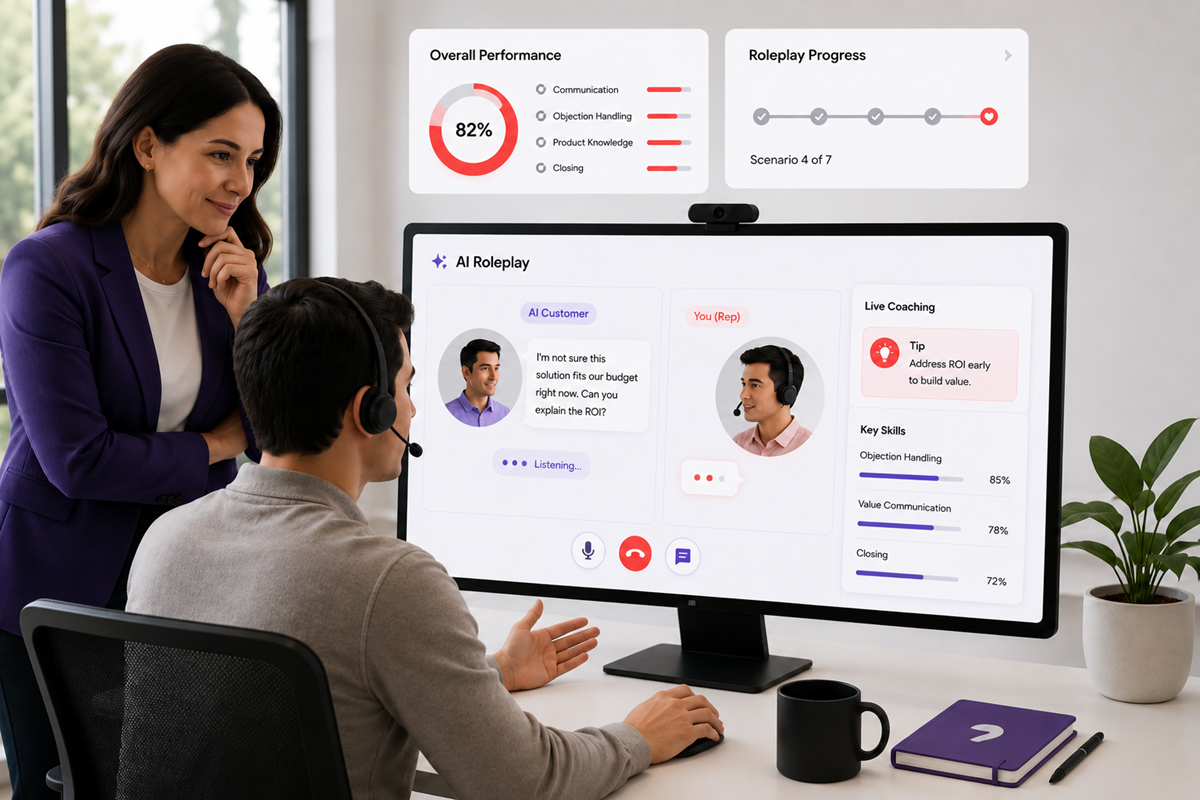
The simulation tools that actually change behaviour share a few things in common. They’re dynamic – the conversation doesn’t follow a script, it responds to what the agent actually says. They’re customisable – managers can dial up frustration, adjust communication style, change the emotional tone of the customer without rebuilding the scenario from scratch. And they’re available on demand — agents can practice before a shift, between calls, or on their phone on the way to work.
That last point matters more than most teams realise. The best practice happens close to the moment it’s needed, not in a quarterly training session.
The Manager Use Case Nobody Talks About
Most of the conversation around AI simulation focuses on new hire training. Onboarding. Consistency. Scale.
All valid. But the more interesting use case is what happens after onboarding.
A manager notices an agent struggling with a specific type of call – an angry customer, a complex complaint, a conversation that keeps going sideways in the same place. Today, addressing that means scheduling time, pulling someone aside, running through something manually, hoping the feedback lands.
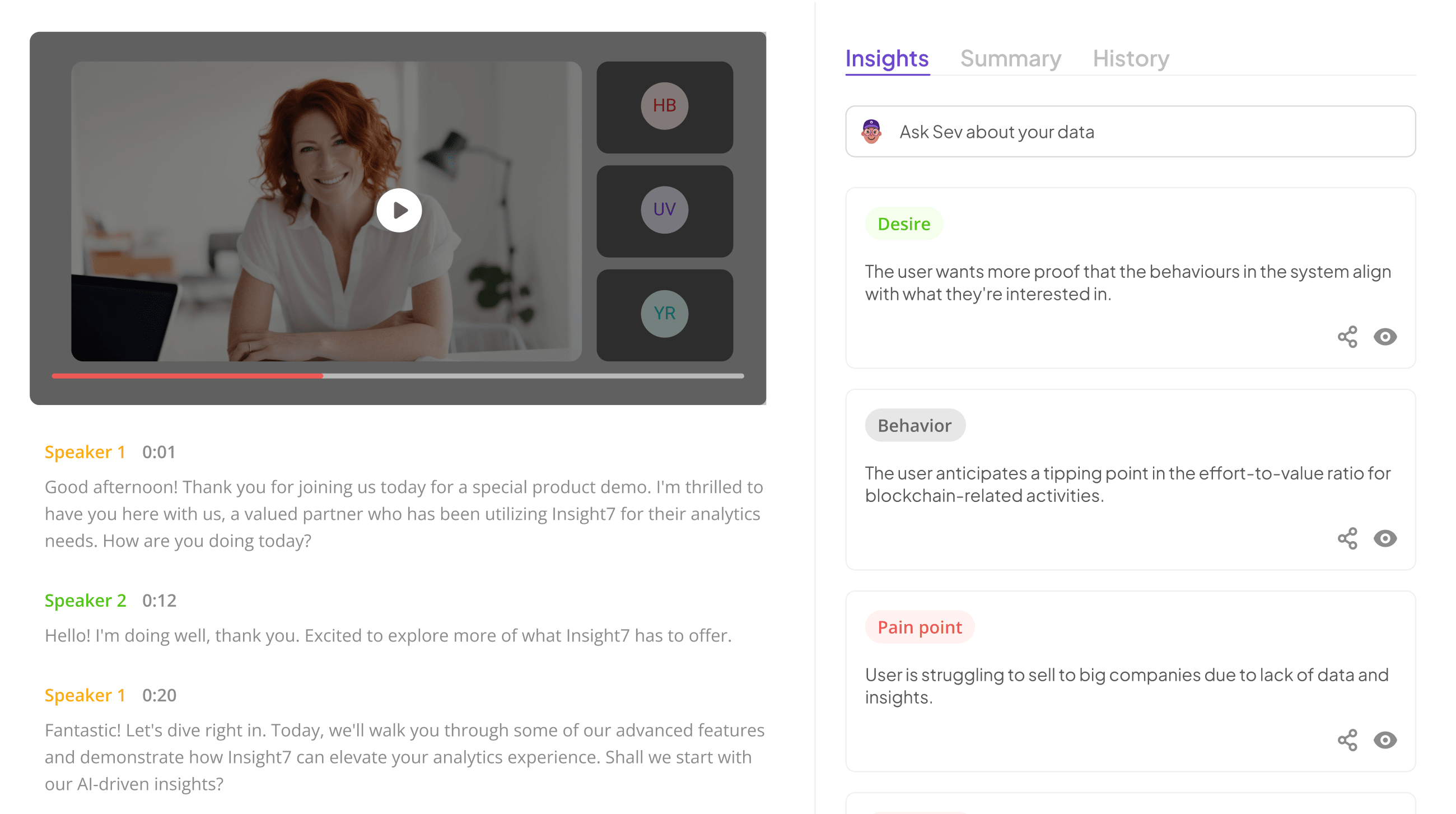
With AI simulation, that manager can build a scenario around that exact situation in minutes, send it to the agent, and follow up in the coaching session with evidence from how they performed. The practice is specific. The feedback is grounded. And the agent doesn’t have to sit across from their manager and act out an uncomfortable scenario.
That’s coaching that actually changes behaviour. Not a general reminder to “be more empathetic with frustrated customers.”
The Bar Is Higher Than Most Tools Are Meeting
Here’s the honest reality: a lot of AI simulation tools in the market right now are rigid.
The responses feel scripted. The customer persona doesn’t adapt. The conversation has a ceiling, and agents hit it fast. When that happens, the training loses credibility, and so does the manager who assigned it.
The teams investing in this space are right to be selective. The question isn’t whether AI simulation works. It’s whether the specific tool you’re evaluating feels real enough to be worth the time.
If it doesn’t, your agents will know immediately. And you’ll be back to pulling people out of the queue.
The Bottom Line on AI Roleplay
Customer service training has a practice problem. Not a knowledge problem — most agents know what good looks like. They just don’t get enough reps in realistic conditions to make it automatic.
AI simulation fixes that. But only if the simulation is good enough to fool you into thinking it’s real.
That’s the bar. And it’s finally achievable.