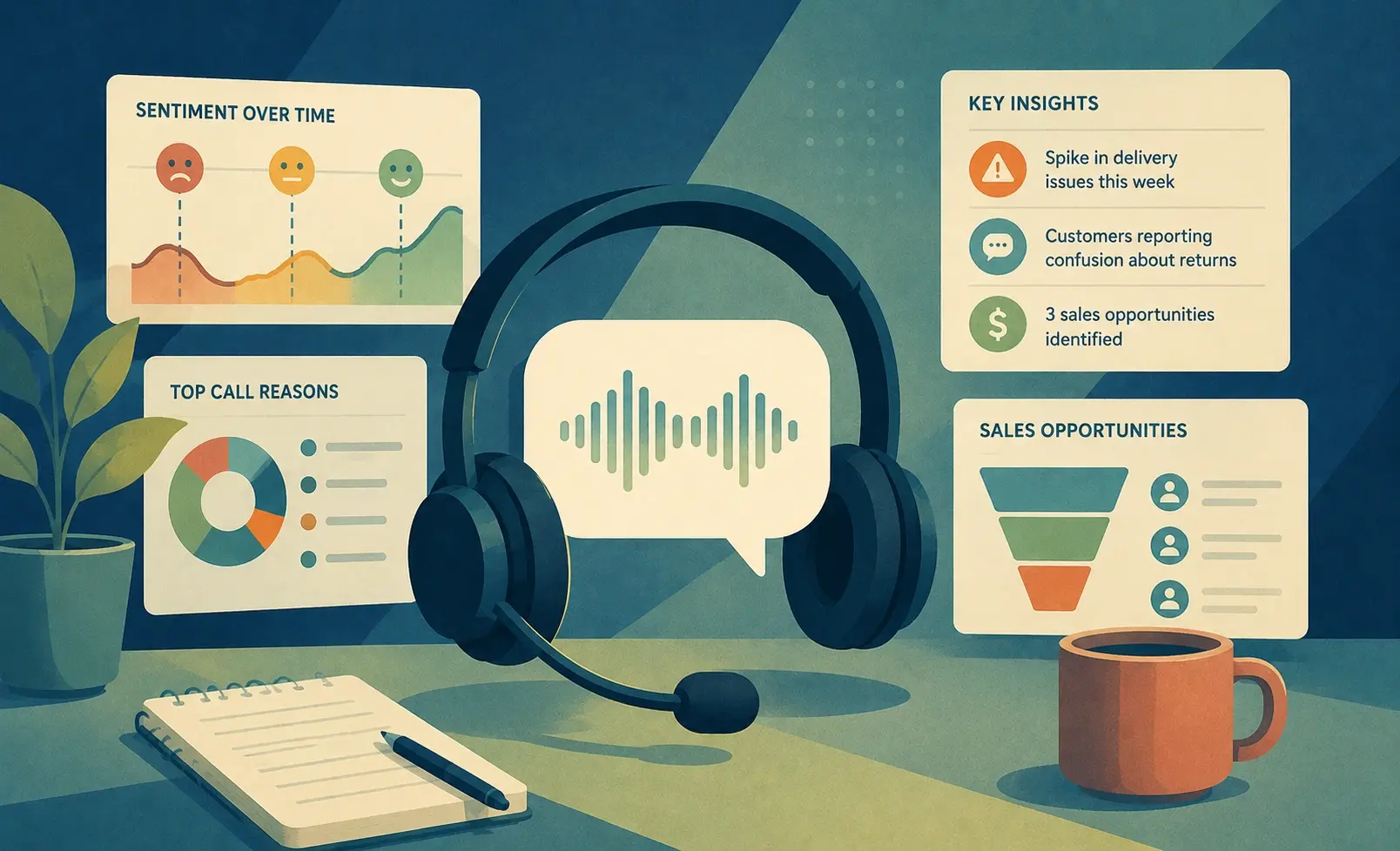
In today's fast-paced customer service landscape, multi-product contact centers face unique challenges. Agents are often required to juggle various products, services, and customer inquiries simultaneously, which can lead to confusion, longer handling times, and decreased customer satisfaction. To address these challenges, many organizations are turning to agent assist solutions powered by artificial intelligence (AI). These tools not only enhance agent performance but also improve customer experiences, operational efficiency, and overall competitive positioning. In this blog post, we will explore the best agent assist solutions for multi-product contact centers, focusing on their capabilities, implementation strategies, and the value they bring to your organization.
Understanding Agent Assist Technology
Core Definition:
Agent assist technology leverages real-time artificial intelligence to monitor customer interactions, understand context and intent, and provide agents with relevant information, guidance, and recommendations during conversations. This technology aims to improve outcomes by streamlining the support process.
What It's NOT:
- Not just a searchable knowledge base
- Not static scripts or call flows
- Not post-call quality scoring
- Not a chatbot or IVR system
This technology works by analyzing conversations in real-time, allowing agents to access the information they need without interrupting the flow of the conversation. By using AI to surface relevant knowledge and insights, agent assist solutions empower agents to handle complex inquiries efficiently.
Core Platform Capabilities
When evaluating agent assist solutions, there are several must-have features to consider that can significantly impact your contact center's performance:
-
Real-Time Processing:
AI should provide sub-2-second latency from speech to guidance, ensuring agents receive assistance when they need it most. -
Context-Aware Knowledge Surfacing:
The system should automatically display relevant information based on the ongoing conversation, reducing the time agents spend searching for answers. -
Sentiment Detection & Escalation Prevention:
Effective tools can recognize shifts in customer emotion and prompt agents with de-escalation tactics to prevent escalations before they happen. -
Compliance Monitoring:
Ensuring adherence to regulations and company policies is critical. The system should prompt required disclosures and flag prohibited language. -
Multichannel Support:
The agent assist solution should work seamlessly across various channels, including voice, chat, email, and social media, providing consistent support regardless of the medium. -
CRM & System Integration:
A successful implementation requires seamless integration with existing technology stacks, such as CRM systems and knowledge bases. -
Supervisor Analytics:
Real-time monitoring and intervention capabilities enable supervisors to gain insights into agent performance and provide data-driven coaching.
These features collectively enhance agent capabilities and improve customer interactions, resulting in better service delivery.
Implementation Considerations
Implementing an agent assist solution requires a strategic approach to ensure that the technology aligns with your contact center's goals. Here’s a structured plan for successful implementation:
Preparation:
- Define Business Objectives: Identify specific goals such as reducing average handling time, improving first call resolution, or enhancing customer satisfaction.
- Assess Environment: Evaluate your contact center's current volume of calls, chats, and emails, as well as the existing technology stack.
Execution:
- Vendor Selection: Choose a vendor that meets your requirements, focusing on technology capabilities, integration options, and vendor viability.
- Pilot Program: Start with a small group of agents (20-50) for a pilot program lasting 60-90 days. This allows you to test the solution in real-world scenarios.
Evaluation:
- Performance Measurement: Analyze key metrics such as average handle time, first call resolution, and customer satisfaction scores to gauge the effectiveness of the agent assist solution.
- Agent Feedback: Gather feedback from agents regarding usability and effectiveness to identify areas for improvement.
Iteration & Improvement:
- Continuously optimize the system based on performance data and agent input. Regular updates and enhancements will ensure that the solution remains relevant and effective.
By following this structured approach, you can maximize the benefits of your agent assist solution and ensure a smooth transition for your agents.
Vendor Comparison Framework
When considering agent assist solutions, it’s essential to evaluate different vendors based on their capabilities and how they align with your contact center's needs. Below is a comparison of some leading solutions, including Insight7:
| Feature | Insight7 | Zendesk | Salesforce Service Cloud | Freshdesk |
|---|---|---|---|---|
| Transcription Accuracy | 96% | 95% | 94% | 93% |
| Latency (seconds) | 1.2 | 1.5 | 1.8 | 2.0 |
| Sentiment Detection | Yes | Yes | Basic | Yes |
| Intent Recognition | Advanced | Advanced | Basic | Advanced |
| Multichannel Support | Yes | Yes | Yes | Yes |
| Integration Capabilities | 15+ pre-built | 10 pre-built | 8 pre-built | 12 pre-built |
| Pricing Model | Per agent/month | Per interaction | Tiered | Per agent/month |
This table highlights the strengths of each platform, allowing you to make an informed decision based on your specific requirements.
Business Impact & Metrics
The implementation of an agent assist solution can lead to significant improvements in various metrics that impact your contact center's performance:
- Average Handle Time (AHT): Expect a reduction of 10-25%, as agents can quickly access relevant information.
- First Call Resolution (FCR): Anticipate an increase of 10-20 percentage points, as agents are better equipped to resolve issues on the first interaction.
- Customer Satisfaction (CSAT): Expect an improvement of 8-15%, driven by faster and more accurate responses.
- Cost Per Contact: A reduction of 15-30% is achievable, resulting from decreased handling times and improved efficiency.
By focusing on these metrics, you can quantify the return on investment (ROI) of your agent assist solution, which typically shows a payback period of 6-12 months and an annual ROI of 200-400%.
In conclusion, the right agent assist solution can transform your multi-product contact center into a more efficient and customer-centric operation. By understanding the technology, evaluating core capabilities, implementing strategically, and measuring impact, you can enhance agent performance and deliver exceptional customer experiences.