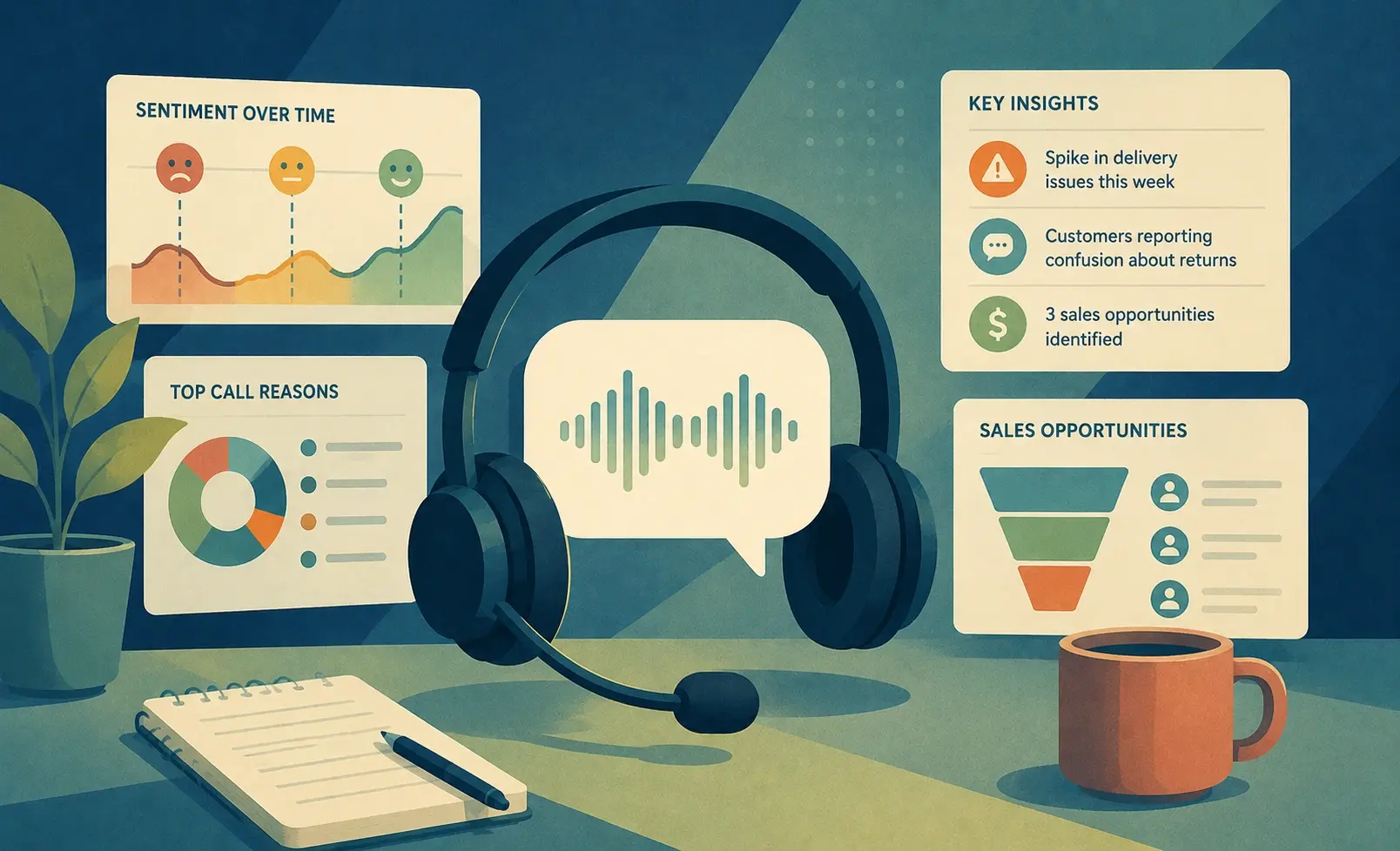
AI agent assist systems have transformed the landscape of customer service and support, providing real-time assistance to agents during live interactions. As businesses increasingly rely on these technologies, understanding their accuracy benchmarks and capabilities becomes crucial for effective implementation. This post will explore the most reliable AI agent assist systems, focusing on their features, accuracy benchmarks, and the overall impact on customer experience and operational efficiency.
Understanding Agent Assist Technology
Core Definition:
AI agent assist systems leverage real-time artificial intelligence to monitor customer interactions, comprehend context and intent, and deliver relevant information, guidance, and recommendations to agents. This technology aims to enhance outcomes by improving the speed and accuracy of responses.
What It's NOT:
- Not just a searchable knowledge base
- Not static scripts or call flows
- Not post-call quality scoring
- Not a chatbot or IVR system
The technology stack of agent assist systems typically includes several layers, from conversation intelligence to analytics and optimization, ensuring a comprehensive approach to enhancing agent performance.
Core Platform Capabilities
When evaluating AI agent assist systems, certain must-have features stand out. Here are the key capabilities you should look for:
-
Real-Time Processing
- Sub-2-second latency from speech to guidance
- Continuous analysis throughout the interaction
- Why: Agents need guidance when a customer asks, not 30 seconds later.
-
Context-Aware Knowledge Surfacing
- Automatically displays relevant information based on the conversation
- Why: This eliminates searching, reduces handle time, and improves resolution rates.
-
Sentiment Detection & Escalation Prevention
- Recognizes emotional shifts and prompts de-escalation tactics
- Why: Prevents escalations before they happen, enhancing customer satisfaction.
-
Compliance Monitoring
- Ensures adherence to regulatory and policy standards
- Prompts required disclosures and flags prohibited language
- Why: Reduces legal risk and regulatory fines.
-
Multichannel Support
- Works across voice, chat, email, and social platforms
- Why: Provides consistent agent support regardless of the channel.
-
CRM & System Integration
- Seamless connection with existing technology stacks
- Why: No integration means no adoption.
-
Supervisor Analytics
- Real-time monitoring and performance insights
- Why: Amplifies supervisor capacity and enables data-driven coaching.
Business Impact & Metrics
Implementing AI agent assist systems yields significant business benefits. Here are some key metrics to consider:
Efficiency Metrics:
- Average Handle Time (AHT): 10-25% reduction due to faster information access and fewer transfers.
- Transfer/Escalation Rate: 20-40% reduction as agents can resolve issues without escalating.
- After-Call Work (ACW): 15-30% reduction through auto-documentation and faster case completion.
Quality Metrics:
- First Call Resolution (FCR): Improvement of 10-20 percentage points, resolving issues without callbacks.
- Customer Satisfaction (CSAT): An increase of 8-15% due to faster resolutions and knowledgeable agents.
- Quality Scores: Improvement of 12-25% through better compliance and consistency.
Revenue Metrics:
- Conversion Rate: Increase of 15-30% for sales teams due to better objection handling and closing guidance.
- Retention/Churn: Improvement of 10-25% through better service recovery and proactive offers.
Cost Metrics:
- Cost Per Contact: 15-30% reduction driven by AHT reduction and FCR improvement.
- Agent Attrition: Improvement of 20-40% as agents experience reduced stress and faster competency.
Vendor Comparison Framework
When selecting an AI agent assist system, it's essential to compare the leading platforms based on their features and performance. Below is a comparison of three notable systems:
| Feature | Insight7 | Vendor B | Vendor C |
|---|---|---|---|
| Transcription Accuracy | 96% | 94% | 97% |
| Latency (seconds) | 1.2 | 2.1 | 0.8 |
| Sentiment Detection | ✓ | ✓ | ✓ |
| Intent Recognition | Advanced | Basic | Advanced |
| Integration Capabilities | 15+ pre-built | 8 pre-built | 20+ pre-built |
| Average AHT Reduction | 18% | 12% | 22% |
| Typical ROI Timeline | 8 months | 12 months | 6 months |
This table provides a clear overview of how Insight7 stacks up against competitors in terms of critical features and performance metrics.
Implementation Considerations
Successfully implementing an AI agent assist system requires careful planning and execution. Here’s a structured approach to ensure a smooth rollout:
Preparation:
- Define clear business objectives and success criteria.
- Assess the existing technology environment and identify integration needs.
Execution:
- Start with a pilot program involving a small group of agents to test the system.
- Provide comprehensive training to ensure agents understand how to leverage the technology effectively.
Evaluation:
- Monitor key performance metrics and gather feedback from agents to identify areas for improvement.
- Adjust the system configuration based on real-world usage and performance data.
Iteration & Improvement:
- Continuously refine the system based on ongoing analytics and agent feedback.
- Scale the implementation gradually across the organization to ensure adoption and effectiveness.
By following this structured approach, organizations can maximize the benefits of AI agent assist systems while minimizing potential challenges.
In conclusion, selecting a reliable AI agent assist system is crucial for enhancing agent performance, improving customer experience, and driving operational efficiency. By understanding the technology's capabilities, evaluating key metrics, and implementing best practices, businesses can position themselves for success in an increasingly competitive landscape.