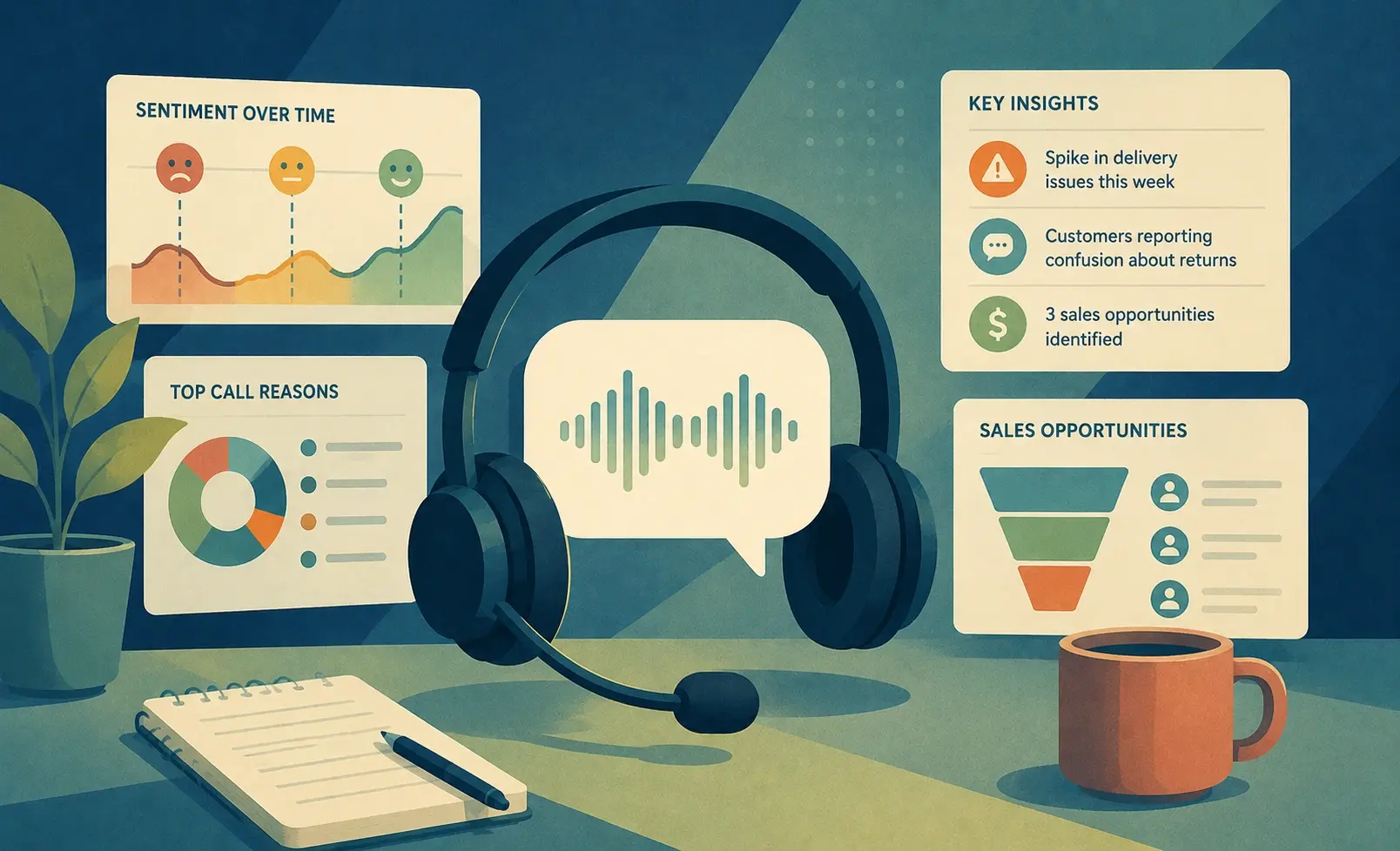
Agent assist technology is transforming the landscape of customer service, providing real-time support to agents during customer interactions. By leveraging artificial intelligence, these tools enhance agent performance and improve customer satisfaction scores significantly. In this post, we’ll explore how agent assist works, its core capabilities, and the tangible benefits it brings to customer service teams.
Understanding Agent Assist Technology
Core Definition:
Agent assist platforms utilize real-time artificial intelligence to monitor customer interactions, understand context and intent, and provide agents with relevant information, guidance, and recommendations during conversations. This technology aims to improve outcomes by enabling agents to respond more effectively and efficiently.
What It's NOT:
- Not just a searchable knowledge base
- Not static scripts or call flows
- Not post-call quality scoring
- Not a chatbot or IVR system
The technology operates through a layered framework that includes conversation intelligence, context engines, and decision engines, all designed to enhance the agent's ability to serve customers better.
The Technology Stack:
-
Layer 1: Conversation Intelligence
Real-time speech-to-text and text analysis that captures and understands conversations, ensuring high transcription accuracy and low latency. -
Layer 2: Context Engine
This layer understands the meaning of conversations, detecting customer sentiment and integrating CRM data to provide relevant insights. -
Layer 3: Intelligence & Decision Engine
AI determines what guidance to provide based on context, offering de-escalation prompts, compliance alerts, and relevant knowledge articles. -
Layer 4: Presentation & Delivery
The user interface displays guidance without disrupting agent workflow, offering knowledge article cards and real-time alerts. -
Layer 5: Integration Framework
Seamless connections to contact center platforms, CRM, and knowledge systems ensure that agents have the right information at their fingertips. -
Layer 6: Analytics & Optimization
This layer measures performance and drives continuous improvement, providing insights into agent performance and customer interactions.
Core Platform Capabilities
To maximize the impact of agent assist technology, several must-have features should be considered:
-
Real-Time Processing
Agents receive guidance within two seconds of a customer inquiry, ensuring timely responses. -
Context-Aware Knowledge Surfacing
The system automatically displays relevant information based on the conversation, reducing search time and improving resolution rates. -
Sentiment Detection & Escalation Prevention
By recognizing emotional shifts, the system prompts agents with de-escalation tactics, preventing potential conflicts. -
Compliance Monitoring
The platform ensures adherence to regulations by prompting required disclosures and flagging prohibited language. -
Multichannel Support
Agent assist works across various communication channels, providing consistent support regardless of the medium. -
CRM & System Integration
Seamless integration with existing tech stacks is crucial for adoption and effectiveness. -
Supervisor Analytics
Real-time monitoring and performance insights enable supervisors to provide data-driven coaching and support.
These capabilities collectively enhance agent performance, leading to improved customer satisfaction scores.
Business Impact & Metrics
Implementing agent assist technology can yield significant improvements in various metrics that directly correlate with customer satisfaction:
-
Average Handle Time (AHT):
Expect a reduction of 10-25%, as agents can access information faster and resolve issues without unnecessary delays. -
First Call Resolution (FCR):
A boost of 10-20 percentage points can be achieved, as agents are equipped to resolve issues on the first contact. -
Customer Satisfaction (CSAT):
Improvements of 8-15% in customer satisfaction scores are common, as faster resolutions and knowledgeable agents enhance the overall experience. -
Quality Scores:
Quality metrics can improve by 12-25% due to better compliance and fewer errors, leading to a more consistent customer experience. -
Cost Per Contact:
A reduction of 15-30% in costs can be realized through decreased AHT and improved FCR, ultimately benefiting the bottom line.
These metrics demonstrate how agent assist technology not only enhances operational efficiency but also drives customer satisfaction, making it a strategic investment for any customer service team.
Implementation Considerations
To successfully implement agent assist technology, organizations should consider the following critical success factors:
Preparation:
- Define Clear Goals: Identify specific objectives for implementing agent assist, such as improving response times or enhancing customer satisfaction.
- Involve Key Stakeholders: Engage contact center managers, IT, and training teams early in the process to ensure alignment and support.
Execution:
- Pilot Program: Start with a small group of agents to test the technology and gather feedback. This allows for adjustments before a full rollout.
- Training: Provide comprehensive training for agents on how to use the tool effectively, emphasizing its role in enhancing their capabilities rather than replacing them.
Evaluation:
- Monitor Performance: Regularly track key metrics to assess the impact of the agent assist technology on customer satisfaction and agent performance.
- Gather Feedback: Solicit input from agents regarding their experience with the tool, making adjustments as necessary to improve usability.
Iteration & Improvement:
- Continuous Optimization: Use performance data to refine the system, ensuring it evolves with changing customer needs and business objectives.
By following these implementation steps, organizations can maximize the benefits of agent assist technology and significantly improve customer satisfaction scores.
Frequently Asked Questions
Q1: How does agent assist technology improve response times?
A1: By providing real-time guidance and relevant information during customer interactions, agents can respond faster and more accurately.
Q2: Can agent assist technology work across multiple channels?
A2: Yes, it is designed to support various communication channels, ensuring consistent assistance regardless of how customers reach out.
Q3: What kind of training is required for agents using agent assist?
A3: Agents should receive training on how to navigate the tool, interpret the guidance provided, and integrate it into their workflows effectively.
Q4: How does agent assist technology ensure compliance?
A4: The system monitors interactions for compliance with regulations and company policies, prompting agents when necessary to adhere to guidelines.
Q5: What metrics should organizations track to measure the success of agent assist?
A5: Key metrics include Average Handle Time (AHT), First Call Resolution (FCR), Customer Satisfaction (CSAT), and quality scores.
By implementing agent assist technology, organizations can not only improve their operational efficiency but also create a more satisfying experience for customers, ultimately leading to higher satisfaction scores and loyalty.