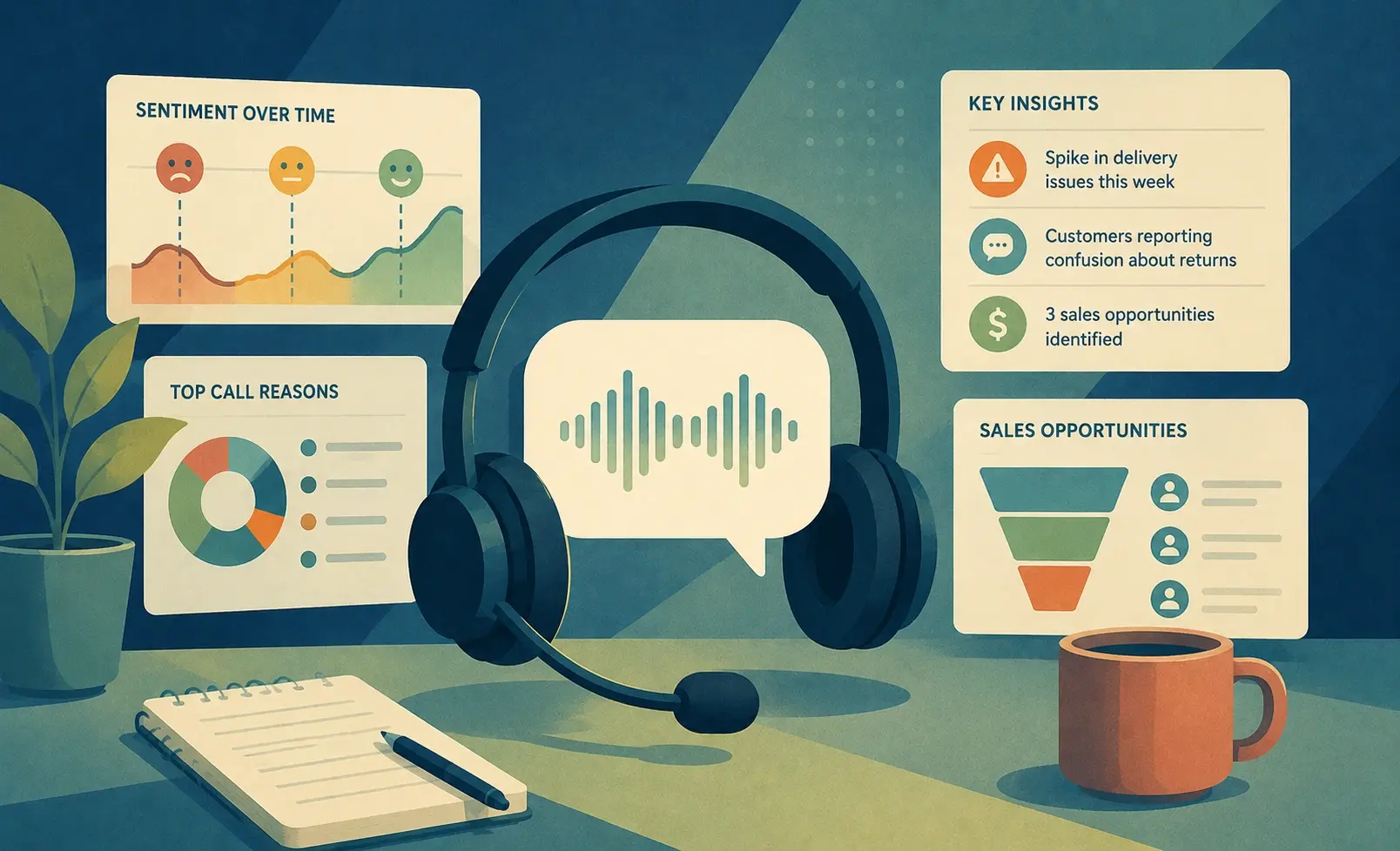
Agent assist technology is revolutionizing the way customer service operates, particularly through the use of speech-to-text capabilities. This innovative approach allows agents to understand conversations in real-time, enhancing their ability to respond effectively to customer inquiries. By leveraging artificial intelligence, agent assist tools can analyze spoken language, recognize intent, and provide actionable insights, all while the conversation is ongoing. This blog post will explore how agent assist employs speech-to-text technology to improve customer interactions, the technology stack involved, and the measurable business impacts it can deliver.
Understanding Agent Assist Technology
Core Definition:
Agent assist is a real-time artificial intelligence solution that monitors customer interactions, understands context and intent, and provides agents with relevant information, guidance, and recommendations during conversations. This technology aims to improve outcomes by enhancing agent performance and customer satisfaction.
What It's NOT:
- Not just a searchable knowledge base
- Not static scripts or call flows
- Not post-call quality scoring
- Not a chatbot or IVR system
The power of agent assist lies in its ability to capture and process spoken language accurately and efficiently. This is achieved through a sophisticated technology stack that includes several layers of functionality.
The Technology Stack
Layer 1: Conversation Intelligence
At the core of agent assist is conversation intelligence, which utilizes real-time speech-to-text and text analysis to capture and comprehend conversations. Key features include:
- Transcription Accuracy: Achieving over 95% accuracy, ensuring that what is captured is reliable.
- Sub-Second Latency: Critical for providing timely assistance.
- Intent and Entity Recognition: Understanding what the customer is asking for and identifying relevant entities within the conversation.
Layer 2: Context Engine
This layer interprets the meaning behind conversations, assessing customer sentiment and the purpose of the call. It includes:
- Customer Intent Analysis: Understanding what the customer needs.
- Emotional Sentiment Detection: Recognizing the emotional tone of the customer.
- CRM and History Integration: Pulling in relevant customer data to inform responses.
Layer 3: Intelligence & Decision Engine
The AI determines what guidance to provide based on the context of the conversation. For example:
- If a customer expresses frustration, the system can suggest de-escalation prompts.
- If compliance is required, it can provide necessary disclosures.
- If there is a knowledge gap, it can surface relevant articles or information.
Layer 4: Presentation & Delivery
This layer focuses on how information is presented to the agent without disrupting their workflow. Features include:
- Knowledge Article Cards: Displaying relevant articles in real-time.
- Script Suggestions: Offering tailored responses based on the conversation.
- Real-Time Alerts: Notifying agents of important moments during the call.
Layer 5: Integration Framework
Agent assist tools seamlessly integrate with existing contact center platforms, CRM systems, and knowledge bases, ensuring that the technology works cohesively within the current ecosystem.
Core Platform Capabilities
Agent assist platforms offer several must-have features that enhance their effectiveness:
-
Real-Time Processing:
- Sub-2-second latency from speech to guidance.
- Continuous analysis throughout the interaction.
-
Context-Aware Knowledge Surfacing:
- Automatically displays relevant information based on the conversation context.
-
Sentiment Detection & Escalation Prevention:
- Recognizes emotional shifts and prompts de-escalation tactics to prevent escalations before they happen.
-
Compliance Monitoring:
- Ensures adherence to regulatory and policy requirements, prompting required disclosures and flagging prohibited language.
-
Multichannel Support:
- Functions across voice, chat, email, and social media, providing consistent agent support regardless of the channel.
-
CRM & System Integration:
- Seamless connection with existing technology stacks to ensure smooth adoption.
-
Supervisor Analytics:
- Real-time monitoring and performance insights to amplify supervisor capacity and enable data-driven coaching.
Business Impact & Metrics
The implementation of agent assist technology has a profound impact on efficiency, quality, and revenue metrics:
- Average Handle Time (AHT): Reductions of 10-25% due to faster information access and fewer transfers.
- First Call Resolution (FCR): Improvements of 10-20 percentage points, leading to issues resolved without callbacks.
- Customer Satisfaction (CSAT): Gains of 8-15% from faster resolution times and knowledgeable agents.
- Cost Per Contact: Reductions of 15-30% due to improved efficiency and effectiveness.
The return on investment (ROI) for implementing agent assist technology is typically substantial, with payback periods of 6-12 months and annual ROI estimates ranging from 200-400%.
Frequently Asked Questions
Q1: How does speech-to-text technology improve agent performance?
A1: Speech-to-text technology allows agents to receive real-time insights and suggestions, enabling them to respond more quickly and accurately to customer inquiries.
Q2: What are the key benefits of using agent assist?
A2: Key benefits include improved response times, enhanced accuracy, reduced agent stress, and increased customer satisfaction.
Q3: Can agent assist technology integrate with existing systems?
A3: Yes, agent assist tools are designed to seamlessly integrate with existing contact center platforms, CRMs, and knowledge bases.
Q4: How does sentiment detection work in agent assist?
A4: Sentiment detection analyzes the emotional tone of the customer’s voice, allowing the system to provide appropriate responses or escalation prompts.
Q5: What is the typical ROI for implementing agent assist technology?
A5: Organizations can expect a payback period of 6-12 months and an annual ROI of 200-400%.
By harnessing the power of speech-to-text technology, agent assist tools are transforming customer service interactions, enabling agents to deliver faster, more accurate, and more empathetic responses. This not only enhances the customer experience but also drives significant operational efficiencies and business growth.